




Sixteen Brother printers share this family, and every one of them takes both of its toner codes: the TN630, Brother's standard cartridge at about 1,200 pages, and the TN660, the high-yield at about 2,600. The oddity this guide is built around sits on our own shelf — the two codes are priced exactly the same at every pack size, and the single cartridge is not sold under either name alone: one joint listing carries both. So the useful questions here are arithmetic ones. What do equal prices do to cost per page? When does the standard cartridge still earn its place? And where do the shared DR630 drum and the TN660J jumbo fit?
The short answer: at identical prices, take the high-yield code. The TN660 2-pack at $29.82 holds about 5,200 pages — roughly 0.57¢ a page — and the same money buys barely half that in TN630 cartridges. The DR630 drum (about 12,000 pages, $27.67) is the only other part these machines ever ask for.
Start with the TN660 2-pack at $29.82: two cartridges rated at about 2,600 pages each, and $16.08 less than the same cartridges bought as singles. Because the TN630 is rated at about 1,200 pages and sits at the identical $29.82 for its own 2-pack, the high-yield code returns well over twice the pages per dollar at every rung of the ladder — there is no fit trade-off underneath, since all sixteen printers accept both codes and share the same DR630 drum.
Sixteen printers, two codes, no wrong door
Brother's lineup for this family is unusually tidy: two DCP copiers, seven HL printers and seven MFC all-in-ones, and each of the sixteen accepts the TN630, the TN660 and the DR630 drum. There is no tier split to decode. On Brother's bigger workgroup platform some models are locked out of the higher-yield cartridges; here, nothing is. Choosing between the two codes is a yield decision and nothing else — fit is settled before the shopping starts.
The sixteen are the DCP-L2520DW, DCP-L2540DW, HL-L2300D, HL-L2305W, HL-L2315DW, HL-L2320D, HL-L2340DW, HL-L2360DW, HL-L2380DW, MFC-L2680W, MFC-L2685DW, MFC-L2700DW, MFC-L2705DW, MFC-L2707DW, MFC-L2720DW, MFC-L2740DW. If your model is on that list, both codes belong in it, and the rest of this guide is about which one deserves the money.
One shelf quirk to understand before the sections below: there is no TN630-only single and no TN660-only single in our store. The single is one joint TN630/TN660 listing at $22.95 — a cartridge built to the TN660's 2,600-page specification whose title names both codes, because owners of both codes buy the same physical part. The identical offer also appears under sixteen further listings titled by printer model, at the same $22.95, for buyers who search by machine name. We card the code-titled listing once and treat the model-titled ones as what they are: the same offer, repeated.
Owners of Brother's larger workgroup machines are in a different family entirely — theirs is covered in our Best Brother TN850 Toner Cartridges guide.
The shelf at a glance
Prices are the live figures from the product pages carded in this guide. Yields are Brother's published ratings — with one labeled exception: Brother publishes no TN660J rating, so that row shows the figure the jumbo listings claim for themselves.
| Cartridge | Compatible single | Compatible 2-pack | Rated yield | Cost per page, single | Genuine Brother single |
|---|---|---|---|---|---|
| TN660 SWEET SPOT | $22.95 (the joint listing) | $29.82 | About 2,600 pages | About 0.88¢ | $96.91 (about 3.73¢/page) |
| TN630 | No code-only single | $29.82 | About 1,200 pages | — (see note) | $68.41 (about 5.70¢/page) |
| TN660J jumbo | $24.48 | No 2-pack sold | No Brother rating — listings claim about 4,000 pages | About 0.61¢ on the listings' figure | Not sold in a Brother box |
| DR630 drum | $27.67 | $39.26 | About 12,000 pages | About 0.23¢ | $129.08 (about 1.08¢/page) |
The TN630's cost per page by pack size: about 1.24¢ in the 2-pack, 1.02¢ in the 3-pack, 0.91¢ in the 4-pack and 0.84¢ in the 5-pack — at every size, roughly double the TN660's figure for the same money, because Brother rates the cartridge at less than half the pages. Real yields vary with page coverage, printer settings and paper; the ratings are the shared yardstick, not a promise for any one office.
The two-box decision
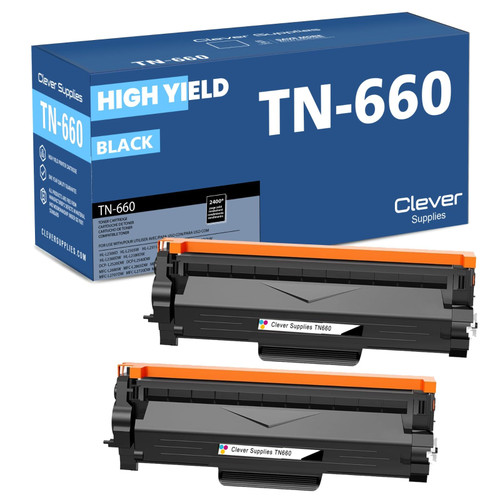
This is the box the arithmetic points to. It costs exactly what the standard-yield 2-pack beside it costs and carries about 2,800 more pages, so there is no trade-off left to weigh. For scale: a genuine Brother TN660 single is $96.91 on our OEM shelf, which makes one of these 2-packs cheaper than a third of one genuine cartridge rated for the same 2,600 pages.
View the TN660 2-Pack →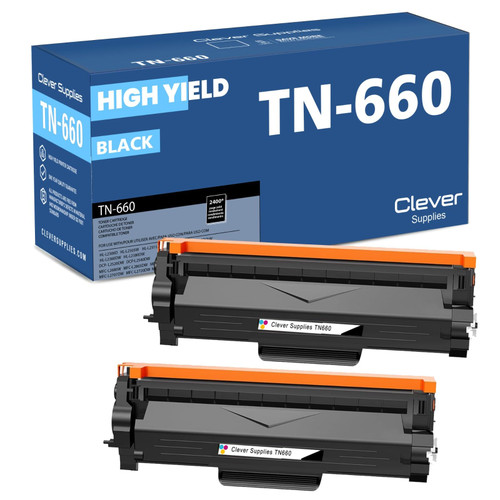
This box stays in the guide for buyers who replace like for like — an office standardized on the TN630 name, or a first compatible purchase kept identical to the cartridge the printer shipped with. Buy it knowingly: at today's equal prices it returns about 1.24¢ a page against the TN660's 0.57¢, so what you are paying for is the name on the box, not the page count.
View the TN630 2-Pack →TN660: the high-yield line
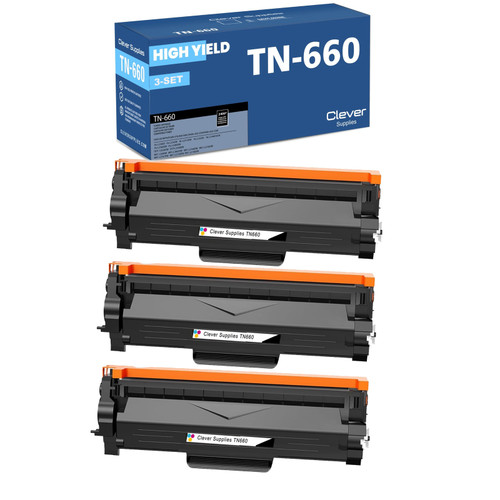
Every pack in this section is built from the same cartridge Brother rates at about 2,600 pages. The single carded first is the joint listing from the platform section — its title names the TN630 too, but the cartridge inside is built to the TN660 specification, which is why it is filed here. The larger boxes walk the per-page figure down in even steps: about 0.57¢ in the 2-pack above, 0.47¢ in the 3-pack, 0.42¢ in the 4-pack and 0.39¢ in the 5-pack.
Two duplicates deserve a sentence each, so they do not confuse anyone comparison-shopping. The joint 5-pack carded below also exists under a TN630-first title at the identical $50.42 — same cartridges, second listing. And the joint single exists a second time under a listing whose own specification fields still carry codes copied over from a color family; it is the same $22.95 offer, and the card below is the clean route to it.



TN630: standard yield at a high-yield price
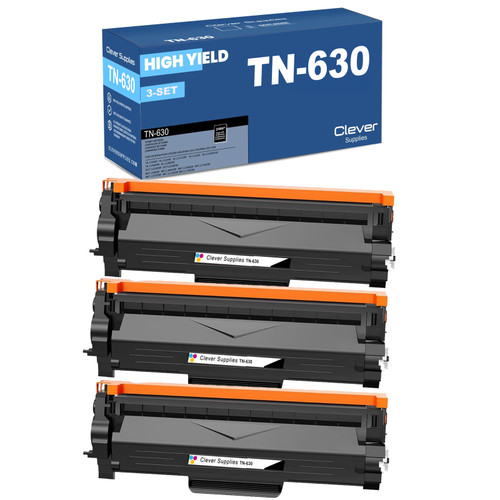
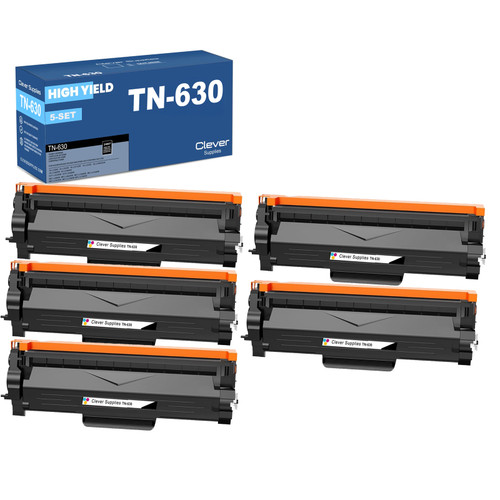
The TN630 is the cartridge these printers were sold with, rated by Brother at about 1,200 pages, and for years it was the default reorder for the whole family. What changed is the shelf around it: our TN630 packs are priced rung for rung with the TN660's — $29.82 for two, $36.69 for three, $43.56 for four, $50.42 for five — while each cartridge is rated at less than half the TN660's pages. This guide will not dress that up as a contest. On cost per page, the standard cartridge loses at every size, by a factor of about 2.2.
It stays carded for the buyers who genuinely want it: offices whose purchasing list names the TN630, and owners who prefer the exact cartridge their manual specifies. There is no TN630-only single — the single for this code is the joint TN660-specification listing in the section above — so the line starts with the 2-pack in the decision band and continues here. One duplicate to recognize along the way: a second 4-pack under a joint TN630/TN660 title sells at the identical $43.56; the card below is the listing we verified.

TN660J: the jumbo, labeled for what it is
Two listings carry a third name: TN660J, a jumbo-fill version of the cartridge sold by compatible makers. Brother publishes no yield for it — the Jumbo is not a Brother product — so the roughly 4,000-page figure on these listings is the listings' own claim. This guide keeps the jumbos in their own section for exactly that reason: the claim is never folded into the TN660's Brother-rated math, and the jumbos are never presented as a longer-rated standard cartridge. On the claimed figure, the $24.48 single works out to about 0.61¢ a page.
Read it as a capacity experiment at a modest premium — $1.53 over the joint single — rather than as a third Brother tier. No genuine TN660J is sold here, and nothing about the standard codes' ratings transfers to it.


DR630: one drum for all sixteen
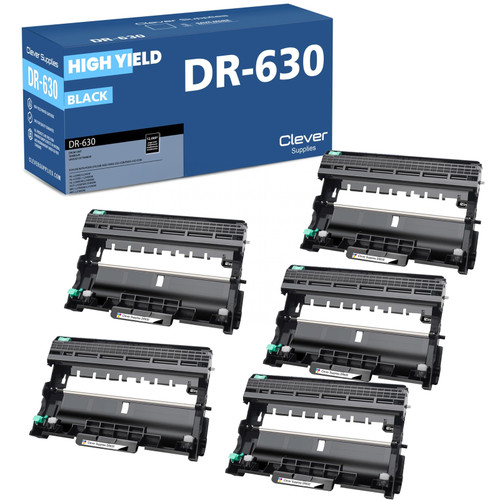
Toner is only half of what these printers consume. The DR630 is the imaging drum the cartridge rides in — a separate unit, on its own replacement schedule, shared by every model in the family. Brother rates it at about 12,000 pages and publishes no second, longer rating for multi-page jobs the way it does for some larger drums, so 12,000 is the figure to plan around. At $27.67, the compatible drum adds about 0.23¢ to the cost of a page; a genuine Brother DR630 is $129.08 on our OEM shelf.
In practice one drum outlasts about ten TN630 cartridges, or somewhere between four and five TN660s — which is why it is bought rarely and stocked singly, and why it belongs in this guide without belonging in every order.
A title warning, because it catches people out: two of our drum listings are titled "Toner Cartridge" even though the product in the box is this drum — a duplicate drum single at the identical $27.67 and a duplicate drum 2-pack at the identical $39.26 wear the wrong headline. The cards below are the correctly titled listings. If you land on the others, trust the DR630 code and the drum description, not the title.

Drum and toner in one box
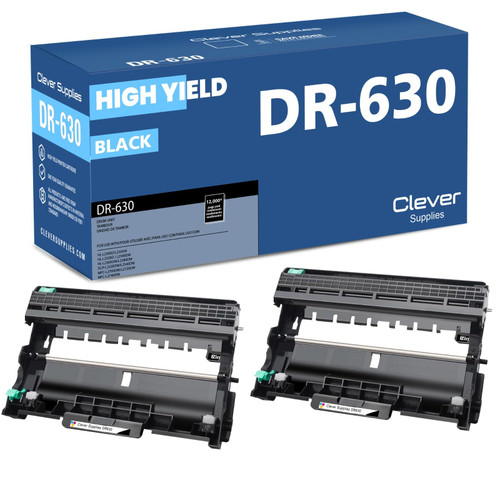
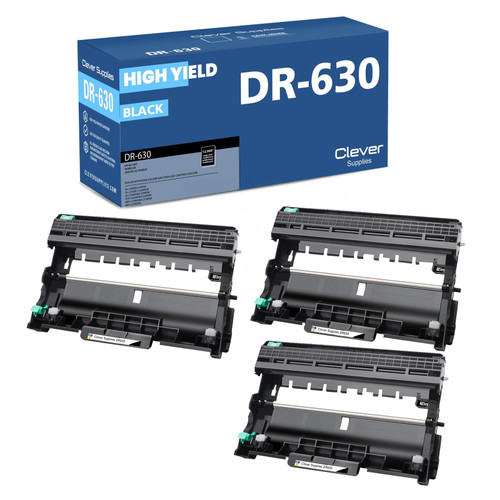
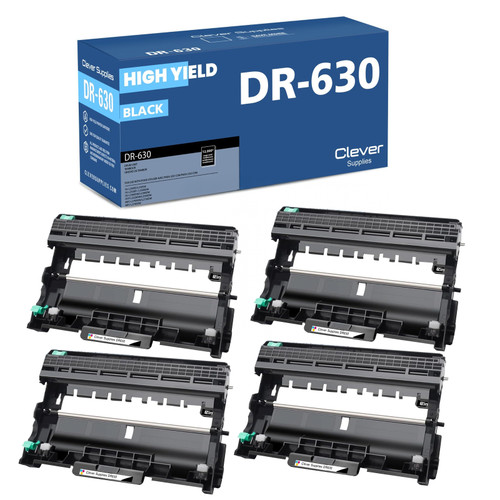
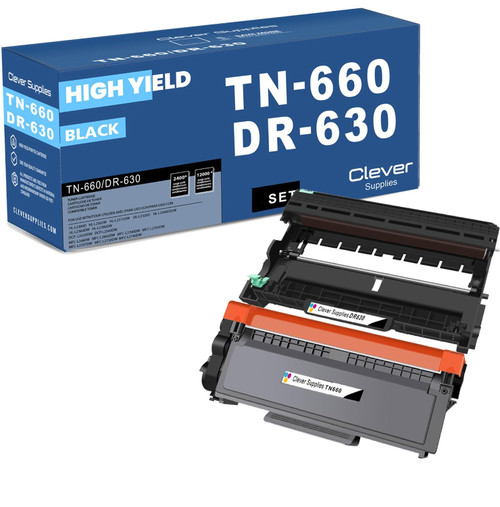
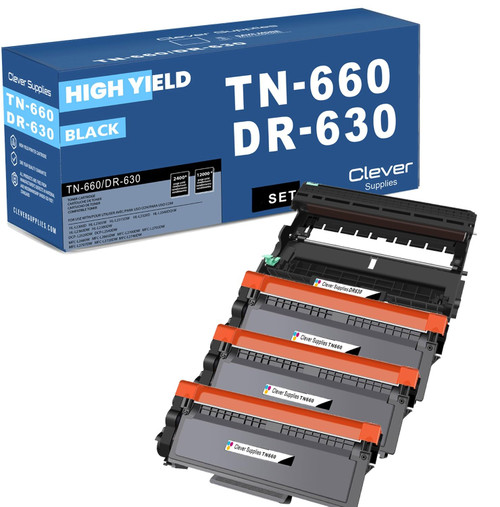
When a drum message and a low toner land in the same month, the combination sets price the two parts together, below the sum of buying them apart. The TN660 sets carded first are the cheaper of two listing generations on our shelf for these combinations: the other generation prices the one-drum mixes at $34.54, $41.41 and $48.28, and each of those listings also exists twice under the same title. The cards here are the lower-priced route to each mix, and every saving figure in this section is computed from them.
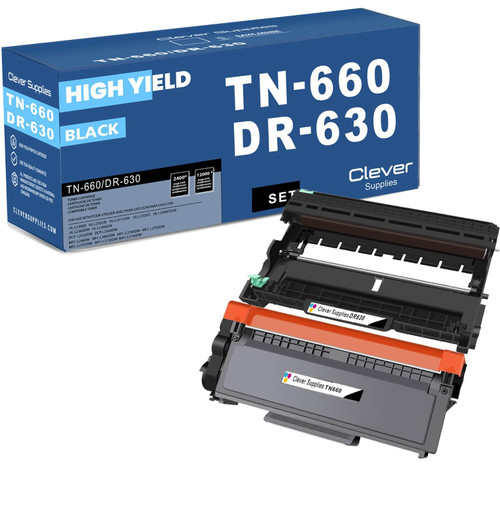

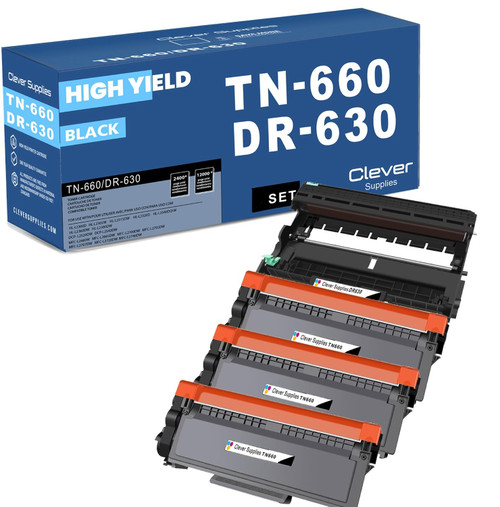
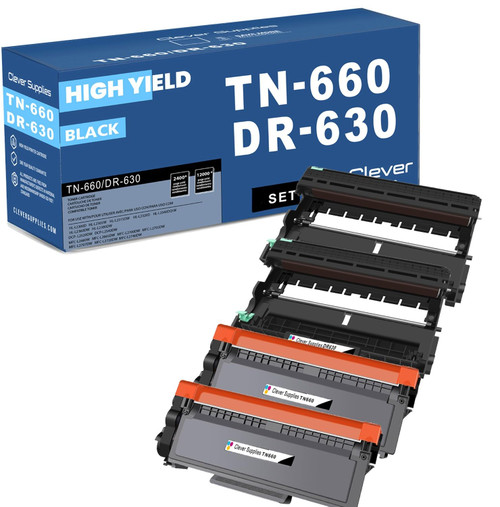
The TN630-titled sets sit below, presented by what is in the box and what it costs — nothing more. Their own listings carry a toner yield figure that belongs to the other code, and this guide does not repeat figures it cannot stand behind. One honest oddity in this row: the three-toner set is priced exactly like the two-toner set, at $43.76, so inside this line the bigger box is simply the better buy.

Two parts, two clocks
The cartridge and the drum age independently, and their messages mean different things. "Replace Toner" is the cartridge asking. "Replace Drum" is the DR630's own counter reaching its rating, and no fresh cartridge will clear it. Faint or streaked pages that survive a cartridge change are the drum asking early — in the print itself, rather than on the display.
Chip claims, addressed directly: nothing sold in this family is documented with a newly fitted chip. The subject barely surfaces in these listings — most are silent on it, and where the word does appear it sits inside one recycled parts-list sentence, a sentence loose enough to also turn up on drum units, which have no toner chip for it to describe. Brother's published firmware position, the reset procedure for the drum counter, and what the "Cannot Detect" and "No Toner" messages actually mean are all covered on our Brother Monochrome Toner & Drum Compatibility page.
Before you order: the TN660 family checklist
Frequently asked questions
The TN660, unless the TN630 name itself is the requirement. Both cartridges fit all sixteen printers in this family, both are priced identically here at every pack size, and Brother rates the TN660 at about 2,600 pages against the TN630's roughly 1,200 — about 0.57¢ a page against 1.24¢ in the 2-packs. The TN630 is the like-for-like cartridge, the one named in the manual, and that is its honest case.
Because the single is shared. Our store sells one joint TN630/TN660 single at $22.95, built to the TN660's 2,600-page specification and titled for both codes, since both codes' printers use the same cartridge body. The same offer is also listed once per printer model — sixteen listings, same cartridge, same price — for owners who search by model name instead of cartridge code.
No. The TN660J is a jumbo-fill compatible cartridge; Brother does not make it and publishes no rating for it. Its listings claim about 4,000 pages, a figure no Brother source stands behind, so this guide prices the jumbos in their own section and never mixes the claim into the TN660's rated figures.
Brother rates it at about 12,000 pages — roughly ten TN630 cartridges, or between four and five TN660s. Brother publishes no extended rating for longer print jobs on this drum, so plan on the 12,000. The printer tracks drum life on its own counter and shows a “Replace Drum” message; fading or streaking that survives a fresh cartridge is the earlier, visible sign.
Two generations of listings. The older generation carded in this guide prices the TN660 one-drum sets at $33.04, $34.54 and $43.76; a newer set of listings prices the same mixes at $34.54, $41.41 and $48.28 — and each of those also exists twice under the same title. The savings figures in this guide are computed only from the carded listings.
No fitted-chip claim can be made for this family, and this guide does not make one. Chip wording shows up in only a minority of these listings, always as the same recycled parts-list sentence — it is even printed on drum units, which have no toner chip. As for blocking: Brother's own published position says its firmware updates do not block third-party toner cartridges. The full wording, the drum-reset steps and the “Cannot Detect” and “No Toner” messages are set out on our Brother Monochrome Toner & Drum Compatibility page.
They carry our 1-year warranty, and returns run a full year as well — if a cartridge or a drum is not right, it comes back to us. We ship from four warehouses (Illinois, Pennsylvania, Georgia and California), and our support team answers Monday through Friday, 9 AM to 5 PM Central.