




Seven compact machines — three LaserJet Pro M203 printers and four M227 multifunctions — run this platform, and it feeds them in two parts: a toner cartridge that empties every couple of thousand pages, and an imaging drum beneath it that lasts far longer. HP sells the toner in two sizes, the standard 30A (CF230A, ~1,600 pages) and the high-yield 30X (CF230X, ~3,500), and the drum as the 32A (CF232A, ~23,000). This store stocks all three as compatibles — eleven toner listings and six drum listings — and all seventeen are discounted as this page is written, so every figure below is worked out from the sale price charged at checkout, not the list price the product pages use. One number deserves attention before any pack is chosen: on singles, the high-yield cartridge costs just $1.13 more than the standard one while carrying more than twice its pages.
If your printer is one of the seven M203 or M227 models, everything it consumes is on this page: two toner tiers in eleven pack sizes between them, and the separate 32A drum in six. No genuine HP listing sits alongside the compatibles here. The 30X 2-pack at $35.78 leads the page — two high-yield cartridges at 0.51¢ a page — because this family’s arithmetic rewards the tier step more than the pack step: a lone 30X costs $25.93 against the standard single’s $24.80, a difference of $1.13 for 1,900 extra rated pages. Below: the eleven toner offers in one table, the drum explained and priced on its own ~23,000-page cycle, the short-lived starter cartridge a new machine arrives with, the seven machines named, and a chip section that quotes the listings’ single parts sentence for exactly what it says — no more.
Start with the tier, then pick the pack
Eleven toner listings sort into two questions. The first is which cartridge: standard or high-yield. The second is how many of it to hold. On most shelves the pack question matters more; here the tier question does, because the step from 1,600 rated pages to 3,500 is priced at $1.13 when cartridges are bought one at a time. The pair of high-yield cartridges below answers both questions at once for most owners, which is why it fronts the shelf; the deepest boxes follow for offices that buy by the quarter.
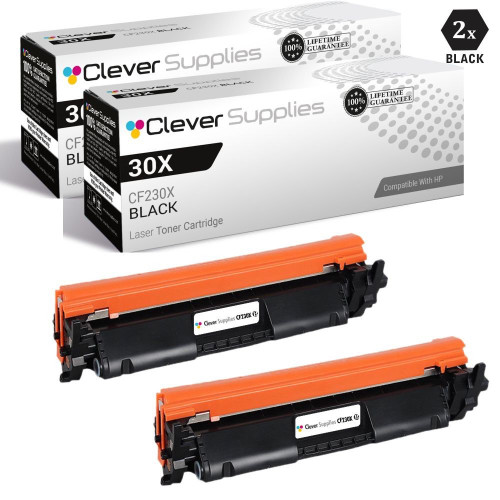
Measured against HP’s own counter, the gap opens widest on this tier: the genuine 30X sells for $139.99, so two genuine cartridges come to $279.98 — $244.20 more than this pair, at the same 3,500-page rating.
Shop the 30X 2-Pack →ALSO ON THE SHELF — BOTH LADDERS IN FULL
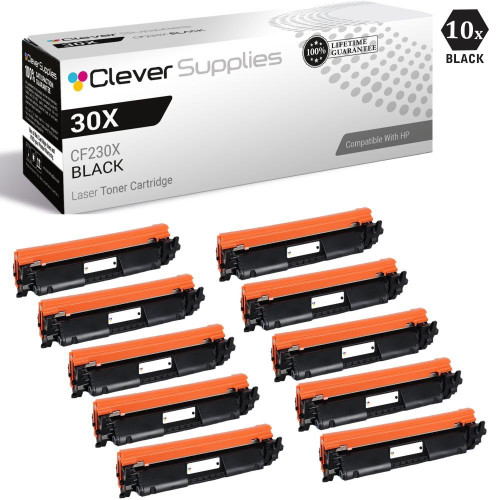
The cheapest toner page on either ladder. Ten cartridges at $11.46 apiece carry a heavy-use office through some 35,000 rated pages between orders.
Shop the 30X 10-Pack →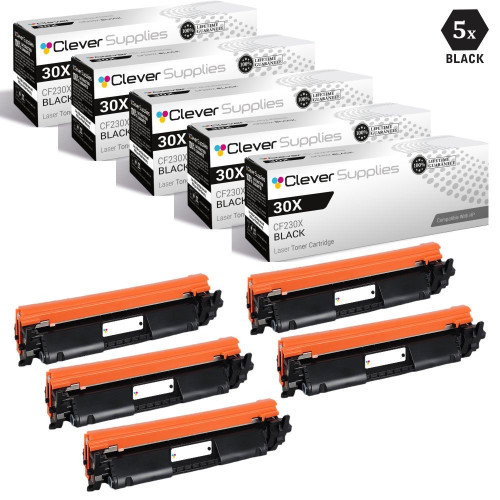
Five high-yield cartridges at $13.07 each — the deep box for a shared workgroup printer that empties a cartridge every few weeks.
Shop the 30X 5-Pack →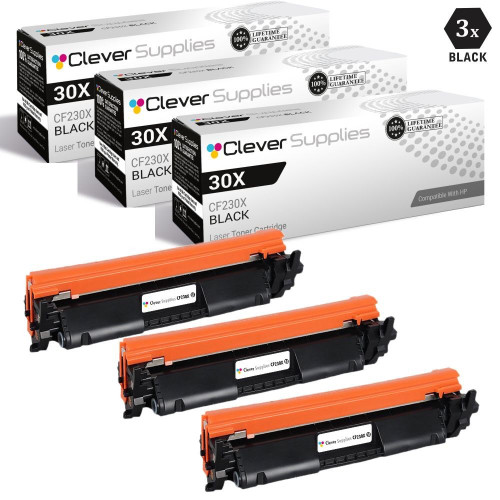
Three cartridges at $15.21 apiece: one in the machine, one in the drawer, and one behind it.
Shop the 30X 3-Pack →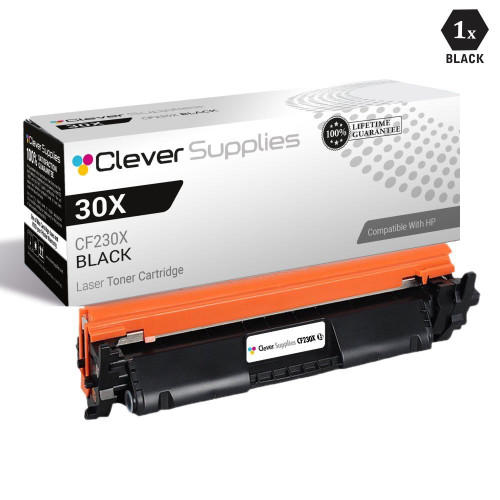
The shelf’s best-value single cartridge: $1.13 more than the standard single buys 3,500 rated pages instead of 1,600. HP charges $139.99 for the genuine 30X.
Shop the 30X Single →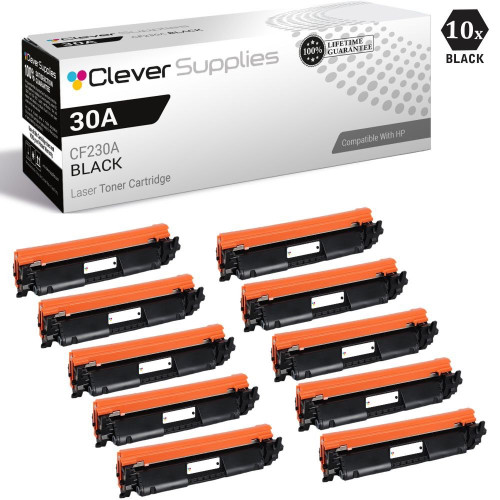
The standard tier’s deepest box — ten cartridges at $10.33 apiece and 0.65¢ a page, for owners who prefer the smaller cartridge in bulk.
Shop the 30A 10-Pack →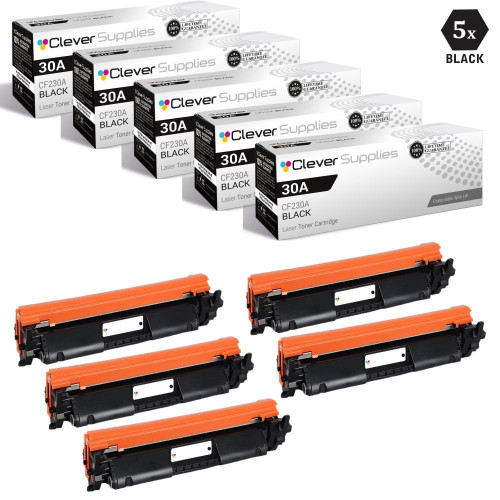
Five standard cartridges at $11.93 each, the midpoint of the standard ladder’s page rates at 0.75¢.
Shop the 30A 5-Pack →
Four cartridges at $12.74 apiece — the standard ladder’s only 4-pack, a size the high-yield ladder does not offer.
Shop the 30A 4-Pack →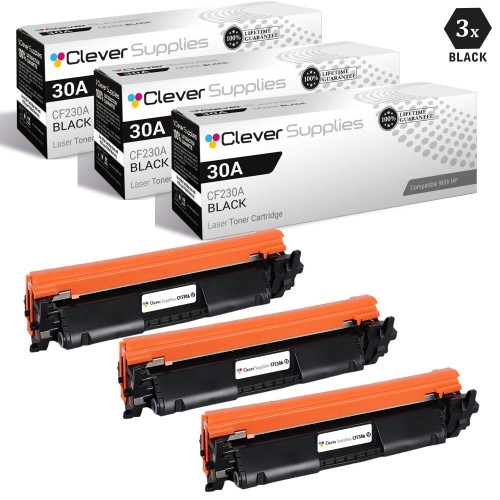
Three standard cartridges at $14.08 each — a working unit, a spare, and cover behind the spare.
Shop the 30A 3-Pack →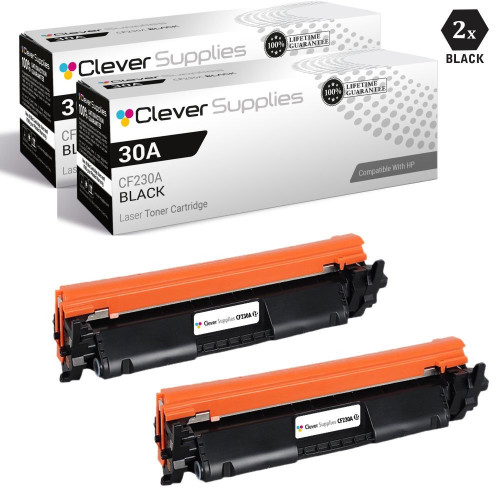
The standard pair at $16.76 a cartridge: the smallest step up from buying one at a time.
Shop the 30A 2-Pack →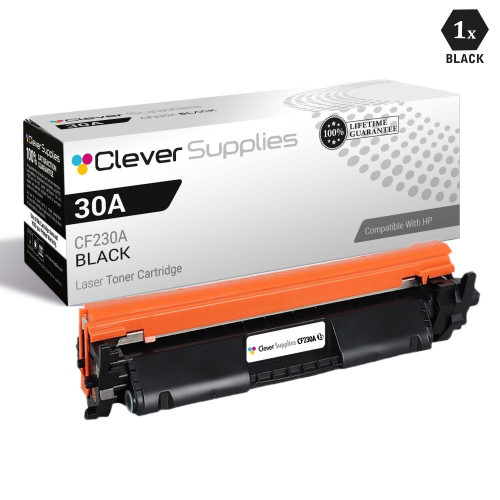
The standard cartridge bought singly — the restock for owners who order only when the machine stops. HP’s genuine equivalent is $90.99, rated at the same 1,600 pages.
Shop the 30A Single →Read the two ladders as one slope. The standard tier descends from 1.55¢ a page to 0.65¢ as its boxes grow; the high-yield tier starts at 0.74¢ — already below every standard-yield offer except the deepest carton, the 10-pack — and ends at 0.33¢. Pack size still pays, steadily, inside each tier. But the single biggest saving on this page is not a box at all: it is the $1.13 step from one cartridge to the other.
Where do these numbers come from? Each one starts from a sale price. While the markdown lasts, every listing sits roughly thirteen percent below its list price, and the product pages go on dividing by those higher list figures — which is why their per-page readings come out above the ones printed here. Everything below is divided out of what checkout charges today.
Eleven toner offers at sale prices — the table
The ratings in the table are HP’s own for the two cartridges, stated on HP’s printed basis for the family: approximate average yields under ISO/IEC 19752, with actual output shifting according to how dense each printed page is. A pack’s page total is its cartridges’ ratings added together, and the per-page column divides each sale price by the pages it buys — pack rows are marked blended because the rate averages every unit in the box.
| Offer | Fits | Sale price | Rated pages per cartridge | Cost per page | Saving against singles |
|---|---|---|---|---|---|
| 30X 2-Pack — the flagship | All 7 models | $35.78 | Up to ~3,500 pages each | 0.51¢ blended | SAVE $16.08 |
| 30X 10-Pack | All 7 models | $114.57 | Up to ~3,500 pages each | 0.33¢ blended | SAVE $144.73 |
| 30X 5-Pack | All 7 models | $65.33 | Up to ~3,500 pages each | 0.37¢ blended | SAVE $64.32 |
| 30X 3-Pack | All 7 models | $45.63 | Up to ~3,500 pages each | 0.43¢ blended | SAVE $32.16 |
| 30X Single | All 7 models | $25.93 | Up to ~3,500 pages | 0.74¢ | Bought one at a time |
| 30A 10-Pack | All 7 models | $103.25 | Up to ~1,600 pages each | 0.65¢ blended | SAVE $144.75 |
| 30A 5-Pack | All 7 models | $59.66 | Up to ~1,600 pages each | 0.75¢ blended | SAVE $64.34 |
| 30A 4-Pack | All 7 models | $50.95 | Up to ~1,600 pages each | 0.80¢ blended | SAVE $48.25 |
| 30A 3-Pack | All 7 models | $42.23 | Up to ~1,600 pages each | 0.88¢ blended | SAVE $32.17 |
| 30A 2-Pack | All 7 models | $33.51 | Up to ~1,600 pages each | 1.05¢ blended | SAVE $16.09 |
| 30A Single | All 7 models | $24.80 | Up to ~1,600 pages | 1.55¢ | Bought one at a time |
Two features stand out. First, the crossover: a single high-yield cartridge at 0.74¢ undercuts every standard-yield offer except the deepest carton, the 10-pack, without any bulk commitment at all. Second, the depth of the bulk discount inside each tier — ten standard cartridges bought singly would cost $248.00 across ten orders against $103.25 in one box, and ten high-yield singles would cost $259.30 against $114.57 boxed. The drum is deliberately absent from this table: it is a different part on a different cycle, and it is priced in its own section below.
The 32A drum runs on its own clock
Unlike the all-in-one cartridges in HP’s smaller families, this platform keeps toner and imaging apart. The toner cartridge drops into a separate drum unit — the 32A (CF232A) — whose photosensitive surface is what actually transfers the image to the page. Toner is the fast-moving part; the drum is the slow one. HP rates the drum at about 23,000 pages, which works out to roughly fourteen standard cartridges, or six to seven high-yield ones, passing through a single drum before it is spent.
A drum is not swapped on a schedule so much as on evidence: output that stays faded, streaked or spotted after a fresh toner cartridge has gone in is the classic sign that the drum surface, not the toner supply, is the tired part. The machine also tracks drum life and will prompt when the unit nears its end. When that day comes the replacement is one of the six listings below — the same part in six box sizes.
One listing needs a word of naming care. The drum 4-pack’s title in this store calls it a “Toner Cartridge 4 Black” — but its own description describes a 4-pack of HP 32A imaging drums, and a drum is what arrives. It is carded below as the drum it is; nothing on this page treats it as toner.
THE DRUM SHELF — ONE PART, SIX BOX SIZES
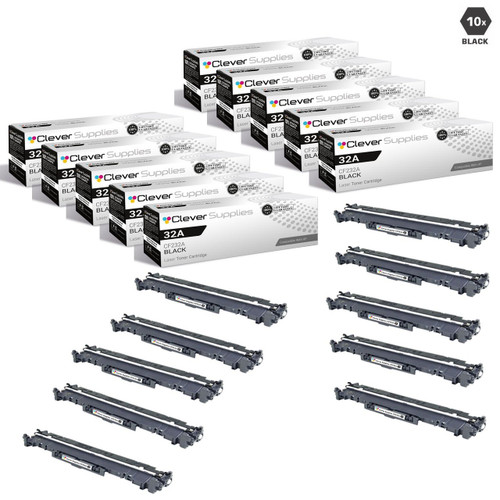
Fleet stock: ten units at $13.63 apiece, roughly 230,000 pages of drum life in one carton.
Shop the 32A Drum 10-Pack →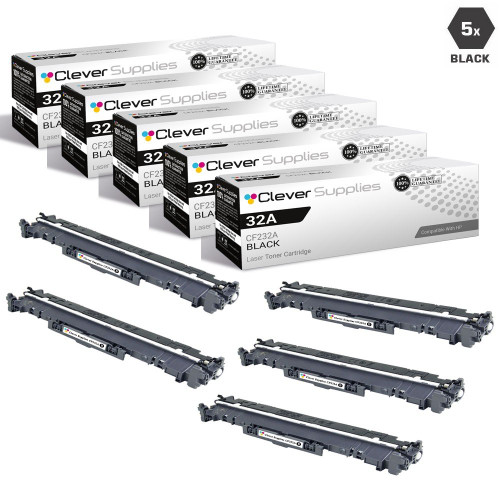
Five units at $15.24 each, for offices running several of these machines on the same drum.
Shop the 32A Drum 5-Pack →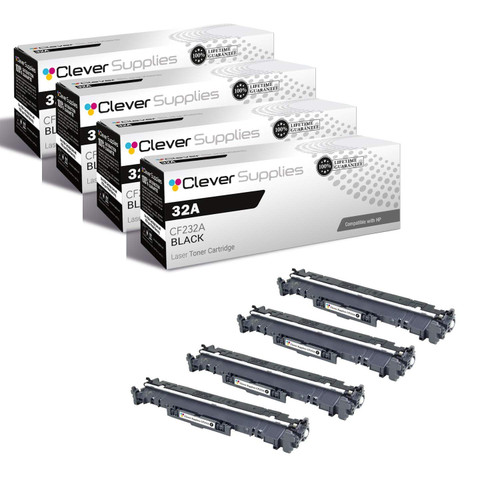
Four imaging drums at $16.05 apiece — sold under a listing title that calls it a toner cartridge; the product is the drum.
Shop the 32A Drum 4-Pack →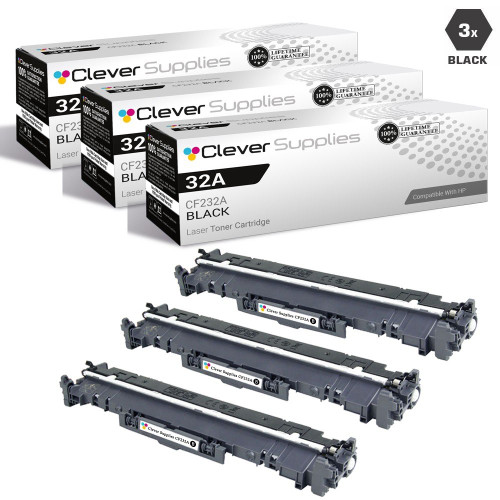
Three drum units at $17.38 each — cover for a small fleet, or a long single-machine horizon.
Shop the 32A Drum 3-Pack →
Two units at $20.07 apiece: the working drum’s replacement, bought ahead of the warning.
Shop the 32A Drum 2-Pack →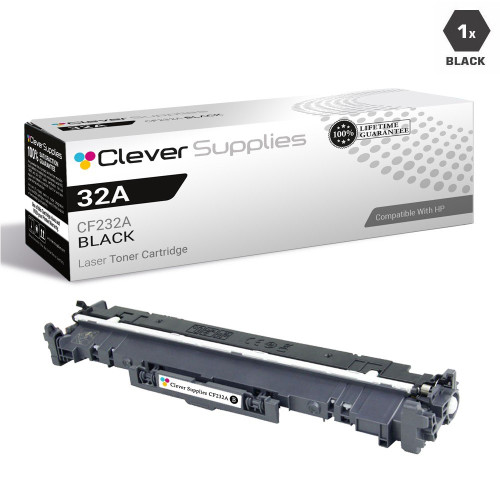
One drum unit — the replacement most owners buy, when the current drum’s output fades. HP asks $122.99 for the genuine unit.
Shop the 32A Drum Single →Priced per page of drum life, the ladder runs from 0.12¢ on the single down to 0.06¢ on the 10-pack — small numbers, because a drum’s cost is spread across so many pages. For most owners the single is the whole story: drums are replaced one at a time, long intervals apart, and the packs serve offices that keep several of these machines running.
The starter cartridge runs out early — by design
A new M203 or M227 arrives with its first toner already fitted, and that cartridge is not a full one. HP’s own box contents for the platform list a black starter cartridge of about 1,000 pages — five-eighths of the standard cartridge’s 1,600-page rating — alongside the imaging drum, which by contrast is the full ~23,000-page unit. Nothing is wrong with the machine when the first low-toner warning comes sooner than the cartridge ratings led you to expect; the first cartridge was simply filled to a lower line.
The practical effect is that the first buying decision on this platform arrives at roughly 1,000 pages, early in the machine’s life and often before its owner has settled on a cartridge. That is a reasonable moment to make the tier decision this page keeps returning to — because the second cartridge, whichever tier it comes from, is a full one, and the high-yield step costs $1.13 at single quantities.
Seven machines share the toner and the drum
HP states this family’s fit at series level — its datasheet for the cartridge says the HP 30 toner cartridges work with the LaserJet Pro M203 and M227 — and HP’s platform documentation resolves those two series into seven models. Every one of them takes both toner tiers and the same 32A drum; there are no fit exceptions inside the roster to fence off.
The printers: LaserJet Pro M203d, LaserJet Pro M203dn and LaserJet Pro M203dw.
The multifunctions: LaserJet Pro MFP M227d, LaserJet Pro MFP M227sdn, LaserJet Pro MFP M227fdn and LaserJet Pro MFP M227fdw. One sourcing note: HP carries the M227d in its platform documentation as a regional variant rather than a model sold through its US store — it is listed here because HP documents it as part of this platform and this store keeps a page for it.
Arrive by either route — the badge on the machine, or the code on the part coming out of it (CF230A or CF230X for toner, CF232A for the drum) — and you land on the same seventeen listings.
Chips: a single parts sentence, reported as written
Search the shelf for the word chip and it surfaces once per listing, in the older listings only, and always inside the same sentence about components: the units are built with all new parts, including OPC drums, wiper blades, “a smart chip” and other internal parts. The newer listings — the 30A 4-pack and the drum 4-pack among them — do not use the word at all. A parts inventory of that kind states what a cartridge is built from; it says nothing about recognition, and nothing anywhere on the shelf discusses firmware.
Nor does HP fill the gap from its side: on the pages checked for this platform, HP prints no dynamic-security statement for the M203 and M227 machines, so this guide claims nothing about chip-based blocking in either direction — neither that these printers police their cartridges, nor that they never will. What the listings stand behind instead is a year’s warranty and a year of free returns, which is the remedy available if a cartridge is refused or fails early. Support is staffed on weekdays, 9 AM to 5 PM Central, while a return is arranged. The family’s chip position, firmware by firmware, is followed on the store’s HP monochrome toner chip compatibility page, alongside the rest of the monochrome range.
What stands behind the seventeen listings
Five checks before the first refill
Questions this family raises
Far less often than the toner. HP rates the drum at about 23,000 pages — roughly fourteen standard cartridges, or six to seven high-yield ones, pass through one drum. There is no fixed swap interval to plan around: the machine tracks drum life and prompts as the unit nears its end, and output that stays faded or streaked after a fresh toner cartridge goes in is the usual sign the drum surface is spent. The replacement is the 32A drum single above, at $28.10.
Not on this shelf. The high-yield ladder above runs single, 2-pack, 3-pack, 5-pack and 10-pack — four is the size it skips, though the standard ladder does include a 4-pack. A buyer who wants exactly four high-yield cartridges can reach the number two ways, and both total the same $71.56: two 2-packs, or a 3-pack with a single added.
Because that is how the shelf is priced: $25.93 against $24.80, a difference of $1.13, for a cartridge rated at 3,500 pages against 1,600. Unless a budget is capped to the dollar, the high-yield single is the sensible default of the two — its 0.74¢ page rate beats every standard-yield offer except the 10-pack, before any pack discount enters the picture.
The gap is a starting-price gap. The listings divide by list — the standard single’s text works from its $28.52 list price and lands at about 1.8 cents a page — while this guide divides by the sale price checkout charges, $24.80 for that cartridge, and lands at 1.55¢. When the markdown ends, the product pages’ figures are the ones that hold again — the price printed on the product page is always the governing one.
It goes back. Every offer on both shelves is covered by a 1-year warranty with returns free for the same twelve months, and pack buyers lose nothing by waiting: cover attaches to each unit separately, so the last cartridge out of a box is protected from the day it is fitted. Help is available on Central Time, 9 to 5, Monday to Friday, while the return is arranged. Keep the box until the part has proven itself — a return travels more safely inside it.