




One black cartridge family feeds HP’s departmental LaserJet Enterprise 600 printers and the M4555 multifunctions, wound at two genuine yields — the 90A (CE390A) at about 10,000 pages and the 90X (CE390X) at about 24,000 — and this store sells those two cartridges in seventeen configurations. The family’s first fact is a fence, and it is a physical one: the LaserJet Enterprise 600 M601 takes the 90A only. HP’s own supplies data sheet prints the M601 with the words “only CE390A” beside it, because the high-yield cartridge does not fit that machine. An M601 owner who orders the 90X on a product page’s say-so receives a cartridge that will not install. This guide prices all seventeen boxes at the sale prices checkout actually charges, draws the fence where HP draws it, and deals plainly with the two extra names the shelf carries — a “Jumbo” line that is the standard cartridge under a store label, and a “90XX” label that HP never issued at all.
Start with the badge on the machine. If it reads LaserJet Enterprise 600 M601dn — or M601n — your cartridge is the 90A and nothing else on this page fits; the standard line below is your whole shelf, led by its 2-pack at $68.62. If the badge belongs to the M602 or M603 lines, or to an M4555 MFP, both tiers fit and the page leads with the 90X 2-pack at $85.90, which halves the standard tier’s cost per page. Every listing in the family is a Clever Supplies compatible; no genuine HP 90 cartridge is stocked here, so HP’s own prices appear further down as a benchmark, labeled as HP’s. Two shelf names get honest labels rather than cards of their own kind: the Jumbo line, carded in its own block, is the same CE390A cartridge at the same 10,000-page rating, and the “90XX Maximum Yield” listings are the 90X under an invented name, noted once in prose and carded never.
The shelf entire: two cartridges, seventeen boxes
Nothing stocked is held back below. The family’s 119 listings collapse, once duplicates are set aside, into seventeen configurations: six pack sizes of the standard cartridge, six of the high-yield, and five wearing the store’s Jumbo label, which has its own block further down. The duplicates are extensive — the standard single alone is re-listed under some forty printer names at the same price — and no duplicate is carded or linked a second time; each card below is one configuration, once, at its verified sale price. A SAVE badge on a pack is one subtraction, struck against the same line’s singles at sale prices. The flagship leads, then the rest of the high-yield line, then the standard line that M601 owners will live on.
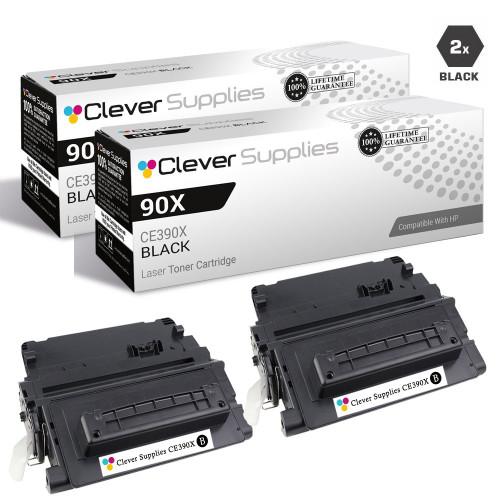
Set it against HP’s counter: the genuine CE390XD 2-pack in HP’s US store is priced at $797.99. This pair costs $85.90 for the same rated work — a difference of $712.09 on a single order. What the pair buys in practice is rhythm rather than drama: a cartridge in the machine and a sealed spare in the stockroom, on printers whose monthly counts run into the thousands and whose empty light never arrives at a convenient hour.
Shop the 90X 2-Pack →THE REST OF THE HIGH-YIELD LINE — EACH FITS THE SAME TEN MODELS
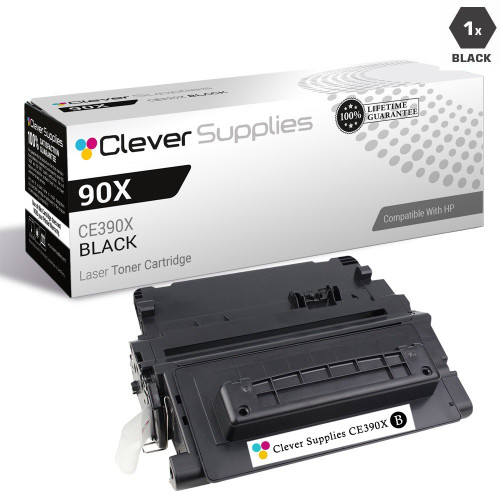
The high-yield unit bought alone — $8.64 more than the standard single, for about 14,000 extra rated pages. HP’s genuine CE390X is $442.99, so the compatible single runs $392.00 under its counterpart.
Shop the 90X Single →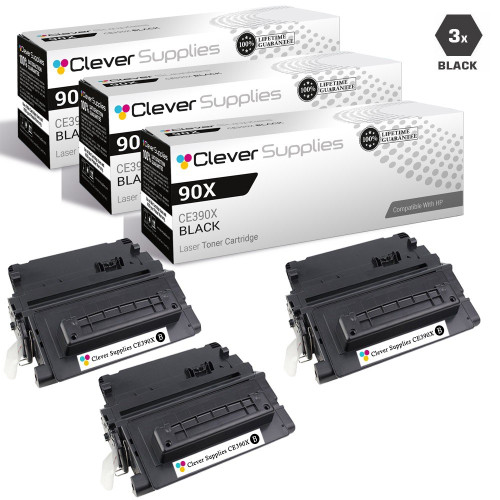
Cartridges at $40.27 apiece. The middle step of the line: a working unit, a spare, and one behind it, for a machine whose quarter is spoken for before it starts.
Shop the 90X 3-Pack →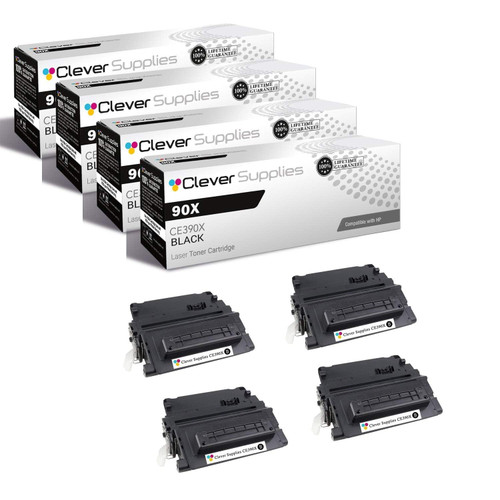
Cartridges at $38.93 apiece, and the rate steps down to 0.16¢. A box sized for a shared M603 or a hard-worked M4555 that eats a cartridge a month.
Shop the 90X 4-Pack →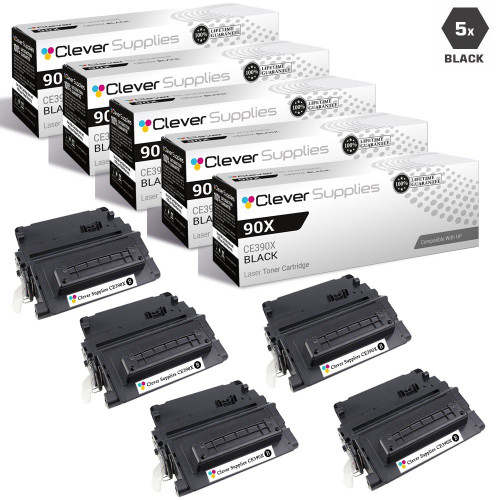
At ten thousand pages a month, this box is a year of printing in one order — cartridges at $38.13 apiece, and no reorder conversation until the year turns.
Shop the 90X 5-Pack →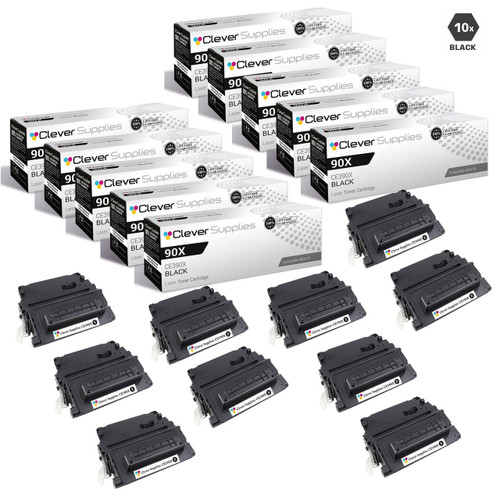
The shelf’s cheapest page, at $36.52 a cartridge. The comparison worth pausing on: the whole box costs $77.78 less than HP charges for one genuine 90X.
Shop the 90X 10-Pack →THE STANDARD LINE — THE ONLY CARTRIDGES AN M601 CAN TAKE, AND A FIT FOR ALL TWELVE MODELS
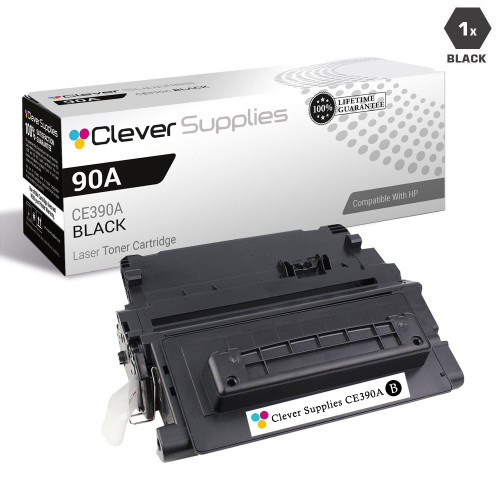
The entry point of the whole family, and the M601 owner’s smallest order. HP prices the genuine CE390A at $266.99 — this single runs $224.64 under it.
Shop the 90A Single →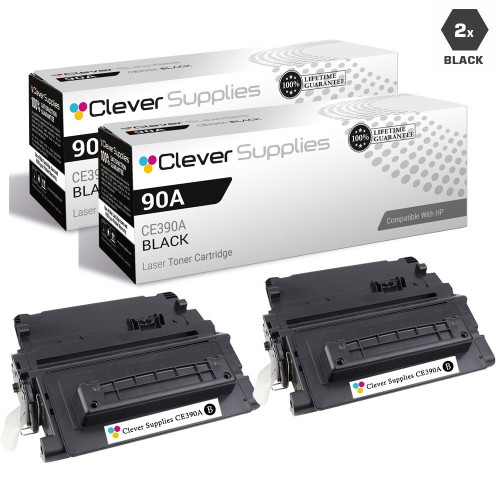
The M601 owner’s working shape: one cartridge printing, one in reserve, at $34.31 apiece. For the other ten models it is the standard tier’s sensible pair.
Shop the 90A 2-Pack →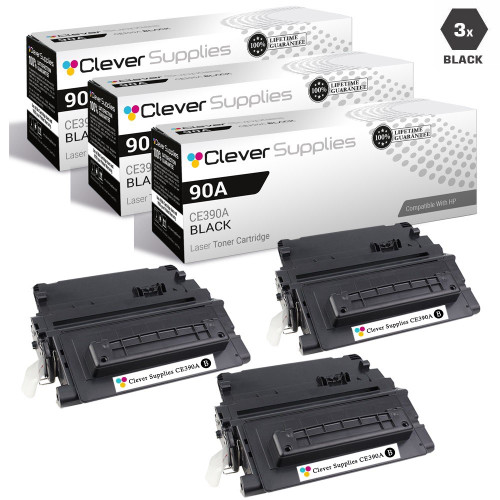
Cartridges at $31.63 apiece. A quarter’s worth of standard cartridges for a department M601 that prints every day and cannot take the high-yield line.
Shop the 90A 3-Pack →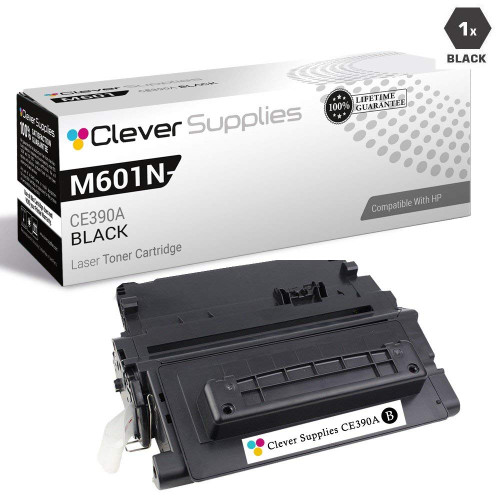
Cartridges at $30.29 apiece. This configuration survives in a single older listing — the offer is live and priced as shown, and its page wears the family’s earlier template.
Shop the 90A 4-Pack →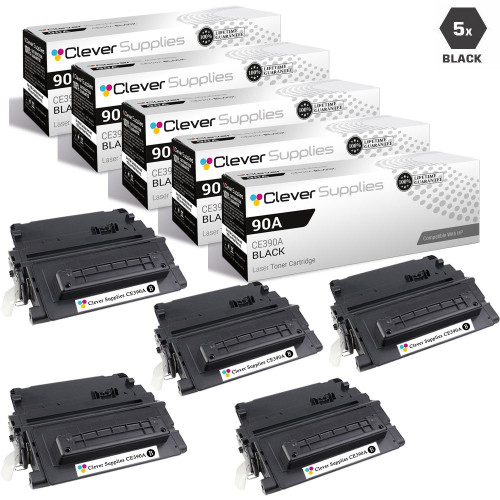
Cartridges at $29.49 apiece. Half a hundred thousand standard pages — the deep standard box for a fleet of M601s sharing one stockroom shelf.
Shop the 90A 5-Pack →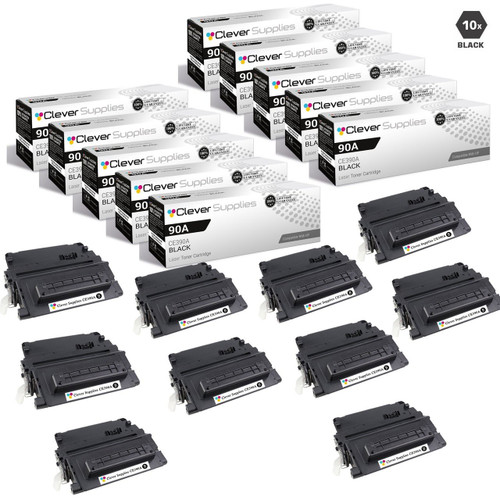
The standard line’s floor, at $27.88 a cartridge. Ten compatibles cost $11.79 more than HP charges for a single genuine 90A — the family’s starkest arithmetic.
Shop the 90A 10-Pack →One name on the shelf is deliberately missing from the cards. Two listings wear a “90XX Maximum Yield” label and claim yields of up to 40,000 pages. HP sells no CE390XX, and the listings’ own OEM number field reads CE390X — they are the high-yield single and 3-pack under an invented name, at prices identical to the cards above, and the cartridge inside either box is the same CE390X rated at 24,000 pages. They are named here once, plainly, and given neither a card nor a row in the table; a buyer who lands on one should read it as the 90X and price it against the 90X cards.
The Jumbo line: the same 90A under a store label
Five further configurations wear the word Jumbo, and this block exists so that word is never mistaken for a tier. Jumbo is this store’s own label on the same CE390A cartridge: the Jumbo listings’ yield field reads 10,000 pages, identical to the regular standard field, and their own description prose concedes the point in so many words — “Jumbo” is part of the listing’s name, and the honest figure to plan around is 10,000 pages per cartridge. HP sells no Jumbo tier. What the label costs depends on the box: the Jumbo single is priced at a premium of about 26 percent over the regular single — $53.49 against $42.35 — and the Jumbo 3-pack is dearer than its regular twin as well, while the Jumbo 2-pack, 5-pack and 10-pack are priced to the cent with the regular packs above. The Jumbo single, for its part, exists only under printer names; the card below uses the listing named for the M601dn, at the price all thirteen of those listings share. The cards sit in their own labeled block, each with its own listing and its own checkout link, and no SAVE badge is printed on them — the comparison that matters is against the regular line, and the copy makes it.
THE STORE’S JUMBO LABEL — SAME CE390A, SAME 10,000-PAGE RATING, SAME TWELVE MODELS

The dearest standard page on the shelf. The regular single above carries the same cartridge at the same rating for $11.14 less — on the evidence of the listings’ own figures, this is the one Jumbo box with nothing to recommend it.
Shop the Jumbo Single →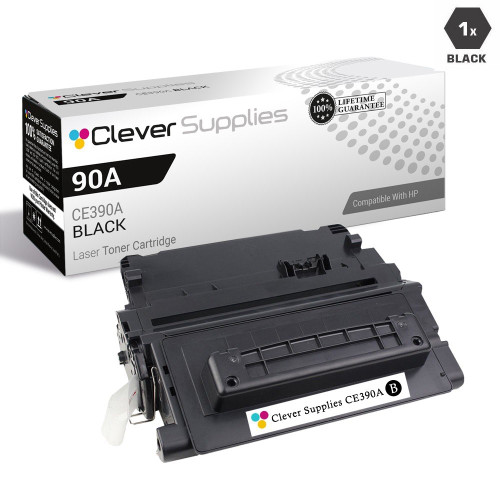
Priced exactly with the regular 90A 2-pack — $68.62 either way, $34.31 a cartridge either way. A buyer indifferent between the two listings loses nothing here; the label adds nothing, and at this size it charges nothing.
Shop the Jumbo 2-Pack →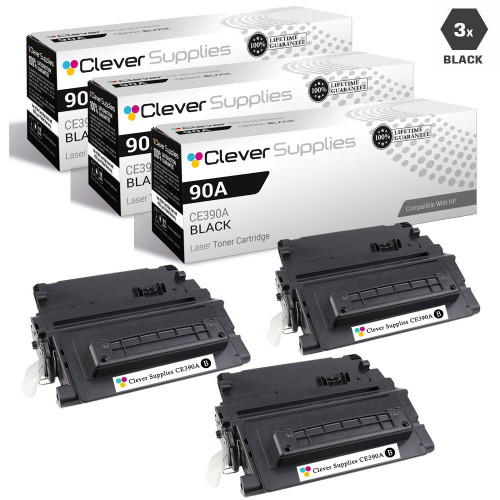
The one Jumbo pack priced above its twin: $128.33 against the regular 3-pack’s $94.89, a premium of $33.44 for the same three cartridges at the same rating. The regular card above is the buy at this size.
Shop the Jumbo 3-Pack →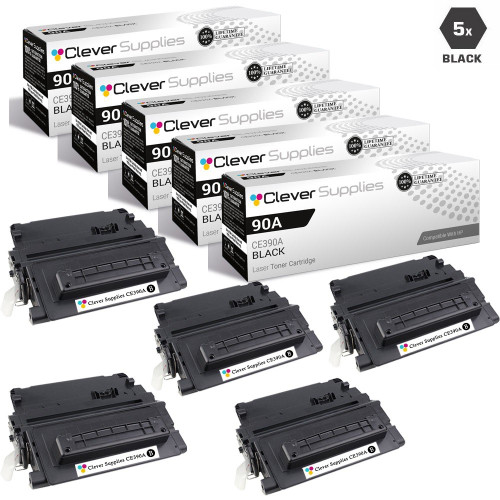
Again priced to the cent with the regular 5-pack — $147.43, $29.49 a cartridge, 0.29¢ a page under either name. At this size the two listings are interchangeable offers.
Shop the Jumbo 5-Pack →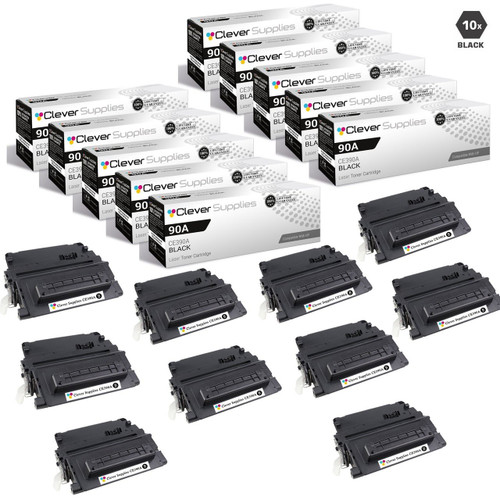
The deepest Jumbo box, and once more the regular line’s exact price — $278.78 for about 100,000 rated pages. Nothing separates the two 10-packs but the word on the listing.
Shop the Jumbo 10-Pack →The Jumbo verdict, in one line: where the price matches the regular line, the choice between listings is a coin toss; where it does not — the single and the 3-pack — the regular cards are the same cartridge for less money, and this guide’s table reads the Jumbo line at the regular line’s rating throughout.
What each box costs per page
A row’s rate is its sale price spread over the rated pages of the cartridges in the box. The twelve rows of the two genuine lines are ordered by that rate, cheapest first; the Jumbo configurations are not re-rowed, because at the regular line’s rating and — in three sizes — its exact prices, they would duplicate the standard rows. The fit column is where the family’s fence lives: it changes with the cartridge, never with the size of the box.
| Offer | Sale price | Rated pages per box | Per-page cost | Fits |
|---|---|---|---|---|
| 90X 10-Pack | $365.21 | 10 cartridges · ~240,000 pages | 0.15¢ | 10 models — not the M601n or M601dn |
| 90X 5-Pack | $190.64 | 5 cartridges · ~120,000 pages | 0.16¢ | 10 models — not the M601n or M601dn |
| 90X 4-Pack | $155.73 | 4 cartridges · ~96,000 pages | 0.16¢ | 10 models — not the M601n or M601dn |
| 90X 3-Pack | $120.82 | 3 cartridges · ~72,000 pages | 0.17¢ | 10 models — not the M601n or M601dn |
| 90X 2-Pack — the flagship | $85.90 | 2 cartridges · ~48,000 pages | 0.18¢ | 10 models — not the M601n or M601dn |
| 90X Single | $50.99 | 1 cartridge · ~24,000 pages | 0.21¢ | 10 models — not the M601n or M601dn |
| 90A 10-Pack | $278.78 | 10 cartridges · ~100,000 pages | 0.28¢ | All 12 models |
| 90A 5-Pack | $147.43 | 5 cartridges · ~50,000 pages | 0.29¢ | All 12 models |
| 90A 4-Pack | $121.16 | 4 cartridges · ~40,000 pages | 0.30¢ | All 12 models |
| 90A 3-Pack | $94.89 | 3 cartridges · ~30,000 pages | 0.32¢ | All 12 models |
| 90A 2-Pack | $68.62 | 2 cartridges · ~20,000 pages | 0.34¢ | All 12 models |
| 90A Single | $42.35 | 1 cartridge · ~10,000 pages | 0.42¢ | All 12 models |
Two slopes run through the table, and they are not the same size. Down either line, pack size shaves the rate gently — the high-yield line moves from 0.21¢ to 0.15¢ across its six shapes, the standard line from 0.42¢ to 0.28¢. Across the lines, the rate falls off a step instead: the dearest way to buy a 90X page, the single at 0.21¢, still undercuts the cheapest way to buy a 90A page, the 10-pack at 0.28¢. The two lines never meet, which is why the tier decision outweighs the pack decision wherever both tiers fit. For the M601 pair the table is shorter than it looks — only the six standard rows exist for those machines, and their owners should read no further up the page than the 0.28¢ row.
Fit: twelve models for the 90A, ten for the 90X
HP’s supplies data sheet for this family states its compatibility in one sentence, and the sentence carries the fence inside it: “HP LaserJet Enterprise M4555 MFP series, HP LaserJet Enterprise 600 M601 (only CE390A), M602, M603.” The standard cartridge therefore fits all twelve models on the roster. The LaserJet Enterprise 600 M601n and M601dn take it; so do the M602n, M602dn and M602x, the M603n, M603dn and M603xh, and the four multifunctions — the M4555 MFP, M4555f MFP, M4555fskm MFP and M4555h MFP. The high-yield cartridge fits the same roster minus the M601 pair — ten models. Every model name above links to its own category page in this store, and every one of the twelve categories is live; the store also keeps a family page under HP CE390A.
The store’s own surfaces do not all hold that line, and the departures matter because they point at the one machine that cannot use the cartridge. The high-yield single’s description prose is honest — its fit list omits the M601, as HP’s does — but the printer link block stored on the same listing links the M601n and M601dn category pages, claiming by link a fit the cartridge does not have. The two “90XX” listings are filed under all twelve categories, the M601 pair included. And the high-yield batch is filed under a category named for an “M603HX” — a model that does not exist — in place of the real M603xh category linked above, a swap the same listings’ prose repeats in print. A buyer who checks fit by category or by link block can be told yes where HP’s answer is no; a buyer who reads the data sheet’s sentence gets the fence exactly where this guide draws it.
One consequence is worth stating for stockrooms that run mixed fleets. A shelf of 90X cartridges serves every 600-series and M4555 machine in the building except the M601s, which need their own standard stock beside it; a shelf of 90A cartridges serves everything, at the standard tier’s page rate. Fleets with a single M601 among larger machines usually keep both lines for exactly this reason — the high-yield line for the ten, the standard line for the pair the fence leaves out.
Two ratings both sides agree on — and HP’s prices beside them
On yield, this family gives the guide nothing to arbitrate. The yield field on the standard listings reads 10,000 pages and on the high-yield listings 24,000; the descriptions repeat those figures and multiply them faithfully into pack totals; and HP declares the same two numbers for the CE390A and CE390X, each as an approximate average yield in accordance with ISO/IEC 19752. Store figure and manufacturer figure are one figure, so every rate in this guide is built on 10,000 and 24,000 without a split to disclose. The two numbers that do not survive are the ones attached to the shelf’s extra names: the Jumbo’s rating is the standard cartridge’s 10,000, as its own prose concedes, and the 40,000 pages claimed for the “90XX” listings is a figure HP has never issued for any cartridge in this family — the cartridge those listings actually sell is rated 24,000.
Against the compatible shelf stands HP’s genuine one, priced here from HP’s US store and labeled as such wherever it appears: the genuine CE390A at $266.99, which works out to 2.67¢ a page at its rating; the genuine CE390X at $442.99, or 1.85¢ a page; and HP’s genuine 2-pack, the CE390XD, at $797.99, or 1.66¢. No genuine cartridge of this family is sold in this store — every listing on the shelf is a compatible — so those prices are context, not alternatives on the same shelf. The gaps they frame are wide ones. The compatible standard single runs $224.64 under its genuine counterpart; the compatible high-yield single, $392.00 under; the flagship pair, $712.09 under HP’s genuine pair. Even the compatible shelf’s deepest box, ten high-yield cartridges at $365.21, costs less than a single genuine CE390X.
One basis caution applies across the whole family, and it explains any figure on a product page that disagrees with this one: the listings’ own About sections do their arithmetic from list prices, while every listing is currently selling below list and this guide reckons from the sale prices checkout charges. The standard 2-pack’s page, for instance, prices its sum at the $78.91 list figure; the $68.62 actually charged is what the 0.34¢ in the table above is divided from. If a promotion lapses, the product page’s price governs — the closing note records the basis in full.
All-in-one: no drum to budget, and a full cartridge in the box
There is no second imaging consumable on this platform. The cartridge is an all-in-one unit — the listings’ own boilerplate lists OPC drums, wiper blades and a smart chip among its all-new internal parts — so the imaging drum’s life sits inside the cartridge’s rating and price, and print quality resets with every change. HP’s supplies data sheet for the platform lists exactly three supply numbers — CE390A, CE390X and the CE390XD 2-pack — and no separate drum is sold for the M601, M602, M603 or M4555. What a service engineer would call the maintenance kit is a printer service part on its own long cycle, not a consumable a buyer times against toner, and it is not stocked here.
The cartridge a 600-series printer arrives with deserves a sentence of its own, because it is not a cut-down starter. HP’s own pages for the M603 models list the box’s contents with a black cartridge rated at about 10,000 pages — a full standard measure, the 90A’s own rating — so the replacement decision arrives after a complete standard run, with a real month or more of the department’s volume on the counter to judge the tier choice by. The high-yield cartridge is never the in-box unit: the data sheet’s footnote states it plainly, “The HP 90X LaserJet Black Toner Cartridge not included; please purchase separately.” For the M4555 multifunctions, no in-box figure was verified from an HP source in this guide’s research, so none is printed for them rather than borrowed from the 600 series.
Chips: the claim depends on which batch wrote the listing
Chip wording in this family splits by template. The current listings’ descriptions carry a boilerplate passage describing units manufactured entirely new, with a smart chip named among the OPC drums, wiper blades and other internal parts, from an ISO9001-certified factory. Two listings wear older templates that make no chip claim at all — the standard 4-pack, which survives in a single older listing, and the high-yield 4-pack’s batch. The split is reported as found; a buyer reading one of the older pages will find no chip sentence there, and this guide does not pretend otherwise.
The store’s standing position reaches these cartridges as it reaches the whole catalog, and it can be stated at its true size: the supplier builds its cartridges with the latest-generation chip; they install plug-and-play; nothing needs transferring from the cartridge coming out. And the limit this series always prints applies here as well — no promise is made about firmware that does not yet exist. Behind the claim stands the cover the listings themselves state, which the next section sets out.
What backs each cartridge
Choosing by the badge on the machine
Answers for the 600-series and M4555 owner
No. HP’s supplies data sheet for this family lists the M601 with the words “only CE390A” beside it: the M601n and M601dn take the standard cartridge, and the high-yield cartridge does not fit them. Some of the store’s surfaces suggest otherwise — the high-yield single’s printer link block links the M601 categories, and the “90XX” listings are filed under them — but the manufacturer’s record is the one that decides whether a cartridge installs. M601 owners buy from the standard line above, led by the 90A 2-pack.
Ten of the family’s twelve models: the M602n, M602dn and M602x; the M603n, M603dn and M603xh; and the M4555, M4555f, M4555fskm and M4555h multifunctions. HP’s own page for the genuine CE390X enumerates nine of them; the tenth, the base M4555 MFP, stands on the data sheet’s series-level statement, which covers the M4555 MFP series as a whole. The standard cartridge fits all ten of those and the M601 pair besides.
No. Jumbo is this store’s own label on the same CE390A cartridge the standard line sells. Its yield field reads 10,000 pages — identical to the regular standard field — and its own description prose says the honest figure to plan around is 10,000 pages per cartridge. HP sells no Jumbo tier for this family. What differs is price: the Jumbo single costs about 26 percent more than the regular single and the Jumbo 3-pack costs more than its regular twin, while the Jumbo 2-pack, 5-pack and 10-pack are priced exactly with the regular packs. The Jumbo cards sit in their own labeled block above so the comparison is never hidden.
It is not an HP cartridge at all. HP sells no CE390XX, and the two listings that wear the “90XX Maximum Yield” name carry CE390X in their own OEM number field, at prices and stock levels identical to the high-yield single and 3-pack — they are those two configurations under an invented name. The 40,000-page yield printed on them is not a figure HP has issued for any cartridge in this family; the cartridge inside the box is the CE390X, rated at about 24,000 pages. This guide gives the name one prose note and no card, and prices those listings’ contents against the 90X cards.
No. The cartridge is an all-in-one unit whose imaging drum is one of its internal parts, so drum life sits inside the cartridge’s rating and price, and no separate unit needs buying or timing against the toner. HP’s supplies data sheet for the platform lists exactly three supply numbers — CE390A, CE390X and the CE390XD 2-pack — all of them toner. A fuser maintenance kit exists as a printer service part on a long cycle; it is not an imaging consumable and it is not stocked here.
A 600-series printer arrives with a black cartridge rated at about 10,000 pages, on HP’s own listing of the box’s contents — a full standard measure rather than a shortened starter, so the first replacement decision comes after a complete standard run. The 90X is never the in-box cartridge; HP’s data sheet notes it is not included and is purchased separately. Judge the tier choice on the page counter that first run gives you: departments printing thousands of pages a month earn the high-yield line’s sub-quarter-cent page, while a lightly used machine is honestly served by the standard cartridge it started with.
Price and disclosure note: Every price in this guide is a sale price, verified live against the store’s catalog and against its listing’s storefront page on November 17, 2026, title-matched in both places. Each listing also carries a higher list price above its sale price; should a promotion lapse, the figure on the product page governs. SAVE badges are sale-basis badges throughout — a pack measured against buying its cartridges singly in the same line at sale prices. On the standard line, two singles total $84.70 behind the 2-pack’s $16.08 badge, three total $127.05 behind $32.16, four $169.40 behind $48.24, five $211.75 behind $64.32 and ten $423.50 behind $144.72. On the high-yield line, two singles total $101.98 behind $16.08, three $152.97 behind $32.15, four $203.96 behind $48.23, five $254.95 behind $64.31 and ten $509.90 behind $144.69. No SAVE badge is printed on the Jumbo cards; their comparisons are stated in their copy, against the regular line. Genuine prices are HP US store prices, checked the same day and labeled as HP’s wherever they appear — the CE390A at $266.99, the CE390X at $442.99 and the CE390XD 2-pack at $797.99; no genuine cartridge of this family is sold in this store. Yields required no choosing: the listings’ yield fields, their texts and HP’s declarations in accordance with ISO/IEC 19752 all land on about 10,000 pages for the CE390A and about 24,000 for the CE390X; a pack’s rated total is the sum of its cartridges’ ratings, and a pack’s per-page rate is its price divided by that total. Fit follows the compatibility statement in HP’s HP 90 supplies data sheet. Measured against that record, the store’s surfaces depart in five recorded respects. First, price basis: the listings’ About sections work their arithmetic from list prices family-wide — the standard 2-pack’s text prices its sum at the $78.91 list figure where checkout charges $68.62 — while this guide reckons from sale prices throughout. Second, high-yield fit surfaces: the 90X single’s stored printer link block links the M601n and M601dn categories although its own prose fit list correctly omits both models; the high-yield batch is filed under a visible category named for an “M603HX”, a model that does not exist, instead of the real M603xh category, and the same token is printed in the listings’ prose, which also repeats its M4555 tail twice. Third, the two “90XX” listings are filed under all twelve roster categories, the fenced M601 pair included. Fourth, the Jumbo shelf: the Jumbo yield field equals the regular standard field and the Jumbo prose states 10,000 pages as the honest planning figure, yet the Jumbo single is priced about 26 percent above the regular single and the Jumbo 3-pack above its regular twin, while the remaining Jumbo packs match the regular packs to the cent; one older duplicate of the Jumbo 3-pack additionally claims “18,000 Each” in its yield field, a figure no current listing supports and one this guide does not repeat. Fifth, the shared introduction on the thirteen printer-named Jumbo single listings mangles the cartridge’s part number, printing “CE3600” — an unrelated color family’s code — in place of CE390A.
Each unique configuration is carded once above — seventeen cards across the two genuine lines and the store’s Jumbo label. The family’s remaining listings are duplicates and are neither carded nor linked: some seventy further re-listings, including older-batch twins of several packs and printer-named re-listings of the singles — about forty of the standard single and thirteen of the high-yield single — at prices identical to their canonical configurations. The two “90XX” listings collapse into the high-yield single and 3-pack configurations and appear as a prose note only. Two further listings were left uncarded entirely. One presents itself in name and description as a single cartridge priced at $138.94 for a single unit, while its SKU names a 3-pack and its price and stock are the high-yield 3-pack’s exactly, so a buyer cannot tell from the page whether one cartridge or three would arrive. The other is named and filed for the LaserJet Enterprise 700 MFP M775 — a color machine whose black cartridge belongs to the 651A family — while its own OEM number field reads CE390X; the M775 cannot use this cartridge, and the listing is recorded here without a card or a link. On chips, the record splits by template: the current listings’ boilerplate names a smart chip among the cartridge’s all-new parts, while the standard 4-pack’s older listing and the high-yield 4-pack’s batch carry no chip claim; the store’s standing supplier position is stated in the chip section, with the standing limit that no promise is made about future firmware. The standard 4-pack survives in a single older listing whose page wears the family’s earlier template; its price and rating were verified like the rest. The 600-series ships-with figure comes from HP’s own product pages; no in-box figure for the M4555 models could be verified from an HP source, so none is printed. Each offer carries the cover its own listing promises — a 1-year warranty and 1-year free returns, with support Monday to Friday, 9 AM to 5 PM Central, and stock held in Illinois, Pennsylvania, Georgia and California.