




This platform was already mature when some of the printers elsewhere in this program were new. HP built two cartridges for the LaserJet 1000, 1200, 1220 and 3300 lines — the C7115A, rated at about 2,500 pages, and the high-yield C7115X, at about 3,500 — and either one runs in every one of the fourteen printers on the roster. On the numbers there is unusual peace: the listings’ yield fields, their description text and HP’s own datasheet all carry the same two figures, with one honest caveat — those ratings come from the 5%-coverage era, before the modern ISO yield standard existed, and this page says so rather than dressing them in a standard they predate. The prices are where the shelf turns strange. The high-yield single costs $29.03, which is $1.22 less than the standard single, and the high-yield ladder undercuts the standard ladder at every size the two share. And yet the standard single is this family’s best seller — a fact this page reports straight, because buyers keep making that choice and it is theirs to make. Fourteen listings become ten cards below; the four left off — an exact duplicate, two specialty listings and the family’s only 4-pack, held off because its own record claims both cartridges at once — are accounted for in the closing note.
Start at the top tier, because the ordinary logic of cartridge buying — pay less, get the smaller fill — does not survive contact with this shelf. A single C7115X is rated at 3,500 pages and costs $29.03; a single C7115A is rated at 2,500 and costs $30.25. The deeper cartridge is the cheaper one, and the pattern repeats at the 2-pack, the 3-pack, the 5-pack and the 10-pack: at every size, the high-yield box costs less and prints more. The page leads with the high-yield pair. The standard ladder is carded in full below it, and nothing on it is misrated or misdescribed — its single is, in fact, the family’s best seller, with more units sold than any other box here. This page will not pretend that record makes the arithmetic favor it; it simply notes that a great many owners order the code their printer’s paperwork names and never look across the aisle. One absence deserves saying early: there is no 4-pack on this shelf, in either tier. The store’s only 4-pack listing is written under both HP codes at once, and it is held off the shelf for that reason — the closing note gives the whole story. And one caution covers every figure: the product descriptions do their sums at higher list prices, so their text is not the register’s number. Everything here is a sale price.
Ten boxes, and the fuller cartridge is the cheaper one
Fourteen listings stand behind these ten cards. One repeats a carded box figure for figure, two are specialty listings this program never cards, and one 4-pack is held off because its own record cannot settle which of the two cartridges it is; the closing note accounts for all four. Prices are sale prices — what the register charges — not the list figures the descriptions reckon with. A SAVE badge, where one appears, means the pack costs less than its own cartridges bought one by one at sale prices — nothing more, and nothing cross-tier. Both ladders pass that test honestly, so the packs on both wear badges; the cross-tier oddity is a separate matter, handled in words — on the cards, and in the standard block below — rather than by hiding a badge whose arithmetic is true.
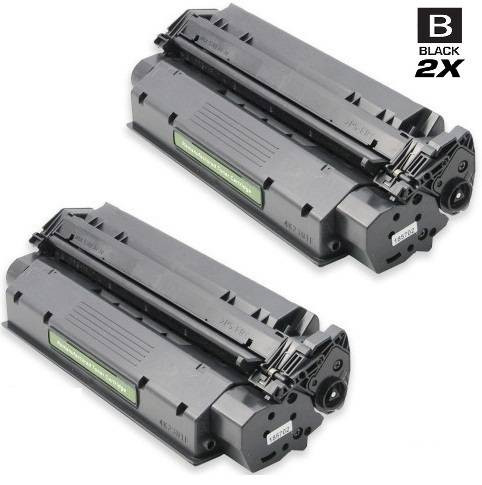
Most cartridge shelves make the pair a modest step down from the single’s rate. This one starts from a single that is already the family’s bargain, so the pair lands at 0.60¢ a rated page — a figure only the two biggest high-yield boxes beat. For an owner keeping one vintage LaserJet alive, two cartridges is also the practical quantity: one in the machine, one on the shelf, and no reorder errand when the low-toner signs begin. Fit asks nothing of you: the pair runs in all fourteen roster models, from the LaserJet 1000 to the 3380.
Shop the 15X 2-Pack →THE HIGH-YIELD LADDER BEYOND THE PAIR — HP’S C7115X AT 3,500 PAGES A CARTRIDGE, ALL FOURTEEN MODELS
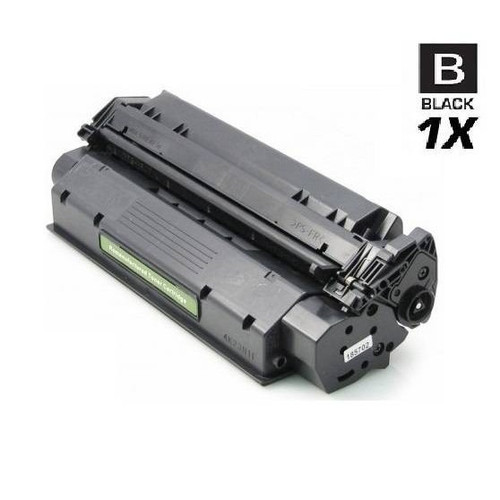
The cheapest single cartridge on the shelf is the fuller one — $1.22 under the standard single, with 1,000 more rated pages inside. Bought one at a time, this is the single to buy.
Shop the 15X Single →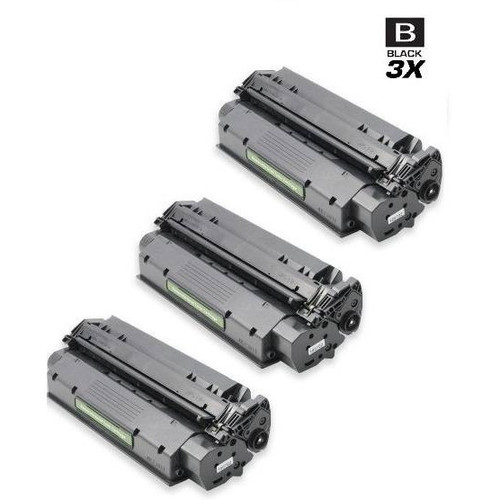
Cartridges at $18.31 apiece, and 10,500 rated pages in one box — the size that suits a small office running two or three of these printers side by side.
Shop the 15X 3-Pack →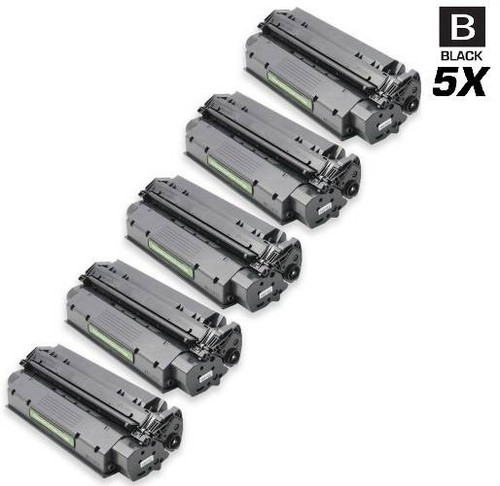
Cartridges at $16.16 apiece. Five deep is a stocking quantity for a printer that still earns its desk space every day — and it undercuts the standard 5-pack by $6.11 while holding 5,000 more pages.
Shop the 15X 5-Pack →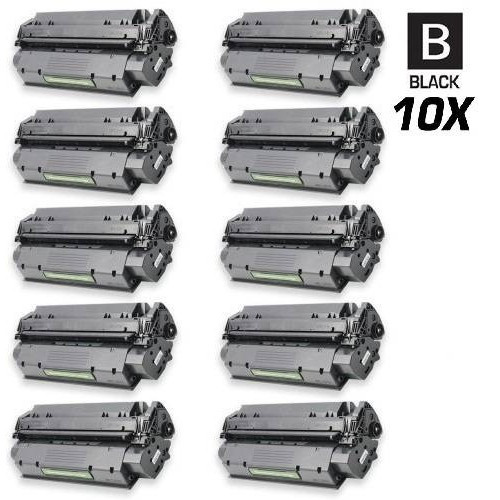
$14.56 a cartridge and the cheapest rated page in the family. The case is the fleet buy — or the single-printer buy for an owner who measures toner in years, not months.
Shop the 15X 10-Pack →The standard line, outsold by nothing and outpriced by its own sibling
There is no defect in the C7115A ladder itself. It is HP’s standard cartridge for this platform, rated at 2,500 pages wherever the figure appears — field, text or HP’s datasheet — and each of its packs genuinely costs less than the same cartridges bought singly, which is all its badges claim. What the ladder cannot win is the comparison across the aisle, and it loses it at every rung: the single by $1.22, the pair by $2.44, the 3-pack by $3.67, the 5-pack by $6.11 and the 10-pack by $12.22 — in each case against a box holding more pages, not fewer. And yet: the standard single is the best-selling box in this family, with five units sold against the high-yield single’s two. This page records that without a smirk. A purchasing habit formed when the standard code was the default, a standing order nobody has revisited, a buyer who orders the code on the cartridge that just came out — whatever the reason, the choice is a legitimate one to make with the numbers in front of you. They are in front of you now.
THE STANDARD LINE — HP’S C7115A, RATED 2,500 PAGES A CARTRIDGE, ALL FOURTEEN MODELS
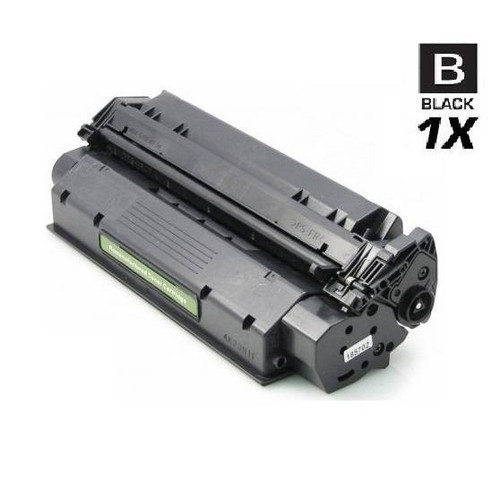
The family’s best seller and, at 1.21¢ a page, its dearest rated page. Both things are true at once; the sales record says buyers reach for the familiar code first.
Shop the 15A Single →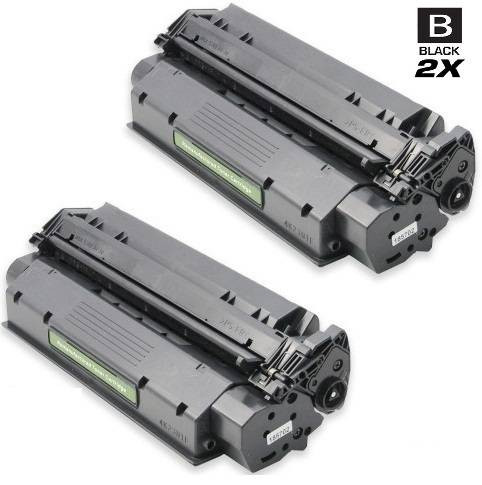
Works out to $22.21 a cartridge — an honest saving against two standard singles. The awkward comparison is the other pair: $2.44 more than the flagship, for 2,000 fewer rated pages.
Shop the 15A 2-Pack →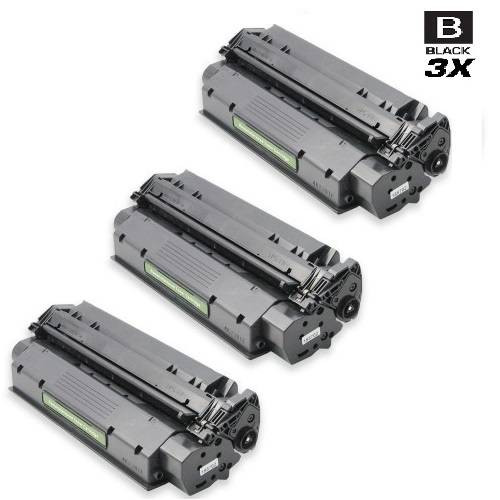
Cartridges at $19.53 apiece. A sound box on its own terms — and $3.67 more than the high-yield 3-pack, which carries 3,000 more rated pages.
Shop the 15A 3-Pack →
Cartridges at $17.39 apiece — the standard tier’s mid-ladder workhorse. A second listing elsewhere in the store repeats this exact box figure for figure under a “Premium Quality” flourish; it is the same offer, and it is not carded twice (see the closing note).
Shop the 15A 5-Pack →
At $15.78 a cartridge this is as cheap as the standard tier gets — and even here, the high-yield case beats it twice over: $12.22 cheaper, with 10,000 more rated pages inside. Buy this box when the 15A code itself is the requirement.
Shop the 15A 10-Pack →What each rated page costs, box by box
Ten boxes, ten times the same sum: divide what a box costs by the rated pages inside it. The page counts are HP’s own ratings, and the listings agree with them to the page — 2,500 for a standard cartridge, 3,500 for a high-yield one. Both figures carry the era’s caveat, set out in the yields section below: they were published under the 5%-coverage convention, before the ISO yield standard existed. Fit settles nothing in this table; every row serves the same fourteen printers.
| Box | Sale price | Pages in the box (rated) | Cost per page | Fits |
|---|---|---|---|---|
| 15X 10-Pack | $145.57 | 10 cartridges · ~35,000 pages | 0.42¢ | All 14 models |
| 15X 5-Pack | $80.82 | 5 cartridges · ~17,500 pages | 0.46¢ | All 14 models |
| 15X 3-Pack | $54.92 | 3 cartridges · ~10,500 pages | 0.52¢ | All 14 models |
| 15X 2-Pack — the flagship | $41.98 | 2 cartridges · ~7,000 pages | 0.60¢ | All 14 models |
| 15A 10-Pack | $157.79 | 10 cartridges · ~25,000 pages | 0.63¢ | All 14 models |
| 15A 5-Pack | $86.93 | 5 cartridges · ~12,500 pages | 0.70¢ | All 14 models |
| 15A 3-Pack | $58.59 | 3 cartridges · ~7,500 pages | 0.78¢ | All 14 models |
| 15X Single | $29.03 | 1 cartridge · ~3,500 pages | 0.83¢ | All 14 models |
| 15A 2-Pack | $44.42 | 2 cartridges · ~5,000 pages | 0.89¢ | All 14 models |
| 15A Single | $30.25 | 1 cartridge · ~2,500 pages | 1.21¢ | All 14 models |
The ranking has a clean split personality. The four cheapest rows are the entire high-yield ladder’s packs, in size order; the standard ladder’s best rate — ten cartridges bought at once — would slot in only fifth; and the high-yield single, bought one at a time with no pack discount at all, still undercuts the standard pair and the standard single. There is no rung where the standard tier wins this table, which is why this page’s advice runs the way it does.
Put one quantity on the counter and the spread prices itself. For 35,000 rated pages the shelf offers two honest tickets: the high-yield 10-pack at $145.57, or the same page count assembled from fourteen standard singles at $423.50. Same printers, same total pages — and the dearer route costs nearly triple. No genuine row joins the table: HP has stopped selling both cartridges, so there is no manufacturer price to print, and a reseller’s is not a substitute.
Fit: two cartridges for fourteen printers, with no model left out
Fourteen models make up HP’s roster for this platform, and the store keeps a category for every one of them: the LaserJet 1000, 1000W and 1005W; the LaserJet 1200, 1200N and 1200SE; the LaserJet 1220 and 1220SE; and the LaserJet 3300, 3300N, 3310, 3320, 3320N, 3330 and 3380. HP’s data also documents a non-wireless LaserJet 1005 for this cartridge outside the Americas, and the store keeps a category for it as well. The whole family shelf hangs under HP C7115A. Both cartridges serve all fourteen: HP sold the 15X purely as the fuller option for the same machines, with no model restriction in any HP source, so the pick is never about which printer you own.
The mistakes this family offers live at its edges, in the near-number neighbors. The LaserJet 1300 series takes HP’s Q2613A, the 13A — a different cartridge behind a similar model number. The LaserJet 1010, 1012, 1015, 1018, 1020 and 1022 take the Q2612A, the 12A. The LaserJet 1160 takes the Q5949A, the 49A. And the newest namesakes are a different species altogether: the Neverstop Laser 1001nw, 1201n and 1202w share this family’s “1200” string but hold their toner in a built-in tank and refill from W1143A reload kits — there is no cartridge slot in them for anything on this page to fit. Inside the roster, none of that applies: if your model is one of the fourteen, either cartridge on this shelf is the right shape, and the only question left is the one the table answers.
Two ratings everyone agrees on — from an era before the standard
Yield disputes are this program’s usual tax, and this family barely levies it. HP’s datasheet rates the C7115A at 2,500 pages and the C7115X at 3,500; the listings carry the same figures in their yield fields and in their prose, and the pack totals multiply out consistently — 12,500 across the standard 5-pack, 35,000 across the high-yield case of ten. With all three sources telling the same story, no referee is needed: each rate quoted here simply divides a sale price by one of those two numbers.
The one caveat is about the measuring stick, not the numbers. This cartridge line predates ISO/IEC 19752, the standard modern yields are declared under; HP’s figures are its published ratings from the 5%-coverage era, when a page was assumed to carry toner over about a twentieth of its area. No listing in this family claims an ISO basis, and this page does not invent one — so read 2,500 and 3,500 as honest ratings on the older convention, comparable to each other and to everything else on this shelf, and not directly interchangeable with a modern cartridge’s ISO figure. A heavy-coverage office will see fewer pages from either cartridge; a light one will see more; the ratio between the two tiers is the part that holds.
One sealed unit is the whole consumable
Keeping one of these printers supplied is a one-item errand. HP’s record for this platform names the two cartridges and no companion consumable on a separate schedule — there is no second part number to track, no drum unit with its own price curve waiting offstage, nothing else in the machine that a toner budget has to feed. The cartridge is the whole of it: when the output fades and stays faded, the unit comes out and a fresh one goes in.
That simplicity is part of why these machines are still in service. A page from one of them costs exactly what the table says it costs — there is no second consumable quietly adding to the bill — so the whole buying question shrinks to two parts: which tier, and how many at a time.
A platform from before cartridge blocking existed
These printers were designed years before HP’s dynamic-security era taught machines to interrogate their cartridges, and the family’s texts show their age in the best way: read all fourteen listings and you will not find the words chip or firmware in any of them, nor any hint of a mechanism by which the printer might turn a cartridge away. A LaserJet 1200 wants two things from a cartridge — that it fit the slot, and that it feed toner. Nothing checks anything else, and hardware of this vintage cannot be taught to start.
What the store says about its compatibles is the same here as across this program, and it is a statement about supply rather than about software: the cartridges come from a supplier whose specification calls for the latest-generation chip, fitted before the cartridge is sealed, so installation is the whole procedure — old unit out, new unit in, no part moved across from the spent cartridge, printing resumed. This program never extends that into a guarantee about firmware that does not exist yet; on printers this old the reservation is theoretical anyway. Nothing about a LaserJet 1220 can change overnight to reject a cartridge it accepted the day before — the machinery for refusing was simply never built into it.
The cover terms, stated the same way on every listing
The cover story does not change as you move across this family: warranty, returns, support hours and shipping origins read identically on the standard single and on the high-yield case of ten. Since no listing tells it differently, it is printed once here, for all ten cards.
Which box, in plain terms
Answers for the vintage LaserJet owner
Both of them. The C7115A and the C7115X are the same cartridge shell at two fills, and every model on the roster — the 1000 line, the 1200 line, the 1220s and the 3300 series — accepts either. Fit is therefore the one thing you do not have to decide; what remains is how many pages you want in the cartridge, and on this shelf the fuller cartridge is also the cheaper one.
Because that is how this store’s shelf is priced, at every size the two tiers share: the X single is $1.22 under the A single, and the gap grows to $12.22 at the 10-pack. Nothing in HP’s record says the fuller cartridge should cost more here — HP no longer sells either one — so the relationship is the store’s own, and this page states it rather than smoothing it over. The standard single remains the family’s best seller all the same; buyers keep choosing it, and the numbers above let you choose with your eyes open.
Not one this page will card. The store’s only 4-pack listing is written under both HP codes at once — its name and its specification field claim the C7115A and the C7115X for the same physical cartridges, its yield field rates them at the standard cartridge’s 2,500 pages, and its text elsewhere calls the same unit “the C7115X itself”. A buyer could pay expecting the high-yield fill and receive cartridges rated at the standard figure, so the listing is held off the shelf and recorded in the closing note instead. If you need four cartridges, two flagship pairs or a 5-pack get you there without the ambiguity.
No. The LaserJet 1300 series takes HP’s Q2613A (13A), the 1010-through-1022 machines take the Q2612A (12A), and the 1160 takes the Q5949A (49A). Similar numbers, different cartridges — nothing on this page fits those printers.
No. The Neverstop Laser 1001nw, 1201n and 1202w are modern tank machines: their toner lives in a reservoir built into the printer and is topped up from W1143A reload kits. They have no cartridge slot, and nothing on this page fits them. The printers on this page are the cartridge machines of the earlier 1200 line — if your printer’s nameplate does not say Neverstop, you are in the right place.
No — and this page will not pretend otherwise. The C7115 line predates ISO/IEC 19752; HP’s 2,500- and 3,500-page figures are its published ratings from the 5%-coverage era, and the listings carry the same figures in their fields and text. The two tiers compare honestly with each other; just do not set either figure beside a modern cartridge’s ISO rating and expect the same measuring stick.
Because the descriptions do their arithmetic at list prices. The standard single’s own text builds on $34.79 and the high-yield single’s on $33.38, while the register charges $30.25 and $29.03 — so any per-page figure a description quotes is computed from a price nobody pays. This guide works from the register’s figures throughout; the listings get the cartridges right and the prices wrong.
Price and disclosure note: Every price quoted here is a sale price, taken from the live catalog on November 17, 2026 and confirmed on the carded listings’ own pages; if a promotion ends, the product page’s figure is the one that stands. A SAVE badge carries a deliberately narrow meaning — within a single tier, at sale prices, the pack’s saving over the same cartridges bought one at a time. The badges are: on the standard tier, $16.08 (2-pack), $32.16 (3-pack), $64.32 (5-pack) and $144.71 (10-pack); on the high-yield tier, $16.08 (2-pack), $32.17 (3-pack), $64.33 (5-pack) and $144.73 (10-pack). Page counts divide by the ratings HP publishes — 2,500 for the C7115A, 3,500 for the C7115X — which are 5%-coverage-era figures that predate ISO/IEC 19752, matched exactly by the listings’ fields and text; no ISO basis is claimed for them anywhere on this page. You will find no genuine HP price quoted: HP’s US store no longer lists either cartridge, no live manufacturer price could be retrieved, and a reseller’s asking price would not be a substitute. Fit follows HP’s published compatibility — each tier runs in every one of the fourteen roster models, with no exceptions in either direction. What follows is where the store’s own pages depart from that record.
First, the descriptions reckon in list prices, all fourteen of them. Their closing paragraphs present the list figure as the price — $34.79 for the standard single, $167.41 for the high-yield case of ten — and their cost answers divide by it, so the text quotes one price and the checkout charges a lower one; only the checkout’s kind appears here. Second, the family’s only 4-pack is held off the shelf above, and the reason belongs on the record: one listing sells a single physical pack under both genuine codes at once — its name reads “C7115A C7115X”, its specification field repeats both codes, its yield field settles the cartridges at the standard figure of 2,500 pages each, and its text never states a per-cartridge yield while at one point calling the same unit “the C7115X itself”. The two tiers are not interchangeable names for one cartridge — they differ by 1,000 pages a unit — so a buyer could pay in the belief they were getting the high-yield fill and receive cartridges rated at the standard figure. Until that listing’s own record settles which cartridge it sells, no 4-pack is carded in either tier, and the quantity is covered by the pairs and 5-packs above. The same listing is also filed under the store’s COLOR LASERJET SERIES tree and under a doubled category name, “LaserJet LaserJet 3320”, and is absent from the family category its thirteen shelf-mates occupy. Third, a spelling error is baked into the high-yield batch: every 15X listing’s name spells “Cartridge” as “Cartirdge”, and the misspelling runs through the carded X listings’ web addresses as well. This page prints the names spelled correctly and links the addresses exactly as they stand, typo and all, because those are the addresses that resolve. Fourth, the store keeps categories for printers HP never sold for this platform: a “LaserJet 3080” category holds all fourteen listings, and the held-off 4-pack’s text claims fit for such a machine; a “LaserJet 3330F” category names another model HP never made; and the 3300 series’ printers appear twice over, under plain-number categories and again under MFP-suffixed renamings of the same machines. The roster above follows HP’s model names, and where a model has two categories, the plain one is the link target. Fifth, one category mixes two different centuries of printer: the “LaserJet 1200N” category holds this family’s fourteen listings alongside fifteen W1143A reload-kit listings for the modern Neverstop machines — kits that refill a built-in tank these vintage printers do not have. The category’s own text says plainly that the kits do not fit the 1200N; the product grid nonetheless offers both families on one page. Sixth, the older listings’ specification lists are dressed in HP’s genuine-product language — dual-polymer toner, a helical roller drive, cartridges and printers “designed together” — and two of those lines, a recycling-guide inclusion and a warranty sentence, are each printed twice in the same list. These are compatible cartridges; this guide writes its own copy and makes no genuine-technology claim for them.
Ten cards make up the shelf above: the standard cartridge in five configurations, the high-yield cartridge in the same five. No 4-pack is carded in either tier, for the reason given above. Four more listings from this family exist in the store and appear here only as records. One repeats the carded standard 5-pack in every figure — list, sale and stock — distinguished only by a “Premium Quality” flourish in its name; it is neither carded nor linked. Another offers the standard single again under a printer’s name, at figures identical to the carded single’s; it belongs to neither card set, and is neither carded nor linked. The last two are check-printing (MICR) products, labeled as such on their own pages; this program’s standing rule keeps them off the shelf entirely — not carded, not linked, not offered — and this sentence is their only appearance here. No listing in the family raises a chip or firmware question, because the platform predates cartridge blocking; the chip section above sets out the supplier’s position together with the limit this program always attaches to it, that no assurance extends to firmware yet unwritten. Every card stands behind the cover the family’s own answers describe: a one-year warranty, a year of free returns, weekday support from 9 AM to 5 PM Central, and dispatch from warehouses in Illinois, Pennsylvania, Georgia and California.