




Some printer platforms fade away a few years after launch; the Ricoh Type 145 platform never got that memo. The color lasers built on it — the Aficio CL4000DN and its SP C410DN, SP C411DN and SP C420DN relatives — are still grinding through office workloads long after newer models came and went, and they all drink from one cartridge line: 888308 black, 888309 yellow, 888310 magenta and 888311 cyan, sold by Ricoh under the Type 145 name. This guide prices the family’s entire compatible shelf — twelve products deep, from single cartridges to an eight-cartridge stock-up — at the sale figures checkout actually charges, and matches each rung of that ladder to the question that really decides the order: how much longer will your machine stay in service?
The short answer: the 4 Color Set at $325.27 is the sensible center of this shelf — one cartridge of each color, $48.23 below the $373.50 the four singles total. Every cartridge in the family, black included, carries the same 15,000-page rating, so the only real decision is depth: buy the rung that matches your machine’s remaining years, and let black’s deeper packs carry the discount if your printing leans monochrome.
Type 145 high-yield cartridges, four codes: 888308 black, 888309 yellow, 888310 magenta, 888311 cyan — in that order, which puts yellow second. The full-machine refill is the 4 Color Set at $325.27. Black also sells in 2, 3 and 5-packs down to $77.50 a cartridge, and the mixed sets climb to an 8 Color Set at $634.47 that undercuts its contents bought singly by $112.53. Every item on the shelf clears our $49 free-shipping threshold on its own, so depth never has to be padded out to earn free delivery.
Four codes, one page rating
Most color platforms make you learn two yield stories — a long black rating and shorter color ratings ticking on a faster clock. Type 145 refuses that complication. Ricoh rates every cartridge in this family, black and colors alike, at 15,000 pages at the standard 5% coverage: these are the high-yield members of the Type 145 line, the ones Ricoh marks HY. A standard-yield Type 145 family also exists at 5,000 pages a cartridge — its black cartridge carries a different code, 888276 — and nothing on this page belongs to it. If a cartridge offered to you claims Type 145 fit at a 5,000-page rating, it is the smaller sibling, not a bargain version of these.
The code order needs one careful look, because it breaks the pattern buyers absorb from other shelves. Here the sequence runs black, yellow, magenta, cyan: 888309 is the yellow cartridge and cyan closes the run at 888311. Anyone arriving from a platform that numbers in process order will reach for 888309 expecting cyan and be wrong. The color word on the box is the authority; the table below pins each code to it.
| Code | Color | Rated yield | Price for one | Toner cost per rated page |
|---|---|---|---|---|
| 888308 | Black | 15,000 pages | $90.36 | About 0.60 cents |
| 888309 | Yellow | 15,000 pages | $94.53 | About 0.63 cents |
| 888310 | Magenta | 15,000 pages | $94.53 | About 0.63 cents |
| 888311 | Cyan | 15,000 pages | $94.08 | About 0.63 cents |
Because the rating is uniform, the per-page arithmetic stays unusually tidy. A monochrome page draws on black alone and carries roughly 0.60 cents of toner at the single price. A full-color page draws on all four cartridges at once; at single prices the four rates add to about 2.49 cents, and when the cartridges came from the 4 Color Set the same page works out near 2.17 cents. Real pages wander around those figures with coverage — a dense presentation page lays down far more than the 5% test page — but for comparing one box on this shelf against another, the comparison is apples to apples.
One pricing wrinkle is worth naming before it trips anyone: the colors are not priced to the same cent. Cyan sits at $94.08 while magenta and yellow sit at $94.53 — a 45-cent gap with no difference in rating or role behind it. It changes the per-page math by three thousandths of a cent. Note it, smile at it, and let bigger numbers make your decision.
The machines that drink from this shelf
Ricoh’s own Type 145 documentation draws the fit line, and this guide follows it. The headline machine is the Aficio CL4000DN, the 26-page-per-minute color laser the platform was built around. The same consumables platform covers the Aficio SP C410DN, the Aficio SP C411DN and the Aficio SP C420DN, and the hardware also shipped under Ricoh’s Lanier badge as the Lanier LP226cn — five nameplates, one cartridge bay design, one set of codes.
Two more badges belong in this paragraph even though our store keeps no category pages for them. The CL4000DN also reached offices as the Savin CLP26DN and the Gestetner C7526dn; Ricoh’s support index files both in the same color-laser family, and the cartridges do not change with the badge on the front panel. If your machine wears one of those names, the four codes on this page are still its codes. A plain Aficio CL4000 and a CL4000HDN turn up in some retailers’ fit lists as variants of the same hardware; Ricoh groups the HDN with the CL4000DN in its own support index, and the Type 145 HY line is the cartridge family for both.
Two cautions close the roster out. Ricoh’s Type 145 list also names an SP C400DN and some -KP variants; our store files no products under those names, so they are deliberately not linked here — if that is your nameplate, confirm the Type 145 HY codes against your manual before ordering. And keep this platform separate from Ricoh’s newer SP C-series machines that recycle similar model numbers: similar badges, different engines, different cartridges entirely.
Twelve ways to buy the same four cartridges
Underneath the twelve products there are only four cartridges; everything else is packaging arithmetic. The table reads the whole ladder at once — every price the sale price, every saving measured against buying the same cartridges one at a time. A piece of catalog housekeeping, stated once: our store lists sixteen product records for this family, but four of them are re-listings of the same items (the black single appears three times, the yellow single and the 4 Color Set twice each) at identical prices. The twelve below are the distinct products, and the cards further down point to one canonical record apiece.
| Product | What is in the box | Sale price | Per cartridge | Against singles | Best when |
|---|---|---|---|---|---|
| 4 Color Set | One cartridge of each color | $325.27 | $81.32 averaged over the four | Saves $48.23 | The whole machine needs refilling, or a new-to-you machine starts empty |
| 3 Color Set | Cyan, magenta and yellow — no black | $250.99 | $83.66 averaged over the three | Saves $32.15 | The colors run low together while black still has life |
| 5 Color Set | Five cartridges across the four codes | $399.55 | $79.91 averaged over the five | Saves $64.31 | A full refill plus a head start on the next black |
| 6 Color Set | Two each of cyan, magenta and yellow | $485.90 | $80.98 averaged over the six | Saves $80.38 | Color-heavy work with black already stocked deep |
| 8 Color Set | Two cartridges of every color | $634.47 | $79.31 averaged over the eight | Saves $112.53 | A committed machine with years of work ahead of it |
| Black 2-pack | 2 × 888308 black | $164.64 | $82.32 | Saves $16.08 | The first step up from singles for a mono-leaning office |
| Black 3-pack | 3 × 888308 black | $238.92 | $79.64 | Saves $32.16 | Steady document volume, reordered a few times a year |
| Black 5-pack | 5 × 888308 black | $387.48 | $77.50 | Saves $64.32 | The cheapest black on the shelf, for machines that earn their keep in mono |
| Black single | 1 × 888308 black | $90.36 | $90.36 | — | A single refill, or a first trial of compatibles in the machine |
| Yellow single | 1 × 888309 yellow | $94.53 | $94.53 | — | Yellow alone has faded — remember, it is the second code |
| Magenta single | 1 × 888310 magenta | $94.53 | $94.53 | — | Magenta alone has faded |
| Cyan single | 1 × 888311 cyan | $94.08 | $94.08 | — | Cyan alone has faded — it closes the code run at 888311 |
Shipping needs no strategy on this shelf: the cheapest item, the black single at $90.36, already clears our $49 free-shipping threshold by itself, and everything above it does too. Depth here is purely a pricing decision, never a delivery one.
Notice what the ladder does not offer: there are no per-color multi-packs. Color volume is sold only through the mixed sets, so an office that burns one color far faster than the others tops that color up with singles between set orders.
Each box, judged on its own
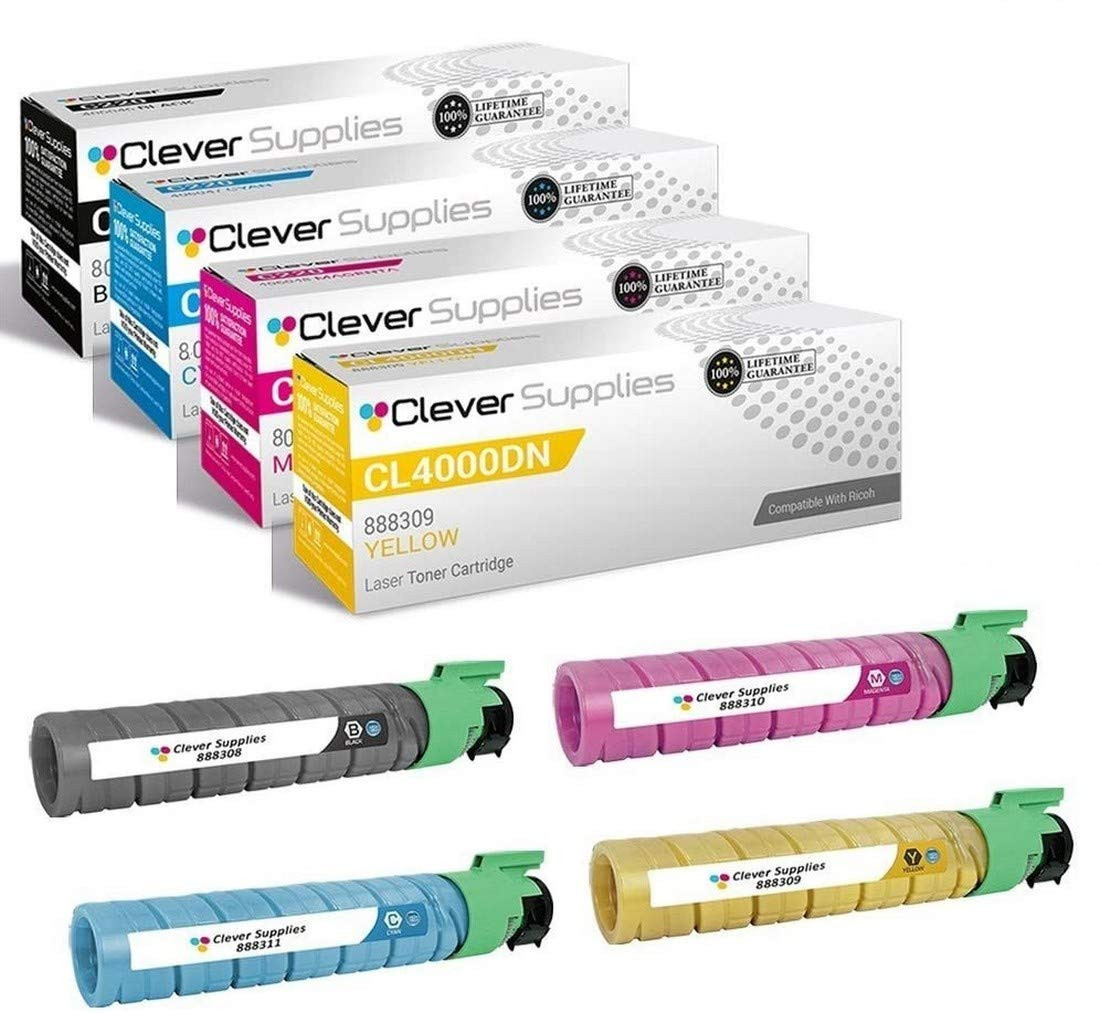
This is the order the shelf is organized around. The cartridges inside are the same ones sold as singles below — no set-only stock, no second grade — gathered into one carton so a full restock is a single shipment and a single invoice line. For a machine that has just arrived in your office, or one where several colors are reporting low together, it is the cleanest possible starting point.
See the 4 Color Set →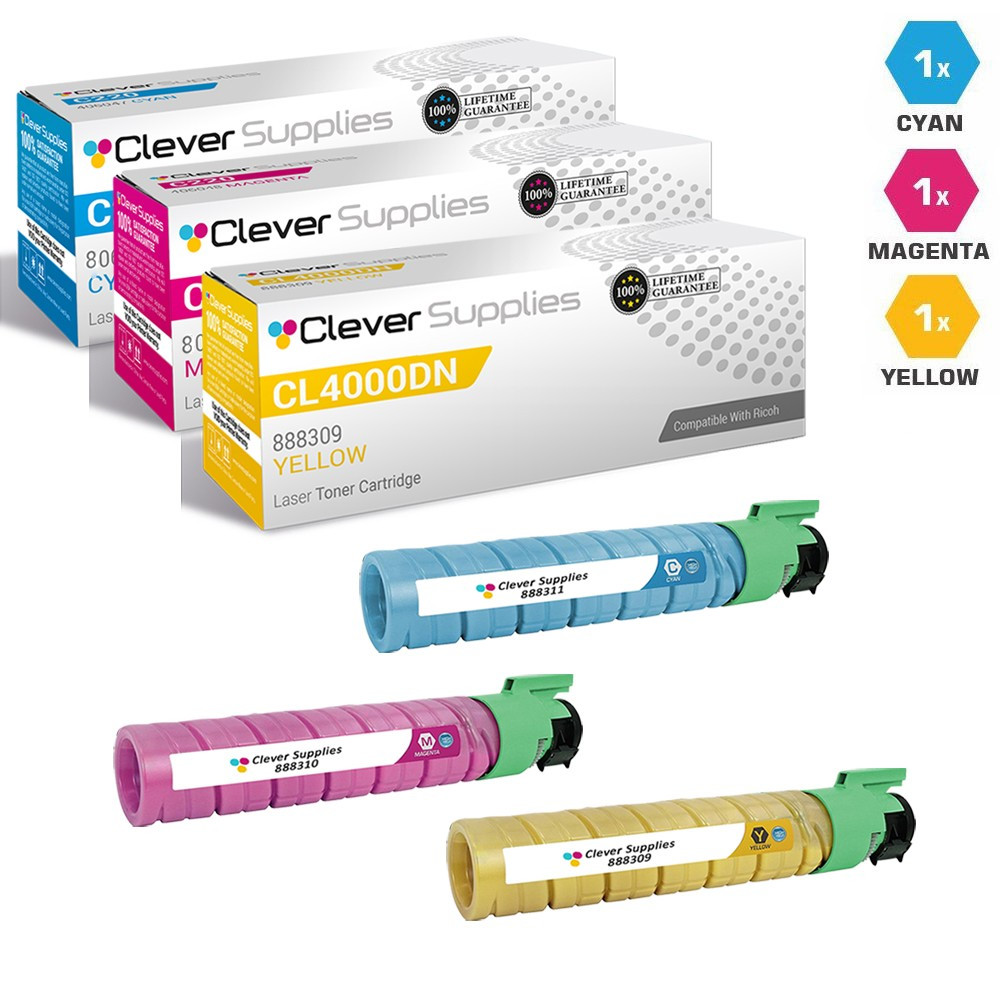
Machines rarely empty in perfect step, and the usual pattern on this platform is a black cartridge with thousands of pages left standing next to three tired colors. This set answers exactly that moment: the full color round, nothing spent on a black you do not need yet.
See the 3 Color Set →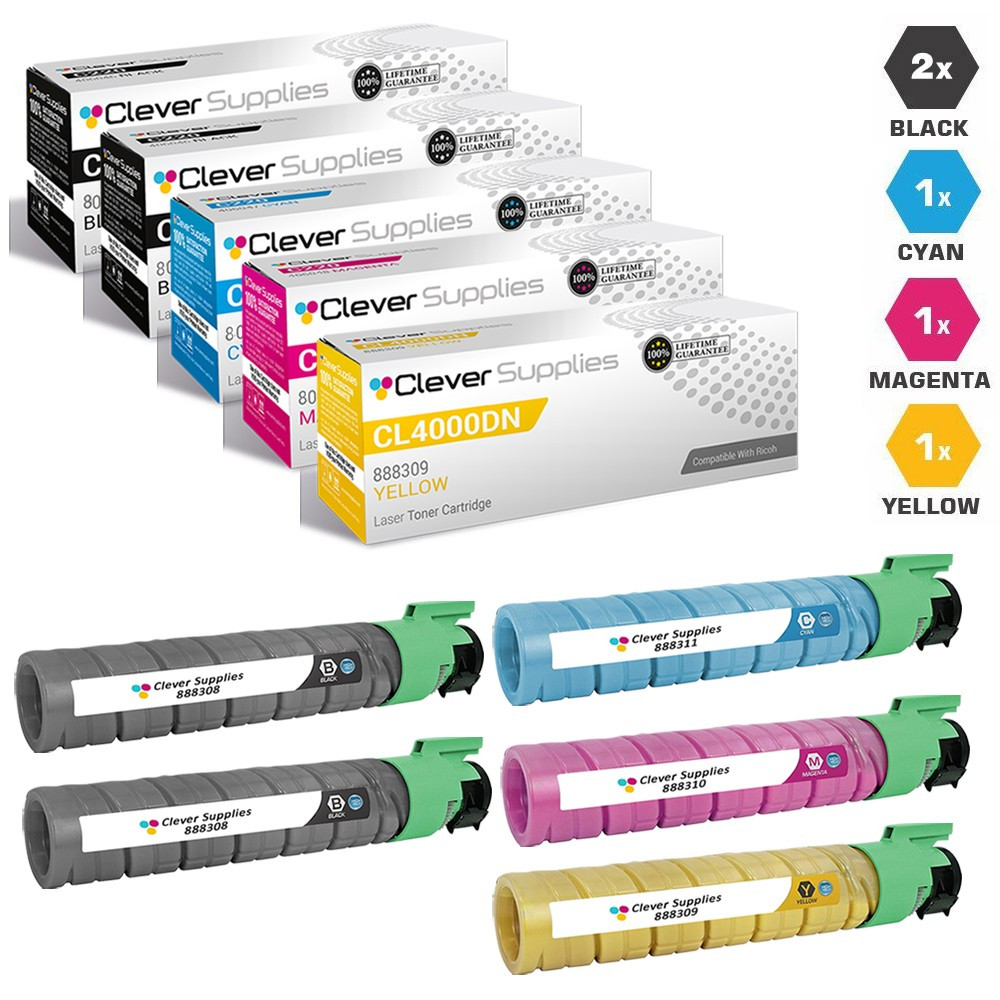
A note on what is inside, because our own listing leaves it unsaid: the box holds five cartridges across the four codes, and while the store text never spells out which color is doubled, the family’s bundle pattern — the 8-set doubles everything, the 6-set doubles the colors — points to a second black riding alongside one of each color. That reading also matches the price. Treat the fifth cartridge as black unless the carton in front of you says otherwise, and the saving above is computed on exactly that basis.
See the 5 Color Set →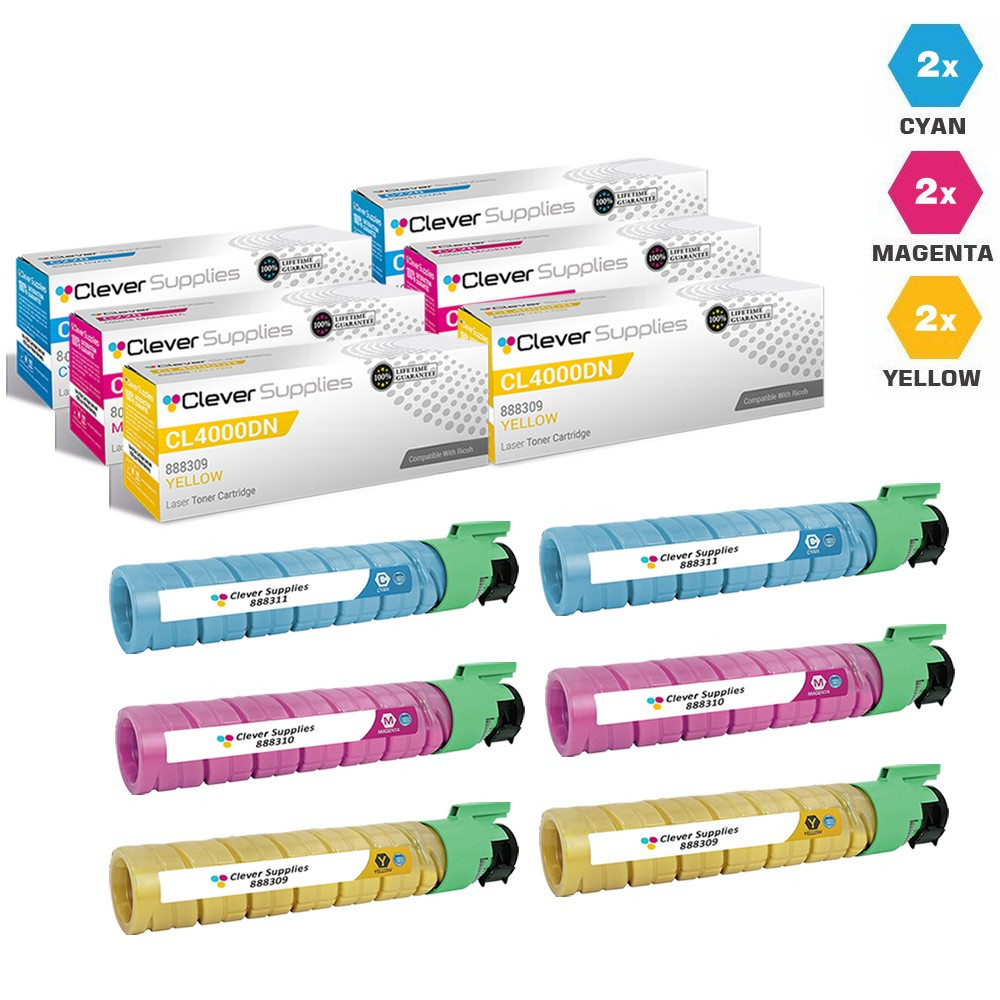
This is the specialist’s bundle: an office whose output is presentation- and graphics-heavy, chewing through colors while black idles. If that is not your workload, the black-free design is a reason to pass it by — the 8 Color Set below covers the same ground with black included for $148.57 more.
See the 6 Color Set →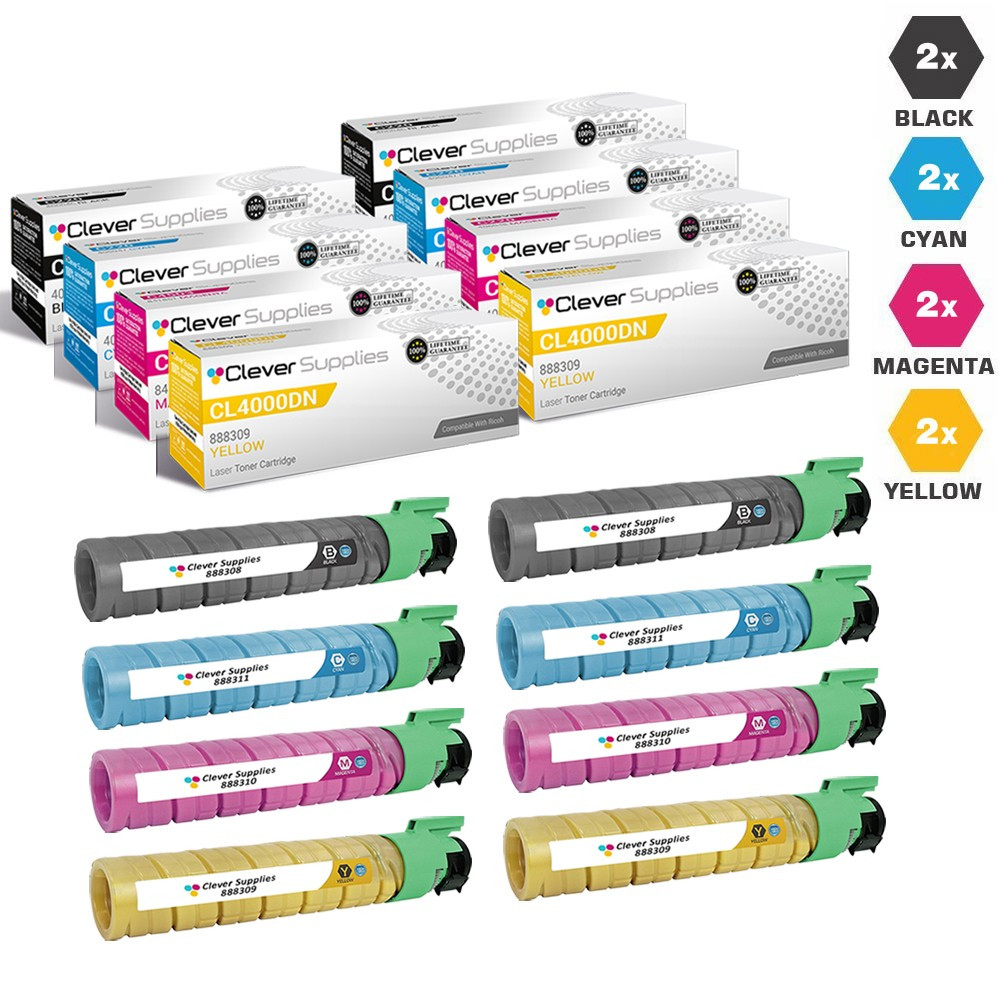
Buying this box is a statement about the machine: it is staying, it is working, and nobody wants to think about toner again for a long stretch. The discount is the shelf’s best, but it is a discount on cartridges you must genuinely expect to use — read the horizon guidance below before this rung, not after.
See the 8 Color Set →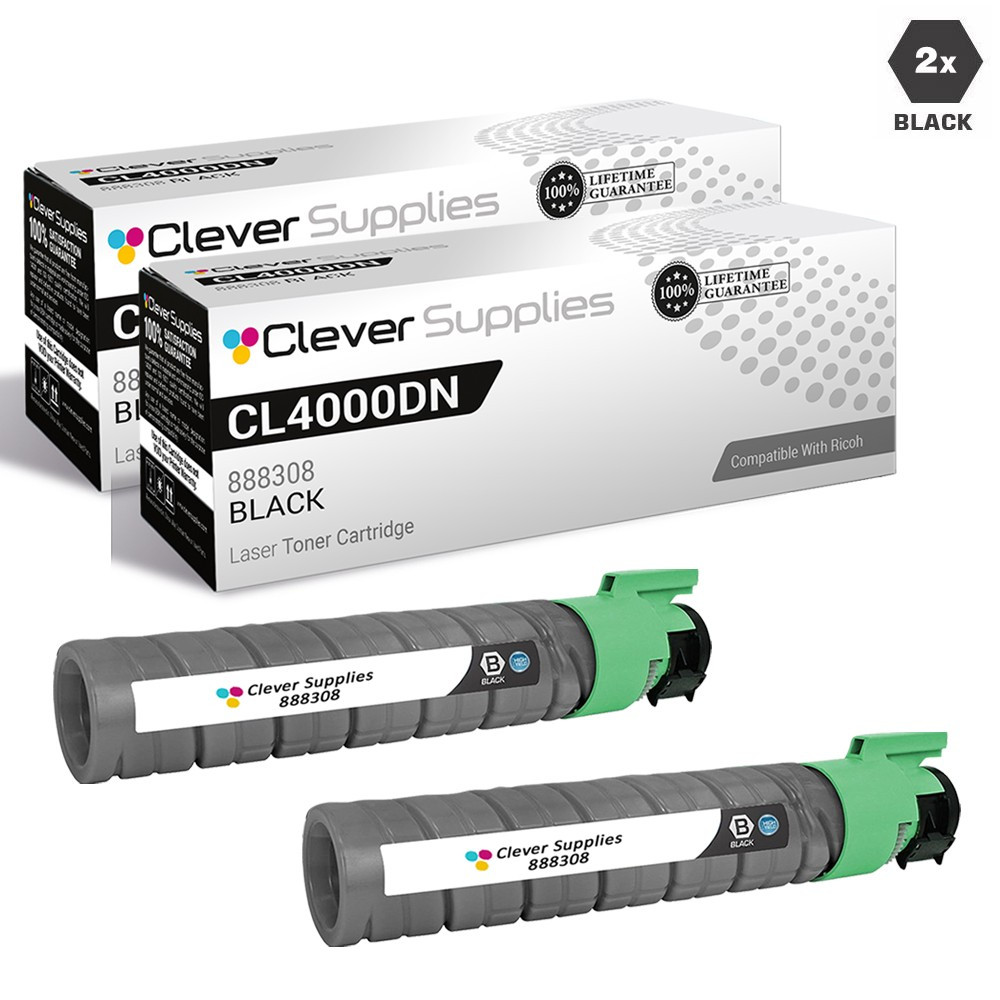
For most offices on this platform, this is where black buying settles. The saving over two singles is real but not the point; the point is that a black failure stops being an emergency the day the spare goes into the cabinet.
See the Black 2-Pack →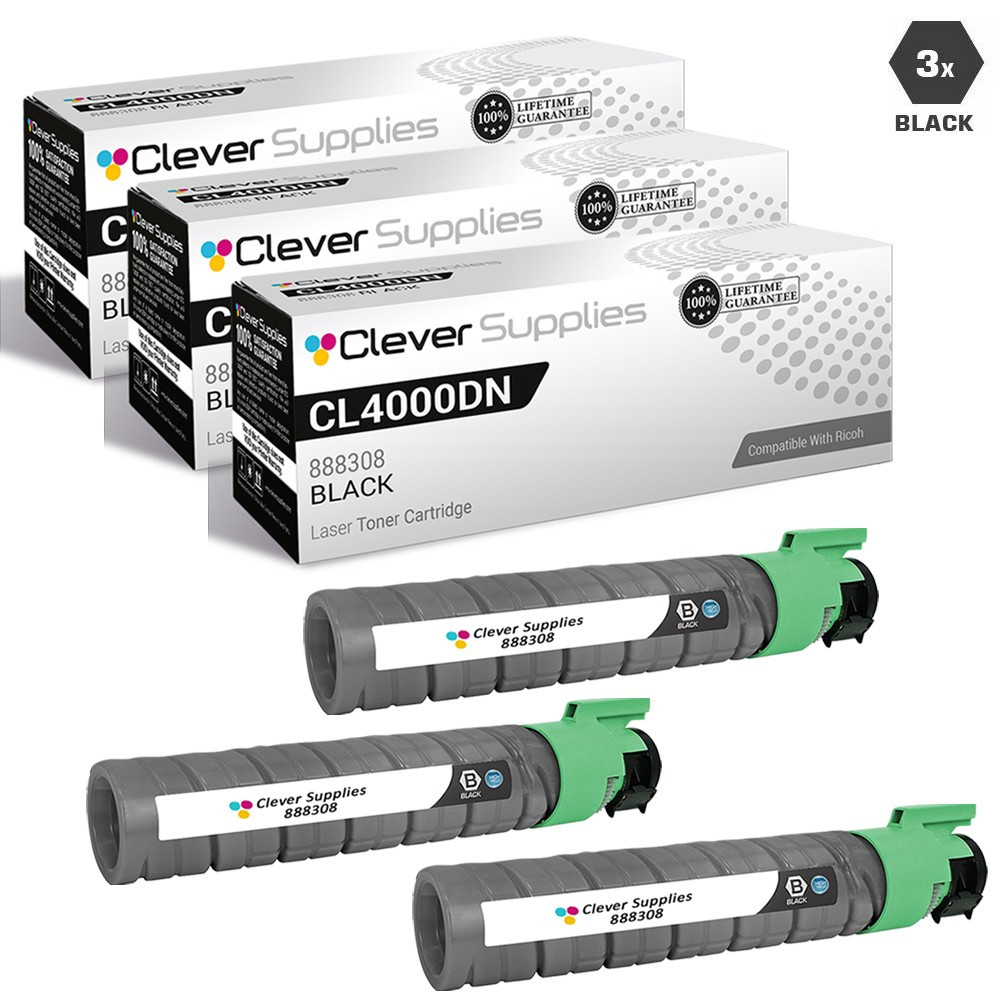
The middle black pack suits the office that has stopped experimenting: the machine’s mono volume is known, the cartridge is proven in it, and the only remaining question is how often anyone wants to place this order. Three at a time stretches that interval without betting the supplies budget on it.
See the Black 3-Pack →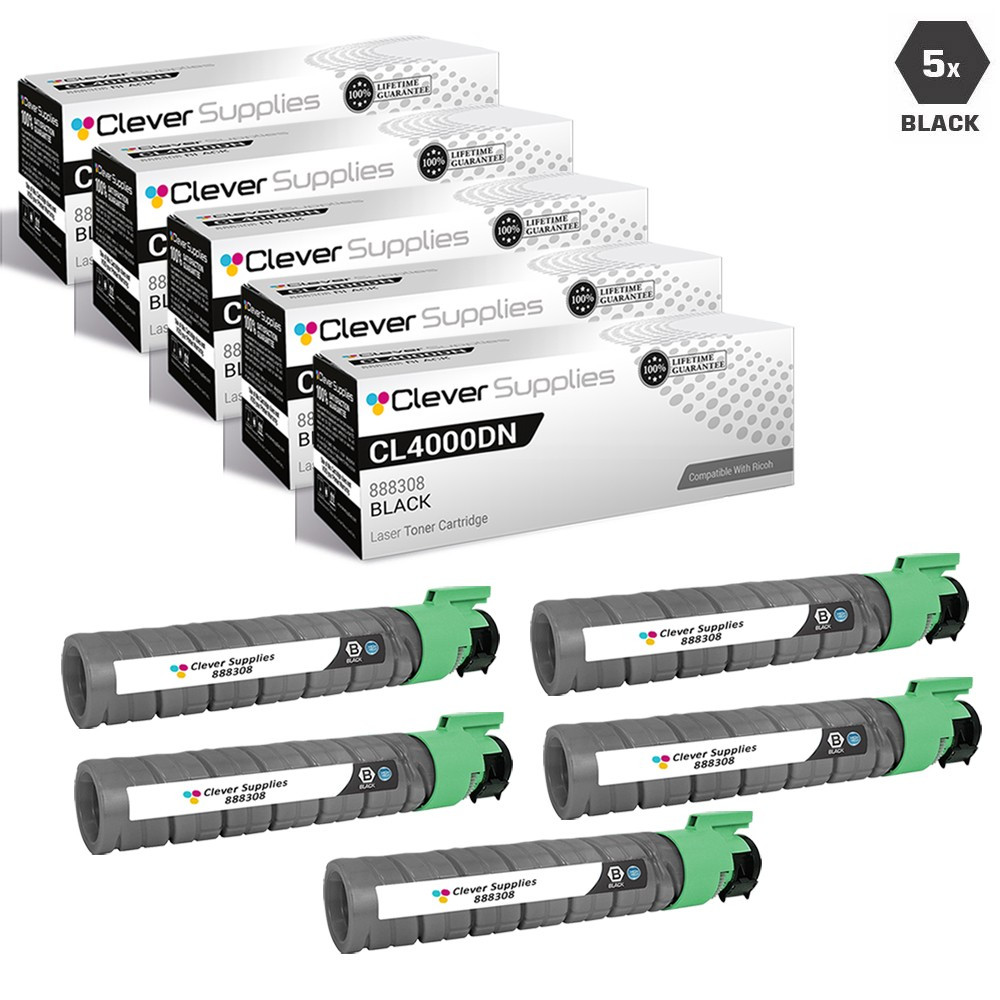
Seventy-five thousand pages is not a casual purchase; it is a forecast. Offices that print statements, invoices and reports all day on a CL4000DN-class machine can make that forecast honestly, and for them this pack prices black lower than any other box on the page. Everyone else should let the 2-pack and 3-pack carry the load.
See the Black 5-Pack →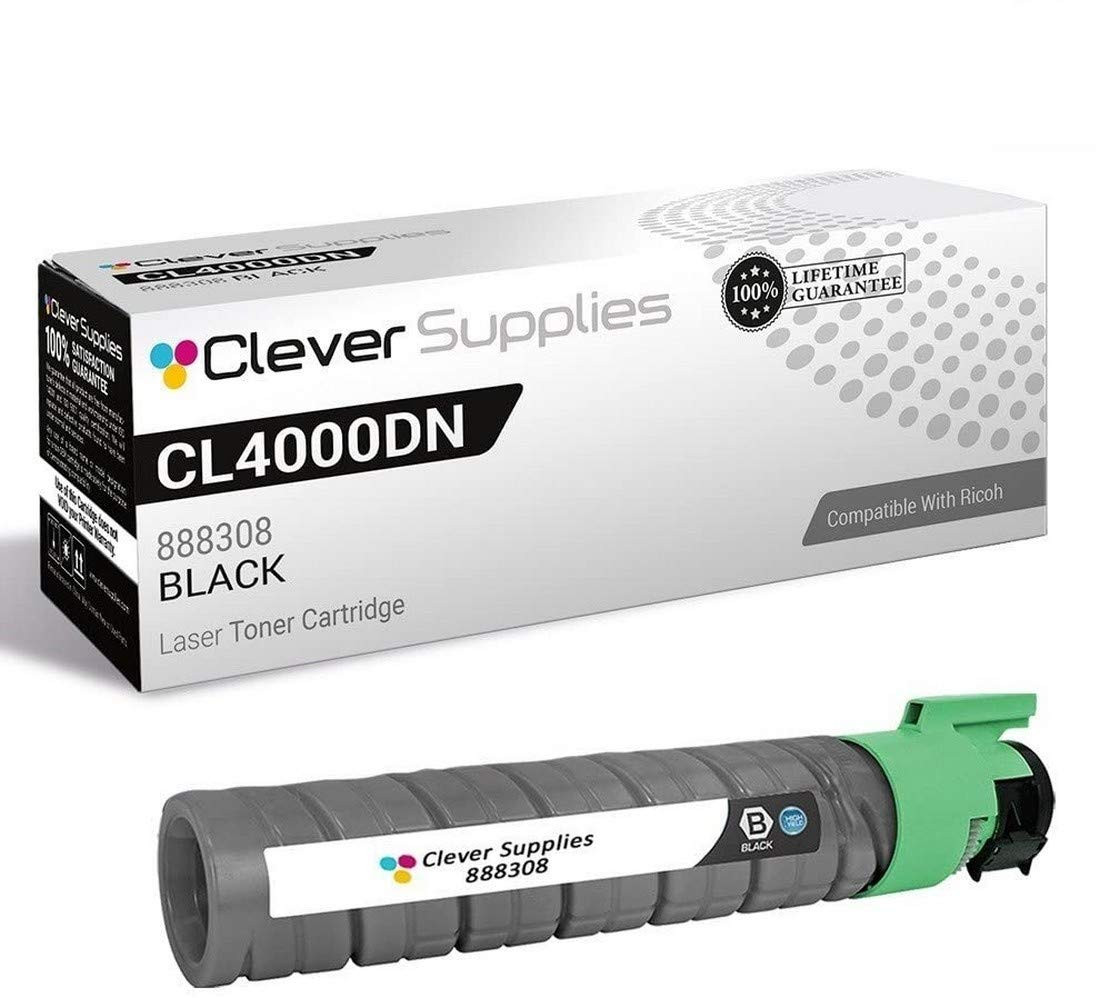
Every ladder starts somewhere, and the single black is the honest first rung: one cartridge, the full high-yield rating, and the smallest possible commitment while you learn how a compatible behaves in your machine. Once it has proven itself, the packs above exist to make the next ones cheaper.
See the Black Cartridge →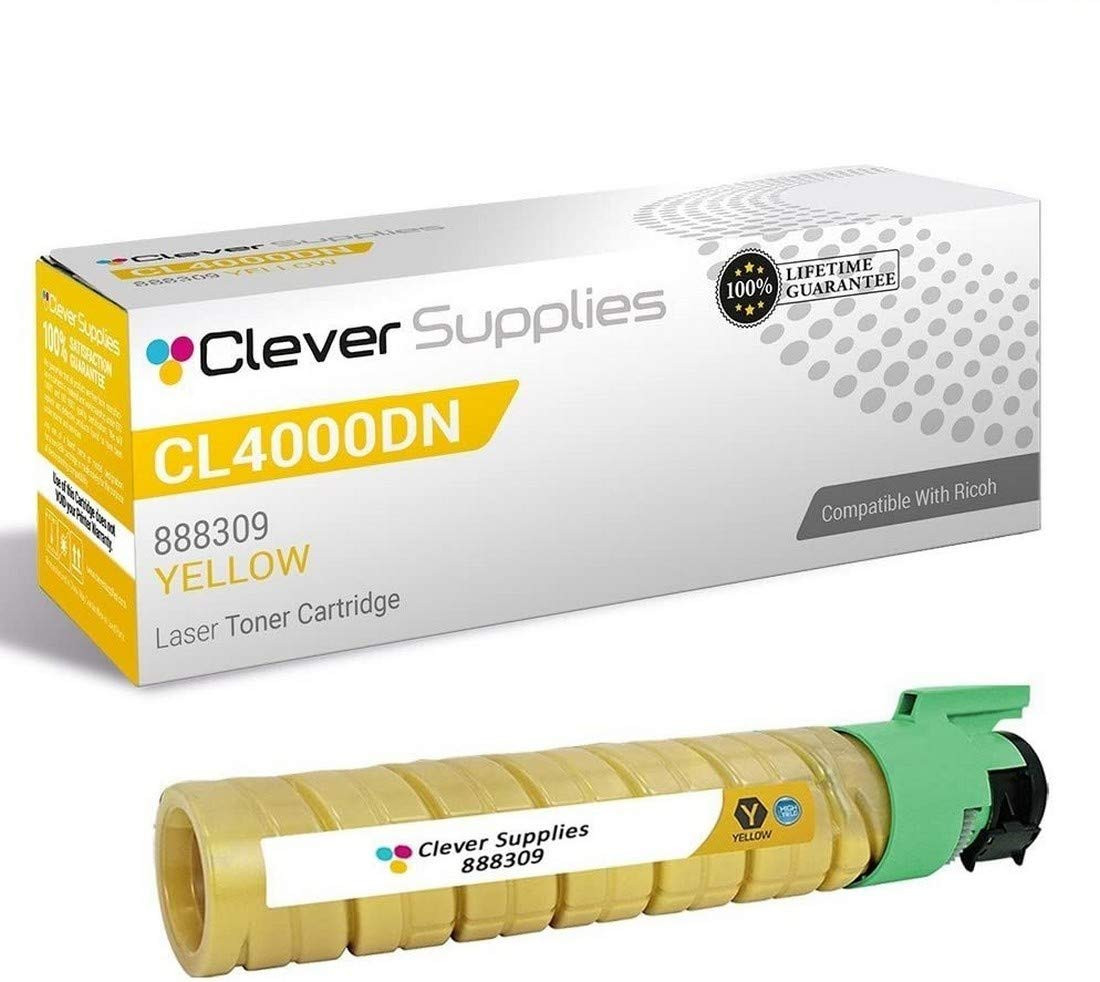
Yellow fades quietly: greens drift blue, highlights go dull, and photographs lose their warmth before anyone names the cause. When the panel confirms it, this single cartridge is the targeted fix — the other colors keep whatever life they have left.
See the Yellow Cartridge →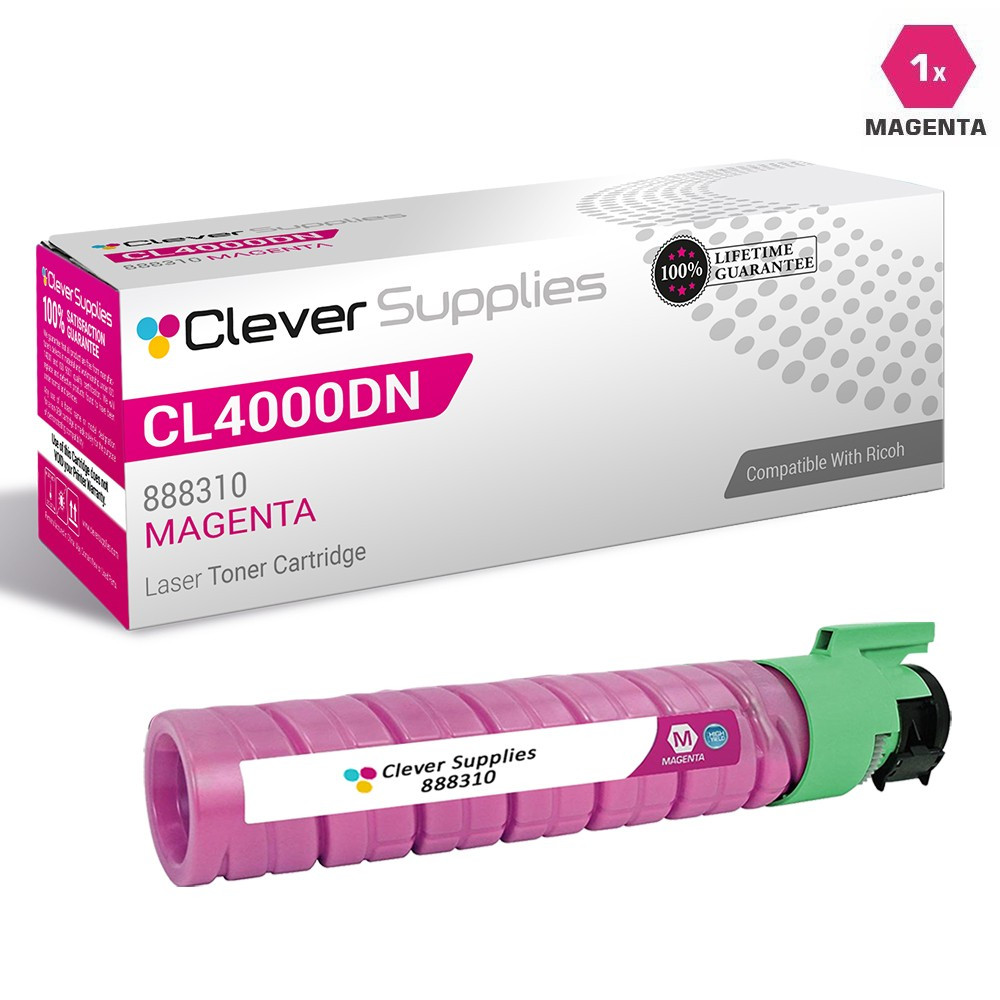
Watch for reds turning rusty and printed faces going pale; that is magenta asking to be replaced. A single cartridge answers it without disturbing the colors that are still earning their place in the machine.
See the Magenta Cartridge →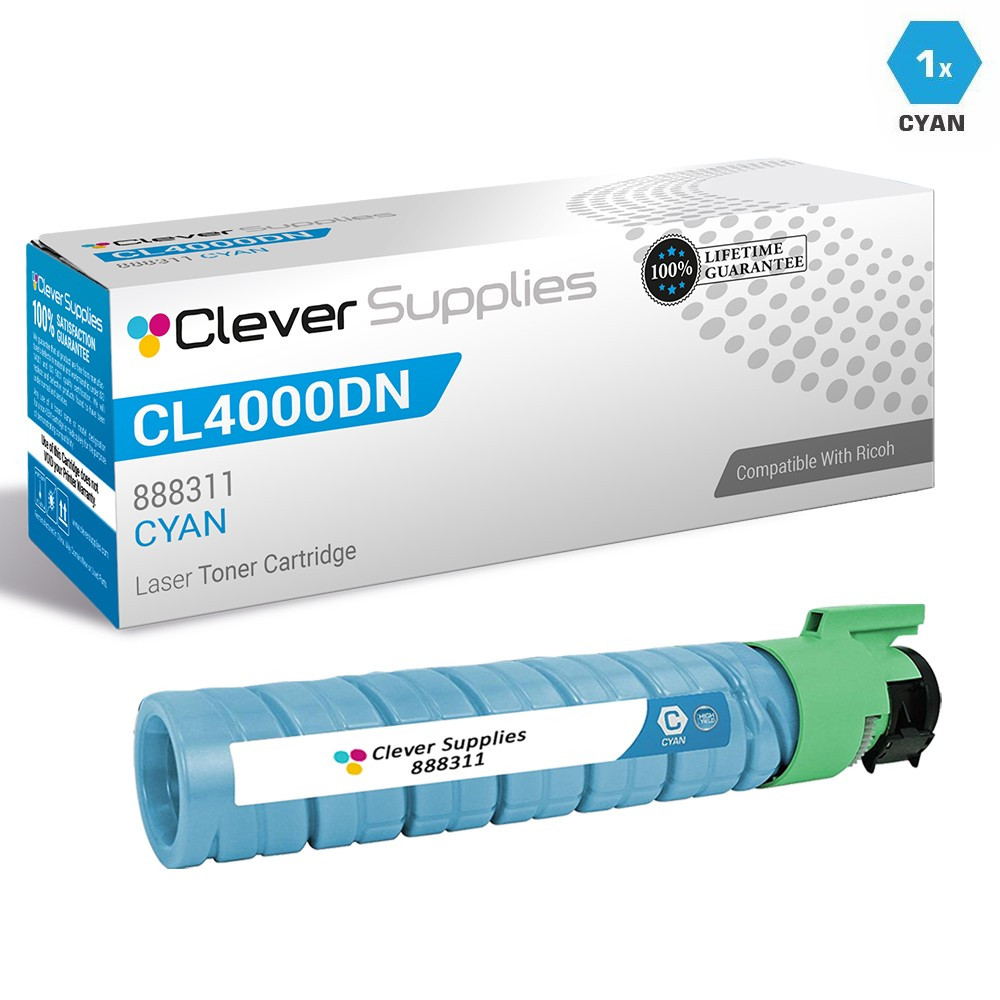
If you learned cartridge numbering on a process-order platform, this is the card to slow down on: here the last code is the cyan one. Order 888311 when blues wash out and greens lose their depth, and leave the colors with life remaining to finish it.
See the Cyan Cartridge →How deep should the order go?
Start with the machine’s remaining years
Every rung of this ladder is the same four cartridges wearing different quantities, so the honest way to choose is to forecast the machine, not the discount. A CL4000DN-class printer that anchors a department’s output and has a healthy engine will burn through an 8 Color Set without blinking; the $112.53 it saves is earned money. The same box bought for a machine that may be retired next year is not a saving at all — it is inventory waiting to be orphaned. Estimate the years first, then let the per-cartridge prices pick the rung that fits inside them.
Black walks ahead of the colors
Uniform ratings hide an uneven reality: all four cartridges are rated at 15,000 pages, but black participates in every monochrome page the office prints and most offices print far more mono than color. That is why the ladder gives black its own three pack sizes while colors travel only in mixed company. The practical pattern for a document-heavy machine is a black 3-pack or 5-pack on a slow reorder cycle, with the 3 Color Set or 4 Color Set refreshing the color side when its gauges finally move — each side bought at the depth its own consumption justifies.
A worked basket: two years of mixed printing
Suppose the next two years consume four black cartridges and two of each color — ten cartridges in all. Bought one at a time, that basket costs $927.72. Bought as one 8 Color Set ($634.47) plus one black 2-pack ($164.64), the identical cartridges cost $799.11, and $128.61 stays in the supplies budget. Shrink the horizon to a single round of each color and the arithmetic shrinks with it — the 4 Color Set’s $48.23 is the same logic at a shorter distance. The ladder rewards exactly the depth you can forecast, and not a cartridge more.
When the shallow end is the right answer
Low volume changes everything. A machine printing a few hundred pages a month will take years to finish even one round of 15,000-page cartridges, and a deep bundle for it ties up budget in toner that may outlive the printer. For that office, singles and the 4 Color Set are not the timid choice; they are the correct one. The savings on the deep rungs are percentages of cartridges you must actually consume — let the page counter, not the discount column, make the call.
Day to day with a veteran color laser
The chip is already handled
Each cartridge on this shelf ships with the current-generation chip fitted, so installation is the whole procedure: seat the cartridge and the printer recognizes it, with toner levels reporting as they should and nothing to transplant from the cartridge you removed. One honest limit applies to every compatible cartridge, ours included: no seller can truthfully promise protection against some future firmware revision, and we do not. What we can point to is the latest chip generation and these cartridges’ long, quiet service record in this platform.
Toner is the whole of this shelf
Everything sold under these four codes is a toner cartridge or a bundle of them. The Type 145 platform’s photoconductor and transfer units are separate Ricoh service parts that live outside this cartridge family — they are not hiding in any box on this page, and no order here needs one to work. When the machine eventually calls for those units, that is a service decision, not a toner order.
Swapping a cartridge on this platform
When a color reports empty, open the front cover, draw the spent cartridge out, and give its replacement a gentle side-to-side rock to settle the toner before removing the protective tape and sliding it home. Replace only the bay the machine named; the others keep their remaining life. Each bay accepts only its own color, so a wrong cartridge refuses to seat — do the code check at the desk anyway, since on this platform the order (black, yellow, magenta, cyan) is the one detail everyone gets wrong once.
Storing a deep order properly
A ladder bought deep only pays if the cartridges wait well. Keep spares sealed, flat and out of direct light in a cool, dry cabinet; toner powder does not dry out, so a cartridge from a big set can wait many months and print like the day it arrived. Work the cabinet oldest-first, and write each cartridge’s color in plain words beside its code on the box — the person swapping at midnight will thank you for not making them decode 888309 under pressure.
Before you order: Type 145 checks
Questions this platform draws
Yellow. This family numbers its cartridges black, yellow, magenta, cyan, so 888309 is yellow and cyan closes the sequence at 888311. Platforms that number in process order put cyan second, which is exactly the habit to unlearn here; the color printed on the cartridge box settles any doubt.
Yes. Every cartridge on this page is the HY version, rated at 15,000 pages at 5% coverage — the figure Ricoh publishes for the Type 145 high-yield line and the figure our product pages state. A standard-yield Type 145 family rated at 5,000 pages also exists (its black cartridge is coded 888276); we do not sell it, and none of these codes belongs to it.
Same hardware, same cartridges. Ricoh sold the CL4000DN under its Savin and Gestetner badges as the CLP26DN and C7526dn, and its support index files all three in the one color-laser family. Our store keeps no category pages under those two names, which is why they are described here rather than linked — but the four codes on this page are the ones your machine takes.
Five cartridges spanning the four codes — and here we will be precise about what we know: our listing text never states the split outright. The family’s own bundle pattern (the 6 Color Set doubles the three colors; the 8 Color Set doubles all four) makes a second black cartridge alongside one of each color the natural reading, and the price agrees with it. The savings quoted for that set are computed on that basis; if the composition matters to your order, ask us before checkout and we will confirm it against the physical bundle.
Honestly, because that is how the shelf is priced. The three color cartridges carry identical ratings and roles, and the gap moves cyan’s cost per page by three thousandths of a cent. It is a curiosity of the price list, not a difference in the cartridges, and no buying decision should turn on it.
No. A set is a way of buying, not a kit with an installation rule. Each cartridge inside is individually sealed and identical to the corresponding single, so fit the color the machine asks for, shelve the rest, and mix set cartridges with singles and packs from later orders freely. The printer tracks each bay separately and has no way of knowing which carton a cartridge arrived in.
In substance, yes. Retail fit lists commonly name the plain CL4000 alongside the CL4000DN, and Ricoh’s support index groups the CL4000HDN with the CL4000DN; all are the same Type 145 hardware family taking these HY cartridges. Our store files its products under the five categories linked in this guide, so those are the doors we point to — check your nameplate code against the four codes here before ordering.
Because one carton on one shipment costs less to pick, pack and move than several separate orders, and the shelf passes that difference down the ladder: the deeper the bundle, the lower the per-cartridge figure, from $83.66 in the 3 Color Set to $79.31 in the 8 Color Set. The cartridges themselves never change — only the packaging arithmetic does.