




Some printer families make you weigh tier against tier. This one never does. HP built exactly one cartridge for the LaserJet 2100 and 2200 lines — the C4096A, short code 96A, rated at 5,000 pages — and never built another: no bigger sibling, no smaller one, nothing above or below it in the catalog. What varies on this shelf is only how many of that same cartridge arrive in a single box: one, two, three, five or ten. The five cards below are those five depths, each priced at the sale figure the store actually charges. Around the ladder sits the usual catalog untidiness — a five-pack listed twice, a single listed three times, product texts that do their sums at prices nobody pays — and this guide names each piece of it rather than stepping around it. Every price on this page is a sale price.
There is no tier decision to make here, because there is only one tier. Every configuration on this page holds the same 5,000-page C4096A; the entire choice is how deep a box to keep on the shelf. Depth pays steadily and without a single inversion: a page costs 0.890¢ from a cartridge bought alone, 0.729¢ from the two-pack, 0.676¢ from the three-pack, 0.633¢ from the five-pack and 0.600¢ from the ten-pack that leads this guide. Two cautions ride along. HP no longer sells the genuine cartridge at all, so no genuine price exists to set against these — the comparison table further down is five compatible rows and nothing else. And every figure here is computed at sale; the product pages’ own texts still work from list prices roughly 13 percent higher.
Ten of the same cartridge — the deepest box on the ladder
Fifty thousand rated pages is what ten 5,000-page cartridges pool to, and $300.24 is what the pool costs: 0.600¢ a page, with each cartridge inside working out to $30.02 against $44.49 bought singly. Ten singles rung up one at a time would total $444.90, so the carton keeps $144.66. It leads this guide because nothing else in the family goes deeper — here, unusually, the depth champion and the rate champion are the same box. Beside it sits the family’s duplicated five-pack, whose second listing says the quiet part out loud.
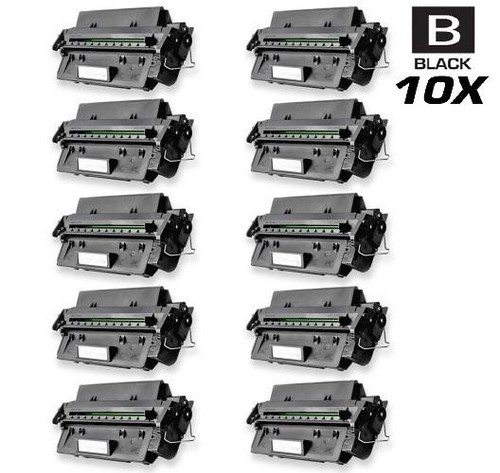
Picture the offices still running these machines: a 2200DTN on a records desk, a 2100 in a back office, each good for months on a single cartridge. A ten-pack on the supply shelf turns toner into a once-in-a-long-while decision — and every unit is the complete consumable, toner and imaging drum in one body, so each swap renews the whole print path at once.
Shop the 96A 10-Pack →Honesty like that deserves recording, and it gets it here. It does not change the shelf’s rule: two pages, one product — so the five-pack receives one card, the plain listing’s, in the grid below, and the twin is described in this panel, not linked.
The same cartridge at four shallower depths
Below the flagship the ladder steps down through five, three and two cartridges to the single that anchors every badge on this page — each rung’s savings measured against that single at its $44.49 sale price. One footnote belongs under the single itself: it is sold under three storefronts in this store, and the panel after the grid explains why only one of them carries a card.
THE 96A LADDER — FIVE, THREE, TWO, ONE

The middle of the ladder, and for most offices the sensible depth: 25,000 pooled pages at $31.63 a cartridge. Five singles at sale come to $222.45, so the box keeps $64.29. The card belongs to the plain listing; the “Premium Quality” twin at the identical price is covered beside the flagship above rather than carded twice.
Shop the 96A 5-Pack →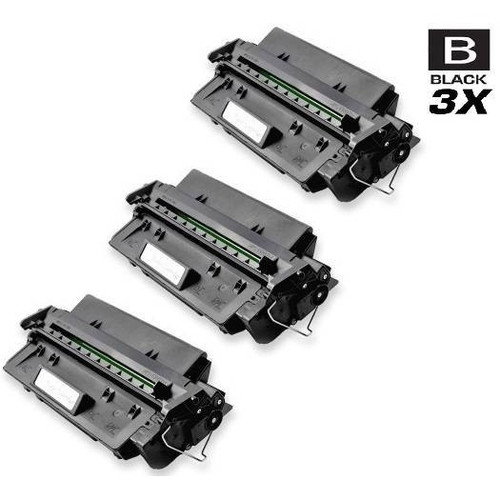
Three cartridges pool 15,000 rated pages — one in the printer, two in the cupboard. Each unit inside costs $33.78 at the price actually charged; its own page, working from list, names the pack at $116.53 outright. Three singles total $133.47; the pack keeps $32.14.
Shop the 96A 3-Pack →
A working cartridge plus its replacement, pooled at 10,000 rated pages. The pair works out to $36.46 a cartridge; its page quotes the $83.85 list figure instead of the price charged. Two singles come to $88.98, so the pair keeps $16.07.
Shop the 96A 2-Pack →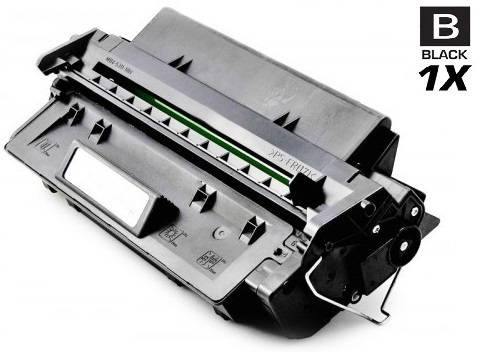
The cartridge itself, and the yardstick for every badge above: 5,000 rated pages at the family’s highest per-page cost. Its own text prices it at $51.16 — the list figure; the till charges the $44.49 shown here. Two further listings sell this identical single under printer-model names; the panel below covers them.
Shop the 96A Single →Five depths of one cartridge, side by side
A genuine row is missing on purpose. HP has discontinued the C4096A: no product page for it exists in HP’s US store, and HP’s own support community was already recording in 2017 that neither the HP Store nor SureSupply carried it anymore. This guide prints genuine prices only where HP itself states them, so the table below runs on the five compatible configurations alone.
| Configuration | Price | Rated pages | Cost / page | Printer fit |
|---|---|---|---|---|
| 96A 10-Pack — the flagship | $300.24 | 10 cartridges · ~50,000 pages | 0.600¢ pooled | All 11 models |
| 96A 5-Pack | $158.16 | 5 cartridges · ~25,000 pages | 0.633¢ pooled | All 11 models |
| 96A 3-Pack | $101.33 | 3 cartridges · ~15,000 pages | 0.676¢ pooled | All 11 models |
| 96A 2-Pack | $72.91 | 2 cartridges · ~10,000 pages | 0.729¢ pooled | All 11 models |
| 96A Single | $44.49 | 1 cartridge · 5,000 pages | 0.890¢ | All 11 models |
Read the table as a single staircase: every step down in depth raises the price of a page, every step up lowers it, and the per-cartridge cost falls at every rung — $44.49 down to $30.02 — with no inversions anywhere. Which rung is right is a question about shelf space and print volume, never about the cartridge, which does not change.
Eleven printers share this cartridge — every one has a category here
HP assigns the C4096A to eleven machines. The 2100 line contributes five: the LaserJet 2100, 2100M, 2100SE, 2100TN and 2100XI. The 2200 line adds six: the LaserJet 2200, 2200D, 2200DN, 2200DSE, 2200DT and 2200DTN. Every one of the eleven has a live category in this store — the fullest roster coverage in this stretch of the guide program — and every card above fits every model on the list. The whole shelf also files under the HP C4096A category, a name that needs no second tier beside it, because HP never issued one.
The product texts are less generous with the roster than the catalog is. The seven older listings name fit by series string alone — “2100 2200 Printer Series” — and enumerate none of the eleven models, even though each of those listings is filed in all eleven model categories. The two newer, model-named singles do enumerate, and stop at ten, leaving out the LaserJet 2200DT — which happens to be the namesake of one of them. That listing’s own questions address the 2200DT directly; its opening list simply forgets it.
Nothing reaches too far in the other direction: no listing in this family names a printer outside the 2100/2200 platform. The fit faults here are omissions and filing, never invention. One structural note: the series page above the family category fails live with a server error and is not linked from this page; the model and family links above all land where they promise.
Five thousand pages — declared twice, inflated nowhere
HP has stated this cartridge’s rating under two different regimes, and both statements land on the same number. The 1998 supplies datasheet rates the C4096A at 5,000 pages at five percent coverage; HP’s later ISO/IEC 19752 test report — nine cartridges tested, their average yield 5,583 pages — formally declares the same 5,000-page value under the modern standard. The listings repeat it exactly: every page on the shelf states 5,000 pages per cartridge, the pack texts rate per cartridge rather than inflating a pooled figure, and no page adds a single page HP did not grant.
The pooled totals in this guide are arithmetic, not claims: five cartridges pool 25,000 rated pages, ten pool 50,000. Real coverage will spend those pools faster or slower than the rating assumes — but the rating itself, the one number that can honestly be compared across the shelf, is HP’s own, to the page.
Toner and drum in one body — nothing else to buy, nothing to move
HP’s datasheet calls the C4096A an all-in-one cartridge and means it literally: the toner supply and the imaging drum live in the same unit, so the surface that forms every image is replaced fresh with each cartridge change. No separate drum exists for the 2100/2200 platform under any part number, and no second consumable waits behind the cards above — the price on each card is the whole price of keeping the printer printing.
On recognition, the store’s position is uniform across its compatible range and applies here: every cartridge leaves with the latest-generation chip already fitted, the printer accepts it on insertion with nothing to set up and nothing transplanted from the spent unit, and toner metering carries on the way it would with a genuine cartridge. One boundary is stated plainly — that assurance covers the firmware these printers run today, not firmware nobody has written yet. It should also be recorded that the product texts in this family say nothing about chips at all; the word appears in none of them, so the position above is the store’s standing one, not a quotation from this shelf.
The terms agree with themselves on every page
Some families in this program print one warranty term in their specification strips and a shorter one in their answers. This is not one of them. All nine listings in the family state the same pair of terms — a one-year warranty and one year of free returns — and nothing anywhere in the family contradicts them. The tiles below print those terms, plus the support and shipping facts the listings state alongside.
Choosing a depth, since the cartridge chooses itself
With one cartridge and five depths, the decision reduces to how much printing stands between this order and the next:
Questions from LaserJet 2100 and 2200 owners
No — not from HP, and not on this shelf. HP’s documentation for this platform lists a single cartridge, the standard-capacity C4096A; the only other code in HP’s datasheet is a 72-unit pallet of that same cartridge, a shipping quantity rather than a tier. The “C4096X” string circulates in third-party marketing, and the phrase “high-yield capacity” even slips into this store’s two newest listings — but it describes the same standard cartridge wearing a label HP never issued. Everything carded above is the one real size.
The honest answer is that the store’s two records disagree. In the catalog data, every carded listing in this family reads zero units — all five cards above, and the duplicate listings besides. On the storefront, the same products stand visible and orderable with live order buttons; the single’s page even displays the words “In Stock” beside its button. This guide prints no stock figure for any carded product and promises nothing about availability: the page in front of you at the moment of ordering is the authority, and if it ever refuses an order, that refusal — not this page — is the truth. For the record, the family’s only nonzero stock figure sits on the one listing this guide sets aside.
Because it was listed three times: once plainly, and once each under the names of the LaserJet 2200DT and the LaserJet 2200DTN. All three quote the identical price block and sell the identical C4096A. The model-named pair are newer pages with more photographs — and with the family’s freshest mistakes, including an opening fit list that omits the 2200DT, one listing’s own namesake. This guide cards the plain listing and describes the other two; nothing is gained by ordering through one page rather than another.
Neither — they are the same five cartridges, and the grander-named listing says so itself. Its text concedes that the cartridges “are built to the same C4096A specification, carry the same 5,000-page rating per cartridge”, and explains its identical price with a sentence this guide is glad to repeat: “we price the cartridge, not the adjective.” The card above follows the plain listing, as this program’s rule requires; the twin is written up beside the flagship rather than carded a second time.
The product texts do their arithmetic at list price; this guide does its at the price the till charges. The single’s text prices it at $51.16 while the sale price is $44.49. The ten-pack’s text speaks of a $345.28 order against $300.24 charged. The two-, three- and five-packs quote $83.85, $116.53 and $181.88 against $72.91, $101.33 and $158.16. The pattern is uniform across all nine descriptions in the family: every in-text figure is the list figure, roughly 13 percent above what a buyer actually pays. Every number on this page is the sale figure.
Because there is no genuine offer to quote. HP has discontinued the C4096A: it has no product page in HP’s current US store, and HP’s own support community was already noting in 2017 that the HP Store and SureSupply no longer carried it. Third-party sellers still list genuine units, but this program takes genuine prices only from HP itself — so the table carries the five compatible configurations and no genuine row.
Price and disclosure note: Every price printed above is the sale price charged on the carded listings, as read on November 18, 2026; if a product page shows a different figure when you visit, trust the page in front of you. The listing texts never use these sale figures at all — their arithmetic runs on list prices: $51.16 for the single (in all three of its storefronts), $83.85 for the two-pack, $116.53 for the three-pack, $181.88 for the five-pack in both its copies, and $345.28 for the ten-pack. Badge savings compare sale with sale against the canonical single: the two-pack $72.91 vs $88.98, the three-pack $101.33 vs $133.47, the five-pack $158.16 vs $222.45, the ten-pack $300.24 vs $444.90. No genuine price is printed, because HP no longer sells this cartridge. Yields are HP’s own 5,000-page declaration for the C4096A — stated at five percent coverage in HP’s 1998 datasheet and declared under ISO/IEC 19752 in HP’s own test report. Fit follows HP’s published eleven: LaserJet 2100, 2100M, 2100SE, 2100TN, 2100XI, 2200, 2200D, 2200DN, 2200DSE, 2200DT and 2200DTN. What the catalog itself gets wrong follows.
(1) List-price arithmetic in all nine descriptions: every price quoted inside the texts is the list figure while the live price is the lower sale figure, so a reader who trusts the text expects to pay roughly 13 percent more than the till charges — on every listing in the family. (2) Stock figures that read zero across the shelf: every carded listing, and every duplicate besides, reads zero units in the catalog data, yet the storefront presents the same products as orderable and the single’s page displays “In Stock”; the family’s only nonzero stock figure sits on the listing this guide sets aside. This guide makes no stock claims. (3) Stray markup: each of the seven older descriptions opens with a broken “<p> />” fragment; the two newer descriptions are free of it. (4) Fit under-naming in the seven older texts, which name the platform by series string only and enumerate none of the eleven roster models, despite each of those listings being filed in all eleven model categories. (5) An opening fit list, shared by both newer singles, that enumerates ten models and omits the LaserJet 2200DT — the very model one of those listings is named and sold for. (6) A “high-yield capacity” label in both newer introductions, dressing the platform’s standard-capacity cartridge in a tier name HP never issued. (7) Three storefronts for one single: the same cartridge on the same price block is sold under the plain listing and under two printer-model names; the guide cards one. (8) Twin five-packs on an identical price block, stock figure and near-identical packshot; the grander-named copy’s text concedes the sameness outright — “we price the cartridge, not the adjective” — and the plain listing takes the card. (9) The two newer singles are mis-filed: absent from the family category and from the primary LaserJet 2100 category, they sit instead in a duplicate “Laserjet 2100” bucket under the store’s color-printer branch, although the 2100 is a monochrome printer. (10) Weight fields that invert the shelf: every pack records a weight of 2 against the singles’ 4 and 3, while HP’s datasheet puts the genuine single’s package at 1.6 kilograms. (11) The series page above the family fails live, returning a server error; it is not linked here. (12) One listing of the nine stands outside this guide’s shelf entirely, set aside as a specialist variant: it is not carded, not linked and not priced anywhere on this page. (13) Silence on chips: no description in this family mentions a chip in either direction, so the recognition paragraph above states the store’s standing position rather than anything this shelf claims. The negative results belong on the record as well: every listing states HP’s 5,000-page rating exactly, with no pooled-total inflation; no description links into the set-aside listing — the cleanest cross-link record in this stretch of the program; no listing names a printer outside the 2100/2200 platform; the warranty and returns terms are the correct one-year pair on all nine pages, with no contradictory lifetime line anywhere; no description carries leaked production text; an image is present on every listing; and a live category exists for each of the eleven roster models.
The buyable shelf rides on five cards — one for each depth of the only cartridge HP made for these printers. Three more listings are dealt with in prose only and are never offered for sale here: the five-pack’s twin, and the pair of model-named copies of the single. One more is set aside altogether. Underneath sit the terms the listings themselves print: a year’s warranty beside a year’s free returns, a support desk staffed 9 AM to 5 PM Central on weekdays, and dispatch from warehouses in Illinois, Pennsylvania, Georgia and California.