




One fact organizes everything on this page, and it is stated here rather than discovered later: HP sells exactly one cartridge for these printers — the Q2612A, rated at about 2,000 pages under ISO/IEC 19752. The two deeper tiers on this shelf, the Q2612X at a claimed 3,000 pages and the Q2612AJ at a claimed 4,000, wear codes in HP’s style, but HP never issued either of them. They are this store’s own fuller fills of the same cartridge shell, and they are carded below under labels that say so, at ratings labeled as the store’s claims wherever those ratings are used. The family’s eighteen listings resolve into fourteen configurations once the duplicates are set aside: six boxes on HP’s genuine code, six on the store’s high-yield line, and two on its AJ line. Every price that follows is the register’s sale figure, and every genuine-tier rate is worked from HP’s declared 2,000 pages — the same figure the listings’ own yield fields print.
Begin with the platform, because on this one the platform does not decide — every cartridge on this page fits every machine on HP’s roster, from the LaserJet 1010 to the LaserJet 3055, so the choice here is depth and evidence, not fit. The guide’s lead box is the 12X 2-pack at $34.08: two of the store’s high-yield cartridges, a claimed 6,000 pages between them, 0.57¢ a page if the store’s rating holds. A buyer who would rather stand on a figure HP itself declares can buy the same 6,000 pages on the genuine code — the 12A 3-pack at $41.29 — and the $7.21 between the two boxes is, precisely, the price of the verified rating. One shelf curiosity deserves its place up front: the high-yield single costs exactly what the standard single costs, $24.48, while claiming half again the pages — the claim is the store’s, and it is printed as a claim, but at the single size the deeper fill asks no premium at all. Everything carded below is a Clever Supplies compatible — this store stocks no genuine HP cartridge for the family — so the one HP price quoted on the page is flagged as HP’s wherever it stands and used purely as a measure.
Fourteen boxes, one genuine cartridge
The family’s eighteen listings resolve into fourteen distinct configurations: HP’s cartridge in six pack sizes, the store’s high-yield line in the same six, and two boxes of its AJ line, which follow in their own labeled block. Three further listings repeat carded configurations to the cent and are dealt with in the closing note instead of being carded a second time. Nothing on the shelf is priced at list; every figure is the sale figure. Badges, where they appear, do one sum only: the cost of the pack’s own cartridges bought singly, minus the pack’s price, inside the same tier. Order on the page runs flagship first, the balance of the high-yield line after it, and the genuine-code ladder last, single to 10-pack.

One genuine Q2612A costs $120.99 at HP’s US store. Against that, $34.08 buys this pair — two high-yield cartridges claiming a combined 6,000 pages, the rated output of three genuine singles — and leaves the buyer $86.91 ahead of a single genuine cartridge. A 1020 or 3055 in daily service consumes cartridges on a rhythm, and the pair matches it: one in the machine, one sealed on the shelf, and the replacement already in hand on the morning the toner light first shows.
Shop the 12X 2-Pack →THE REST OF THE HIGH-YIELD LINE — THE STORE’S OWN TIER, CLAIMED AT 3,000 PAGES A CARTRIDGE
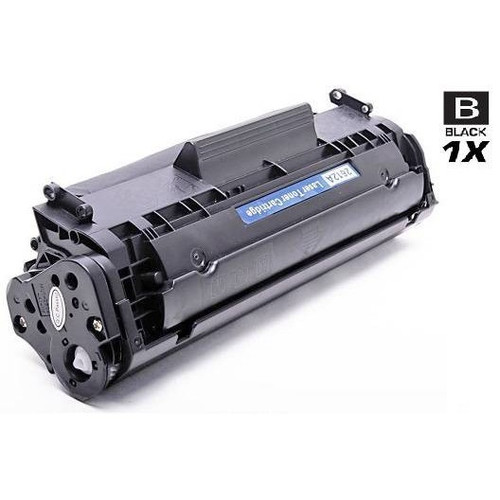
The high-yield cartridge on its own — and the shelf’s curiosity. It costs exactly what the standard single costs, $24.48, while claiming 3,000 pages against the genuine code’s 2,000. HP sells no such cartridge, so the extra thousand pages rest on the store’s word; if the word holds, the single is pure upside.
Shop the 12X Single →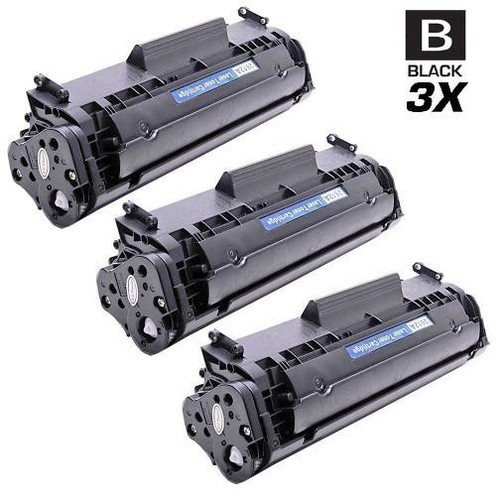
Cartridges at $14.36 apiece. A claimed 9,000 pages in one carton — the high-yield line’s middle depth, for a shared machine whose toner drawer should never be the reason a job waits.
Shop the 12X 3-Pack →
Cartridges at $13.02 apiece. This is the newer listing of the line — the one whose name carries both codes at once — carded here as what its yield field says it is: the high-yield line’s 4-pack, rated at the store’s claimed 3,000 pages a cartridge.
Shop the 12X 4-Pack →
Cartridges at $12.22 apiece — a claimed 15,000 pages for less than half the price of one genuine cartridge, for the office that reorders by the half-year rather than the month.
Shop the 12X 5-Pack →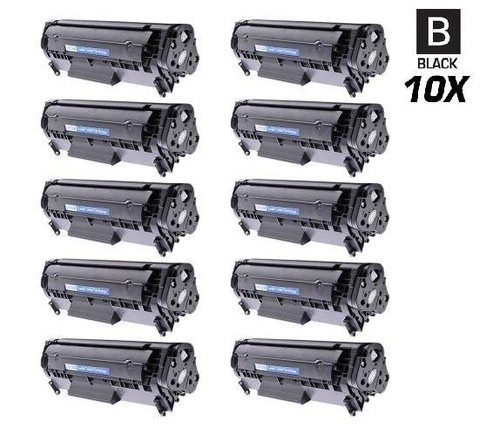
Cartridges at $10.61 apiece — the cheapest claimed page on this shelf. Ten of the store’s high-yield cartridges together cost $14.91 less than a single genuine Q2612A bought from HP.
Shop the 12X 10-Pack →THE GENUINE-CODE LINE — HP’S Q2612A, RATED 2,000 PAGES BY HP ITSELF
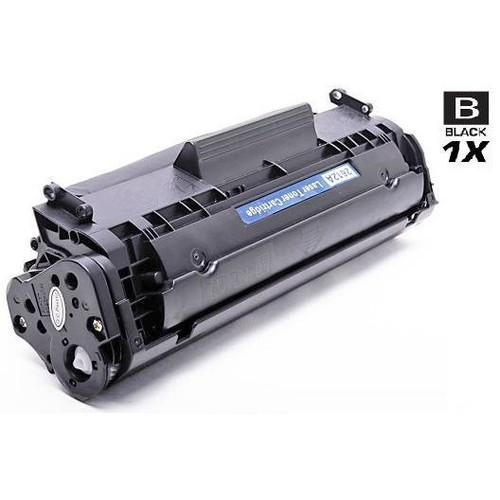
The cartridge these printers were born with, at HP’s own rating. HP asks $120.99 for the genuine Q2612A; this single runs $96.51 under that figure at the same declared 2,000 pages.
Shop the 12A Single →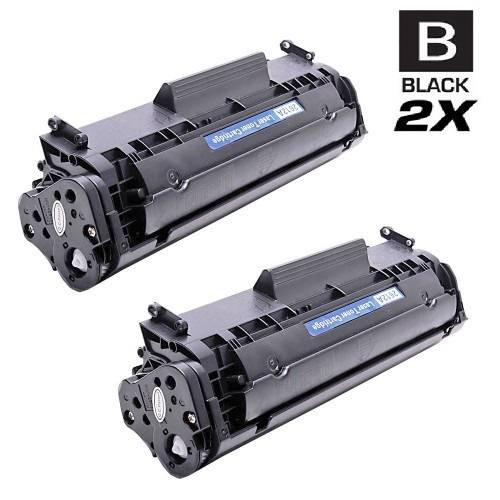
Cartridges at $16.45 apiece. HP sells a genuine 2-pack of this cartridge as well; its US price could not be retrieved for this guide, so no comparison is printed against it — the pair stands on its own arithmetic.
Shop the 12A 2-Pack →
Cartridges at $13.76 apiece — the verified-rating answer to the flagship. The same 6,000 pages the high-yield pair claims, carried instead at HP’s declared 2,000 a cartridge, for $7.21 more.
Shop the 12A 3-Pack →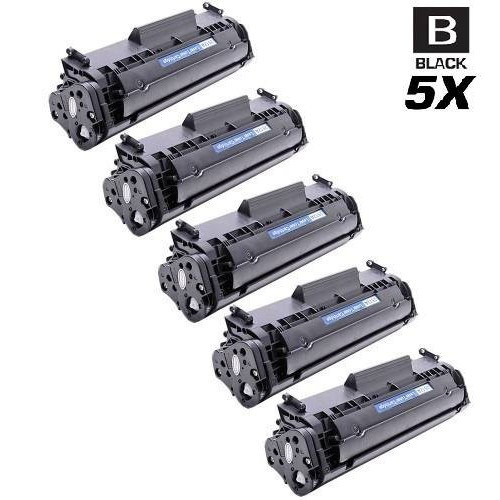
Cartridges at $11.62 apiece. Ten thousand pages at HP’s rating — the genuine ladder’s working depth for a small fleet of these machines fed from one drawer.
Shop the 12A 5-Pack →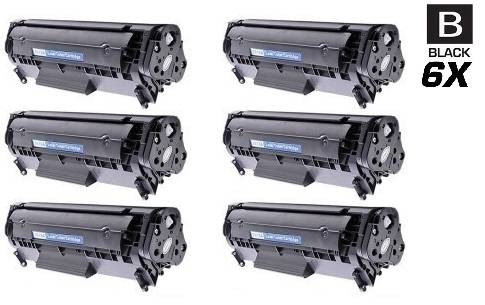
Cartridges at $11.08 apiece. There is no 4-pack on the genuine ladder — the shelf steps from three cartridges to five to this six — and at this depth its per-page rate slips under the flagship pair’s claimed rate — on a figure HP itself declares.
Shop the 12A 6-Pack →
Cartridges at $10.01 apiece — the genuine line’s floor, and the cheapest verified page on this shelf. Twenty thousand pages at HP’s declared rating, for $20.87 less than HP charges for one cartridge.
Shop the 12A 10-Pack →The AJ line: “Q2612AJ”, a second code HP never issued
Two boxes carry a third code — Q2612AJ, sold as a jumbo fill and rated by the store at 4,000 pages a cartridge. HP’s catalog knows no such article: its genuine range for this platform is the single Q2612A, full stop, and the AJ code has no existence anywhere outside this store. The AJ is the store’s own deepest fill of the same cartridge, and unlike the high-yield line above, it never grew into a ladder — a single and a 4-pack are all there is. Taken at its claimed figure, its pages land at 1.14¢ and 0.84¢: the single beats exactly one box on this shelf, the genuine-code single, and the 4-pack loses to every pack of both ladders. This block wears no SAVE badges — its honest comparison is against the other tiers, and the table below is where that comparison sits.
THE STORE’S SECOND VARIANT — A STORE-CLAIMED 4,000 PAGES, FITTING ALL 18 MODELS

The dearest single on the shelf — $21.10 more than either of the $24.48 singles — for a claimed doubling of the standard fill. Even granting the claim in full, its page costs more than every packed page above; the premium buys the longest interval between swaps, nothing more.
Shop the 12AJ Single →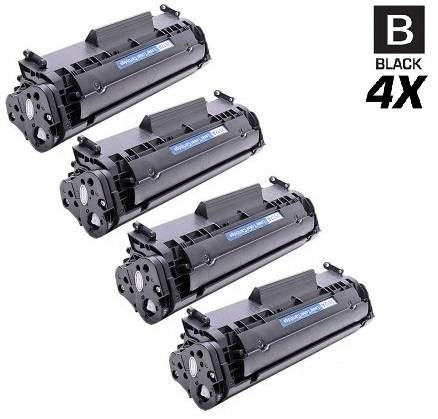
At $33.52 a cartridge this is the cheapest page the AJ line offers — and the flagship pair still undercuts it, at 0.57¢ against its 0.84¢. The box costs $28.01 more than the high-yield 10-pack while claiming just over half its pages.
Shop the 12AJ 4-Pack →The full shelf on one scale
Each row is a division: the box’s price over the pages it is rated to print. The genuine tier divides by HP’s declared 2,000 a cartridge; the store tiers divide by their claimed figures, and each such row says so in its own text. The fit column, unusually, never changes as the eye travels down it — HP built a single cartridge shell for the entire platform, and no tier is shut out of any machine on the roster.
| Pack | Sale price | Pages the box is rated for | Per-page rate | Fits |
|---|---|---|---|---|
| 12X 10-Pack | $106.08 | 10 cartridges · ~30,000 pages on the store’s claimed rating | 0.35¢ | All 18 models |
| 12X 5-Pack | $61.08 | 5 cartridges · ~15,000 pages on the store’s claimed rating | 0.41¢ | All 18 models |
| 12X 4-Pack | $52.08 | 4 cartridges · ~12,000 pages on the store’s claimed rating | 0.43¢ | All 18 models |
| 12X 3-Pack | $43.08 | 3 cartridges · ~9,000 pages on the store’s claimed rating | 0.48¢ | All 18 models |
| 12A 10-Pack | $100.12 | 10 cartridges · ~20,000 pages | 0.50¢ | All 18 models |
| 12A 6-Pack | $66.50 | 6 cartridges · ~12,000 pages | 0.55¢ | All 18 models |
| 12X 2-Pack — the flagship | $34.08 | 2 cartridges · ~6,000 pages on the store’s claimed rating | 0.57¢ | All 18 models |
| 12A 5-Pack | $58.10 | 5 cartridges · ~10,000 pages | 0.58¢ | All 18 models |
| 12A 3-Pack | $41.29 | 3 cartridges · ~6,000 pages | 0.69¢ | All 18 models |
| 12A 2-Pack | $32.89 | 2 cartridges · ~4,000 pages | 0.82¢ | All 18 models |
| 12X Single | $24.48 | 1 cartridge · ~3,000 pages on the store’s claimed rating | 0.82¢ | All 18 models |
| 12AJ 4-Pack (store variant) | $134.09 | 4 cartridges · ~16,000 pages on the store’s claimed rating | 0.84¢ | All 18 models |
| 12AJ Single (store variant) | $45.58 | 1 cartridge · ~4,000 pages on the store’s claimed rating | 1.14¢ | All 18 models |
| 12A Single | $24.48 | 1 cartridge · ~2,000 pages | 1.22¢ | All 18 models |
Read this table with its evidence column in mind. The top rows run on the store’s own ratings — claimed pages, honestly labeled — and the genuine line’s verified floor is the 12A 10-pack at 0.50¢, a rate no claim stands behind because none is needed. The AJ line sits where it sits even after being granted every page it claims: depth per cartridge is all it sells, and on this shelf depth is cheaper elsewhere. Between the two ladders, the same money buys either more claimed pages or fewer declared ones; the table prices both, and the choice of which evidence to trust is the buyer’s.
Fit: one cartridge, eighteen machines, no fence
HP’s published compatibility for the Q2612A names eighteen models, and the store keeps a category for seventeen of them: the LaserJet 1010, 1012, 1015, 1018, 1020 and 1020 Plus, 1022, 1022n and 1022nw; the 3015, 3020 and 3030 all-in-ones; the 3050, 3050z, 3052 and 3055; and the M1005 MFP and M1319f MFP — the eighteenth name, the 1020 Plus, has no category of its own and is carried here in prose. The family’s own shelf is gathered under HP Q2612A. Because HP sells a single cartridge for the platform, there is no tier fence to police: the genuine-code boxes, the store’s high-yield line and its AJ line all ride on the same shell, and every one of them claims the whole roster. No model on the list is confined to the shallow cartridge, and none is promised the deep one by HP — depth here is a fill, not a fitment.
The store’s own tree reaches further than HP’s list. It also files this family under categories for a LaserJet 1010W, a LaserJet 1018S, a LaserJet 1022NXI and a LaserJet 1030 — names that appear in no HP compatibility list for this cartridge, whatever their standing in regional lines elsewhere. This guide follows HP’s published roster: the eighteen models above are the fit claim, and the four store-only names are not carried into it.
Yields: one HP rating, two store claims
On the genuine tier there is nothing to arbitrate. HP declares an average of about 2,000 standard pages for the Q2612A, in accordance with ISO/IEC 19752; the store’s yield fields print 2,000 on every genuine-code listing, and their descriptive text says 2,000 as well. Field, prose and manufacturer agree to the page, so every genuine-tier rate in this guide is a division by 2,000 and every pack total a plain multiplication of it.
The deeper tiers’ numbers have no such anchor. The code Q2612X appears in no HP store, no HP support page and no HP regional catalog; it lives in compatible-industry channels, where third parties attach figures of their own — one chip maker’s catalog pairs the two codes at 2,000 and 3,500 pages. The store’s 3,000 matches neither an HP figure (there is none) nor that industry one; it is the store’s own rating, and the AJ’s 4,000 is the same kind of figure for a code with no existence outside this store at all. Neither number is used in this guide without its label: X and AJ rates are computed at the claimed figures and called claims wherever they appear.
Against all of it stands HP’s own shelf, its figures taken from HP’s US store and marked as HP’s at every appearance: one genuine Q2612A at $120.99, in stock, which is 6.05¢ a page at the declared rating. A genuine 2-pack exists in HP’s lineup as well; no US price for it could be obtained for this guide, so the guide prints none and builds no comparison on it. Set against the one genuine figure that exists, the compatible standard single saves $96.51 against a single genuine cartridge, and the flagship pair stands $86.91 under one.
A word of caution applies to the family’s product pages as a group: their cost-per-page sums are worked at list prices, not at the sale prices the register actually takes — the prices carded here. The standard single’s text computes “roughly 1.4 cents a page” at its $28.15 list price, where checkout takes $24.48 and the rate is 1.22¢; the high-yield single’s “roughly 0.94 cents” is 0.82¢ at sale; the high-yield 4-pack’s “just under $15 per cartridge” is $13.02 at sale; the AJ 4-pack’s “about 0.96 cents a page” is 0.84¢. A per-page figure read on any of these product pages should be divided again at the sale price before it is trusted; that re-division, and nothing grander, is what this guide’s arithmetic consists of.
One supply to stock — and the full cartridge in the box
No separate drum belongs in the budget for these machines. The Q2612A carries its imaging drum inside the same housing as its toner — HP’s manual for the platform warns against touching that drum — so drum wear is charged against the cartridge’s 2,000-page rating, and each replacement renews the imaging surface along with the toner. Platforms that split toner and drum into separate part numbers ask for two budgets; this one asks for one, at HP and at this store alike.
The cartridge in the box deserves a sentence of its own. HP’s technical specifications for the LaserJet 1020 list an HP LaserJet print cartridge among the box contents, and the ordering information in the same document identifies it as the Q2612A at the standard declared yield of 2,000 pages. No reduced introductory rating is published for this platform anywhere: the boxed cartridge is the cartridge sold on this page, filled to its full rating — so by the time the first replacement is ordered, the machine’s appetite has a full cartridge’s evidence behind it.
Chips: a platform from before the argument
Not one of the family’s eighteen descriptions mentions a chip, a firmware version or dynamic security — and on this platform the silence is simply accurate. The design dates from 2003, years before HP began building cartridge authentication into its printers, and there is no blocking machinery in these machines for a warning to describe; HP’s present-day page for the cartridge prints no dynamic-security notice either.
The store’s compatibles are built to the supplier’s standing specification — a current-generation chip, fitted before boxing — and this family’s cartridges follow it like the rest of the range. Installation is a plain swap, old cartridge out and new cartridge in, plug-and-play, with nothing to transplant from the spent unit. One line is never crossed, here or in any guide in this program: no promise is made about firmware that has yet to be written. The cover standing behind each box follows.
What stands behind each box
Which box, for which printer
Answers for the 1010–3055 owner
No. HP sells exactly one cartridge for these printers — the Q2612A — and the code Q2612X appears in no HP store, support page or catalog. It is this store’s deeper fill of the same cartridge shell, wearing a code in HP’s style, and its 3,000-page rating is the store’s own. It is carded above under labels that say so, because the box itself is a legitimate offer; only its ancestry needs correcting.
Yes — fit on this platform is universal. HP built one cartridge shell for all eighteen models on its roster, from the LaserJet 1020 to the LaserJet 3055, so every tier carded here — genuine-code, high-yield and AJ alike — fits every machine on the list. The tiers differ in how much toner the cartridge carries and whose rating stands behind the figure, never in whether it seats.
The 2,000 is HP’s declaration for the Q2612A, made under ISO/IEC 19752, and it is the only figure on this page that a manufacturer stands behind. The 3,000 and the 4,000 are this store’s ratings for its own deeper fills of the same shell; they may well be honest fills, but no HP document vouches for them. This guide computes the store tiers’ per-page costs at the claimed figures and labels them claims at every use, so the comparison is priced both ways and the choice of evidence is yours.
Because the store prices them as equals: $24.48 buys either the standard cartridge at HP’s declared 2,000 pages or the high-yield cartridge at the store’s claimed 3,000 — the same shelf price, the same stock figure, two different kinds of evidence behind the page count. A buyer who wants the manufacturer’s number takes the 12A; a buyer willing to take the store’s word takes a claimed thousand extra pages for nothing.
No — there is no drum line item on this platform at all. Toner and imaging drum share one housing in the Q2612A’s design, so the drum’s service life is spent inside the cartridge’s page rating and a fresh drum surface arrives with every fresh cartridge. Neither HP nor this store lists a drum part number for these machines.
The standard cartridge, filled to its full rating. HP’s specifications name the boxed cartridge as the Q2612A itself, declared at the complete figure of about 2,000 pages — no reduced starter yield is published for this platform — and no machine in the line shipped with a deeper fill, HP never having made one for it. The depth question therefore waits for the first replacement, by which point the first cartridge’s lifespan has already answered half of it.
Price and disclosure note: Prices here are sale prices — the figures the register charges — taken from the store’s live catalog on November 17, 2026 and checked against the storefront page of every listing carded, the page’s title matched to its catalog record before the figure was trusted. Behind each sale price stands a higher list price; if a promotion lapses, the figure on the product page governs. A SAVE badge is a subtraction performed inside one tier at sale prices: the pack’s price set against the cost of its own cartridges bought singly. Genuine-code tier: the 2-pack’s $16.07 badge is the gap between its $32.89 price and $48.96 of singles; the 3-pack’s $32.15 against $73.44; the 5-pack’s $64.30 against $122.40; the 6-pack’s $80.38 against $146.88; the 10-pack’s $144.68 against $244.80. High-yield tier: $14.88 against $48.96 of singles for the 2-pack; $30.36 against $73.44 for the 3-pack; $45.84 against $97.92 for the 4-pack; $61.32 against $122.40 for the 5-pack; $138.72 against $244.80 for the 10-pack. The AJ block carries no badges by design. HP’s price was read the same day from the offer data on its US store product page and is marked as HP’s wherever it appears: the genuine Q2612A at $120.99, in stock. A genuine 2-pack stands in HP’s lineup; its US price could not be obtained, so this guide prints none and rests no comparison on it. Yields: genuine-tier rates divide by HP’s declared figure — about 2,000 pages for the Q2612A under ISO/IEC 19752, the same number the listings carry in their yield fields and their prose; the store tiers’ rates divide by the store’s claimed figures — 3,000 pages for the high-yield line, 4,000 for the AJ line — and each is labeled a claim at every appearance in this guide. Fit is taken from HP’s published compatibility for the cartridge: eighteen models, of which the store keeps categories for seventeen, the LaserJet 1020 Plus being named in prose. Against that record, the departures on the store’s own pages are these.
First, the store’s two deeper tiers wear HP-style codes HP never issued: the high-yield listings’ names, their shared intro’s phrase “part of the HP 12A and HP 12X LaserJet Series” and an OEM Number field reading “Q2612X” all present the code as HP’s, and the AJ tier does the same with “Q2612AJ”. Second, a misspelling — “Cartirdge” — runs through five of the six high-yield listings’ names and through their page addresses as well. Third, the sixth high-yield listing, the 4-pack, spells its name correctly but carries both codes in that name and in its OEM Number field, a yield field reading “Black: 3000”, and an answer conceding the listing “covers both HP order codes” — only one of the two is an HP order code. Fourth, arithmetic at list prices runs through the whole family: the descriptions divide by prices the customer never pays — the standard single’s text claims “roughly 1.4 cents a page” for a cartridge whose sale price works out to 1.22¢ — and both store tiers repeat the habit. Every rate in this guide is therefore worked afresh from sale prices. Fifth, HP’s own marketing prose opens the older listings, written in HP’s voice, including passages that describe a toner cartridge’s output as ink — “spatter-free application of ink to the page” among them. Sixth, filing: the family’s three newer listings are parked under COLOR LASERJET SERIES, a color heading over a monochrome family, and not one of them sits in the family’s own category, where the fifteen older listings are filed; two of them also appear under a color-path LaserJet 1010 category and a duplicate M1005MFP category. Seventh, the duplicates: two further standard singles share one name character for character, one price and one stock figure, the second’s address being the first’s with “-1” appended, and a “Premium Quality” 5-pack that duplicates the carded 5-pack exactly — same list price, same sale price, same stock figure — under a name its own answers concede describes a build standard rather than a different product; none of the three is carded. Eighth, a cross-reference paragraph in the three newer listings states that this cartridge is the same unit as a Canon cartridge — Canon’s Cartridge 104, FX-9 and FX-10 — with a “Canon rates the cartridge at 2,000 pages” figure and a live link to a Canon product; it is recorded here as an unverified store claim, checked against no Canon publication for this guide, and it plays no part in the HP arithmetic above. Ninth, the older batch’s shared intro names two of the platform’s eighteen models — “LaserJet 1010 3015 all-in-one Series” — as its whole fit statement, leaving the other sixteen to the listings’ closing paragraphs; and the category tree around the family is untidy in the same spirit, keeping paired categories for single all-in-one models (a LaserJet 3015 beside a LaserJet 3015MFP, and likewise for the 3020, 3030, 3050 and 3052), two categories for the M1319f and three for the M1005, while the AJ 4-pack is missing from the LaserJet 3050 category its siblings are filed under. Tenth, the high-yield single carries the standard single’s exact price and its exact stock figure — an identity that extends past pricing into inventory. Eleventh, the high-yield 5-pack’s description runs markedly shorter than its five siblings’ and lacks the closing roster fit paragraph the rest of the line carries.
Fourteen cards stand above: six configurations on HP’s genuine code, six on the store’s high-yield line, and two on its AJ line, the store tiers each presented in blocks that identify them as the store’s own. One further listing in this family is a check-printing (MICR) product, named as such on its own page; under this guide program’s standing rule it is neither carded, linked nor offered here — this note’s count is its only appearance. The chip section above records that all eighteen descriptions are silent on chips and firmware alike, on a platform whose design predates cartridge blocking, and states the supplier’s position as the store’s own, bounded as always: firmware still to come is promised nothing. The in-box figure is HP’s, from its LaserJet 1020 technical specifications. Every offer carries the cover its own listing prints — a year’s warranty, a year’s free returns, support on weekdays from 9 AM to 5 PM Central, and stock distributed across Illinois, Pennsylvania, Georgia and California.