




HP’s production end of the LaserJet line — the 9000, 9040 and 9050 series — runs on a single cartridge design, and HP issued exactly one version of it: the C8543X, badged 43X, rated at about 30,000 pages. This catalog sells that cartridge, and it also sells a second tier HP never made: the C8543XJ, a Jumbo variant whose code appears in no HP list and whose 40,000-page rating is this store’s figure alone. Both tiers are set out below at the sale prices checkout charges, with the invented tier labeled as invented from the first screen. Two further wrinkles are stated just as plainly: the genuine cartridge’s own single listing is switched off, yet the cartridge itself can still be bought one at a time, on a listing named for one of its printers rather than for its code; and the genuine three-pack costs less than the three buyable singles it replaces.
Running these machines today, the practical default is the 43XJ three-pack at $458.64: it prints the family’s cheapest buyable page and holds one of the two genuine savings on the shelf. A single machine needing one cartridge takes one of the two singles that can actually be ordered: the 43XJ single at $163.60, or HP’s own 43X at $142.83 on a listing named for a printer it serves. Buyers who want HP’s own code and nothing else take the 43X three-pack at $396.32, knowing it undercuts the three buyable singles by $32.17; the shelf’s dearest page is now the genuine single’s own, at 0.476¢. The XJ tier is this store’s variant, not an HP product; that status is disclosed wherever its rating is printed. Every figure here is a sale figure from the product’s own page. The listings argue from list prices instead, and those figures appear only in the disclosure at the foot of this page, identified as the listings’ own.
The flagship is a store-tier pack — and it earns its badge
The flagship is not the genuine cartridge. It is the three-pack of the store’s own Jumbo tier — the configuration that prints the cheapest buyable page in this family and one of two that undercut their own singles: three 43XJ singles total $490.80 at sale, the pack is $458.64, and the $32.16 difference is badged on its card because the comparison is measured sale against sale, the only basis checkout honors. The genuine pack further down earns a badge on exactly that basis. That a store-invented tier should lead a buying guide is exactly why the panel beside the card exists. The J’s provenance is stated there in full, before any price is asked to carry weight.
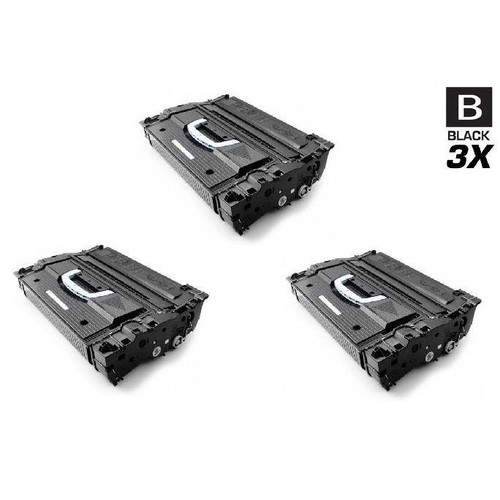
A three-pack suits the way these machines actually live — in print rooms and departmental clusters, working at volumes where a 30,000-page cartridge is a scheduling unit rather than a lifetime supply. The pack is three complete renewals, spendable on one heavy machine or spread across a fleet, each unit independent of the other two. Nothing inside needs pairing or assembly; the pooled rate simply assumes all three cartridges are eventually used, which on this platform is a safe assumption.
Shop the 43XJ 3-Pack →This catalog has met house tiers before, and the treatment here follows the standing rule: the variant is carded under its own name, its rating is always attributed to the store and never to HP, and a buyer who wants only manufacturer-rated hardware is pointed to the genuine pack further down. What the J amounts to physically — a standard shell filled further — cannot be verified from HP’s side, because HP’s side is silent. The store’s rating is printed because the store stands behind the listing; it is labeled because the store is its only source.
The genuine cartridge — its buyable single, its pack, and the listing that stays dark
The rest of the shelf holds two buyable singles — the store’s variant and the genuine cartridge itself, on a listing named for a printer — the genuine tier’s three-pack, and two listings that earn prose instead of cards. One of those prose listings duplicates the genuine pack outright. A second 43X three-pack wears the words “Premium Quality” in its name at the identical $396.32, with identical fields, rating and stock — and its own first FAQ dismantles the distinction before a buyer has to: asked what the premium buys over the regular pack, it answers that it is “nothing extra that shows up in the specifications”, and a later answer concludes that “the adjective is free, and worth exactly that.” This guide cards the plain listing — the one that also holds the family’s only recorded sale — and leaves the premium twin here, quoted in its own words.
THE REST OF THE SHELF — THREE CARDS AND ONE DARK LISTING
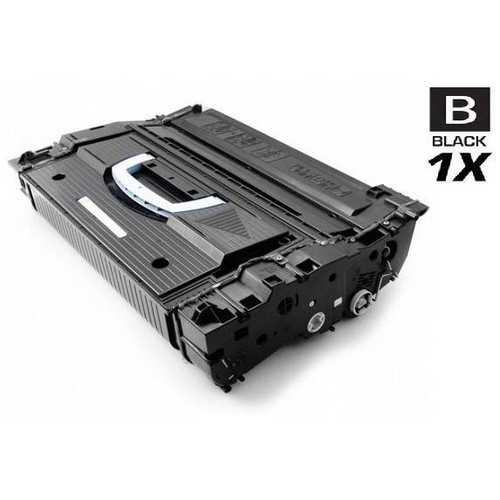
The cheaper page of the two singles in this family that can actually be ordered. The genuine tier’s code-named single listing is switched off, but the cartridge itself is sold one at a time on the model-named listing carded beside this one — so one-at-a-time buying runs through both doors, and this variant’s page costs less. Its 40,000-page rating is the store’s figure for its own code, printed as such here as everywhere on this page.
Shop the 43XJ Single →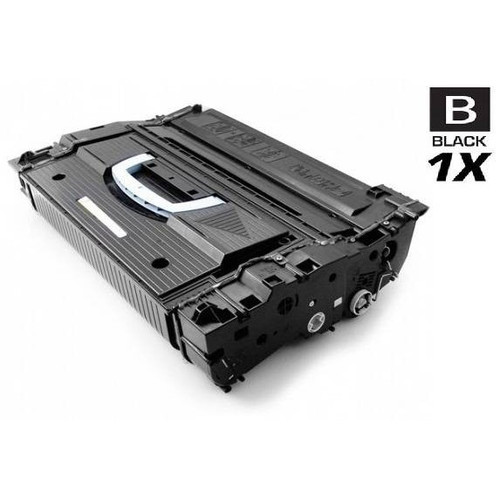
HP’s own cartridge, buyable one at a time after all — on a listing named for the LaserJet 9000hnf, one of the seventeen machines it serves, rather than for the cartridge code. The cartridge inside is the genuine tier’s C8543X at its 30,000-page rating. Bought singly its page is the shelf’s dearest; what the premium buys is one cartridge under HP’s code, with no pack arithmetic attached.
Shop the 43X Single →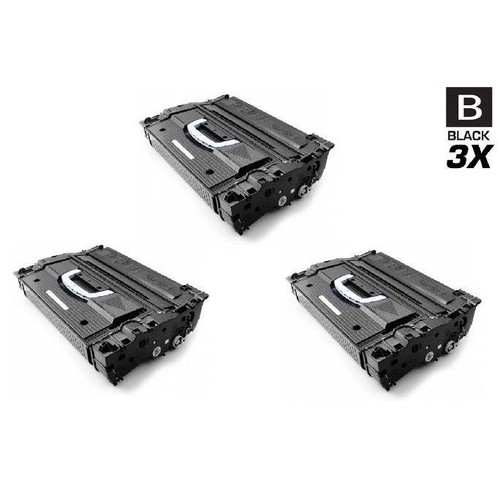
The genuine HP tier in depth — and its card carries a badge, earned on the same basis as the flagship’s. Three buyable singles at their $142.83 sale figure total $428.49, so this pack saves $32.17 against its own contents bought one at a time; the table below shows the working. It is also the family’s only listing with a recorded sale.
Shop the 43X 3-Pack →Why the single is dark, the catalog does not say. Its effect is narrower than it first looks: the code-named door to one HP-coded cartridge is shut, but the cartridge itself is sold one at a time on the model-named listing carded above — this family’s fourth card — so a buyer who wants one today is routed to that listing, to the store-tier single, or to the genuine pack. If this listing is ever switched back on, it becomes the family’s fifth card: the same configuration as the fourth, at a lower price. Until then it is recorded here, so that its absence reads as a known fact rather than a buyer’s confusion.
Every configuration on one price basis
Each buyable row divides a sale price by a stated page rating; pack rows are marked pooled because their pages sit in three separate cartridges. The fifth row is a record rather than an offer — the genuine single under its own code-named listing, switched off — carried so the shelf’s full shape, dark corner included, stands in one place:
| Configuration | Sale price | Rated pages | Cost per page | Printer fit |
|---|---|---|---|---|
| 43XJ 3-Pack — the flagship | $458.64 | 3 cartridges · ~120,000 pages | 0.382¢ pooled | All 17 models |
| 43XJ Single | $163.60 | 1 cartridge · ~40,000 pages | 0.409¢ | All 17 models |
| 43X Single | $142.83 | 1 cartridge · ~30,000 pages | 0.476¢ | All 17 models |
| 43X 3-Pack | $396.32 | 3 cartridges · ~90,000 pages | 0.440¢ pooled | All 17 models |
| 43X Single — listing switched off | Not currently sold | 1 cartridge · ~30,000 pages | 0.424¢ (reference) | All 17 models |
Read the genuine rows together and the tier’s arithmetic resolves. Three buyable singles at the model-named listing’s $142.83 sale figure total $428.49; the pack that holds the same three cartridges costs $396.32 — $32.17 less, and the saving is badged on its card. The dark listing’s $127.13 figure survives only as a reference in the last row: measured against a price no buyer can pay, the pack would look dearer, which is precisely why this guide strikes its savings against buyable singles alone. The family’s other saving runs on the store tier: $32.16 off three J singles, badged on the flagship’s card.
No genuine HP price appears in this table. HP’s US store returned no price for the C8543X when this guide was prepared, so no manufacturer figure stands beside the store’s own, and none has been estimated to fill the space.
Seventeen printers across three production series
HP’s published compatibility gives both tiers the same estate. From the 9000 line, the LaserJet 9000, 9000n, 9000dn, 9000hnf, 9000hns, 9000mfp and 9000L MFP; from the 9040 line, the 9040, 9040n, 9040dn, 9040mfp and M9040 MFP; and from the 9050 line, the 9050, 9050n, 9050dn, 9050mfp and M9050 MFP. The store files the family under its HP C8543X category — named, properly, for the genuine code, although the store-tier listings sit under it too; that is recorded in the disclosure. The category tree around the platform runs wider than the roster: twenty-three model categories stand in the store for a seventeen-name HP list, and two of the extra names correspond to no printer HP ever made. They are named in the disclosure and linked nowhere on this page.
On fit, the listings are well behaved. Every description in the family states its compatibility at series level — the 9000, 9040 and 9050 series — which is exactly HP’s platform, and none of them reaches for a printer outside it. Because both tiers are built on one cartridge design, a 43X and a 43XJ are interchangeable at the machine; what separates them is fill and provenance, never fit. The spent cartridge remains the decisive check: if the code coming out reads C8543X — or the store variant’s C8543XJ — the cards on this page are its replacements. If it reads anything else, this is the wrong family.
One rating with three signatures, one with a single source
The genuine cartridge’s rating is the simplest in this catalog to state. HP’s product page gives about 30,000 pages for the C8543X; the listings’ spec fields give 30,000; their prose gives 30,000. The basis is the yardstick of the cartridge’s era — five percent average page coverage, from before ISO/IEC 19752 standardized how yields are tested — so the figure supposes text-weight pages, and heavy production work will finish a cartridge sooner than the rating suggests. Every genuine-tier figure on this page is computed from that declared rating, exactly as published, with no arbitration needed between sources.
The Jumbo tier’s 40,000 has a shorter pedigree: it appears in the variant’s spec field and in its prose, and nowhere else. No HP document rates this cartridge, because no HP document acknowledges its code. The store’s two statements at least agree with each other, so the figure is printed — always as the store’s rating for its own variant, never as an HP number. On the store’s figures the tier gap is a third again: 40,000 against 30,000, a ratio of 1.33 and 10,000 extra rated pages. A buyer deciding how much of that gap to bank on is really deciding how much weight a single-source rating carries. The genuine tier’s figure, by contrast, can be checked against the manufacturer in one search — and survives the check.
One practical consequence follows from the shared basis. Both ratings are stated at standard coverage, so the comparison between the tiers is at least made with a single ruler — even though only one of the two figures has a manufacturer standing behind it. Production work runs denser than the test page on both tiers alike, so real life will land below both ratings in roughly the same proportion, and the shape of the choice — a verified 30,000 against a store-stated 40,000 — does not change when it does.
One cartridge carries the drum — and the listings never mention it
HP designed this platform’s cartridge as a complete print unit: toner and imaging drum sealed into the one C8543 shell, with no separate drum part, code or rating anywhere in HP’s line for these machines. A cartridge change therefore renews the whole image-forming path at once, and nothing else in a 9000, 9040 or 9050 runs on a second consumable schedule. What is unusual here is the listings’ silence on the subject: across the family’s descriptions, the component is never mentioned at all — no claim about it, true or false, is made either way. The architecture stated on this page comes from HP’s design, not from listing text, because there is no listing text on the subject to lean on.
The electronic side follows the store’s standing arrangement. Each cartridge ships with the supplier’s current chip generation already fitted — the practice across this store’s compatible range, with a clean record behind it: no chip complaint has come back on a cartridge supplied this way. Seat the cartridge and the machine accepts it, toner gauge reporting; nothing is salvaged or transferred from the spent unit. The assurance is bounded in the same breath: it covers cartridges as supplied today and the record accumulated so far, and it cannot speak for firmware HP has not yet released.
The terms underneath all four cards
Four products are carded on this page, and one set of terms travels with each of them; the terms are gathered here rather than repeated under every card.
Choosing among the four cards
Questions from 9000, 9040 and 9050 print rooms
No. HP’s cartridge code list for this platform carries C8543X alone, and HP’s store has no page for the J code. C8543XJ is this store’s designation for its own higher-fill variant of the same cartridge design, and its 40,000-page rating is the store’s figure. This guide cards the variant under its own name with that status attached, and never presents the code or the rating as HP’s.
The catalog does not say. The listing exists — invisible to browsing, disabled for ordering — with a recorded stock of fifteen cartridges behind it, the family’s largest pool. But that one dark listing no longer decides whether a single 43X can be bought: the same cartridge is sold one at a time on a listing named for the LaserJet 9000hnf, one of the seventeen machines it serves, and that listing is carded on this page. The three-pack and the store’s Jumbo single stand beside it.
Yes — $32.17 of it, badged on its card. Three buyable singles at the model-named listing’s $142.83 sale figure total $428.49; the pack is $396.32. Against the dark listing’s $127.13 the pack would look dearer, but that figure sits on a listing nobody can order from, so it sets no basis here. The family’s other saving sits on the store tier: $32.16 on the 43XJ three-pack against its singles.
By its own account, nothing. The duplicate listing matches the carded pack in price, fields, rating and stock, and its first FAQ answers its own name directly: the premium buys “nothing extra that shows up in the specifications”, and “the adjective is free, and worth exactly that.” This guide cards the plain listing and quotes the twin rather than paraphrasing it.
No. HP built toner and imaging drum into the single C8543 cartridge, and sells no drum part for the platform — no code, no rating, nothing to schedule. Each swap renews both together. Notably, the listings themselves never raise the subject at all; the architecture here is stated from HP’s design, not from anything a listing claims.
A year of each, counted from delivery: warranty cover runs twelve months, and returns stay free for the same twelve months, under the terms set out on each product’s own page. Help is staffed on weekdays between 9 AM and 5 PM Central, and parcels ship from the Illinois, Pennsylvania, Georgia and California warehouses.
Price and disclosure note: Every price printed above is the sale figure showing on the carded product’s own page when this guide was prepared, on November 18, 2026; if a price has moved since, the product page governs. Sale is the basis throughout, because sale is what checkout charges. The listings’ own prose argues from list instead — $177.98 for the genuine single, $455.77 for the genuine three-pack, $527.44 for the Jumbo three-pack and $188.14 for the Jumbo single — and derives its price answers from those amounts; the sale price appears nowhere in any description’s text. Even the premium duplicate’s concession, quoted on this page, quotes the pack at its $455.77 list figure. The yield figures carry their sources with them: about 30,000 pages for the C8543X, on which HP’s product page, the listings’ spec fields and their prose agree, on the five-percent coverage basis of the cartridge’s era; and 40,000 pages for the C8543XJ, which is the store’s rating for a code HP never issued, printed as the store’s and never as HP’s. No genuine price is printed for this family: HP’s US store returned no price for the C8543X when this guide was prepared, and no figure has been estimated in its place. Fit follows HP’s published roster: LaserJet 9000, 9000n, 9000dn, 9000hnf, 9000hns, 9000mfp and 9000L MFP; the 9040, 9040n, 9040dn, 9040mfp and M9040 MFP; and the 9050, 9050n, 9050dn, 9050mfp and M9050 MFP. The catalog’s own disorder follows, item by item.
First, the dark single: the genuine cartridge’s code-named single listing is invisible and disabled, holding the family’s largest recorded stock — fifteen cartridges — behind a page no buyer can reach. The tier is not confined to threes, though: the same cartridge sells one at a time on a listing named for the LaserJet 9000hnf, and that listing is carded on this page. Second, money argued at list, as noted above: every price figure in every listing’s prose is a list figure while checkout charges sale. Third, the lead tier’s provenance: two of the three buyable listings, including the cheapest page on the shelf, rest on a cartridge code and a page rating that no HP source states; the guide’s handling — carded as a labeled store variant, its rating attributed to the store — is set out beside the flagship card. Fourth, the premium duplicate: a second genuine three-pack listing duplicates the carded one in price, fields, rating and stock under a “Premium Quality” name its own FAQs concede buys nothing, and the pair double-count one pool — both read a stock of five. Fifth, categories for printers that do not exist: a visible store category stands for a “LaserJet M9059MFP”, a model HP never made — a transposition of the M9050 — and every listing in the family is filed under it; another category name, “LaserJet 9000MFR”, matches no HP model either. Twenty-three model categories stand in the store for a seventeen-name roster. Sixth, the genuine pack’s saving: $396.32 against $428.49 for three buyable singles, a $32.17 saving, badged on its card. The yardstick is the buyable single on the model-named listing; the dark listing’s three-for-$381.39 figure is not used, because a saving measured against a price nobody can pay would be fiction. Seventh, the platform’s series category page returns a server error in the live store; it is linked nowhere here. Recorded as not defects: no production or prompt text leaks into any description in the family; no lifetime warranty promise appears anywhere in it; no claim of any kind is made about the imaging drum, true or false; and no listing claims a printer outside HP’s roster. Minor artifacts: the descriptions open with an image tag rather than text.
Four cards carry this family’s buyable shelf, and each product is shown exactly once; the dark single and the premium duplicate are dealt with in prose, where their states can be explained instead of merely displayed. The roster stops where HP stops: seventeen models, three series, one genuine cartridge and one store-made tier standing beside it, labeled as what it is. Ratings are printed with their sources attached — the genuine figure signed by HP and the listings together, the variant’s figure signed by the store alone. Beneath all of it sit the terms on the family’s own product pages — a year of warranty cover, a year of returns at no cost, weekday support staffed 9 AM to 5 PM Central, and dispatch from Illinois, Pennsylvania, Georgia and California.