




This platform makes its decision at the printer, not at the shelf. HP sells exactly two cartridges for the LaserJet 1160, 1320 and 3390 generation — the Q5949A, rated at about 2,500 pages, and the high-yield Q5949X, at about 6,000 — and this store invents no third code beside them. The yields are the calm part of the family: the listings’ fields, the listings’ prose and HP’s own ISO/IEC 19752 figures all read 2,500 and 6,000, so no figure below needs an asterisk. What sorts buyers is a boundary HP itself drew. The standard cartridge runs in all nine printers on the roster; the high-yield cartridge runs in seven of them, and the LaserJet 1160 and 1160LE are not among the seven — for those two machines the 49X is simply not an option at any price. Everywhere else, the deeper cartridge wins twice over: a single 49X costs $31.63 and outprints a $43.73 2-pack of the standard cartridge. Fifteen listings resolve into eleven distinct configurations, carded below, and HP still sells both genuine cartridges — so this page can weigh the shelf against the manufacturer’s own prices as well.
Start with the printer, because the printer decides the tier. If yours is a LaserJet 1160 or 1160LE, your cartridge is the Q5949A — it is the only one of the two that fits your machine, and its whole ladder is carded in the standard block below. Every other model on the roster — the 1320 line and the 3390 and 3392 all-in-ones — should start with the high-yield Q5949X: 6,000 rated pages against the standard cartridge’s 2,500, at 0.53¢ a page against 1.20¢. As the flagship 2-pack it costs $47.19 for 12,000 rated pages — 0.39¢ a page — and that is the box this page leads with. Against HP’s own shelf the arithmetic sharpens: HP charges $284.99 for one genuine 49X single, so the flagship pair costs less than a fifth of two genuine singles. One caution runs through the whole page — the product descriptions do their sums at higher list prices, so the figures printed in their text are not the figures at the register. Every number here is a sale price. One habit is worth forming before anything on this page goes into a cart: find your model name first. On this platform the printer, not the price tag, makes the first decision — the tier follows from it, and the pack size follows from your volume.
Eleven boxes, one fence
Fifteen listings stand behind these eleven cards; two are exact duplicates of carded boxes and two are specialty listings, all four accounted for in the closing note rather than on the shelf. Prices here are the prices at the register — the sale figures — not the higher list figures the product descriptions do their sums with. Where a card wears a SAVE badge, the badge is nothing more exotic than subtraction inside one tier at sale prices: what the pack costs, set against what its cartridges cost one at a time. Both ladders here are honestly built — no single is priced above any of its own packs, and every pack undercuts its singles — so badges appear wherever the subtraction is real, in both tiers. The one comparison no badge can settle is across the tiers, and the flagship card makes it for you.
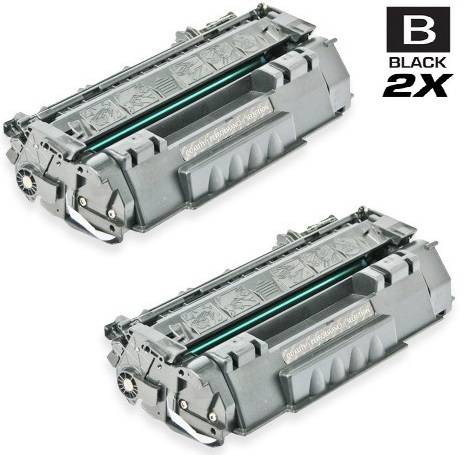
Hold this pair up against the standard tier and the platform’s shape shows at once. One high-yield single — $31.63, 6,000 rated pages — already beats the standard 2-pack, which asks $43.73 for 5,000 pages: the deeper cartridge is cheaper and fuller at the same time. This pair doubles that advantage, for a two-printer office or one machine with a shelf beside it. The single limit on the box is the fence, and it is absolute: these cartridges fit the LaserJet 1320, 1320N, 1320NW, 1320T, 1320TN, 3390 and 3392 — and they do not fit the LaserJet 1160 or 1160LE.
Shop the 49X 2-Pack →THE REST OF THE HIGH-YIELD LADDER — HP’S Q5949X AT 6,000 PAGES A CARTRIDGE, FOR SEVEN MODELS AND NEVER THE 1160
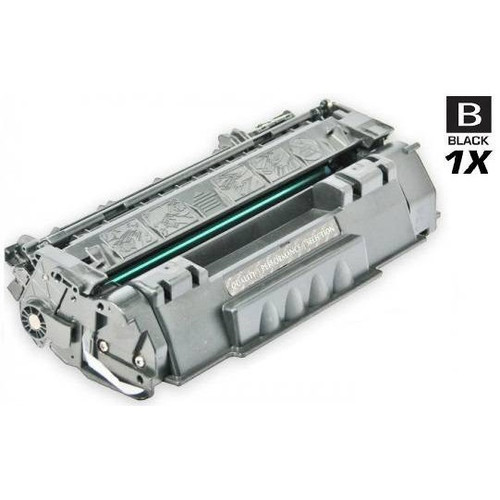
The hardest-working single on the shelf: for $31.63 it delivers 6,000 rated pages — more paper than the standard tier’s $43.73 2-pack holds. If your 1320 or 3390 takes one cartridge at a time, this is the one.
Shop the 49X Single →
Cartridges at $20.92 apiece. Eighteen thousand rated pages in one carton — a long stretch between orders for a busy single machine.
Shop the 49X 3-Pack →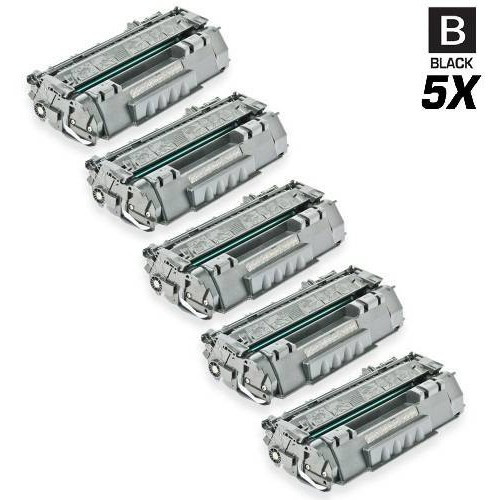
Cartridges at $18.77 apiece. Thirty thousand rated pages — depth for a small fleet of 1320s fed from one supply shelf.
Shop the 49X 5-Pack →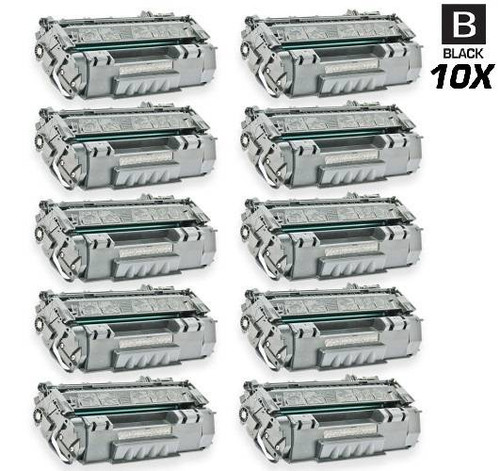
Cartridges at $17.16 apiece — the cheapest rated page in the family. At sixty thousand rated pages this stops being a purchase and becomes a stocking policy: a fleet’s year, bought once.
Shop the 49X 10-Pack →The standard line: the only cartridge a 1160 can take
The Q5949A is not this family’s consolation prize; for two of its nine printers it is the whole shelf. HP qualifies it for every model on the roster — the 1160 and 1160LE included — and its ladder is honestly built, each pack undercutting its own single by a true subtraction. What the standard tier cannot do is win the per-page argument anywhere the high-yield cartridge is allowed: its best rate, 0.62¢ at the bottom of the 10-pack, still sits above the 49X single’s 0.53¢, and above the single its packs argue with a cartridge that costs less and prints more. So read this block as two different offers sharing one ladder — for a 1160 or 1160LE, the only offer there is; for everything else, a ladder to climb only as far as your volume honestly goes. The market, for what it is worth, already treats the single as the ladder’s working end: it is one of the family’s two best-selling listings.
THE STANDARD LINE — HP’S Q5949A, RATED 2,500 PAGES A CARTRIDGE, ALL NINE MODELS
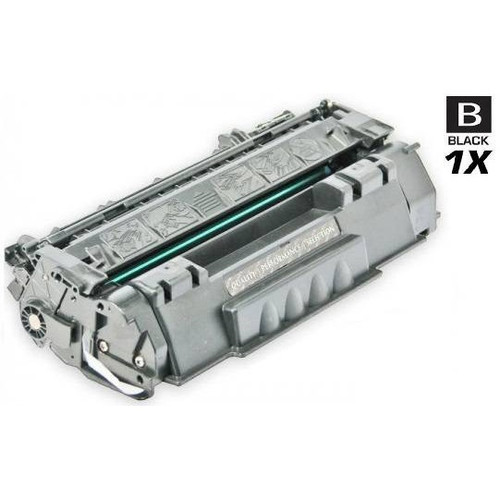
The cartridge the 1160 and 1160LE were documented with, and one of the family’s two best sellers. One at a time it is the dearest page on the shelf — but for a 1160 owner it is also the only page there is.
Shop the 49A Single →
Works out to $21.87 a cartridge. As a pack it properly undercuts its own single — and a lone 49X at $31.63 still outprints the whole box.
Shop the 49A 2-Pack →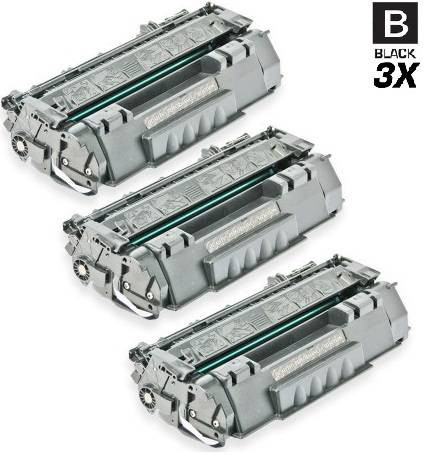
Cartridges at $19.19 apiece. Seven thousand five hundred rated pages — the point where the standard ladder starts to make sense for a 1160 that prints every day.
Shop the 49A 3-Pack →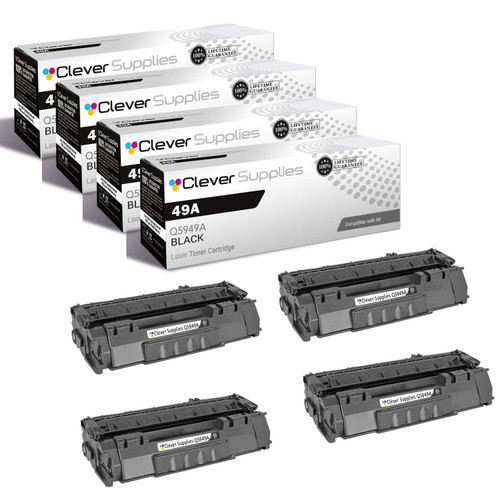
Cartridges at $17.85 apiece. The family’s only 4-pack — ten thousand rated pages, a full shelf for a 1160 or a mixed office that standardizes on the A.
Shop the 49A 4-Pack →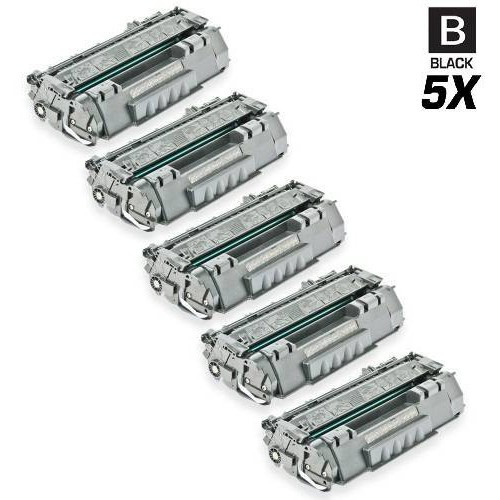
Cartridges at $17.04 apiece. This card uses the listing named “Premium Quality”; a plain-named twin sells the identical box at identical numbers (see the closing note).
Shop the 49A 5-Pack →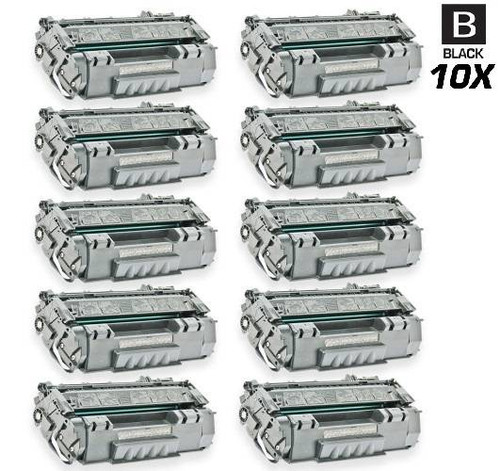
$15.44 a cartridge — as low as the standard tier goes, and still not as low as the high-yield single’s rate. Bulk cannot close a gap the tier itself opens; buy it for a 1160 fleet, not for the rate.
Shop the 49A 10-Pack →Eleven boxes ranked by cost per page
The ranking below is a single division repeated eleven times — each box’s price over its rated pages — and for once the divisor needs no footnote: HP’s published ratings and the store’s yield fields and prose all carry the same two numbers, 2,500 and 6,000. What the fit column decides here is real: the seven cheapest rows are closed to two of the nine printers, and the table marks them so.
| Pack | Sale price | Rated pages in each box | Cost per page | Fits |
|---|---|---|---|---|
| 49X 10-Pack | $171.64 | 10 cartridges · ~60,000 pages | 0.29¢ | 7 models — not the 1160 |
| 49X 5-Pack | $93.86 | 5 cartridges · ~30,000 pages | 0.31¢ | 7 models — not the 1160 |
| 49X 3-Pack | $62.75 | 3 cartridges · ~18,000 pages | 0.35¢ | 7 models — not the 1160 |
| 49X 2-Pack — the flagship | $47.19 | 2 cartridges · ~12,000 pages | 0.39¢ | 7 models — not the 1160 |
| 49X Single | $31.63 | 1 cartridge · ~6,000 pages | 0.53¢ | 7 models — not the 1160 |
| 49A 10-Pack | $154.36 | 10 cartridges · ~25,000 pages | 0.62¢ | All 9 models |
| 49A 5-Pack | $85.22 | 5 cartridges · ~12,500 pages | 0.68¢ | All 9 models |
| 49A 4-Pack | $71.39 | 4 cartridges · ~10,000 pages | 0.71¢ | All 9 models |
| 49A 3-Pack | $57.56 | 3 cartridges · ~7,500 pages | 0.77¢ | All 9 models |
| 49A 2-Pack | $43.73 | 2 cartridges · ~5,000 pages | 0.87¢ | All 9 models |
| 49A Single | $29.91 | 1 cartridge · ~2,500 pages | 1.20¢ | All 9 models |
Read the table once more and two things stand out. First, the halves do not interleave: ranks one to five are all high-yield, ranks six to eleven all standard, and the standard ladder’s cheapest page — bought 25,000 at a time in the $154.36 box — costs more than the high-yield single’s. Pack size, which does the heavy lifting in most families, only polishes here; the tier is the decision. The second is what the split means in practice: above the 49A single, the standard ladder’s remaining argument is not arithmetic at all. It is the fence — the 1160 and 1160LE cannot climb into the cheaper half of this table at any price.
A worked example fixes the scale. Twelve thousand pages — a year of steady work for a small office — can be bought four ways on this shelf: as the flagship pair for $47.19; as two high-yield singles for $63.26; as five standard singles for $149.55, with 500 pages to spare; or as two genuine HP singles for $569.98. Same platform, same rated pages, a twelve-fold spread between the sensible end and the manufacturer’s end — and the only buyer who cannot take the cheapest route is the one whose printer stands behind the fence.
Fit: nine printers for the A, seven for the X
HP’s roster for this platform runs to nine models, every one of which has its own category in this store. The full list: the LaserJet 1160, 1160LE, LaserJet 1320, 1320N, 1320NW, 1320T and 1320TN; and the LaserJet 3390 and LaserJet 3392 all-in-ones. The Q5949A serves all nine. The Q5949X serves the seven that follow the 1160 pair — every 1320 variant and both all-in-ones. The whole family shelf hangs under HP Q5949A.
The exclusion deserves its own paragraph, because it is the one buying mistake this family can produce. The Q5949X does not fit the LaserJet 1160 or the LaserJet 1160LE — not “fits with reduced yield”, not “fits most 1160s”: HP’s own yield documentation for the 1160 tests the Q5949A alone, HP’s compatibility for the genuine 49X names the 1320 series and the 3390 and never the 1160, and the store’s X listings say the same in plain words and are filed away from the two 1160 categories. If your printer is a 1160 or 1160LE, every X card on this page is closed to you, whatever its rate. One boundary in the other direction: the LaserJet P2014 and P2015 series and the M2727 take a different cartridge — HP’s 53A — however often third-party lists lump the two families together; nothing on this page fits those machines.
The store’s own filing follows the same line, which is worth saying because it so often does not. The standard batch sits under all nine model categories; the high-yield batch sits under exactly its seven — a 1160 owner browsing their own printer’s category will never be offered the cartridge that cannot run in it, and a 1320 owner browsing theirs will find both tiers side by side. Where the filing does fail the family is higher up the tree, in the family category itself; the closing note records that separately.
Yields with nothing to arbitrate, and HP’s own price tag
HP rates the Q5949A at approximately 2,500 pages and the Q5949X at approximately 6,000, both under ISO/IEC 19752 — these cartridges come from the first generation HP actually tested to that standard, and HP’s yield reporting form for the 1320 records a tested mean above the rated figure. The listings match the manufacturer in field and in prose, on every one of the family’s texts; the arbitration this section usually performs has nothing to arbitrate. Pack totals throughout are the single rating multiplied by the count in the box — nothing fancier is needed, because nothing disagrees.
Unlike many families in this program, this one still has a genuine yardstick: HP’s US store sells both cartridges today, at $156.99 for the Q5949A and $284.99 for the Q5949X. Weighed against it, the flagship pair’s $47.19 buys 12,000 rated pages for less than a fifth of the $569.98 that two genuine X singles cost — and even the standard single undercuts its genuine counterpart by more than five to one. HP offers no genuine multipack price this program could retrieve, so none is printed; the comparison rests on the singles, which is where it is strongest anyway.
Run the comparison out to working volumes and it stops looking like a discount and starts looking like a different budget. Sixty thousand rated pages — the contents of the high-yield 10-pack — cost $171.64 from this shelf; bought as genuine 49X singles, the same pages take ten cartridges at $284.99, which is $2,849.90. On the standard side, the 10-pack’s 25,000 pages cost $154.36 against ten genuine 49A singles at $1,569.90. The compatible shelf is not a few percent under the manufacturer’s price; it is roughly a tenth of it, at ratings HP itself publishes and the listings honestly repeat.
The drum rides inside the cartridge
In both tiers the toner and the imaging drum leave the factory in one sealed unit, so the cartridge is the only supply these machines ever ask for. HP lists no drum part for the LaserJet 1160, 1320 or 3390 lines — nothing with its own part number, its own replacement interval or its own shelf space. Use a cartridge up and its imaging surface is used up with it; the next cartridge starts both clocks again.
Running cost therefore has exactly one variable. No drum is quietly wearing toward a replacement of its own behind the cartridge’s figures, and no second per-page number waits to be added to the table’s rates — and no second shelf needs stocking for the platform, whichever side of the fence a given office sits on.
Firmware: nothing to unlock on this generation
This platform dates from 2004, before HP’s dynamic-security era, and the family’s listings reflect that: not one of the fifteen mentions a chip, a firmware version or a blocking mechanism of any kind. These machines were built before printers learned to interrogate their cartridges; a compatible unit has no checkpoint to pass, only a slot to fit and paper to feed.
The compatibles carded here are built to the store’s standing supplier specification — latest-generation chip, fitted before the box is sealed. Swapping one in is the whole installation: spent cartridge out, fresh cartridge in, nothing transplanted from the old unit, and the printer carries on. One boundary stands, as it does on every page in this program: nothing here promises anything about firmware that has not been written yet. Cover terms follow.
For the buyer, the practical meaning is narrow and welcome: there is no version lottery on this platform. A cartridge bought today is not one firmware update away from refusal, because the machinery that would refuse it was never built into these machines. The compatibility question here is the fence, and only the fence.
The cover behind every cartridge
Every listing in this family publishes the same cover in its own answers — no exceptions, no competing term anywhere in the fifteen texts. That uniformity is rarer in this catalog than it should be, and it is the version printed here.
Matching the box to the machine
Answers for the LaserJet 1160, 1320 and 3390 owner
No. The Q5949X is not an HP-qualified cartridge for the LaserJet 1160 or 1160LE: HP’s yield documentation for the 1160 covers the Q5949A alone, HP’s compatibility for the genuine 49X names the 1320 series and the 3390 and never the 1160, and the store’s own X listings state the exclusion in words. A 1160 or 1160LE takes the Q5949A — every configuration in the standard block above fits it.
Because the two cartridges share a platform, and the price gap never caught up with the yield gap. The X single costs $31.63 against the A single’s $29.91 — $1.72 more for 3,500 more rated pages. Pushed one step further, the comparison turns absurd in the buyer’s favor: the X single delivers 6,000 pages for less money than the A 2-pack’s 5,000. Where the X fits, there is no price argument for the A at all; the A’s case begins and ends at the 1160 fence.
Read a description closely and you will find its arithmetic done at list prices: the standard single’s own text calls it “priced at $34.40” and works its cost per page out to roughly 1.4 cents, while the register charges $29.91 and the true rate is 1.20¢. The packs quote list totals and per-cartridge list fractions the same way. Every figure in this guide is a sale price, read from the live catalog — the descriptions’ numbers are not wrong about the cartridge, only about what you pay for it.
No — there is no drum to buy. Toner and imaging drum are sealed into the same unit in both tiers, so the drum ages exactly as fast as the cartridge does and every replacement arrives with a new imaging surface already inside it. No drum part number exists for the 1160, 1320 or 3390 lines in HP’s catalog or in this store’s, and nothing else needs stocking.
HP’s US store lists the Q5949A at $156.99 and the Q5949X at $284.99, both in stock when this page was checked. Two genuine X singles therefore cost $569.98; the flagship compatible pair on this page costs $47.19 for the same 12,000 rated pages. HP publishes no genuine multipack price we could retrieve, so the guide makes the comparison on singles only.
In any of the seven models that take both — every 1320 variant and the two all-in-ones — yes, freely: the two cartridges share the platform, each swap is independent, and nothing about running a standard cartridge today changes what the printer accepts tomorrow. The freedom runs in one direction only. A 1160 or 1160LE accepts the 49A on every swap and the 49X on none, so a mixed shelf has to keep the tiers straight by printer, not by habit.
No. The P2014 and P2015 series and the M2727 take HP’s Q7553 family — the 53A and 53X — a different supply that HP documents separately. Some third-party lists present the 5949 cartridge as fitting those machines; HP’s record does not, the store’s listings do not repeat the claim, and this guide follows HP.
Price and disclosure note: Every figure on this page is a sale price, taken from the live catalog on November 17, 2026 and confirmed against the carded listing’s own page, title to record, before it was used. Behind each sale price stands a higher list price; if a promotion ends, the product page’s price governs. A SAVE badge is a within-tier subtraction at sale prices — what a pack saves against buying its cartridges one by one. The badges are: on the standard tier, $16.09 (2-pack), $32.17 (3-pack), $48.25 (4-pack), $64.33 (5-pack) and $144.74 (10-pack); on the high-yield tier, $16.07, $32.14, $64.29 and $144.66 at the same ascending sizes. Both ladders earn theirs honestly — no single in this family is priced above any of its own packs. Yields divide by HP’s published figures — about 2,500 pages for the Q5949A and 6,000 for the Q5949X, both measured to ISO/IEC 19752 and identical to the figures in the listings’ fields and prose; there is no split to disclose. Genuine prices are HP’s US store figures for the two singles, $156.99 and $284.99; no genuine multipack price was retrieved and none is printed. Fit follows HP’s published compatibility: the standard tier across all nine roster models, the high-yield tier across seven — the LaserJet 1160 and 1160LE excluded, a platform that takes the standard cartridge only. The store’s pages depart from that record in the following ways.
First, arithmetic at list prices runs through all fifteen of the family’s descriptions: identity answers quote the list price as the price — $34.40 for the standard single, $36.37 for the high-yield single — per-page answers compute from it (roughly 1.4 cents where the sale-price truth is 1.20¢), and the packs quote list totals with per-cartridge list fractions throughout, from $50.29 and $25.15 down the standard ladder to $197.39 and $19.74 on the high-yield 10-pack. A buyer who reads a description end to end meets the higher price in the text and the lower one at the register; every rate here is worked from sale prices instead. Second, the high-yield batch is missing from the family’s own category: the HP Q5949A category page holds the standard listings and no X product at all, so a shopper browsing the family shelf never learns the deeper cartridge exists — this guide links the family category for the roster, and the X cards above for the tier itself. Third, the family’s newest batch is filed in the wrong tree: the 4-pack carded above and its 2-pack twin sit under the store’s COLOR LASERJET SERIES heading — for a monochrome cartridge — inside a second “LaserJet 1160” category that lives in that color tree, and are absent from the monochrome 1160 category and the family category alike. Fourth, the carded 5-pack is the listing named “Premium Quality”, and its plain-named twin — not carded — matches it on list price, sale price, stock figure and photograph exactly; the store defines no quality difference between them, and neither does this guide. Fifth, the high-yield listings carry HP’s own marketing prose nearly word for word, including HP’s warranty sentence for the genuine cartridge and a recycled-content figure HP’s current page states differently; the standard batch makes the softer version of the same move, describing a toner cartridge with the word “ink” throughout. Sixth, the pack photographs are shared across the tiers: at each size, the standard and high-yield listings serve the identical photo file, so a card’s picture shows the pack size faithfully but not its own tier’s box print. Seventh, a smaller drift in the newest batch: its yield field records “Black: 2500” — the color families’ field format, on a monochrome product — and its color field reads plain “Black” where the older batch records the pack count. The numbers agree with the family’s; only the bookkeeping dialect differs.
Eleven cards stand above: six configurations on HP’s standard code and five on its high-yield code. Two further listings duplicate carded boxes number for number — the plain 5-pack and the new batch’s 2-pack — and are not carded or linked. Two more listings in the family are check-printing (MICR) products, identified as such on their own pages; under this program’s standing rule they are not carded, not linked and not offered, and this single count is their entire presence here. Chips and firmware appear in none of the family’s fifteen texts — the platform predates cartridge blocking altogether — and the chip section above gives the supplier’s position as the store’s own, bounded as always: nothing is promised about firmware still unwritten. The cover behind every card is the cover the listings’ own answers describe: a year of warranty, a year of free returns, weekday support from 9 AM to 5 PM Central, and shipping from the store’s Illinois, Pennsylvania, Georgia and California warehouses.