




Fifteen Brother workgroup printers run on one monochrome platform and one drum, the DR720 — but the toner comes in three sizes, and the shelf hides a trap in plain sight. The standard TN720 and the high-yield TN750 are priced identically, cartridge for cartridge, pack for pack, combo for combo, even though Brother rates the TN750 for 8,000 pages against the TN720's 3,000. Nothing on the price tags tells the two tiers apart; the difference only appears when the price is divided by the pages. This guide does that division openly for every offer on the shelf, fences the super-high-yield TN780 into the four machines Brother built it for, and — unusually for a Brother family — cards a compatible drum alongside the toner.
The short answer: on any of the fifteen machines, buy TN750 before TN720 — the single costs the same $29.21 either way, and the high-yield cartridge returns about 0.37¢ a page against the standard tier's 0.97¢. Owners of the HL-6180DW, HL-6180DWT, MFC-8950DW or MFC-8950DWT have a third option: TN780, rated at about 12,000 pages and the cheapest page in the family at roughly 0.26¢. When the drum counter runs out, this platform is one of the few Brother families with a compatible drum on the shelf — the DR720 at $36.33, against $174.47 for the genuine unit here.
Start from the machine, then from the division. Every printer on this platform accepts TN750, so the high-yield tier is the default: a TN750 2-pack at $42.33 covers about 16,000 rated pages and saves $16.09 against two singles. TN720 stays carded in full below for buyers whose ordering is keyed to the standard code — at these prices it is a habit purchase, not a value one. The four flagship machines add TN780 (single $31.14, about 0.26¢ a page). And the platform's running cost has a floor set by the drum: a compatible DR720 works out to roughly 0.12¢ a page, where the genuine drum on our shelf runs about 0.58¢.
Fifteen machines, one drum, three tier sizes
Brother's compatibility lists for the TN720, the TN750 and the DR720 drum name the same fifteen printers: DCP-8110DN, DCP-8150DN, DCP-8155DN, HL-5440D, HL-5450DN, HL-5470DW, HL-5470DWT, HL-6180DW, HL-6180DWT, MFC-8510DN, MFC-8710DW, MFC-8810DW, MFC-8910DW, MFC-8950DW, MFC-8950DWT. Two tiers of toner and the drum are interchangeable across that whole list — a cartridge bought for the DCP at reception fits the MFC in accounts. One caution about our own listings: much of the family's description copy names only fourteen of the fifteen, leaving the MFC-8950DWT off the printed list even though Brother includes it and the listings are shelved under its category. This page follows Brother's fifteen, MFC-8950DWT included.
Four of the fifteen — the HL-6180DW, HL-6180DWT, MFC-8950DW, MFC-8950DWT — unlock the third tier. Brother's TN780 list stops at those four names, and no other machine on the platform is rated for the super-high-yield cartridge, however similar the toner bay looks. The TN780 section below is written for owners of that quartet; everyone else can read it as background and buy from the two shared tiers.
Neighboring monochrome platforms have their own guides, and Brother cartridges do not cross between them: the heavier-duty line is covered in Best Brother TN920 Toner Cartridges, the TN850 family in Best Brother TN850 Toner Cartridges, and the compact TN630/TN660 platform in Best Brother TN660 Toner Cartridges. The model check comes first on each of those pages, exactly as it does here.
The shelf on one table
Yields are Brother's published ratings under ISO/IEC 19752; prices are the live shelf price of the offer named, taken from its own product page. Read the first two rows together: they are the same row of prices wearing two different fills. The gaps in the TN780 row are real gaps — no 3-pack or 5-pack of that tier exists on this shelf — and the drum row skips a 4-pack for the same reason.
| Tier | Brother yield | Single | Cost per page | 2-pack | 3-pack | 4-pack | 5-pack |
|---|---|---|---|---|---|---|---|
| TN720 (standard yield — all 15 machines) | About 3,000 | $29.21 | About 0.97¢ | $42.33 | $55.46 | $68.59 | $81.72 |
| TN750 (high yield — all 15 machines) | About 8,000 | $29.21 | About 0.37¢ | $42.33 | $55.46 | $68.59 | $81.72 |
| TN780 (super high yield — 4 machines only) | About 12,000 | $31.14 | About 0.26¢ | $46.21 | — not sold | $76.34 | — not sold |
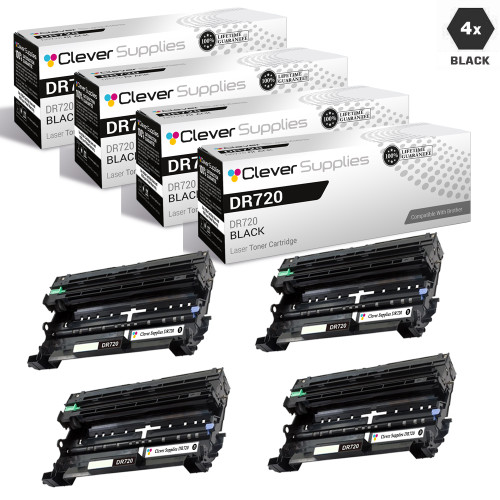
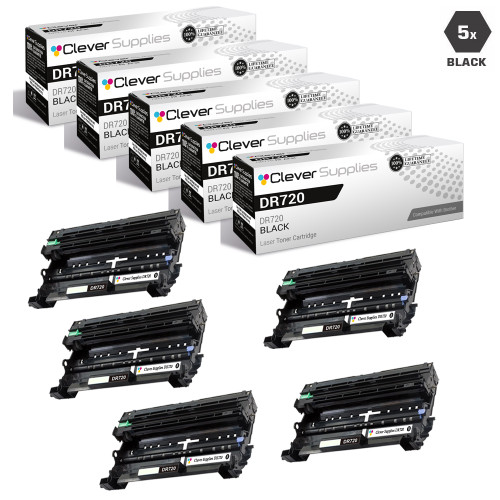
| DR720 (drum unit — all 15 machines) | About 30,000 | $36.33 | About 0.12¢ | $56.58 | $76.83 | — not sold | $117.33 |
Against the genuine shelf the arithmetic sharpens: a genuine TN720 single on our OEM shelf costs $107.20 (about 3.57¢ a page) and a genuine TN750 $143.55 (about 1.79¢), where the compatibles below run 0.97¢ and 0.37¢. Brother's own store prices the same two cartridges at $84.99 and $126.79 — lower than our genuine shelf on both, a fact worth knowing before anyone orders genuine for this platform; every genuine figure quoted on this page is our shelf's price and is labeled as such.
TN750: the high-yield tier the arithmetic votes for
A high-yield tier normally has to argue for its premium. TN750 has no premium to argue for: the single is $29.21, the packs climb $42.33, $55.46, $68.59 and $81.72, and every one of those figures is also the TN720 figure, to the cent. What Brother changes between the tiers is the fill — about 8,000 pages here against about 3,000 in the standard cartridge — so the same spend returns roughly 2.67 times the printing. That is why this section leads the guide: not because TN720 is a poor cartridge, but because at identical prices the burden of proof sits on the shorter-lived tier, and its section below makes the only case available to it.

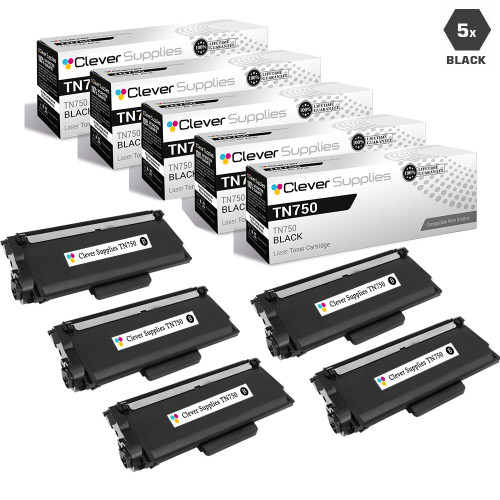
This is the purchase the family's arithmetic points at. The 2-pack costs exactly what the TN720 2-pack costs — the ladder is shared — yet each cartridge inside is rated for 8,000 pages instead of 3,000, so the box carries about 10,000 more pages for the same money. Against genuine, the contrast is starker still: Brother's own twin pack is $226.79 at Brother's store, and our genuine TN750 2-pack sits at $273.76.
Shop the TN750 2-Pack →


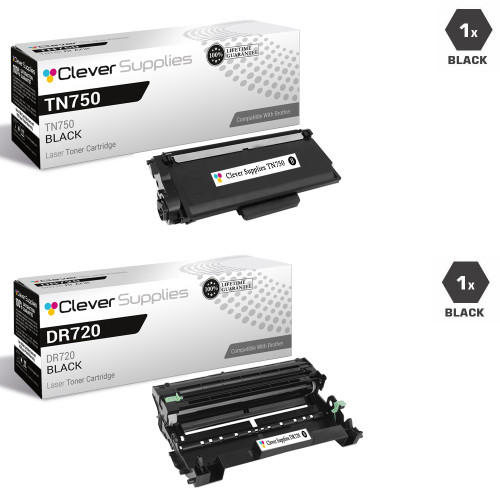
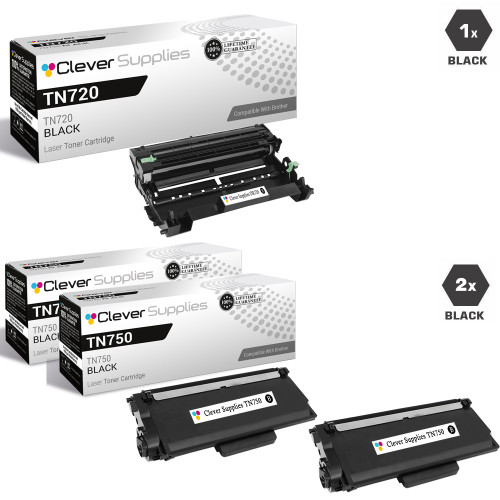
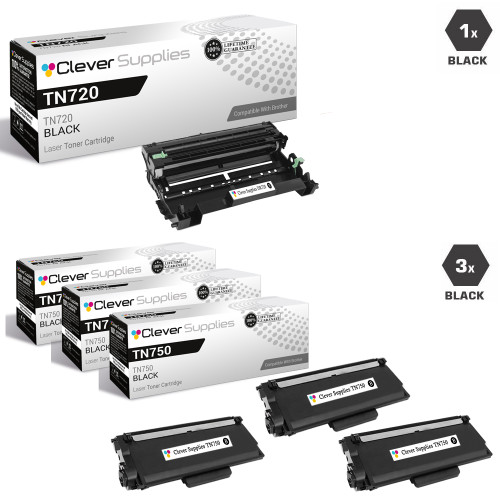
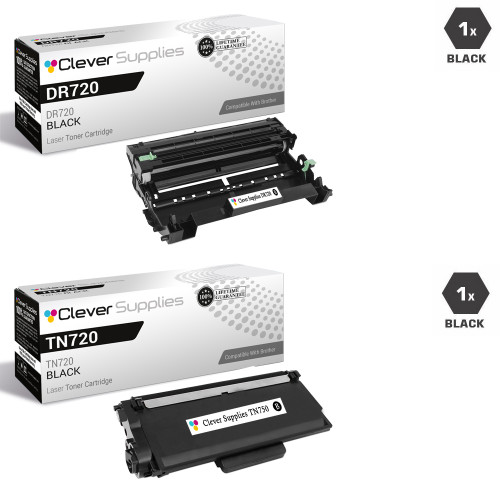
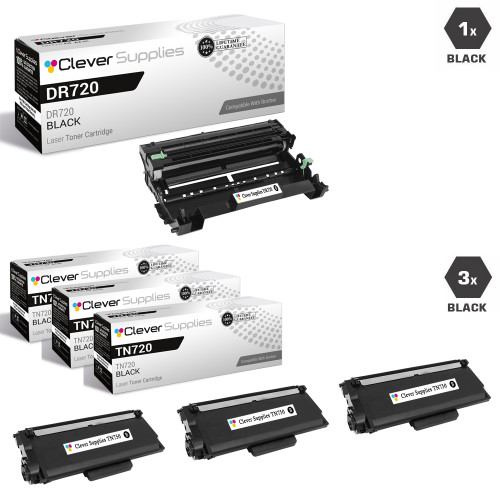
When the drum's counter is also near its end, the toner and the DR720 drum can be renewed in one order. The drum half of each combo is the same compatible DR720 carded in its own section below, rated at about 30,000 pages; the saving on each card is measured against buying that toner quantity and one drum as separate items.
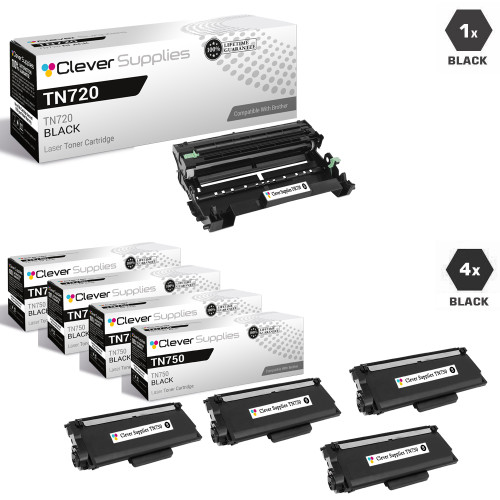
A word on duplicates, because this tier collects them: the same TN750 offers also appear under “Premium” titles, the 1-toner combo exists twice under two title wordings, and the single is listed 25 further times under individual printer names — those model-named pages sit in no model category and surface only through search. Every card above is the one verified, code-named listing for its offer; the duplicates carry the same cartridge at the same price, and nothing is gained by ordering through them. The 5-pack, alone among the ladder, exists only under the older Premium-era titles — the card above is its cleanest-titled listing, and the offer itself is ordinary.
TN720: the standard tier, priced like its bigger brother
TN720 is the cartridge this platform is named for, and on any other shelf it would be the sensible default: a standard-yield cartridge rated at about 3,000 pages, fitting all fifteen machines, with a full ladder of packs behind it. What demotes it here is nothing about the cartridge itself — it is the shelf's own pricing, which hands the buyer the high-yield TN750 for the same money at every size. The cards below therefore present TN720 completely and let the comparison stand next to them: single at $29.21 (about 0.97¢ a page), packs saving the same $16.09 to $64.33 against singles as the TN750 ladder saves, and combos at the same four prices. One stock note in the open: the 2-toner combo's inventory counter currently reads zero while the listing itself prices and orders normally, and we treat it as live like its seven combo siblings.
The standard tier gets its full shelf here — single, four pack sizes and the four drum combos — because a guide that quietly dropped it would be steering, not guiding. Its honest position is this: at $29.21 the single matches TN750's price while carrying 5,000 fewer rated pages, so the case for TN720 is procedural, not economic. Offices whose purchase orders, stock systems or service contracts name the standard code reorder without friction, and a machine that prints a few hundred pages a month will not feel the shorter rating for years.
Shop the TN720 2-Pack →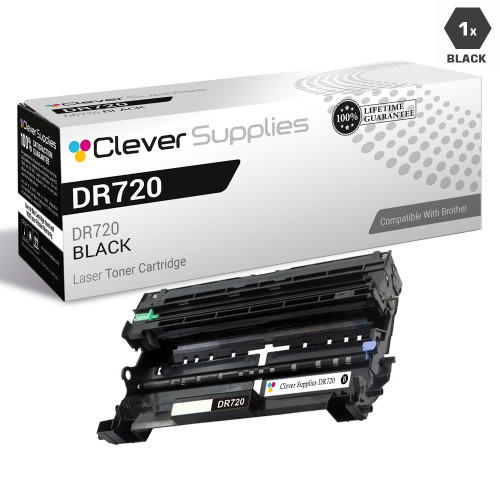

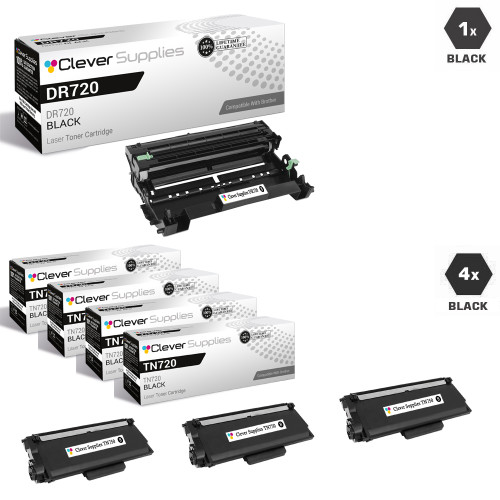
The TN720 single also has a “Premium”-titled twin at the same $29.21; as with the TN750 duplicates, the cards above use the plain code-named listings, and the twin changes neither the cartridge nor the price.
TN780: the super-high-yield tier, four machines only
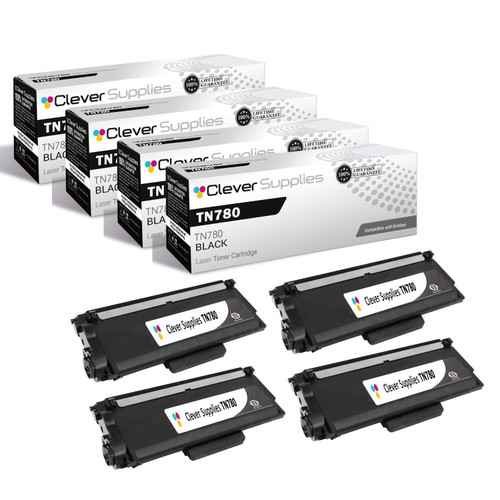
Within its fence, TN780 is the strongest offer in the family: Brother rates it at about 12,000 pages, the single is $31.14 — barely above the shared $29.21 ladder — and its roughly 0.26¢ a page undercuts even TN750. The tier's shelf is short and complete below: a single, a 2-pack and a 4-pack. There is no TN780 combo, so when a flagship machine also needs its drum, the DR720 is ordered on its own from the next section. Against genuine, a Brother TN780 single is $145.99 on our shelf — and, unusually, exactly the $145.99 Brother's own store charges.
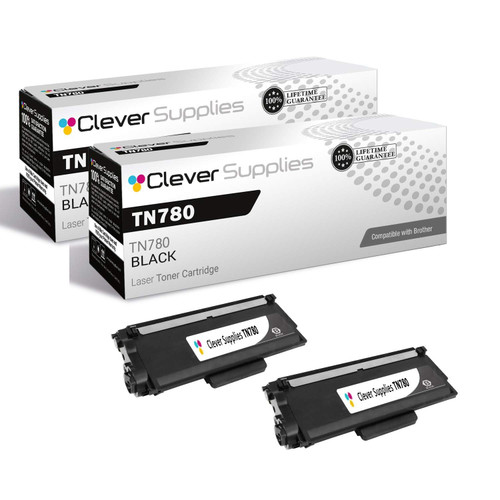
For the four machines that accept it, the TN780 2-pack is the end of the value argument: two cartridges, about 24,000 rated pages, and a per-page figure no other offer on the platform reaches. The tier is deliberately narrow — Brother built it for the two flagship printer lines and their MFC counterparts — and the shelf matches that narrowness, with no 3-pack, no 5-pack and no drum combo in this tier.
Shop the TN780 2-Pack →
DR720: the drum this family lets you buy compatible
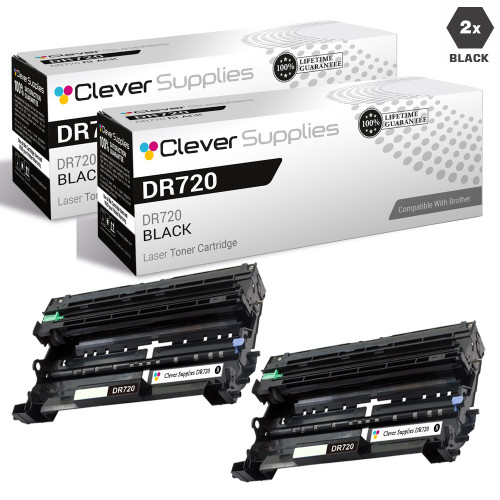
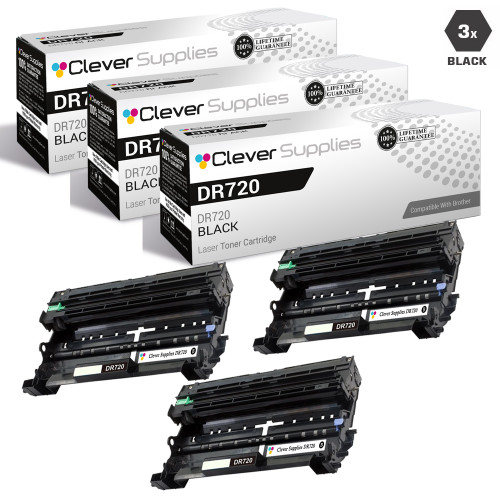
Every machine on the platform — the same fifteen named at the top of this page — runs its toner cartridges inside one DR720 drum unit, and Brother rates that unit at about 30,000 pages, given as a single approximate figure that varies with the type of use. No split rating for short and long jobs is published for this drum, and this page does not borrow one from other Brother drums. A drum typically outlasts several toner cartridges, which is why it is sold separately, in combos with toner above, and in the multi-packs below; there is no pure 4-pack of drums on the shelf, so four-drum coverage means a combo or a 3-pack plus a single.
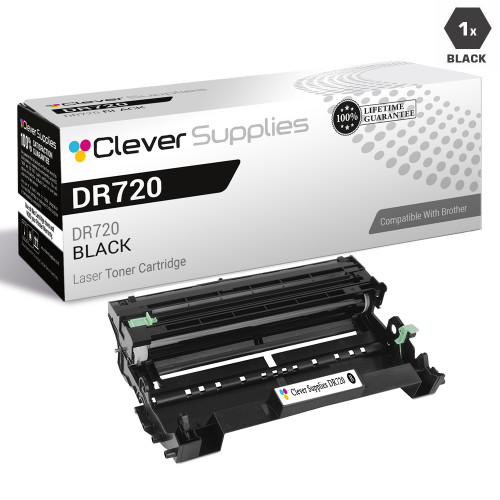
Most Brother platforms in our guides end with a genuine-only drum and an apology. This one is different: a compatible DR720 exists, it is the listing Brother's own $171.79 unit competes with, and at $36.33 it undercuts our genuine shelf price of $174.47 by about 79%. The drum is a separate part from the toner — it is the unit the cartridge sits in — and its counter, not the toner's, decides when it is due.
Shop the DR720 Drum Unit →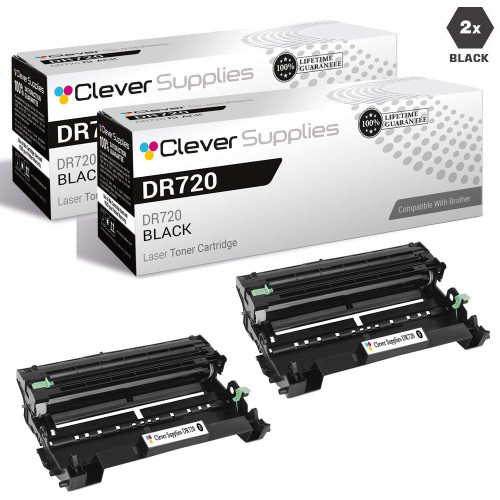

When the machine reports the drum due, the swap is followed by a counter reset so the new unit starts its own count from zero; what the drum messages on this generation mean, and the reset procedure itself, are laid out on our Brother Monochrome Toner & Drum Compatibility page. Print that fades or streaks in repeating bands, and survives a fresh toner cartridge, is usually the drum asking ahead of its counter.
Chips and firmware — a short section, because the record is short
Nothing in this guide claims a fitted chip for any cartridge or drum, and the reason is the state of the listings themselves. Of the family's 60 listings, the word “chip” appears in exactly three — the second-wave DR720 multi-packs — and there only as one item in a boilerplate sentence listing new internal parts. The 51 toner listings, compatible and genuine alike, never mention a chip at all, and the word “firmware” appears nowhere in the family. A parts list on three drum packs is not evidence about recognition behavior, and this page builds no claim on it.
What can be said comes from Brother rather than from listings: Brother's published position is that firmware updates are not used to block third-party cartridges. The practical questions this generation does raise — recognition prompts after a swap, toner counters, the drum reset — are gathered on our Brother Monochrome Toner & Drum Compatibility page. This guide's own brief is fit, yield and price, and on those three it can be exact.
Before you order: the TN720 platform checklist
Frequently asked questions
TN750, for almost every buyer. The two tiers share one price ladder to the cent — single $29.21, packs and combos identical — while Brother rates TN750 at about 8,000 pages against TN720's 3,000, so the high-yield page costs roughly 0.37¢ against 0.97¢. TN720 makes sense where an ordering system is keyed to the standard code, or where a machine prints so little that even a standard cartridge lasts years. Both tiers fit all fifteen machines, so the choice is arithmetic, not compatibility.
No. Brother's TN780 compatibility list names exactly four printers — the HL-6180DW, HL-6180DWT, MFC-8950DW and MFC-8950DWT. The other eleven machines on this platform, including the HL-5470DW and MFC-8910DW, are listed for TN720 and TN750 only. Our TN780 listings are shelved under exactly those four categories, and this guide links the tier only from them.
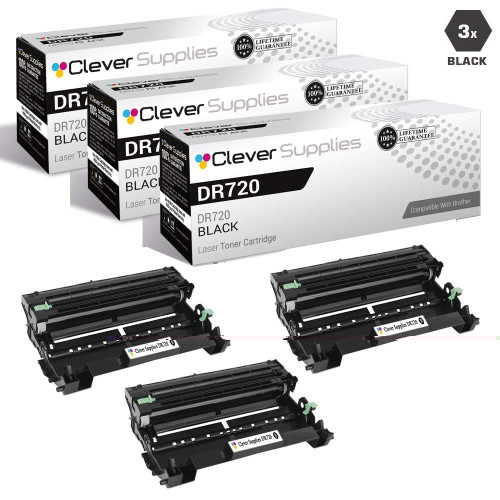
There is, and it is the exception that makes this family unusual. The compatible DR720 single is $36.33, with 2-, 3- and 5-packs behind it, and the same drum is the one inside the toner-and-drum combos — all rated by Brother at about 30,000 pages. The genuine DR720 is also sold here, at $174.47. On several neighboring Brother platforms the drum exists only as a genuine part; on this one the buyer genuinely has the choice.
Because Brother publishes just one for this unit: an approximate 30,000 pages, with the note that drum life varies with the type of use. Some other Brother drums carry two figures for different average job lengths; the DR720 does not, so this page prints the single figure rather than importing a second one from a different drum family.
The TN750 single is listed 25 extra times under printer names — one for each of the fifteen full model names and ten shortened ones. They are the same offer at the same $29.21 (their specification fields name TN750 and its 8,000-page rating), but each is assigned only to a general category rather than its model's, so they turn up through search instead of the category pages. The guide cards the code-named listing; ordering through a model-named page buys the same cartridge at the same price.
On this shelf, none that a buyer can measure: the “Premium” and “Premium Quality” listings duplicate plain offers — a TN720 single, a TN750 single, 3-pack and 5-pack — at identical prices, and the TN750 5-pack in fact exists only under those older titles. One TN750 drum combo is also listed twice under two different title wordings. The guide cards each offer once, through the verified listing named in the card, and treats the rest as duplicates.
No chip claim is made anywhere in this guide, because the listings do not support one: the word “firmware” appears in none of the family's 60 listings, and “chip” appears only inside a boilerplate parts sentence in three DR720 multi-pack listings — the toner listings never mention one. Brother's published position is that its updates are not used to block third-party cartridges. Recognition messages and the drum-counter reset for this generation are covered on our Brother Monochrome Toner & Drum Compatibility page.
Compatible toner and drum units carry our own terms: a 1-year warranty and a return window of the same full year if a unit is not right. Genuine Brother items are under the manufacturer's warranty instead, and OEM returns run to 30 days. Parcels ship from whichever of our four warehouses — Illinois, Pennsylvania, Georgia or California — is closest to you, and the support desk is staffed 9 AM to 5 PM Central, Monday to Friday.