




Eight machines from HP’s 2012 workhorse line — six LaserJet Pro 400 M401 printers and two MFP M425 multifunctions — run on one cartridge family, built by HP in two sizes: the 80A (CF280A, about 2,700 pages) and the high-yield 80X (CF280X, about 6,900). This store stocks both tiers in full pack ladders, plus two extended-yield builds HP never made — a Jumbo single and a Maximum Yield line — for fourteen offers in all, every one a compatible, every one marked down as this page is written. The shelf’s first surprise is in the singles: the high-yield cartridge costs exactly the same as the standard one, $25.85, so the tier step is free at the smallest size. The second is in the fine print: HP’s own rating for the 80A moved over the years, and this page shows both of its figures rather than quietly picking one.
Own one of the eight M401 or M425 models and the cartridges below are the whole of what this store stocks for it: six pack sizes of the standard-yield 80A, five of the high-yield 80X — there is no 80X 4-pack — and three extended-yield offers built beyond HP’s range, a Jumbo single and a Maximum Yield single and 3-pack. Not one of the fourteen is a genuine HP cartridge. The pair leads the page because in this family the money is made by stepping across tiers rather than up pack sizes: $40.60 of high-yield pair holds roughly 13,800 rated pages, where the standard pair at $35.63 holds 5,400. What follows lays the fourteen offers side by side, untangles the two figures behind the 80A’s rating, names the eight machines, and gives the chip question exactly the space the listings give it — one sentence of parts list, reported as found.
Two ladders, one flat single price — and two builds HP never made
Fourteen listings sort into three groups, and the groups tell different stories. The standard ladder climbs single, pair, and boxes of three, four, five and ten, its page rate easing from 0.96¢ down to 0.42¢ as the cartons grow. The high-yield ladder climbs the same staircase with one step missing — no 4-pack — and its rate runs 0.37¢ down to 0.20¢. The third group is the shelf’s oddity: a Jumbo single and a Maximum Yield single and 3-pack, extended fills whose ratings are the listings’ own claims, not HP’s. The flat single price is the fact that rearranges the usual advice: at $25.85 for either tier, the first cartridge a buyer tries need not be the standard one at all.
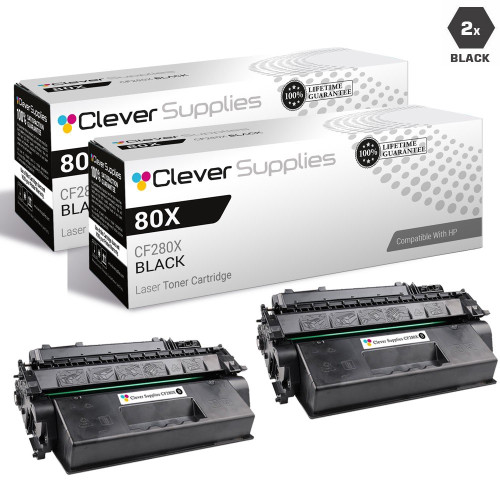
Set against HP’s shelf price the pair’s arithmetic sharpens: a genuine 80X costs $270.99, so two of them total $541.98 — $501.38 beyond this pair’s price. And the yield behind the pair is the one figure on this shelf with no dispute anywhere: HP rates its cartridge at about 6,900 pages, and the compatibles on this shelf state the same 6,900 in their own listings.
Shop the 80X 2-Pack →ALSO ON THE SHELF — THE STANDARD LADDER
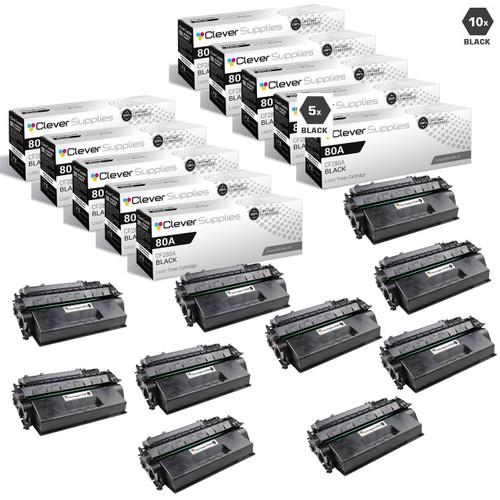
The biggest box on the standard side: ten cartridges at $11.38 each, the lowest per-cartridge price the ladder reaches — the quarterly reorder, boxed.
Shop the 80A 10-Pack →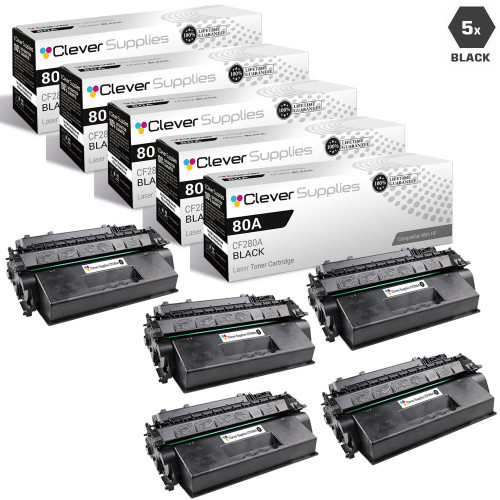
Five cartridges at $12.99 each — half the depth of the big box, for stockrooms that turn over faster.
Shop the 80A 5-Pack →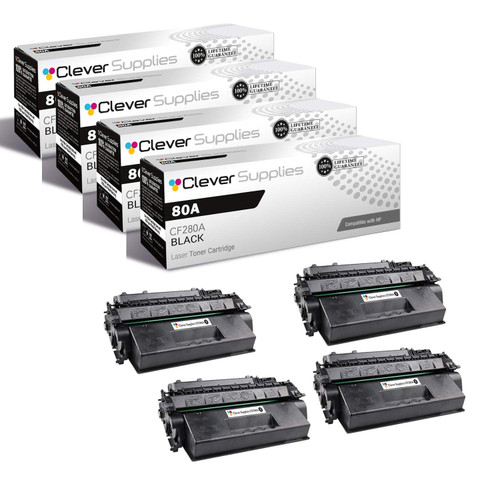
Four cartridges in one box — but its listing states no page yield anywhere, so this page prints no per-page rate for it. It is carded as the 80A 4-pack on the strength of its SKU; its name carries both tier codes, and the two tiers are different fills.
Shop the 80A 4-Pack →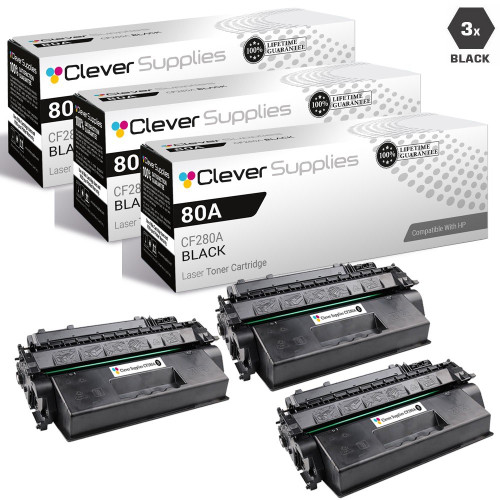
Three cartridges at $15.13 each — one in the machine, one ready, one in reserve.
Shop the 80A 3-Pack →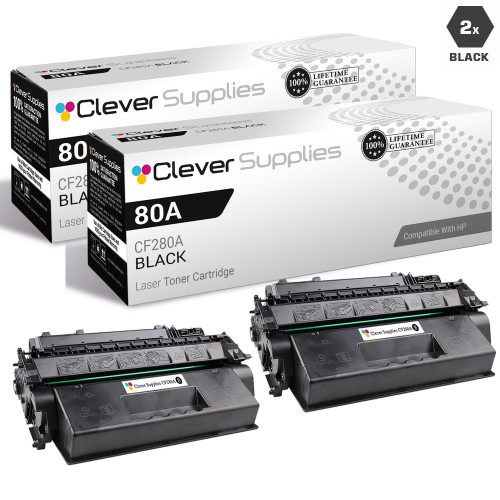
Two cartridges at $17.82 each. Keep the flagship in view while pricing it: $4.97 separates this pair from the high-yield pair, and the page counts are 5,400 against 13,800.
Shop the 80A 2-Pack →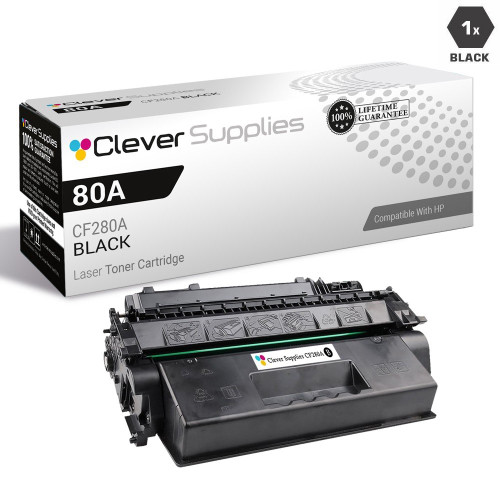
One standard cartridge, bought alone — the entry point of the family, and the emergency restock. HP’s genuine version of the same cartridge is $158.99. Judged purely on arithmetic this single is hard to defend while the high-yield single sits at the identical $25.85; what it offers is sameness — the very cartridge the printer was delivered with.
Shop the 80A Single →ALSO ON THE SHELF — THE HIGH-YIELD LADDER
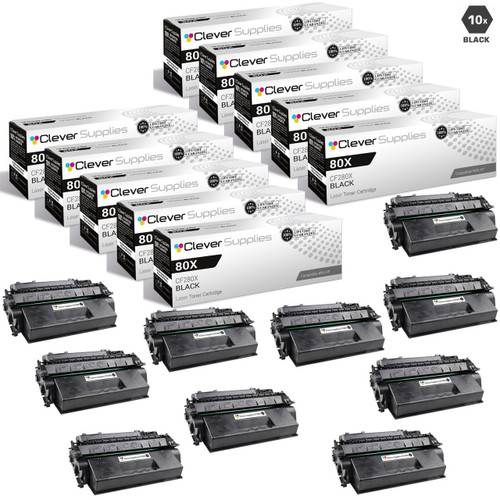
The high-yield tier’s deepest box and the cheapest verified page on the shelf: ten cartridges at $13.87 apiece.
Shop the 80X 10-Pack →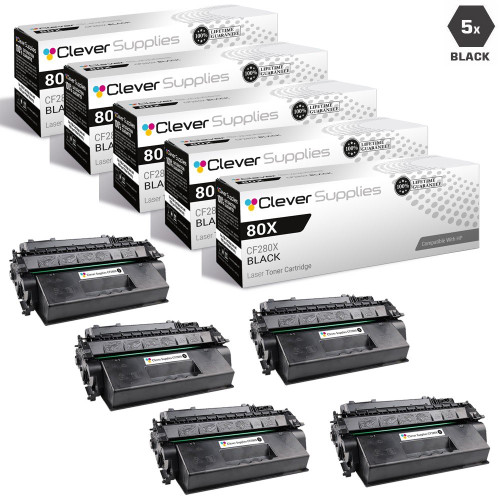
Five cartridges at $15.48 apiece — the mid-depth high-yield box, and already cheaper per page than any standard-yield offer.
Shop the 80X 5-Pack →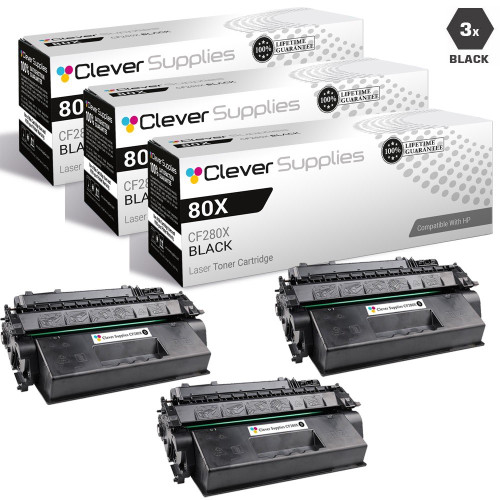
Three cartridges at $17.62 apiece — the high-yield ladder’s middle step, and the rung the missing 4-pack jumps over.
Shop the 80X 3-Pack →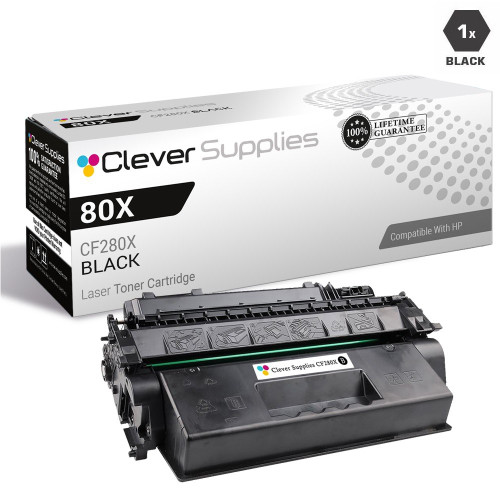
The high-yield cartridge on its own, at the same price as the standard single — and with more than twice its rated pages. HP asks $270.99 for the genuine article at the same 6,900-page rating.
Shop the 80X Single →ALSO ON THE SHELF — THE EXTENDED-YIELD BUILDS
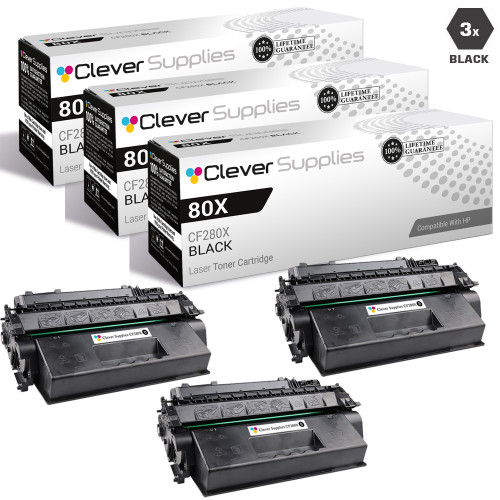
Three cartridges at $17.62 apiece, priced exactly as the 80X 3-pack — while claiming 10,000 pages a cartridge against the 80X’s 6,900. The 10,000 is the listing’s own claim; HP issues no such rating.
Shop the 80XX 3-Pack →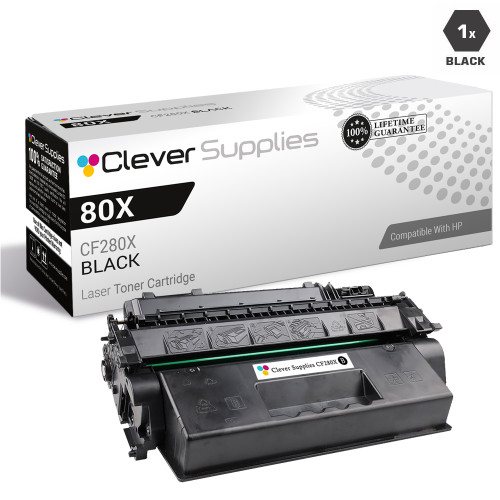
The Maximum Yield single: $2.49 more than either HP-tier single, claiming 10,000 pages where the 80X claims 6,900. The claim is the listing’s own — take it as such, or take the verified 80X instead.
Shop the 80XX Single →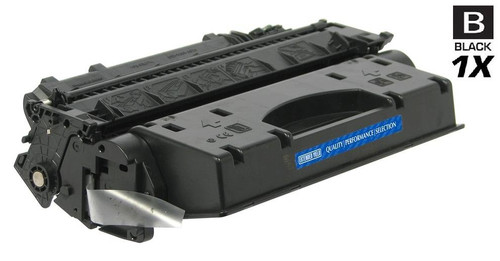
The Jumbo single claims 8,000 pages for $33.29 — more money than the 80X single at $25.85, and a worse claimed page rate than the 80X’s verified 0.37¢. It is the shelf’s hardest offer to argue for on arithmetic alone.
Shop the Jumbo 80XJ Single →Read as one slope, the standard ladder descends 0.96¢, 0.66¢, 0.56¢, then the 4-pack with no rate printed, then 0.48¢ and 0.42¢ — each larger box shaving a little more off the page. The high-yield ladder runs below it throughout, 0.37¢ down to 0.20¢, and the two ladders cross at the very first step: the singles are the same price, so the tier step costs nothing and buys 4,200 extra rated pages. Counted in bulk, ten standard cartridges total $258.50 when ordered singly across ten orders, against $113.83 in one box — while the high-yield 10-pack, $138.71 in total, holds some 69,000 rated pages, more than two and a half times the standard 10-pack’s 27,000.
Two naming wrinkles deserve plain statements. First, the 80A 4-pack’s name carries both cartridge codes, CF280A and CF280X, and its text never pins its contents to one tier or states any page yield; what settles it is the SKU, which assigns the box to the 80A, and this page cards it there and prints no per-page rate for it. Second, the extended-yield builds present their codes as if HP issued them — the listings call the Jumbo “HP’s 80XJ” and the Maximum Yield “HP’s 80XX” — but HP’s range for this family is exactly two tiers, and the 8,000 and 10,000 figures are the listings’ own claims, carried here with that sourcing attached.
Every figure on this page is a sale-price figure. The discount runs to about thirteen percent off list on each of the fourteen listings at the time of writing, while the product pages continue to do their sums from list — which is why their per-page numbers come out higher than these. Checkout charges the sale price, so the sale price is what this page divides by.
Fourteen offers at sale prices — the table
For the two genuine tiers the yield column uses HP’s published ratings, which HP frames as approximate averages measured under ISO/IEC 19752 — real output moves with the density of what lands on each page. Pack totals simply sum the ratings of the cartridges inside, and each per-page figure is the sale price spread across that total; the word blended flags rows where the rate is averaged over a whole box. Three rows break the pattern on purpose: the Jumbo and Maximum Yield rows divide by numbers their own listings assert rather than anything HP published, and the 80A 4-pack shows a dash, since its listing offers no yield figure to divide by at all.
| Offer | Fits | Sale price | Rated yield per cartridge | Cost per page | Saving vs singles |
|---|---|---|---|---|---|
| 80X 2-Pack — the flagship | All 8 models | $40.60 | Up to ~6,900 pages each | 0.29¢ blended | SAVE $11.10 |
| 80X 10-Pack | All 8 models | $138.71 | Up to ~6,900 pages each | 0.20¢ blended | SAVE $119.79 |
| 80X 5-Pack | All 8 models | $77.40 | Up to ~6,900 pages each | 0.22¢ blended | SAVE $51.85 |
| 80X 3-Pack | All 8 models | $52.87 | Up to ~6,900 pages each | 0.26¢ blended | SAVE $24.68 |
| 80X Single | All 8 models | $25.85 | Up to ~6,900 pages | 0.37¢ | Bought one at a time |
| 80XX 3-Pack (Maximum Yield) | All 8 models | $52.87 | 10,000 pages each (listing’s claim) | 0.18¢ blended, claimed | SAVE $32.15 |
| 80XX Single (Maximum Yield) | All 8 models | $28.34 | 10,000 pages (listing’s claim) | 0.28¢, claimed | Bought one at a time |
| Jumbo 80XJ Single | All 8 models | $33.29 | 8,000 pages (listing’s claim) | 0.42¢, claimed | Bought one at a time |
| 80A 10-Pack | All 8 models | $113.83 | Up to ~2,700 pages each | 0.42¢ blended | SAVE $144.67 |
| 80A 5-Pack | All 8 models | $64.95 | Up to ~2,700 pages each | 0.48¢ blended | SAVE $64.30 |
| 80A 4-Pack | All 8 models | $55.18 | Not stated in its listing | — | SAVE $48.22 |
| 80A 3-Pack | All 8 models | $45.40 | Up to ~2,700 pages each | 0.56¢ blended | SAVE $32.15 |
| 80A 2-Pack | All 8 models | $35.63 | Up to ~2,700 pages each | 0.66¢ blended | SAVE $16.07 |
| 80A Single | All 8 models | $25.85 | Up to ~2,700 pages | 0.96¢ | Bought one at a time |
Two rows repay a second look. The singles show $25.85 buying either 2,700 standard-yield pages or 6,900 high-yield pages — identical money, very different page counts. And the two 3-packs sit at the identical price of $52.87, one holding three cartridges HP rates at 6,900 pages each, the other three cartridges its listing rates at 10,000 each. Same money either way; what differs is whose number the buyer is standing behind.
What a page costs on each rung
Cost per page is where this family stops behaving like most. In a typical two-tier family the high-yield cartridge asks more money up front and repays it in pages; here the up-front ask is identical, so the standard tier’s ladder is competing against a tier that starts level and pulls away. The standard ladder’s own slope is real — 0.96¢ at the single easing to 0.42¢ at the 10-pack — but every rung of it sits above the corresponding high-yield rung, and the high-yield single, at 0.37¢, already undercuts the standard 10-pack. Depth still matters inside the high-yield tier: the 10-pack’s 0.20¢ is a little over half the single’s 0.37¢, and the pair at 0.29¢ captures most of the gain for a $40.60 outlay.
Where does that leave the standard ladder? On cash, not on pages. The 80A 10-pack is the cheapest ten cartridges on the shelf at $113.83, against $138.71 for ten high-yield units — a $24.88 difference an office with a fixed supply budget may genuinely prefer, buying 27,000 rated pages instead of 69,000. And a machine near retirement, or one that prints a few pages a week, may never live long enough in service to spend the high-yield cartridge’s extra pages. The extended builds sit outside this comparison on purpose: their 0.18¢ to 0.42¢ rates are computed from claims, and a claimed page is not the same currency as a rated one.
The 80A’s two ratings, and the claims beyond them
The 80X’s figure is the simple one. HP rates the CF280X at about 6,900 pages — on its store page, in its datasheets, everywhere — and every high-yield listing on this shelf states the same 6,900. The 80A’s figure has a history. When HP launched this line, its M401 datasheets declared the CF280A at 2,700 standard pages, in accordance with ISO/IEC 19752, and HP’s printer pages still describe the replacement cartridge that way. HP’s current page for the cartridge itself, though, rates it at about 2,560 pages. Both numbers are HP’s; they were simply published thirteen years apart.
The listings on this shelf use the launch figure, 2,700, and so does this page — every standard-tier rate above is computed at 2,700 pages, and labeled as the listings’ basis. The difference is worth seeing once in money: at HP’s current 2,560-page figure, the standard single would work out to 1.01¢ a page instead of 0.96¢. Nothing in the high-yield tier moves, and no ranking on this page changes either way — but a buyer comparing against HP’s current cartridge page will meet the smaller number there, and now knows why.
Beyond HP’s two tiers sit the extended builds. The Jumbo single claims 8,000 pages and the Maximum Yield line claims 10,000 pages per cartridge, each framed at the standard five percent coverage measure. No HP document and no ISO/IEC declaration stands behind either figure that this research could find — HP makes no CF280XJ and no CF280XX at any price — so wherever this page uses those numbers, it says “claimed” beside them. A claim is not a rating; it is what the listing asserts, and the buyer who relies on it is relying on the listing.
The first cartridge deserves a mention too. Many workgroup machines ship with a cut-down starter, good for only a fraction of a replacement’s life; these do not. HP’s printer pages for the M401dne, M401n and M401dn describe the in-box cartridge as a complete 80A, rated at the same roughly 2,700 pages as the cartridge on the shelf. A new owner therefore gets a full cartridge’s worth of printing — typically months of ordinary office work — in which to measure real monthly volume before committing to a tier.
Eight machines take both cartridges
HP publishes fit for this family by series — the LaserJet Pro 400 M401 printer series and the LaserJet Pro 400 MFP M425 series — and its M401 datasheets break those series down into the eight models below. All eight run both cartridges, standard and high-yield alike, so compatibility never narrows the choice here; capacity is the only variable the roster leaves to the buyer.
The printers: LaserJet Pro 400 M401a, LaserJet Pro 400 M401d, LaserJet Pro 400 M401dn, LaserJet Pro 400 M401dne, LaserJet Pro 400 M401dw and LaserJet Pro 400 M401n.
The multifunctions: LaserJet Pro 400 MFP M425dn and LaserJet Pro 400 MFP M425dw.
Two cautions from the store’s own tree, because near namesakes cause real mis-orders. The listings’ fit lists do not all agree — the older texts omit the M401d and name the M425 only at series level, the newer ones omit the M401dne — but the union of the texts equals HP’s eight, and HP’s documents govern this roster. And a category named for an “M401S” exists in the tree, though no such model appears in HP’s M401 datasheets; it is not on this roster, and no cartridge here is sold for it. Before ordering, confirm either the model badge on the machine or the CF280 code printed on the cartridge being replaced.
Chips: one parts sentence on half the shelf, silence on the rest
The word chip appears in this family’s newer listings exactly once apiece, buried in a sentence about how the cartridges are built: each unit is described as manufactured entirely new, its parts — drums, wiper blades and “a smart chip” among them — all fresh. The older listings and the 80A 4-pack do not mention a chip in any form. Nothing on the shelf says more than that: firmware is never discussed, and a component named in a parts inventory describes how a cartridge is assembled — it is not an undertaking about printer recognition.
The machines’ 2012 vintage closes the subject from HP’s side. Dynamic security — the cartridge-blocking system fitted to later LaserJets — was never part of this platform, and HP’s pages for these models carry no dynamic-security language: there is no manufacturer warning to pass on, and no ground for inflating a parts list into a recognition promise either. The commitment the listings actually make is remedial — twelve months of warranty and twelve months of free returns, applied cartridge by cartridge inside the packs, so a spare installed long after purchase is still covered from its first day in the machine. Both of this family’s codes, CF280A and CF280X, are followed on the store’s HP monochrome toner chip compatibility page, together with the wider monochrome range.
What stands behind the fourteen listings
Which of the fourteen to buy
Questions buyers ask about this family
No. The high-yield ladder in this store runs single, 2-pack, 3-pack, 5-pack and 10-pack — the 4-pack size exists only on the standard side. A buyer who wants exactly four high-yield cartridges has two honest routes: the 80X 3-pack plus a single, $78.72 in total, or two of the 2-packs at $81.20. The 3-pack-plus-single route is the cheaper of the two by $2.48.
Extended-yield compatible builds that HP never made. HP’s range for this family is exactly two cartridges — the 80A and the 80X — and it sells no CF280XJ and no CF280XX at any price. The Jumbo single claims 8,000 pages and the Maximum Yield line claims 10,000 pages per cartridge; both figures are the listings’ own, at the standard coverage measure, with no HP or ISO/IEC rating behind them that this research could find. The listings present the codes in HP’s format and even as HP’s own builds; they are not. They are stocked and covered like the rest of the shelf — same warranty, same returns — but every per-page figure for them on this page is labeled claimed, because that is what it is.
Because the canonical high-yield single is an older-generation listing priced at the standard single’s figure — $25.85, to the cent, with the same inventory count — while a second listing of the same cartridge under the newer naming is priced at $28.34. This guide’s ladder uses the $25.85 listing, which is why the 80X 2-pack’s saving badge reads a modest $11.10: it is measured against two $25.85 singles. A buyer who lands on the $28.34 listing instead is buying the same cartridge family at a higher price; the cheaper listing is the one carded on this page.
No. On HP’s pages for the M401dne, M401n and M401dn, the in-box cartridge is a complete 80A — roughly 2,700 pages, the standard cartridge’s full rating — not a reduced starter. The first reorder is therefore a full cartridge’s life away, leaving room to gauge a month’s printing before deciding among the standard ladder, the high-yield ladder and the extended builds.
The two sets of figures begin from different prices. Every rate here is the sale price divided by rated pages — $25.85 for either single, giving 0.96¢ a page on the standard cartridge — whereas each product page runs its math from list, $29.73 for that same cartridge. Neither is wrong; they are answers at different prices. For as long as the discount runs, the sale-based numbers describe the money that actually changes hands; should it end, the list-based numbers on the product pages become the operative ones again.
Return it. All fourteen offers carry a year of warranty and a year of free returns, and within a pack the protection runs per cartridge — the last unit out of a 10-pack is covered from the day it is installed, not from the day the box was delivered. Support is on hand Monday to Friday, 9 AM to 5 PM Central, while a return is set up. Hold on to the packaging until the cartridge has proven itself; returns travel better in it.