




This family keeps the decision unusually narrow. Every printer it serves takes a single black cartridge, and HP sells that cartridge at two yields: the 58A (CF258A), rated at about 3,000 pages, and the 58X (CF258X), rated at about 10,000 pages in the same slot. Below are the six compatible listings sold here — each yield as a single, a 2-pack and a 4-pack — with the cost per page worked out for every one of them, plus a plain account of the chip question that follows this family around and of what HP itself charges for the same two cartridges.
If your printer is one of the eight models on HP’s list for this family — the LaserJet Pro M404n, M404dn or M404dw, the MFP M428dw, M428fdn or M428fdw, or the Enterprise M406dn and MFP M430f — this is your shelf: six Clever Supplies compatibles, every cartridge fitted with a new chip, and not a single genuine HP cartridge stocked among them. The 58X 2-pack at $153.61 leads the page, because it pairs the high-yield rating with the middle outlay. The 58X 4-pack at $293.57 holds the shelf’s cheapest page. The 58A line, opening at $67.02, serves printers that run lightly. The sections below take up the rest: how the two yields compare page for page, what HP’s own store charges for the same cartridges, what to make of the cartridge that came in the box, and exactly where the listings’ chip promise stops.
Start with the high-yield pair; the rest of the shelf follows
All six listings fit all eight printers, so fit cannot rank them — workload does. Most owners of these machines print steadily enough that the standard cartridge becomes a recurring errand, which is why the high-yield pair opens the page: it is the buy that fits the way these printers are actually used. The deep 58X box follows for the busiest desks, and the three standard-yield listings close the ladder for machines that print in occasional bursts.
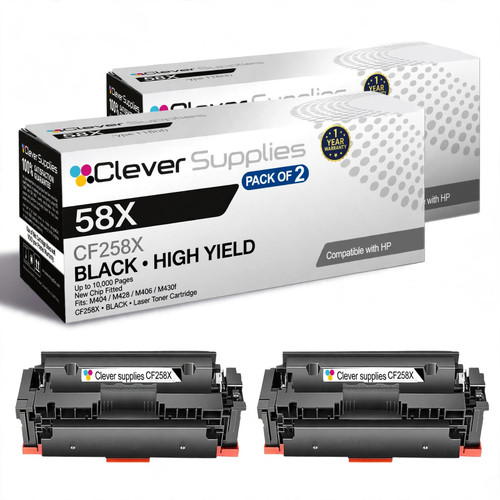
The comparison that frames this pack: two genuine 58X cartridges at HP’s own store come to $611.98. This pair does the same rated work for $153.61. It also clears the $49 free-shipping threshold without anything else in the order — though on this shelf, as the cards below show, everything does.
Shop the 58X 2-Pack →THE REST OF THE SHELF — THE DEEP BOX, THEN BOTH YIELDS AS SINGLES AND PACKS
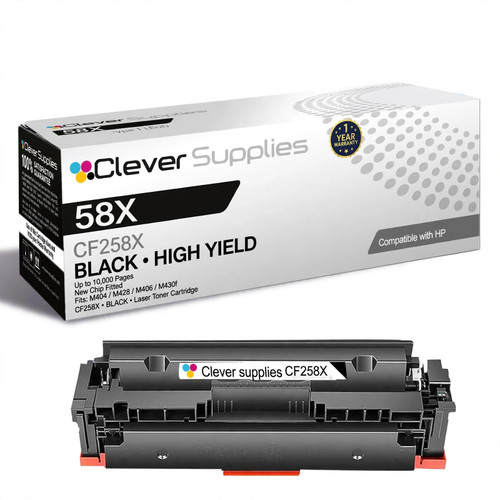
The high-yield cartridge bought one at a time, for a printer that prints steadily but is restocked as needed. Set it against HP’s own shelf: the genuine 58X is $305.99 there, and even the genuine standard-yield 58A costs $146.99 — more than this cartridge.
Shop the 58X Single →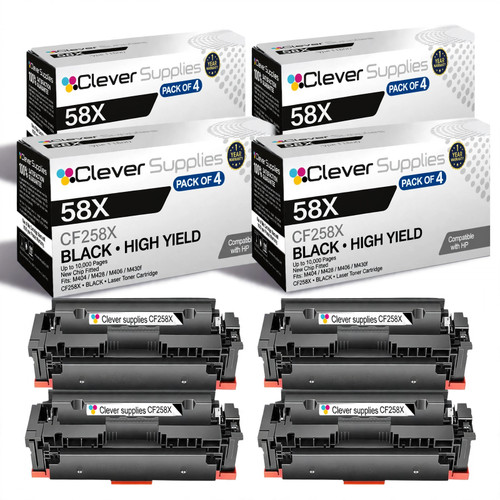
Where this shelf’s page rate bottoms out. Cartridges cost $73.39 apiece inside the box — the lowest per-cartridge figure here — and the rated total runs to roughly 40,000 pages, a stock-up for the busiest machines on the roster.
Shop the 58X 4-Pack →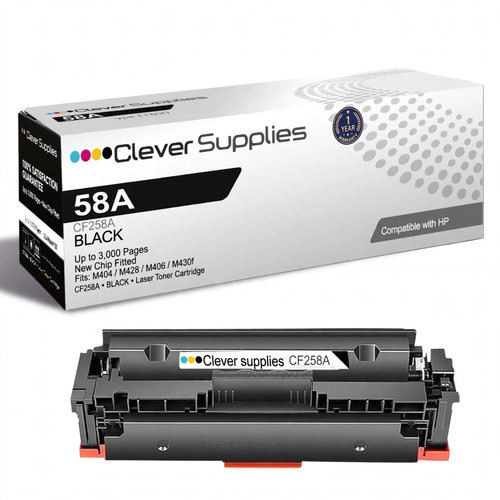
The entry point to the shelf, and the right size for a printer that works in bursts rather than daily. Its page costs more than the high-yield line’s, but the outlay is the smallest here. HP asks $146.99 for the genuine cartridge of the same rating.
Shop the 58A Single →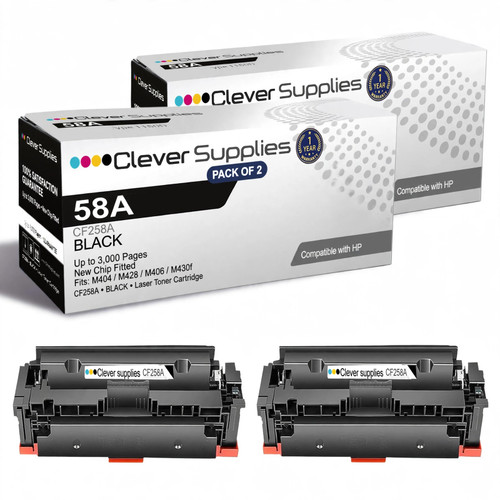
Two standard cartridges at $60.19 apiece. It keeps a spare on hand for a lighter-use printer without stepping up to the high-yield line — though the math section below shows what that restraint costs per page.
Shop the 58A 2-Pack →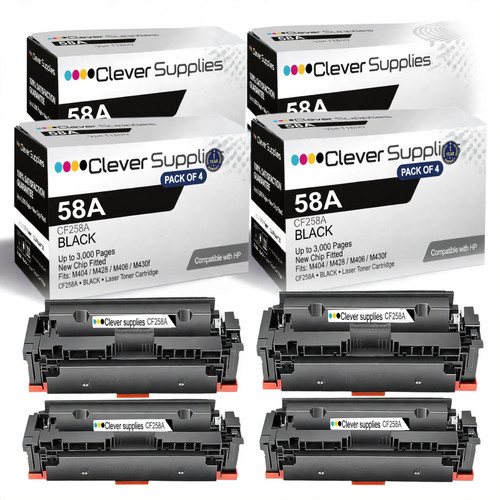
The deepest standard-yield box: four cartridges at $56.78 apiece and the line’s best page rate. It earns an honest note below — a single 58X cartridge carries nearly the same rated pages for $83.63.
Shop the 58A 4-Pack →Why do singles share a page with packs at all? Because a printer gives no warning that suits a stockpile schedule. One cartridge runs out mid-week and the single answers that day; the packs answer the quarter. Singles win on outlay and on never paying today for pages a light-use machine may take a year to reach. Packs win on the per-page rate and on how rarely the shelf needs revisiting. Both reasons are real, which is why both shapes stay on the page.
One shelf trait is worth naming before the table: shipping never arbitrates here. Free shipping starts at $49, and the cheapest listing on this page — the standard single at $67.02 — already passes that line standing alone. Choose by yield and pack size, not by what a box does for the shipping line.
Six listings, two yields — the table
Every rating on this page descends from the footnote HP prints for this family: “Approximate average yield based on ISO/IEC 19752. Actual yield varies considerably based on content of printed pages and other factors.” HP applies that rating cartridge by cartridge — about 3,000 pages for the 58A, about 10,000 for the 58X — and the listings here observe the same discipline: a pack’s page total is the sum of its cartridges’ ratings, nothing more. The pack rows below therefore reach their page rates by division alone, and the word “blended” rides along wherever those divided rates appear.
| Offer | Fits | Price | Rating per cartridge | Cost per page | Set against the singles |
|---|---|---|---|---|---|
| 58X 2-Pack — the flagship | All eight printers | $153.61 | Up to ~10,000 pages each | 0.77¢ blended | SAVE $13.65 |
| 58X Single | All eight printers | $83.63 | Up to ~10,000 pages | 0.84¢ | The high-yield slot, singly |
| 58X 4-Pack | All eight printers | $293.57 | Up to ~10,000 pages each | 0.73¢ blended | SAVE $40.95 |
| 58A Single | All eight printers | $67.02 | Up to ~3,000 pages | 2.23¢ | The entry point |
| 58A 2-Pack | All eight printers | $120.38 | Up to ~3,000 pages each | 2.01¢ blended | SAVE $13.66 |
| 58A 4-Pack | All eight printers | $227.11 | Up to ~3,000 pages each | 1.89¢ blended | SAVE $40.97 |
Two gradients run through the table, and they are not equal. The pack gradient is the smaller one: inside either yield, moving from single to 2-pack to 4-pack trims the page rate in steps of a few hundredths of a cent — 0.84¢ to 0.77¢ to 0.73¢ on the high-yield side. The yield gradient dwarfs it. A page from the dearest high-yield box still costs less than half of a page from the cheapest standard-yield box, because the 58X spreads a modest price premium across more than three times the pages. Read the table yield first and pack size second; that is the order the arithmetic rewards.
Standard or high yield: the one real fork in this family
HP builds this cartridge at exactly two fill levels, and the slot in the printer accepts either without adjustment. The standard cartridge, the 58A (CF258A), is rated at about 3,000 pages. The high-yield cartridge, the 58X (CF258X), is rated at about 10,000 — the same housing and the same fit, carrying a little over three times the rated work. There is no third tier above it and no economy tier below it; the family tree has two branches and stops.
Priced per cartridge, the step up is small: $83.63 for the high-yield single against $67.02 for the standard, a difference of $16.61 for roughly 7,000 additional rated pages. Priced per page, it is not small at all — 0.84¢ against 2.23¢. That is why the standard line’s honest case rests on outlay and pace rather than economy: a printer that produces a few hundred pages a month takes years to spend a high-yield cartridge, and the 58A keeps less money sitting in the drawer in the meantime. A printer in daily service reverses the verdict completely, and for that desk the 58X 2-pack at the top of this page is the shelf’s natural center.
Against HP’s own till, both yields sit far below the genuine line. HP’s US store lists the genuine 58A at $146.99 and the genuine 58X at $305.99, so the compatible single undercuts its genuine counterpart by $79.97 on the standard cartridge and by $222.36 on the high-yield one. The starkest single comparison on this page: the compatible high-yield cartridge, at $83.63, costs less than HP charges for the genuine standard cartridge — while carrying the 10,000-page rating rather than the 3,000-page one.
The cartridge in the box: no reduced starter rating to plan around
Each of the eight printers arrived with a cartridge already installed, and buyers of other families are used to that first cartridge being a short measure — a “starter” rated well below the retail cartridge. For this family, HP publishes no such reduced figure. On HP’s own product page for the M404dn, the preinstalled cartridge is described as a 58A with a yield of about 3,000 pages — the full standard rating, stated in the same terms as the retail cartridge.
One caution belongs here, because a smaller figure travels with this family online. A starter yield of roughly 1,500 pages is quoted for some of these models on third-party sites; it could not be found on HP’s own pages during the research for this guide, so it is not printed here as fact. If your machine’s first cartridge ran out sooner than the rating suggests, heavy early use and setup pages are the likelier explanation than a hidden half-size cartridge.
Either way, the position once the first cartridge is spent is unambiguous: every cartridge on this shelf is a full retail unit carrying its complete published rating — about 3,000 pages for a 58A, about 10,000 for a 58X, whichever slot in your ordering it fills.
A new chip in every cartridge — with the limit printed beside it
Open any of the six listings and the chip is addressed head-on. The single’s wording is representative: “this cartridge arrives with a new chip already fitted”, followed by the practical consequence — “Open the box, install the cartridge and print — there is no chip to pry off your old cartridge and nothing to move over.” The packs say the same of every unit inside them. On this family the point matters more than most, because these printers read their cartridges electronically and HP built them under its dynamic security program.
The listings are equally plain about the boundary of that claim, and this guide keeps their framing rather than widening it. HP describes these machines as intended to work only with cartridges that carry a new or reused HP chip. Future firmware is, in the listings’ own words, “a real variable that no seller controls”, and what is claimed is the chip form of the cartridge in the box, as supplied, today — nothing is promised about firmware that does not yet exist. Our HP monochrome toner chip compatibility page follows that subject across the HP range for owners who want the wider picture.
What stands behind the claim if a cartridge misbehaves is the cover stated in every listing: a 1-year warranty and 1-year returns on each of the six. The offer, stated at its true size, is a new chip fitted before shipping, no transfer step at install, honest silence about future firmware — and a year of cover if the cartridge itself falls short.
Eight printers, one cartridge family
HP’s compatibility list for these two cartridges names eight models, and every listing above fits every one of them, at either yield. The eight fall into three groups, and the differences between the groups are about the printers — paper handling, speed, multifunction features — never about the cartridge, which is shared across the whole list.
The LaserJet Pro M404 trio: LaserJet Pro M404n, LaserJet Pro M404dn and LaserJet Pro M404dw — the single-function printers of the line.
The multifunction M428 trio: LaserJet Pro MFP M428dw, LaserJet Pro MFP M428fdn and LaserJet Pro MFP M428fdw — the same cartridge behind a scanner and copier as well.
The Enterprise pair: LaserJet Enterprise M406dn and LaserJet Enterprise MFP M430f. Filing in this store follows HP’s list exactly: all six listings appear inside each of the eight model categories, so arriving by the printer on your desk or by the code on the spent cartridge ends at the same six offers.
The terms behind every listing
Five checks before ordering from an eight-printer shelf
Questions this family draws
Let your monthly volume answer. The 58X single costs $16.61 more than the 58A single and returns roughly 7,000 extra rated pages for it, which prices its page at 0.84¢ against 2.23¢. A printer in daily service recovers that small premium almost immediately. A printer that wakes up a few times a month may take years to spend even the standard cartridge, and for that machine the 58A’s lower outlay is the rational buy — the economy argument only bites when the pages actually get printed.
Because the pair is where most of the value arrives. It already carries the high-yield rating, already trims the per-cartridge price to $76.81, and already puts roughly 20,000 rated pages on hand for $153.61. The 58X 4-pack improves the page rate further — 0.73¢ against 0.77¢ — and is the right buy for the busiest machines, but it asks $293.57 today for pages a moderate printer will take a long while to reach. The flagship is the balance point; the deep box is the volume play.
That is the question this family’s listings answer most carefully. Every cartridge here arrives with a new chip fitted — there is no chip to move from your old cartridge — and the listings claim the chip form of the cartridge as supplied, today. They also state the limit in the same breath: HP built these printers to work with cartridges carrying a new or reused HP chip, and future firmware is a variable no seller controls, so recognition under firmware that does not yet exist is promised by neither the listings nor this page. Each cartridge is covered by a 1-year warranty and 1-year returns if it falls short.
This page does not claim them. Some third-party sources pair those series with this family, but HP’s own US device lists for the CF258A and CF258X name the eight models in the roster above and do not include the M405 or M429 series, and this store stocks no categories for them. Compatibility here is claimed only where HP claims it — if your model is not among the eight, these listings are not sold as fitting it.
The cover printed in every listing applies: a 1-year warranty on the cartridge and 1-year free returns, with support staffed Monday to Friday, 9 AM to 5 PM Central. That is the route the listings themselves name — the warranty process, rather than a workaround. It is also why the chip claim on this page is kept at its honest size: a new chip in every cartridge, and a year of cover standing behind it.