




Three workgroup lines draw on one black cartridge family: HP’s LaserJet P3015 printers, the Pro M521 multifunctions and the Enterprise 500 MFP M525 series. HP winds the cartridge at two depths — the 55A (CE255A) at about 6,000 pages and the 55X (CE255X) at about 12,500 — and this store sells the pair in fifteen configurations, counting a third line of its own invention that gets a labeled block of its own below. The family’s deciding fact is a price, not a fit chart. There is no tier fence: every cartridge on this page drops into every machine on the roster. And the step between the tiers costs almost nothing — the high-yield single is thirteen cents dearer than the standard single while carrying 6,500 more rated pages, and at no pack size does the step cost more than sixty-seven cents. All fifteen boxes are priced at the sale figure checkout actually charges, and the page deals openly with the shelf’s two inventions: a “Maximum Capacity” code HP never issued, and a newer set of listings that describes the two genuine cartridges as one and the same supply — which they are not.
Own a LaserJet P3015, an M521dn or an M525dn and the fit question is already answered: both cartridges below run in your machine, so what remains is how much toner to buy, and under which code. This page leads with the 55X 2-pack at $59.65 — two high-yield cartridges, about 25,000 rated pages, 0.24¢ a page — because the shelf’s own pricing has already settled the tier argument: the standard single is $37.73 and the high-yield single is $37.86, so the extra 6,500 rated pages inside every X cartridge cost less than a dollar at every size on the shelf. Every offer here is a Clever Supplies compatible — the store stocks no genuine HP cartridge for this family. Where HP’s prices appear further down, they appear labeled as HP’s own, as a measure. One warning belongs up front, because it decides real orders: the 55A and the 55X are not the same cartridge under two codes, as several of this store’s newer listings claim — they are two different fills, 6,000 pages against 12,500, and a buyer who pulls out a CE255X needs an X on the box that replaces it. The full correction sits in the fit section and in the closing note.
The whole shelf: two fills, fifteen boxes
Twenty-one listings carry this family’s codes; fifteen configurations remain once the re-listings are set aside — the standard cartridge in six pack sizes, the high-yield in five, and four boxes wearing the store’s own “Maximum Capacity” label, which sit in their own block after this shelf. The closing note accounts for every listing not carded here. Each configuration is carded once, at its verified sale price. Where a pack carries a SAVE badge, the figure is plain subtraction inside its own tier: the pack’s price taken from the cost of its cartridges bought singly, at sale prices. Order on the page: the flagship first, the rest of the high-yield line, then the standard line from the single to the 10-pack.
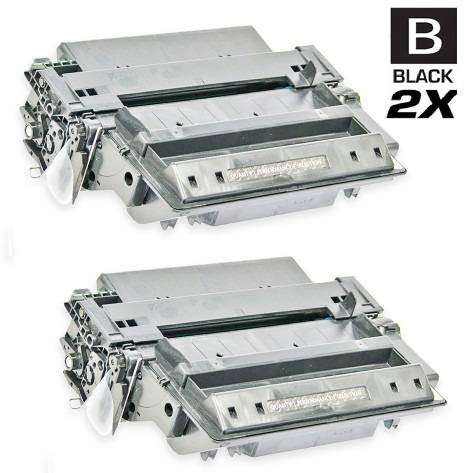
HP sells this exact configuration itself, which makes the comparison unusually direct: the genuine CE255XD twin pack sits in HP’s US store at $622.99. This box holds the same two cartridges’ rated output — about 25,000 pages — for $563.34 less. One cartridge in the machine and one sealed beside it is the natural rhythm for a workgroup printer, and at this rate the spare is bought at a per-page price nothing in the standard tier approaches.
Shop the 55X 2-Pack →THE REST OF THE HIGH-YIELD LINE — EVERY BOX FITS ALL TEN MODELS
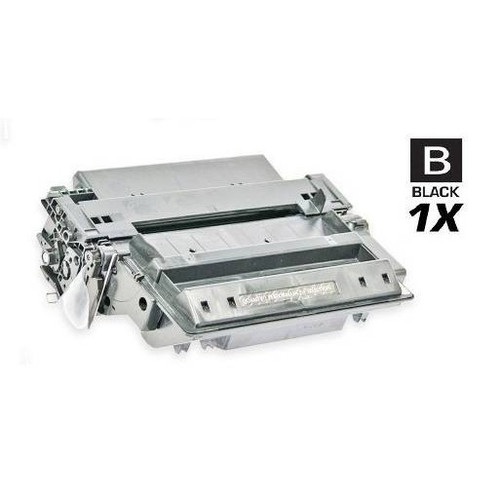
The step this family is built around: thirteen cents over the standard single buys a cartridge rated for 6,500 more pages, and cuts the per-page rate from 0.63¢ to 0.30¢. Against HP’s genuine CE255X at $345.99, this single sits $308.13 lower.
Shop the 55X Single →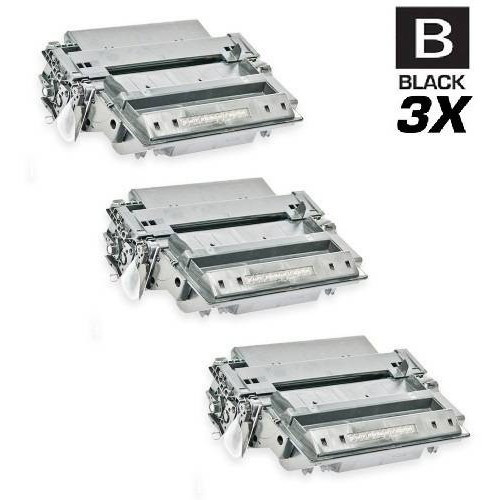
Cartridges at $27.14 apiece. About 37,500 rated pages in one order — a working quarter for a shared M521, with the shelf kept in a single carton.
Shop the 55X 3-Pack →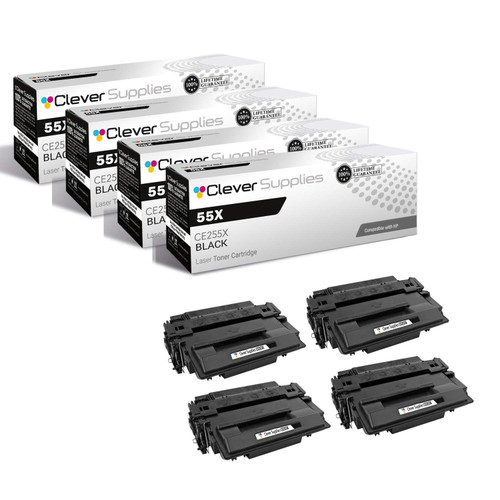
Cartridges at $25.81 apiece. Set it beside the standard 4-pack below — $103.22 against $102.68 — and the family’s whole argument is in the gap: fifty-four cents buys double the pages in every cartridge.
Shop the 55X 4-Pack →
The cheapest page the genuine tiers sell, at $25.00 a cartridge. Five of these cost $220.99 less than HP charges for one genuine CE255X single.
Shop the 55X 5-Pack →THE STANDARD LINE — THE FULL LADDER, SIX BOXES
The fill the printer itself arrives with, and the family’s entry point — though the high-yield single above costs thirteen cents more for double the rating. HP prices the genuine CE255A at $224.99, so this single runs $187.26 under its counterpart.
Shop the 55A Single →
Cartridges at $29.69 apiece. The standard pair is priced twenty-seven cents under the flagship — for half the pages in each cartridge. Its honest case is a machine nearing retirement, not a rate.
Shop the 55A 2-Pack →
Cartridges at $27.01 apiece — about 18,000 standard pages. The high-yield 3-pack above costs forty cents more and carries 37,500.
Shop the 55A 3-Pack →
Cartridges at $25.67 apiece. Carded as what it is — a standard 4-pack — though its own listing dresses the box in both codes at once. The cartridges inside are the 6,000-page fill; the fit section explains why that distinction decides orders.
Shop the 55A 4-Pack →
Cartridges at $24.87 apiece. Thirty thousand standard pages in one carton — the standard tier’s deep box, for a fleet that has settled on the A and buys it by the year.
Shop the 55A 5-Pack →
The standard line’s floor, at $23.26 a cartridge. Ten of these cost $7.60 more than HP charges for one genuine CE255A — sixty thousand rated pages set against six thousand.
Shop the 55A 10-Pack →The “Maximum Capacity” line: a store variant, priced above the real X
Four further boxes wear a third name — “55XJ,” or “CE255XJ Maximum Capacity” — and this block exists so the name is read for what it is. CE255XJ is not an HP part number: HP’s supply lists for this platform name exactly three genuine articles, the CE255A, the CE255X and the CE255XD twin pack. The variant is this store’s own extended fill, rated by the store at 20,000 pages per cartridge — a figure no HP source carries. Rated even on that claim, it is the family’s dearest way to buy a page. The variant single works out to 0.35¢ against the regular X single’s 0.30¢, and the deepest variant box, the 9-pack at 0.28¢, still prints a dearer page than the regular X 2-pack at 0.24¢. What the label honestly sells is interval — fewer cartridge changes across a year — not cheaper pages, and the cards below are priced on exactly that basis. No SAVE badge is printed on this block: the comparison that matters runs across to the X line above, and the copy makes it.
One card here needs its own warning. The variant 2-pack’s listing never calls itself Jumbo or Maximum Capacity anywhere a buyer can read: its name and description are the store’s generic two-code text, which calls the units standard cartridges, and the variant identity lives only in its SKU. It is carded in this block because its price — $123.81, $61.91 a cartridge — sits at the variant tier’s level and nowhere near the regular X 2-pack’s $59.65. Do not mistake it for that box, and do not read any extended rating into its page: it claims none.
THE STORE’S VARIANT LABEL — AN INVENTED CODE, A STORE-CLAIMED RATING, ALL TEN MODELS

The dearest single on the shelf: $32.08 more than the regular X single, for a claimed 7,500 extra pages the genuine tier prices at thirteen cents. Even taken at its own rating, its page costs more than the X’s.
Shop the 55XJ Single →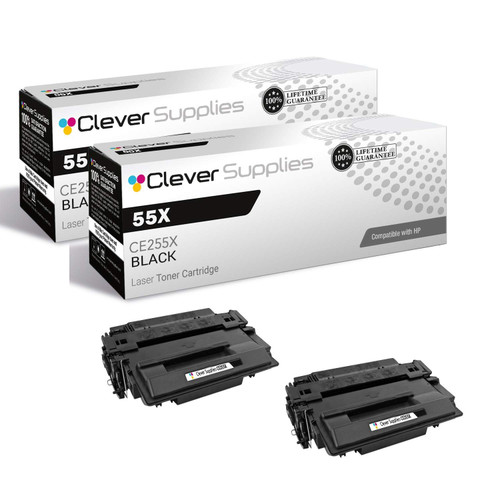
Carded in this block on its SKU and its price, as the warning above explains — its own listing text claims no extended rating and calls the units standard cartridges. At $61.91 a cartridge it costs more than double the regular X 2-pack; read its product page with that in hand.
Shop the 55XJ 2-Pack →
Cartridges at $57.89 apiece. A claimed 80,000 pages in one box — and at its own claimed rating the box’s page still costs 0.29¢, where the regular X 4-pack above prints at 0.21¢.
Shop the 55XJ 4-Pack →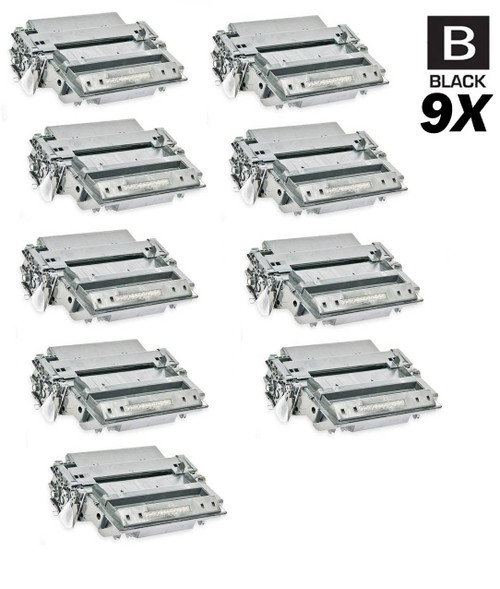
The variant’s deepest box, at $55.65 a cartridge and a claimed 180,000 pages. Its 0.28¢ rate is the variant’s best — and it still loses to every high-yield pack on the shelf above.
Shop the 55XJ 9-Pack →Every box, priced by the page
Each row divides what the box costs by the rated pages inside it — 6,000 pages per standard cartridge, 12,500 per high-yield, and for the variant rows the store’s claimed 20,000, flagged as a claim wherever it is used. Rows run from the cheapest page to the dearest, and the fit column is a formality: it reads the same on all fifteen, because every box here fits every model on the roster.
| Pack | Sale price | Pages the box is rated for | Per-page rate | Fits |
|---|---|---|---|---|
| 55X 5-Pack | $125.00 | 5 cartridges · ~62,500 pages | 0.20¢ | All 10 models |
| 55X 4-Pack | $103.22 | 4 cartridges · ~50,000 pages | 0.21¢ | All 10 models |
| 55X 3-Pack | $81.43 | 3 cartridges · ~37,500 pages | 0.22¢ | All 10 models |
| 55X 2-Pack — the flagship | $59.65 | 2 cartridges · ~25,000 pages | 0.24¢ | All 10 models |
| 55XJ 9-Pack (store variant) | $500.88 | 9 cartridges · ~180,000 pages at the store’s claimed rating | 0.28¢ | All 10 models |
| 55XJ 4-Pack (store variant) | $231.55 | 4 cartridges · ~80,000 pages at the store’s claimed rating | 0.29¢ | All 10 models |
| 55X Single | $37.86 | 1 cartridge · ~12,500 pages | 0.30¢ | All 10 models |
| 55XJ 2-Pack (store variant) | $123.81 | 2 cartridges · variant tier, rated in the block above | 0.31¢ at the tier’s claimed rating | All 10 models |
| 55XJ Single (store variant) | $69.94 | 1 cartridge · ~20,000 pages at the store’s claimed rating | 0.35¢ | All 10 models |
| 55A 10-Pack | $232.59 | 10 cartridges · ~60,000 pages | 0.39¢ | All 10 models |
| 55A 5-Pack | $124.33 | 5 cartridges · ~30,000 pages | 0.41¢ | All 10 models |
| 55A 4-Pack | $102.68 | 4 cartridges · ~24,000 pages | 0.43¢ | All 10 models |
| 55A 3-Pack | $81.03 | 3 cartridges · ~18,000 pages | 0.45¢ | All 10 models |
| 55A 2-Pack | $59.38 | 2 cartridges · ~12,000 pages | 0.49¢ | All 10 models |
| 55A Single | $37.73 | 1 cartridge · ~6,000 pages | 0.63¢ | All 10 models |
Read the table in three bands. The high-yield packs own the top — 0.20¢ to 0.24¢ — because the tier step costs almost nothing on this shelf. The variant block sits in the middle despite claiming the longest rating in the family: a bigger claimed fill at a much bigger price is still a dearer page, and the variant’s best box loses to every high-yield pack on the shelf. The standard line fills the bottom, its deepest box printing at 0.39¢ — over half again the flagship’s rate. On this shelf the pack size is a logistics choice; the tier is the money choice, and the money choice costs thirteen cents.
Fit: every cartridge, every model — and two codes that are not one supply
HP’s compatibility for this platform is stated at series level and is as simple as it gets: the LaserJet P3015 printer series, the LaserJet Pro M521 multifunction series, the LaserJet Enterprise 500 MFP M525 series and the flow M525 line all take the same two cartridges, with no model reserved for one tier. This store keeps a category for ten models: the LaserJet P3015, P3015d, P3015dn, P3015n and P3015x printers; the M521dn and M521dw multifunctions; and the M525dn, M525f and flow M525c. Every name in that list links to the model’s own category page in this store, and the family’s own shelf is filed under HP CE255A. Both genuine tiers — and the store variant — fit all ten.
One correction has to be made at full strength, because the store’s own newer listings blur it. Six listings — both 4-packs among them — are written as though the CE255A and the CE255X were two names for a single cartridge: “this is the same supply,” in one listing’s words, sold “to satisfy a match on either” code. They are not the same supply. The two codes are two different fills of one cartridge shell — 6,000 rated pages against 12,500 — and HP declares the two figures separately. The blur is harmless in one direction: a 55A owner sent a high-yield cartridge simply receives double pages. In the other direction it costs real pages at real prices: a buyer who pulls a spent CE255X and orders the “55A” 4-pack on that copy receives 6,000-page cartridges at $102.68 — fifty-four cents under the genuine X 4-pack carrying twice the fill in every unit. Match the code on the cartridge you remove. If it reads CE255X, the replacement is an X.
The store’s older fit lines err the other way — by omission. A boilerplate line shared across the older listings fits the family to the P3015 and M521 lines and stops there, leaving out the entire M525 series, a third of HP’s published roster, while naming two models — P3011 and P3016 — that appear in no HP compatibility statement for this family. The fuller rosters printed elsewhere in the same descriptions name the M525 models the boilerplate drops. The roster above follows HP’s series statement instead: three printer lines, ten categorized models, no fence anywhere.
Yields both sides sign — and HP’s shelf across the aisle
Yield is the honest subject in this family. Every listing rates the standard cartridge at 6,000 pages and the high-yield at 12,500, the pack totals multiply out on the same figures, and HP declares exactly those numbers — about 6,000 for the CE255A and about 12,500 for the CE255X, each an approximate average under ISO/IEC 19752. So every rate in this guide divides by 6,000 and 12,500 with nothing to reconcile: no field-versus-prose split exists here, and no listing in the family carries a structured yield field at all — the figures live in prose, and for once the prose is right. One HP footnote deserves its line: HP’s own datasheet rates the CE255X higher on the M525 machines — 13,500 pages there, against 12,500 on the P3015 and M521. This guide keeps the store’s uniform 12,500 as its divisor everywhere, M525 included; an M525 owner may simply do a little better than the rates printed here.
HP’s genuine prices stand across from the shelf, pulled from HP’s US store and flagged as HP’s at every quotation: the genuine CE255A at $224.99, which works out to 3.75¢ a page at its rating; the genuine CE255X at $345.99, or 2.77¢; and — a rarity in this series — a genuine twin pack, the CE255XD at $622.99 for two high-yield cartridges, 2.49¢ a page. No genuine standard twin pack exists: HP sells the A singly only, so where a standard pack is compared with HP at all, the comparison runs against that many genuine A singles and says so. The gaps are wide. Against genuine prices, the compatible standard single saves $187.26, the compatible high-yield single saves $308.13, and the flagship pair stands $563.34 under the genuine twin pack carrying the same rated pages.
One warning about price bases covers the family, and it accounts for any product-page number that disagrees with the ones here: every listing in this family keeps its prose books at list, while every configuration on this shelf currently sells under list. The standard single’s text prices it at $43.39, where checkout charges $37.73; a newer listing sells its cartridge “at $43.54” in prose where checkout charges $37.86. This guide counts nothing but checkout figures. If a promotion lapses, trust the product page’s own figure; the closing note records the whole basis.
One consumable — and a full cartridge in the box
There is no second consumable to budget for on this platform. The CE255A and CE255X are all-in-one units, with toner and the imaging drum sealed in one housing — in the words of HP’s own yield forms — so drum wear is already counted inside each rating above, and a cartridge change starts the print surface fresh with the toner. HP’s genuine supply list for the platform holds three entries — CE255A, CE255X and the CE255XD twin pack — and all three are this same cartridge. The store’s newer listings agree in their own words: “the imaging drum is part of the cartridge itself… There is no second consumable to order.” The fuser kit belongs to the printer’s service schedule rather than its supply shelf, and it is not sold here.
What the printer arrives with deserves its own sentence, because this platform does not do the cut-down starter. HP’s P3015 datasheet lists the in-box print cartridge at the standard rating — an average of 6,000 pages under ISO/IEC 19752 — a full CE255A rather than a shortened sample. The first replacement is therefore a like-for-like decision, not a step up: by the time the first cartridge empties, the machine has printed a genuine standard run, and that run is the evidence the tier choice needs. The 55X is never the in-box unit on any HP source; it is the optional high-capacity supply, bought separately from the first replacement onward. A buyer whose first cartridge lasted a year has the standard tier’s case made; a buyer who emptied it in a quarter has the high-yield’s.
Chips: nothing to quote — the listings are silent, and so is the era
Put the chip question to all twenty-one descriptions in this family and the answer is a blank: no listing mentions a chip, a firmware or dynamic security in any form. This time the silence has a plain explanation. These printers were built between 2009 and 2012, before HP’s dynamic-security program existed; HP’s own datasheets and specification pages for the P3015, M521 and M525 carry no dynamic-security notice, because there is no cartridge-blocking mechanism on this platform to describe. A buyer who compares these pages with a newer family’s will find a warning there that simply has no counterpart here.
In place of a listing quote — there is none to give — the position that covers the shelf is the store’s own standing one for its compatible range. Every cartridge arrives with a current-generation chip already fitted by the supplier; it installs as a straight swap, plug-and-play, and the spent cartridge’s chip goes out with the spent cartridge. One boundary is worth printing even in a family whose printers predate firmware blocking altogether: the store promises nothing about firmware HP has not yet written. What backs the cartridges themselves is set out next, in the cover the listings state.
What stands behind each box
Matching the box to the workload
Answers for the P3015, M521 and M525 owner
Order an X. The two codes are two fills of one cartridge shell — the CE255A carries about 6,000 rated pages, the CE255X about 12,500 — and HP declares the figures separately. The “same supply” wording on several of this store’s newer listings describes the shared shell, and it misleads in exactly one direction: a buyer who replaces a spent CE255X with a “55A” box receives half the pages, at prices within a dollar of the X’s own. The flagship 55X 2-pack is the replacement this guide leads with.
Either fits — there is no tier fence on this platform. HP lists both cartridges as the replacements for every machine in the P3015, M521 and M525 lines, from the P3015n to the flow M525c. Choose on volume and rate: the 55X carries about 12,500 rated pages to the 55A’s 6,000, and on this shelf it costs between thirteen and sixty-seven cents more per box, size for size.
No. HP sells no CE255XJ; its supply lists for this platform name the CE255A, the CE255X and the CE255XD twin pack, and nothing else. The XJ is this store’s own extended-capacity variant, rated by the store at 20,000 pages per cartridge with no HP figure behind it. It is carded in its own labeled block above, and the arithmetic there is unkind to it: even at its claimed rating, its pages cost more than the regular 55X’s at every comparable size. Buy it for longer intervals between swaps if that is worth a premium — not for cheaper pages.
Both numbers are HP’s. HP’s datasheet declares the CE255X at 12,500 pages on the P3015 and M521 and at 13,500 on the M525 — the same cartridge yields a little more in the bigger engine. This store rates it 12,500 uniformly, and every rate in this guide divides by 12,500, so an M525 owner’s true per-page cost runs slightly under the figures printed here. The guide follows the store’s figure rather than re-rating the shelf by engine.
They do not — the drum is not a second part on this platform. Toner and the imaging drum share the one housing, HP’s yield forms describe both cartridges as “all in one,” and the drum’s life is counted inside the cartridge’s rating, so a change renews the print surface together with the toner. HP’s genuine supply list for the platform is three entries long and every entry is this cartridge; there is no drum part number to order, here or from HP.
A full one. HP’s P3015 datasheet puts the in-box cartridge at the standard rating — an average of 6,000 pages under ISO/IEC 19752 — the complete CE255A fill, not a shortened starter. The first replacement is therefore a like-for-like decision made on real evidence: if that first cartridge carried the machine for a year, the standard tier’s rhythm suits it; if it emptied inside a quarter, the thirteen-cent step to the 55X has already made its argument. The 55X never ships in the box; it is bought separately from the first replacement on.
Price and disclosure note: Every figure quoted here is the price checkout charges — pulled from the store’s live catalog on November 17, 2026, then checked again on the listing’s own storefront page, with the page title matched against the catalog record both times. Behind each sale price sits a higher list price; if a promotion ends, the product page’s own price is the one that governs. SAVE badges are sale-basis arithmetic from end to end — a pack is measured against the same cartridges bought one by one inside its own tier, at sale prices. Standard tier: the 2-pack’s $16.08 badge is the gap between its $59.38 price and $75.46 of singles; the 3-pack’s $32.16 against $113.19; the 4-pack’s $48.24 against $150.92; the 5-pack’s $64.32 against $188.65; the 10-pack’s $144.71 against $377.30. High-yield tier: $16.07 against $75.72 of singles for the 2-pack, $32.15 against $113.58 for the 3-pack, $48.22 against $151.44 for the 4-pack, $64.30 against $189.30 for the 5-pack. The variant block carries no badges by design. HP’s numbers are quoted from HP, verified the same day, and marked as HP’s at each appearance — the CE255A at $224.99, the CE255X at $345.99 and the genuine CE255XD twin pack at $622.99, all from the offer data carried on their HP US store product pages. No genuine standard twin pack exists, so standard-pack comparisons against HP run against that many genuine A singles, and the text says so. Yields need no arbitration in this family: listing prose and HP’s declarations agree on about 6,000 pages for the CE255A and about 12,500 for the CE255X, each measured under ISO/IEC 19752, and those are the divisors behind every rate in this guide; pack page counts are the sum of the cartridges inside, and a per-page rate is the pack’s price divided by that sum. One HP footnote is disclosed rather than used: HP rates the CE255X at 13,500 pages on the M525 engine, and this guide’s math follows the store’s uniform 12,500. The variant block’s 20,000-page figure is the store’s own claim for its own label, with no HP counterpart, and is flagged as a claim wherever it is used. Fit is taken from HP’s series-level compatibility for the platform. Set against that record, the store’s own pages depart from it in the following respects.
First, the founding claim of the family’s newer listing batch: that the CE255A and CE255X are one cartridge sold under two codes — “this is the same supply,” “sold to satisfy a match on either.” The codes name two different fills of one shell, 6,000 pages against 12,500, declared separately by HP; the conflation can send a buyer who removed a CE255X to a 6,000-page box at near-X prices, and every newer listing’s name carries both codes, so the confusion begins in the search results. This guide presents the tiers as what they are and repeats that framing nowhere. Second, list-price arithmetic in prose, family-wide: every description quotes list prices as selling prices and builds its per-unit math on them — the standard single “priced at $43.39” where checkout charges $37.73, its pair’s cartridges at “$34.15” where sale gives $29.69, the standard 4-pack’s cartridges at “about $29.52” where sale gives $25.67. Every figure in this guide is recomputed from sale prices. Third, the invented tier code: “CE255XJ” is worn in names, SKUs and prose as though it were an HP reference — one listing calls the full code “the reference for any question that follows” — with a 20,000-page rating no HP source supports; HP’s lists name CE255A, CE255X and CE255XD only. The variant is carded in its own labeled block, as this store’s label. Fourth, two listings in this family are MICR products whose names and descriptions never say so: their identity rests on their SKUs alone — a MICR 2-pack priced at $266.06 against the regular 2-pack’s $59.65, under a regular name and a URL that names the wrong family entirely, a “53x” slug on a 55X product; and a MICR 4-pack priced and stocked identically, to the unit, with the regular 4-pack it was copied from, so its MICR identity may exist only in the SKU string. Compounding it, both listings’ closing cross-links label regular listings as MICR — an anchor reading “the 55X MICR two-pack” points at the regular high-yield 2-pack carded above — so a buyer following those links to buy check toner lands on ordinary toner. Neither hidden-MICR listing is carded or linked here; the family’s two openly named MICR singles are likewise excluded, and are recorded in this note only. Fifth, the variant 2-pack’s identity defect: its extended-capacity identity exists only in its SKU, while its name is the generic two-code form and its description calls the units “standard cartridges for the family” — nothing a buyer can read distinguishes it from the regular 2-pack at double the price; it is carded in the variant block on its SKU and its price, with no extended rating printed as its own claim. Sixth, filing: all six newer listings sit under the store’s COLOR LASERJET SERIES as their series parent — a monochrome family filed as color — and none of the six is filed in the family category where the other fifteen listings sit. Seventh, the older batch’s shared fit line omits the entire M525 series while asserting two model names, P3011 and P3016, that appear in no HP compatibility statement for this family; the fuller rosters in the same descriptions contradict it, and this guide’s roster follows HP. Eighth, the standard batch’s introductory text is HP’s own cartridge copy worn by a compatible: it introduces the cartridge as “an authentic HP 55A” and warns against “generic toner” in the same passage — the one framing a compatible listing must not wear. Ninth, every newer description prints a cross-reference to Canon’s Cartridge 120, with a Canon rating of 5,000 pages; this pass did not check the equivalence against Canon’s own publications, so the paragraph is recorded as a claim the store makes and this guide does not adopt — the Canon code is not printed here as established fit, and the 5,000-page figure enters none of the arithmetic above. Tenth, the canonical record itself: the store’s own shelf map marks the regular high-yield 4-pack carded above as a duplicate and a second high-yield single listing as canonical, but the numbers run the other way — the second single is priced and stocked identically to the canonical single, to the unit, while the 4-pack is the only regular listing of its configuration. This guide follows the numbers: the 4-pack is carded, the second single is not.
Fifteen cards stand above: six standard configurations, five high-yield, and four wearing the store’s variant label in their own block. The listings not carded are the two exact re-listings — a “Premium Quality” standard 5-pack whose own FAQ concedes the name adds “nothing to the specification and nothing to the price,” and a second high-yield single sharing its canonical twin’s price and stock to the unit — and the four check-printing listings recorded above; none is carded, and none is linked. On chips, the section above records a family-wide silence — the words chip, firmware and dynamic security occur in no description, on a platform older than the mechanism itself — and gives the supplier position as the store’s own, with its standing boundary: no undertaking about firmware still to come. The in-box figure comes from HP’s P3015 datasheet. Each offer carries the cover printed on its own listing — one year of warranty, one year of free returns, weekday support hours of 9 AM to 5 PM Central, and stock held across Illinois, Pennsylvania, Georgia and California.