




This is the least complicated ink platform in the Brother range this store covers: one cartridge code, one yield rating shared by black and colors alike, and four Work Smart printers that all take exactly the same ink. There is no black to route by model name and no second group hiding inside the family. The decision that matters sits somewhere else entirely — between this High-yield tier and the Standard-yield LC3011 tier underneath it, which fits the same four printers and costs 75 cents less a cartridge at half the rated pages. This page prices all six LC3013 offers per page, settles the tier question with arithmetic, and states the one display message these cartridges can honestly produce.
Own one of the four Work Smart models below and every offer on this page fits it — fit is the one question this family never asks. The shelf is six offers deep: four singles at a flat $10.49, a Set of 4 at $35.94 and a Set of 9 at $72.77, and all six are compatible cartridges carrying a new compatible chip; this store lists no genuine LC3013. What deserves your attention is the tier line. Your printer also accepts Brother's Standard-yield LC3011 cartridges, rated at half the pages — and at this store's prices the step up to LC3013 costs $0.75 a cartridge and roughly halves what each page costs. Buy the tier first and the box size second, and there is nothing left to get wrong.
Four printers, one cartridge family, and not a single routing decision
Brother's own cartridge pages print the roster for this platform in one breath, and every page fetched for this guide agrees on it word for word: the MFC-J491DW, the MFC-J497DW, the MFC-J690DW and the MFC-J895DW — four members of Brother's Work Smart series, named here exactly as Brother names them. No model on that list takes a different black from its neighbors, no cartridge in the family is fenced to part of the roster, and the same four machines are the whole audience for every single and every set below. The complete shelf sits in the store's Brother LC3013 category, and owners browsing by printer rather than by cartridge will find the same six offers filed under each of the four model pages.
The cartridges these printers arrived with deserve a sentence, because they explain the numbers new owners carry in their heads. All four models shipped holding LC3011-series starter cartridges — the Standard tier, not this one — and Brother's footnote on its printer pages states that a starter's actual yield runs at approximately 100% of a replacement LC3011 cartridge, the initialization process notwithstanding. Read that again and it stops sounding like a footnote: the ink in the box was, by Brother's own rating, a full-strength Standard set. So an owner whose first cartridges seemed to last a respectable while was not imagining it — and the step from those starters to the LC3013 cartridges on this page is a doubling of rated pages per cartridge, not the leap from a token starter set that other platforms impose.
One more consequence of the shared roster is worth stating before the prices arrive. Because the Standard and High-yield tiers serve the same four printers and the same four slots, the two tiers are not rival systems an owner must commit to — they are two sizes of the same supply, and Brother's own texts allow them to sit side by side in one machine, slot by slot. The tier section below prices that choice properly; everything between here and there is this tier's own shelf.
One shelf, six offers: a set in front, a stock-up box behind it, singles to top up
With fit settled for everyone at once, the ladder on this shelf is purely a question of how much ink to buy in a single order. The Set of 4 leads, as a complete refill at a per-cartridge price the singles cannot match; the Set of 9 follows as the bulk box whose composition — three blacks against two of each color — follows the way these printers actually drink; and the four singles stand behind both as the top-up tier, each at the same flat price.
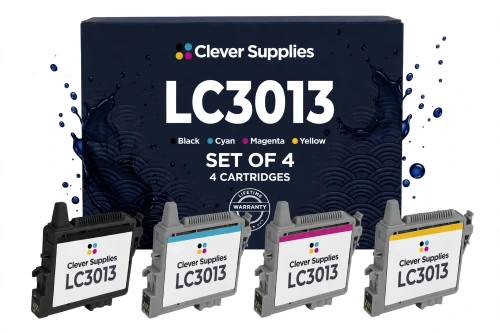
Set the box against Brother's own shelf and the gap widens. Brother sells a genuine four-cartridge pack for this platform — its LC30134PKS — at $74.99, more than double this box, and prices its genuine color singles at $18.29 each before a black cartridge enters the arithmetic at all. This set covers the same four slots at the same published 400-page ratings for $35.94. It does not reach the $49 free-shipping line by itself; the box below is the one that does.
Shop the LC3013 Set of 4 →THE REST OF THE LADDER — THE BULK BOX, THEN THE FOUR SINGLES
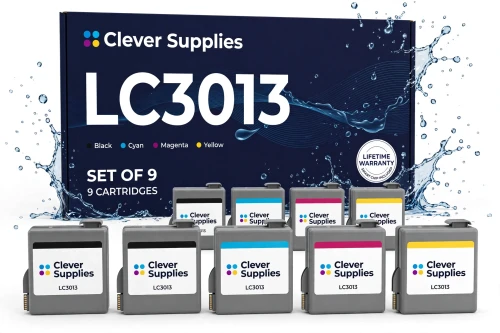
$8.09 a cartridge — the family's lowest unit price — weighted toward black because text is what these printers mostly print. It is also the only offer here that clears the $49 free-shipping line alone.
Shop the LC3013 Set of 9 →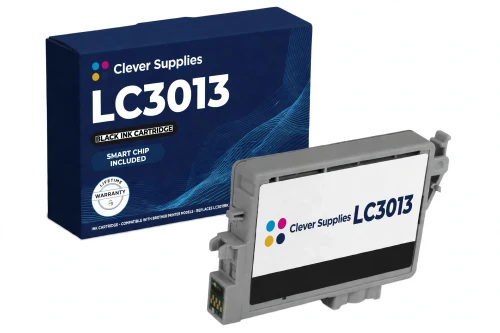
The slot that empties first in a Work Smart printer, at the family's flat single price — letters, forms and school runs draw on this cartridge long before the colors feel it.
Shop LC3013BK Black →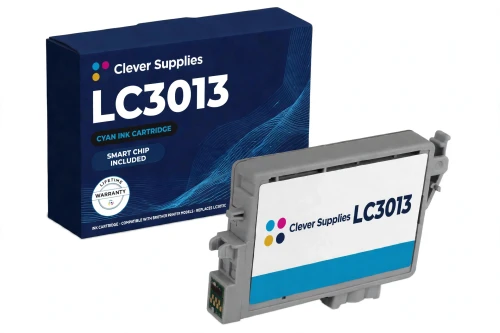
Cyan carries the skies, the charts and the underlined links of everyday printing, and it is usually the first color slot to call for a top-up. One cartridge, the same flat price as its siblings.
Shop LC3013 Cyan →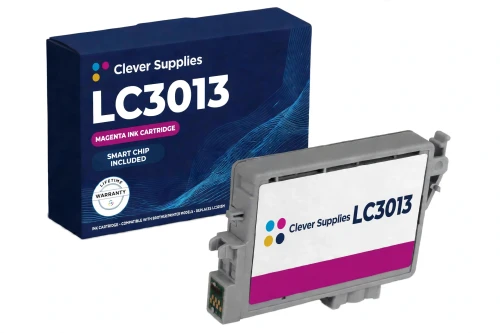
Magenta at the shelf's one-price rule — Brother charges $18.29 for its own version of this cartridge; here the color costs exactly what the black beside it costs.
Shop LC3013 Magenta →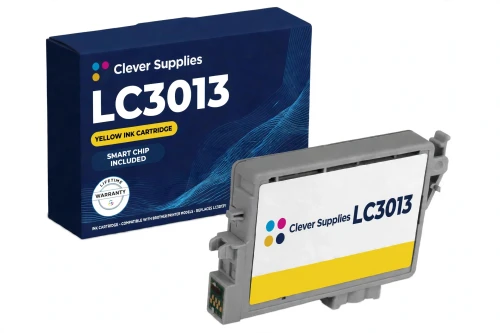
Yellow fades out of photographs and highlighted pages before it announces itself, so it is the slot owners discover empty mid-job. A single on hand ends that discovery for $10.49.
Shop LC3013 Yellow →Every offer, priced per page
Brother rates this family with unusual evenness: each cartridge — the black and every color — is good for up to 400 pages, an approximate page yield in accordance with ISO/IEC 24711 (letter/A4), in Brother's own basis wording for this platform. Because no cartridge outrates another, the cost-per-page column separates the offers on price alone; and because a yield belongs to one cartridge, the set rows blend a box's price across its own cartridges' rated pages rather than adding the ratings into one headline figure.
| Offer | Fits | Price | Yield per cartridge | Cost per page | Against its own singles |
|---|---|---|---|---|---|
| LC3013 Set of 4 — the flagship | All four printers | $35.94 | Up to 400 pages each | 2.25¢ blended | SAVE $6.02 |
| LC3013 Set of 9 | All four printers | $72.77 | 3 blacks + 2 of each color, each up to 400 | 2.02¢ blended | SAVE $21.64 · ships free alone |
| LC3013BK black single | All four printers | $10.49 | Up to 400 pages | 2.62¢ | The one-slot top-up |
| LC3013C cyan single | All four printers | $10.49 | Up to 400 pages | 2.62¢ | The one-slot top-up |
| LC3013M magenta single | All four printers | $10.49 | Up to 400 pages | 2.62¢ | The one-slot top-up |
| LC3013Y yellow single | All four printers | $10.49 | Up to 400 pages | 2.62¢ | The one-slot top-up |
Read the ladder as a straight slope, because that is what it is: per-cartridge price steps down from $10.49 to $8.99 to $8.09 as the box grows, and cost per page steps down with it from 2.62¢ to 2.25¢ to 2.02¢. Nothing on the shelf is priced against its own rating, nothing is duplicated under a second name, and no rung asks you to check a model number before trusting it. The interesting comparison is not inside this table at all — it is against the tier underneath, which the next section prices on the same basis.
The tier underneath: what 75 cents a cartridge actually buys
Brother builds this platform in two tiers and names them plainly on its product pages: LC3011, the Standard-yield tier, rated up to 200 pages a cartridge, and LC3013, the High-yield tier this page covers, rated up to 400 — the same printers, the same slots, the same ISO/IEC 24711 basis. This store stocks the Standard tier as four singles at $9.74 each, so the comparison can be priced exactly rather than argued. A Standard single works out to 4.87¢ a page; a High-yield single, at $10.49, works out to 2.62¢. The step between tiers costs $0.75 a cartridge and buys twice the rated pages — a cut of roughly 46% in what every page costs, repeated on every cartridge you fit from then on.
Brother's own price list makes the same point from the other direction. Brother prices its Standard-yield LC3011 color singles at $11.29 each — which is to say, Brother's smaller cartridge costs more than this store's larger one at $10.49. And at the top of the genuine shelf, Brother's four-cartridge LC30134PKS pack stands at $74.99 and its black 2-pack, the LC30132PKS, at $55.29. None of that makes the Standard tier a mistake in its own slot: a printer that prints a dozen pages a month will take years to spend even 200-page cartridges, and ink sitting in a little-used machine is money parked, not saved. But for any Work Smart printer in regular service, the arithmetic is one-directional, and it is why this guide is written around the High-yield tier.
Two naming traps guard the tier line, and both are worth disarming here. There is no tier above this one: Brother publishes no LC3015 for these printers, and this store stocks none — the platform is exactly two tiers deep. And “LC3013XL”, a code that circulates in marketplace listings, is seller wording rather than a Brother cartridge; Brother's pages never use it, and the listings on this page say so themselves. The cartridge rated up to 400 pages is called LC3013, full stop — if a listing elsewhere adds letters to the name, it is describing this same cartridge in its own dialect.
Set of 4, Set of 9, or one cartridge at a time
The Set of 4 is the default refill because printers rarely empty one slot in isolation for long: colors drift down together behind the black, and a box that renews all four at $8.99 a cartridge beats four separate errands at $10.49. It is the right box for a household or small office that prints weekly and wants the drawer empty of spares. What it does not do is ship free alone — at $35.94 it sits under the $49 line, so it travels cheapest with a single or two added for the drawer.
The Set of 9 is built for the black-heavy pattern these printers actually live: three blacks against two of each color, $8.09 a cartridge, the family's floor of 2.02¢ a page, and — at $72.77 — free shipping without company in the cart. Its honest condition is throughput. Nine cartridges rated at up to 400 pages apiece is a long supply line; a printer in daily service will spend it steadily, while a quiet machine may hold the tail of the box for a very long time. Buy it for the per-page price when the volume is real, not as a hedge.
Singles remain the maintenance tool. Work Smart printers do not drain evenly — black first, cyan behind it, yellow quietly last — and a $10.49 single restores the one slot that stopped the job without restocking colors that still hold pages. Nor does choosing a size today lock anything in: the cartridges inside the sets are the same cartridges sold as singles, same ratings and same chip, so a shelf can open with a set and be kept with singles, or graduate to the Set of 9 at the next full refill, and the printer registers no difference in kind.
The chip, and the one message it may honestly leave on your screen
The claim comes first, in the products' own words, because it is theirs: every listing in this family carries a dedicated specification field reading “New compatible chip”, and the descriptions put it in sentences — a single's text says the cartridge carries a new compatible chip, and a set's text says every cartridge in the box carries one. There is no cartridge on this page, in any box, without one. The listings also point to the small green chip on top of the cartridge, the contact Brother's own support pages ask about when a cartridge is not detected.
The limit that travels with the claim is specific to this family, and it is a display behavior rather than a failure: with a compatible cartridge fitted, the printer may show “Cannot Detect Ink Volume”. Brother's support text, as the listings characterize it, says the machine keeps working with that message showing, and that only a new genuine cartridge clears it — so on a compatible cartridge the ink-level gauge may not read, and an owner watching for a low-ink warning should instead watch the print quality and keep a spare single in the drawer. That is the whole of it: printing continues, the gauge may not. The texts also allow that recognition hiccups can occasionally follow a firmware update, and they promise no recognition guarantee on any firmware version — this guide repeats that limit rather than softening it.
The handling routine the listings give is short and physical: hold the cartridge by its housing and never touch the green chip, seat it firmly until it settles, and fit it promptly once it is opened. Followed, that routine is the answer to most detection complaints before they start; and if a cartridge still refuses to register, the lifetime warranty printed in every listing's fields is the backstop. One boundary, kept deliberately: this is an ink family's chip account, stated at the size these six products state it — nothing here is a claim about toner or drum cartridges elsewhere in the store.
The terms standing behind these six offers
Before you check out: five quick confirmations
The questions this platform draws
No — it is the same system one tier up. Your printer shipped with Brother's Standard-yield LC3011 series in the slots, and LC3013 is the High-yield series built for the identical four printers and the identical slots. Nothing about the machine changes: the LC3013 cartridges are simply rated at up to 400 pages against the Standard tier's 200. Most owners meet this family exactly where you are — at the first refill, discovering the printer had a larger cartridge available all along.
Yes. The tiers mix slot by slot — the store's own listings state it, and Brother's platform treats the two series as sizes of one supply rather than as rival fittings. A half-spent Standard black can serve out its pages beside a fresh High-yield cyan, and each slot can step up to LC3013 as it empties. There is no conversion moment and no setting to change; the practical advice is simply to let each tier change happen at a natural refill.
Because on this platform the starters were barely starters at all. Brother's printer-page footnote rates the inbox LC3011-series cartridges at approximately 100% of a replacement LC3011 cartridge — a full Standard yield, with the ink spent initializing the system already accounted for. Owners of other Brother platforms often meet starters rated well below their replacements; here the first set behaved like a bought set. The LC3013 cartridges on this page double that per-cartridge rating, to up to 400 pages.
By the account the listings give, no. With a compatible cartridge fitted, that message is the expected display behavior on this family: Brother's support text says the machine keeps working with the message showing, only a new genuine cartridge clears it, and the trade is that the ink-level gauge may not read. Treat it as a gauge that has gone quiet, not as a printer that has stopped — keep an eye on print quality instead, keep a spare single in the drawer, and keep fingers off the small green chip on top of the cartridge, whose clean contact is what detection depends on.
Neither exists as a Brother cartridge. Brother's product pages name exactly two tiers for these printers — LC3011 Standard-yield and LC3013 High-yield — and no LC3015 appears anywhere in Brother's range for this platform, nor on this store's shelf. “LC3013XL” is wording that circulates in marketplace listings; the listings here debunk it themselves. The cartridge rated up to 400 pages is sold under the plain LC3013 name, and it is the largest cartridge Brother makes for your printer.
Throughput, and the shipping line. The Set of 4 renews every slot once for $35.94 at 2.25¢ a page blended; the Set of 9 renews black three times and each color twice for $72.77 at 2.02¢, and it is the only box here that ships free by itself. A printer in daily service spends the nine steadily and should take the lower per-page figure. A printer used a few times a month is better served by the Set of 4 plus singles as slots empty — the cartridges are identical either way, so no choice made today locks the next one.