




The LaserJet P3005 and its M3027 and M3035 multifunction siblings run on the two cartridges HP actually made for them: the standard 51A, rated 6,500 pages, and the high-yield 51X, rated 13,000. This store lists them in seven honest configurations — the seven cards below. Around them sit three traps this guide names rather than sells. A “Maximum Yield” tier wears a code HP never issued, spelled one way in its name, another in its text. Seven product descriptions end with a cross-link whose label promises the plain standard single and delivers somewhere else. And every page on the shelf prints a “Lifetime” warranty line its own answers contradict. Every price on this page is the sale price.
Begin with the tier, because the step between tiers is the cheapest capacity on the shelf. The 51X single costs $9.48 more than the 51A single — $48.83 against $39.35 — and prints twice as many rated pages, cutting the cost of a page from 0.605¢ to 0.376¢. Depth then decides the rest. The best rate anywhere in the family belongs to the high-yield four-pack: 52,000 pooled rated pages at 0.283¢. The deepest box is a standard-tier ten-pack — 65,000 pooled rated pages at 0.383¢ — flagged below as the flagship for depth, not rate — it does not win on rate. There is no third HP tier above the X: the “Maximum Yield” listings examined beside the flagship carry a code found in no HP source, at the worst rates on the shelf even on their own claimed pages. And no genuine price exists to compare against: HP’s US store has discontinued both cartridges, so the table below is compatible rows only.
Ten standard cartridges deep — the biggest single order in the family
Pool ten 6,500-page cartridges and one order covers 65,000 rated pages: $248.83 at 0.383¢ a page, each cartridge inside costing $24.88 against $39.35 bought alone. Ten singles would total $393.50, so the carton keeps $144.67. It is the flagship on depth alone; the high-yield four-pack further down prints more cheaply, and this guide says so wherever the two meet. Beside it sits the shelf’s invention: a “maximum” tier HP’s paperwork has never heard of.
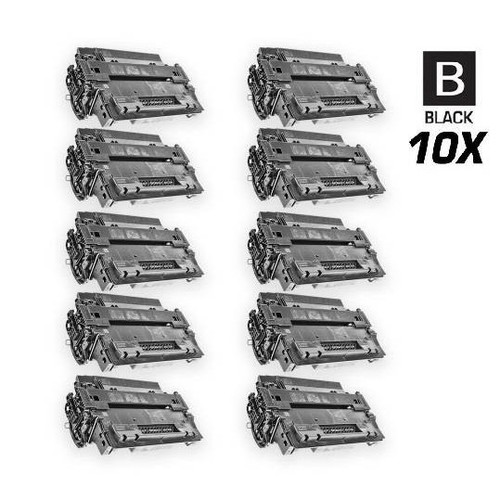
Think of it as the stock-up order: a row of P3005s across sites, or one multifunction that eats a cartridge a month, fed from a single carton for most of a year. Every unit is the complete consumable — toner and drum in one body — so each swap renews both at once.
Shop the 51A 10-Pack →The genuine X single’s own text lends the invention a hand — its reorder answer warns that “a maximum-yield 51XX also exists on the platform”, and its closing paragraph names the invented single as a shelf-mate. HP’s only other codes here, Q7551XD and Q7551XC, are a dual pack and a contract variant of the X — packaging, not yield. The pair is written up here and nowhere else: not carded, not linked, no table rows.
The standard cartridge at five depths — Q7551A
The A ladder is the family’s staircase: one, two, three, five and ten cartridges of 6,500 rated pages each, the per-page rate easing from 0.605¢ down to 0.383¢ as the boxes grow. The ten-pack leads this guide as the flagship; the four shallower depths follow. One rung needs a footnote: the five-pack exists twice, under two listings with identical prices — the panel after the grid deals with the double. A caution applies to nearly every card here: each description ends with a cross-link labeled as the plain standard single that does not lead to the single carded below — the single’s own page, whose links are clean, is the exception. The questions near the end explain the pattern.
THE 51A TIER — SHALLOWER DEPTHS
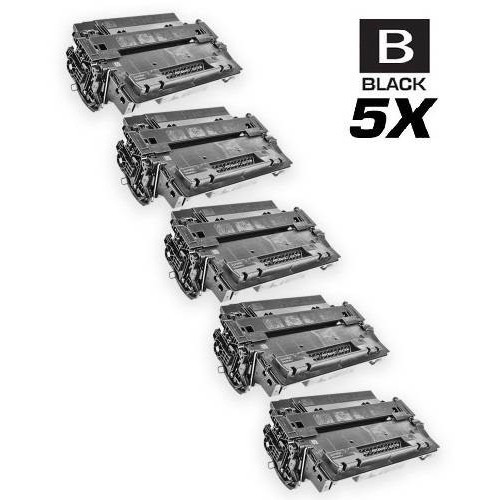
The five-pack is where the standard tier starts to feel stocked rather than bought: 32,500 pooled pages, at $26.49 a cartridge. Five singles at sale come to $196.75, so the box keeps $64.30. This card follows the plain listing; its identically priced “Premium Quality” twin is written up below.
Shop the 51A 5-Pack →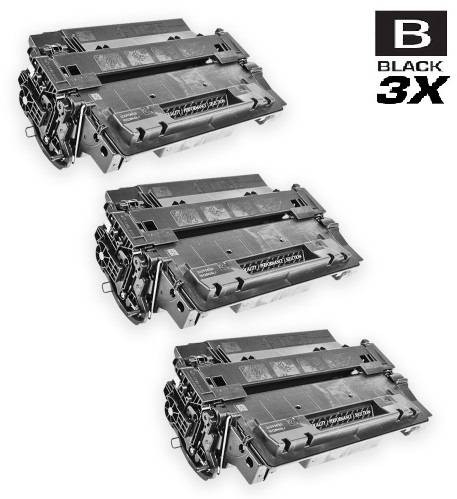
Three standard cartridges pool 19,500 rated pages — one in the machine, two on the bench. Each unit inside costs $28.63 at the price actually charged, not the $32.93 its page computes from list. Three singles total $118.05; the pack keeps $32.15.
Shop the 51A 3-Pack →
The pair pools exactly the 13,000 rated pages one high-yield cartridge carries, split across two standard units — for anyone who likes the smaller cartridge yet refuses to run the shelf dry. Two singles come to $78.70; the pair keeps $16.07, at $31.32 a cartridge.
Shop the 51A 2-Pack →
The entry point, and the standard tier’s yardstick: every A badge on this page is measured against this cartridge. Its own page asks what “the $45.25 price” includes — list price; the figure actually charged is the $39.35 shown here. Its closing links, alone in this family, go exactly where their labels say.
Shop the 51A Single →The high-yield cartridge, in only two shapes — Q7551X
HP’s bigger cartridge is sold lean here: a single and a four-pack — no two-, three- or five-pack exists. What the tier lacks in depths it repays in rate: the four-pack’s 0.283¢ a page is the family’s cheapest honest figure, undercutting even the flagship. One caution belongs to the single: its closing paragraph carries both faults this guide tracks — the misdirected single link, and a mention presenting the invented “maximum” single as a shelf-mate.
THE 51X TIER

Four high-yield cartridges pool 52,000 rated pages at the family’s best rate. Each unit inside costs $36.77 at sale; its own page, working from the $169.15 list, says “about $42.29” and calls the rate “near a third of a cent” — at the price actually charged it is 0.283¢. Four singles total $195.32, so the pack keeps $48.23.
Shop the 51X 4-Pack →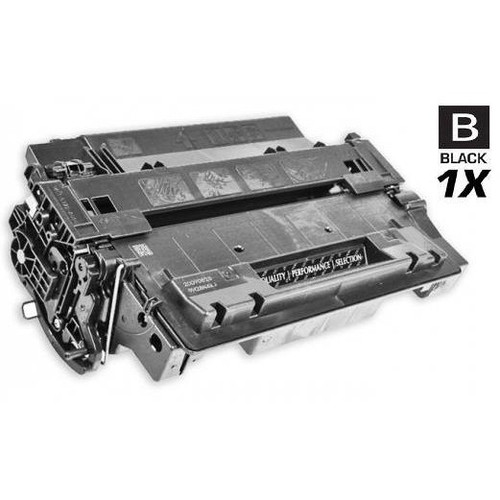
The step that defines this family: $9.48 over the standard single buys double the rated pages and cuts the per-page cost by more than a third. Its page also gives the shelf’s invention its loudest assist — its reorder answer and closing paragraph present the “maximum-yield” code as a real option. The cartridge and the price on this card are exactly what the name says; the endorsements around them are not HP’s.
Shop the 51X Single →Seven honest configurations on one table
Two kinds of row are missing on purpose. There is no genuine row: HP’s US store has discontinued both cartridges — their old addresses land on a generic finder page that lists no “HP 51” family at all, stepping from HP 49 straight to HP 53 — and this guide prints genuine prices only where HP states them. The invented “Maximum Yield” pair gets no rows either: configurations HP never made, at rates that earn them no place here.
| Configuration | Price | Rated pages | Cost / page | Printer fit |
|---|---|---|---|---|
| 51A 10-Pack — the flagship | $248.83 | 10 cartridges · ~65,000 pages | 0.383¢ pooled | All 9 models |
| 51X 4-Pack | $147.09 | 4 cartridges · ~52,000 pages | 0.283¢ pooled | All 9 models |
| 51X Single | $48.83 | 1 cartridge · 13,000 pages | 0.376¢ | All 9 models |
| 51A 5-Pack | $132.45 | 5 cartridges · ~32,500 pages | 0.408¢ pooled | All 9 models |
| 51A 3-Pack | $85.90 | 3 cartridges · ~19,500 pages | 0.441¢ pooled | All 9 models |
| 51A 2-Pack | $62.63 | 2 cartridges · ~13,000 pages | 0.482¢ pooled | All 9 models |
| 51A Single | $39.35 | 1 cartridge · 6,500 pages | 0.605¢ | All 9 models |
The four-pack’s 0.283¢ is the number the family bends around — the deepest standard box cannot match it, because doubling the cartridge beats multiplying it. And the two singles frame the real decision: $9.48 buys a second 6,500 pages. Everything else is depth — how much of a chosen tier to hold at once.
Nine printers take these cartridges — four of them the listings never name
HP assigns both the Q7551A and the Q7551X to nine machines. The printer line runs to five: the LaserJet P3005, P3005d, P3005dn, P3005n and P3005x. The multifunction line adds four: the M3027 MFP, M3027x MFP, M3035 MFP and M3035xs MFP. All nine take every card shown here, and the whole shelf files under the HP Q7551A category — no Q7551X category exists; the family category wears the standard cartridge’s name, and the high-yield listings shelter under it.
Read the product pages for fit and you would never assemble that nine — their introductions name the platform by series string only, and their closing paragraphs enumerate at most the five P3005 variants (the high-yield single’s only four, dropping the P3005x). Not one description enumerates any of the four multifunction models; the MFPs exist in the text only inside the series string. An M3035 owner is left to infer fit from a string. The roster above is HP’s, and it is complete.
The category tree also doubles each multifunction model with a second, “MFP”-suffixed bucket. Those are filing artifacts, not additional printers; this page links each model’s primary category only.
The fit text never reaches too far: no description names a printer outside this platform, and no page carries a “not compatible” warning against any model here. On fit, this family’s fault is silence, not invention.
One glance at the cartridge coming out settles the tier: the stamp reads Q7551A or Q7551X — standard or high-yield build of a single design. Order the tier your stamp shows. A “maximum” stamp, under either spelling, corresponds to nothing HP ever cataloged for these machines.
The ratings are HP’s own, to the page
Yield inflation is the usual toner-catalog sin; this family is innocent of it. HP declares 6,500 pages for the Q7551A and 13,000 for the Q7551X, both under ISO/IEC 19752, and each genuine-tier listing states its own tier’s figure without adding a page. The pooled totals multiply out clean as well: 13,000, 19,500, 32,500 and 65,000 up the standard ladder; 52,000 in the high-yield four-pack. Each rate here divides the sale price by HP’s rating, scaled for the cartridges in the box.
Real coverage spends ratings unevenly, but the two-to-one relationship survives it: whatever the standard cartridge prints, the high-yield prints roughly twice.
The family’s single off-paper figure is the invented tier’s claimed 20,000 pages. It appears here only where the claim is being corrected, always labeled as claimed.
One body holds toner and drum — the price is the whole price
No second consumable waits behind these cards. HP’s family datasheet describes the design in its own words: the cartridge “incorporates HP toner and the imaging drum in one supply”. The wear surface that forms the image is renewed at every cartridge change, and no drum unit exists for these machines under any separate part number. The family’s one stray drum mention, in a troubleshooting answer, names that built-in component — correctly.
A current-generation chip is already on board every compatible cartridge — the store’s latest, trouble-free chipped supply — so there is nothing to set up: drop the unit in, shut the cover, and the machine recognizes it and meters its toner the way it would a genuine cartridge’s. The spent cartridge keeps its own chip; nothing is transplanted. That holds for the firmware these printers run today — firmware still unwritten is beyond any honest seller’s warranty.
Two warranty answers on every page — the shorter one is the real one
Ask this family’s specification strips about warranty and they promise “Lifetime”; ask the same pages’ own answers and the term shrinks to a one-year warranty with one year of free returns. Both statements ride on all ten listings this guide covers, and they cannot both govern. The one-year terms do — the terms the listings state as their own, and this store’s toner terms; the “Lifetime” line is boilerplate contradicting the very page that carries it. The tiles below print the operative set.
Picking the box by the work in front of it
Rate first, depth second — the reverse of the usual pack logic, because here the tiers are not priced alike:
Questions from P3005, M3027 and M3035 owners
Not from HP, under either spelling: the family datasheet lists two part numbers, Q7551A and Q7551X, full stop. The two listings claiming a third tier cannot agree on its name: titles and SKUs say Q7551XJ; addresses and every paragraph of text say Q7551XX — the XJ spelling appears in no description in the family. Their claimed 20,000-page rating is a figure HP never published; their own specification block files the cartridge as “High-yield”, not maximum; the single’s identity answer instructs buyers to verify a box code that contradicts the listing’s own title. Both listings read zero stock and have never sold, at $160.17 and $304.26 — the worst rates on the shelf even per claimed page. HP’s genuine extra codes, Q7551XD and Q7551XC, are a dual pack and a contract variant of the X. Neither listing is carded or linked here; the panel beside the flagship lays out the full case.
The one year. All ten listings covered here carry the same split: a features block reading “Warranty: Lifetime”, and answers promising a one-year warranty with one year of free returns. The answers state the store’s actual toner terms; the strip is inherited boilerplate that contradicts the page it sits on. Buy on the one-year terms — the ones this guide prints in its trust band above.
Because one five-pack was listed twice: the same $132.45 sale price, the same stock figure of 32, the same sixteen categories. The second listing adds a “Premium Quality” label — and then, to its credit, declines to exploit it: its own identity answer says the label “is the name this five-pack is sold under, and we will not dress it up with differences we cannot point to”, with no premium surcharge. That is the most honest paragraph in this family’s duplicate problem, and this guide records it gladly. The catalog’s map nonetheless ranks that copy as canonical, reversing its usual pattern — but two pages selling one product get one card here, and the card follows the plain listing.
You met the family’s most widespread defect. The closing paragraph of each of seven carded listings contains a cross-link whose words name the plain standard single — “the 51A (Q7551A) single cartridge” — but which lands on a different listing this guide excludes entirely. Only the standard single’s own closing paragraph links where its labels promise. Every card above points at its own product’s page, full stop; the wandering links are described here, never reproduced.
Because HP no longer sells these cartridges. The US store addresses for both the Q7551A and the Q7551X now resolve to a generic toner finder page carrying no offer for either — a finder whose family list steps from HP 49 straight to HP 53, with no HP 51 entry at all. This guide takes genuine prices only from HP’s own store and prints none it cannot source there, so the table runs on compatible rows only.
The product pages do their sums from the list price; this guide does its sums from the price at the till. The standard three-pack prices a cartridge at $32.93 — its $98.79 list split three ways. Charged at $85.90, the true figure is $28.63. The high-yield four-pack’s page says “about $42.29” per cartridge against $36.77 at sale, and “near a third of a cent” per page against 0.283¢. Not one description in the family quotes the price a buyer actually pays; every figure on this page does.
Price and disclosure note: Prices throughout are sale prices, taken from the carded listings on November 18, 2026 — where a product page disagrees today, the product page wins. The descriptions themselves never quote those figures; they work from list: $45.25 for the standard single, $72.02 for the standard two-pack, $98.79 for the standard three-pack, $152.32 for the standard five-pack in both its copies, $286.15 for the standard ten-pack, $56.15 for the high-yield single, $169.15 for the high-yield four-pack, $184.20 for the invented-code single and $349.90 for the invented-code two-pack. Badge savings compare sale with sale inside each tier (standard, for two-, three-, five- and ten-packs: $62.63 vs $78.70, $85.90 vs $118.05, $132.45 vs $196.75, $248.83 vs $393.50; high-yield four-pack: $147.09 vs $195.32). Neither cartridge carries a genuine price here, because HP’s US store offers neither and its finder page knows no HP 51 family. Yields are HP’s ISO/IEC 19752 declarations — 6,500 pages for the standard cartridge, 13,000 for the high-yield — apart from the invented tier’s claim, which is flagged as claimed wherever it appears. Fit follows HP’s published nine: LaserJet P3005, P3005d, P3005dn, P3005n, P3005x, M3027 MFP, M3027x MFP, M3035 MFP, M3035xs MFP. What the catalog itself gets wrong follows.
(1) An invented third tier sold as genuine HP identity, under two spellings at once: the pair is named and SKU’d “Q7551XJ / 51XJ Maximum Yield” while its addresses and all of its text say “Q7551XX / 51XX” — the XJ string appears in no description in the family. HP’s datasheet lists exactly two part numbers (Q7551A, Q7551X); the claimed 20,000-page rating was never published; the tier’s own spec block files it as “High-yield”, not maximum; and the single’s identity answer instructs buyers to verify “the complete code is Q7551XX” on the box, contradicting the listing’s own name. The genuine high-yield single’s text propagates the invention, presenting the “51XX” as a real shelf option in its reorder answer and closing paragraph. (2) Links whose labels lie: in the closing paragraph of seven carded listings, the words name the plain standard single while the link itself delivers a listing this guide excludes — a destination the label never mentions. The standard single’s own closing paragraph is the family’s one clean set of links. (3) List-price arithmetic in all twelve descriptions: every quoted price is the list figure, never the sale figure, and every derived number inherits the basis — the standard three-pack’s “$32.93 per unit” against $28.63 at sale, the high-yield four-pack’s “about $42.29 per unit” against $36.77 and its “near a third of a cent per page” against 0.283¢, the invented single’s “just under one cent per rated page” against 0.801¢ per claimed page at sale. (4) A “Warranty: Lifetime” line in the specification strip of all ten listings this guide covers, contradicted by the answers printed on the same pages, which promise one year of warranty and one year of free returns. Those one-year terms are the operative ones. (5) The invented pair shows stock of zero on both listings, yet both pages stand visible and orderable, and neither has recorded a single sale. (6) The five-pack’s reversed twin: two listings sell the identical standard five-pack on one price block, a stock figure of 32 and one filing set, and the catalog’s canonical map puts the “Premium Quality” copy first — backwards against its usual pattern. Uniquely here, that copy’s text admits the sameness in plain words, inventing no differences and adding no surcharge. The plain listing takes this guide’s card. (7) Fit under-naming: introductions name the platform by series string only; closing paragraphs enumerate at most the five P3005 variants — the high-yield single’s only four — and none enumerates any multifunction model. (8) Weight fields that invert the shelf: every pack records weight 2 while the singles read 6 and 7; HP’s genuine packages weigh 1.9 kg (standard) and 2.3 kg (high-yield) per the datasheet. (9) Markup debris: a broken “<p> />” fragment opens each of the twelve descriptions. (10) A family category named for a single tier — everything files under “HP Q7551A”, high-yield and invented listings alike — plus a duplicate “MFP”-suffixed bucket shadowing the primary category of every multifunction model. (11) Two further listings, excluded entirely, mirror their tiers’ plain singles exactly — identical sale prices and stock figures (166 against the standard single, 57 against the high-yield single), the same pooled-echo pattern as the twin five-packs. (12) The series page above the family fails live: the monochrome LaserJet series page returns a server error and is not linked here. The negative results belong on the record as well: no genuine-tier yield is inflated — each listing repeats HP’s figure exactly and every pooled total multiplies correctly; no description names a printer beyond the P3005/M3027/M3035 platform, and none carries a fit warning against HP’s word; no separate drum is claimed anywhere; no production text leaks into any description; every listing carries an image; and each of the nine roster models has a live category.
The buyable shelf rides on seven cards — one for each distinct configuration of the two cartridges HP made. Three more listings are handled in prose and never offered: the five-pack’s twin and the pair wearing the invented code. Two more are excluded altogether. Underneath sit the terms from the listings’ own answers: one year of warranty, one year of free returns, support on weekdays from 9 AM to 5 PM Central, and shipping out of Illinois, Pennsylvania, Georgia and California.