




Sixteen of Brother's compact laser printers — the DCP-L2500 and MFC-L2700 generation and their HL-L2300 siblings — all run on this one drum unit, and none of them runs on anything else. The DR630 is the imaging drum the toner cartridge sits in, rated by Brother at roughly 12,000 pages, and fit on this platform is as simple as fit ever gets: if your printer takes TN630 or TN660 toner, this is its drum. What is left to decide is how many to buy at once, and that is a pricing question — so this page works through the five pack sizes, the drum-and-toner sets, and the genuine alternative, with every figure taken from the live shelf.
One compatible DR630 costs $27.67 on this shelf. Buying drums in a pack steps the per-drum price down through $19.63 and $16.95 to $14.81 at the 5-pack, and the 2-pack is where most owners should land. Every one of the sixteen printers on Brother's roster uses this drum — there is no second drum code for the platform and no model that takes the toner but not the drum. The only real choice the platform offers is on the toner side, where TN630 (about 1,200 pages) and TN660 (about 2,600 pages) differ in yield alone. Below: the roster, the ladder, how to tell a worn drum from a worn cartridge, and the two price quirks hiding in the drum-and-toner sets.
Sixteen printers, one drum — and a toner choice that is only about yield
Start with Brother's own paperwork. The DR630 page names sixteen printers. The TN630 page names the same sixteen. The TN660 page names the same sixteen again. Nothing is carved out: no model is limited to the standard-yield cartridge, no flagship takes a heavier drum, and no sub-group needs a different unit. Owners of drum platforms that divide their rosters have to check which side of a line their machine sits on; owners of this platform do not, because there is no line. The sixteen are:
DCP series: DCP-L2520DW · DCP-L2540DW
HL series: HL-L2300D · HL-L2305W · HL-L2315DW · HL-L2320D · HL-L2340DW · HL-L2360DW · HL-L2380DW
MFC series: MFC-L2680W · MFC-L2685DW · MFC-L2700DW · MFC-L2705DW · MFC-L2707DW · MFC-L2720DW · MFC-L2740DW
Because fit is settled, the TN630-versus-TN660 question can be answered on yield and nothing else. Both cartridges are rated in accordance with ISO/IEC 19752: the TN630 at about 1,200 pages, the TN660 at about 2,600. Pick by how much you print — the drum underneath does not change either way, and a drum will see roughly ten TN630 cartridges or four to five TN660 cartridges pass through it before its own turn comes.
Two shelf untidinesses are worth a sentence each, so nobody is confused by them later. A few of the older drum listings in this store were written before four of the model pages above existed, and their text names fifteen of the sixteen models — the MFC-L2740DW is missing from the words although Brother's roster includes it and the drum fits it; this guide follows Brother's sixteen. And two of the store's DR630 listings carry the words "Toner Cartridge" in their titles while selling this drum. Both points are flagged once here and again where the cards begin; the part itself is never in doubt.
The drum ladder: five ways to buy the same 12,000-page unit
Every saving on this page is measured against the single drum at $27.67, bought one at a time: two singles total $55.34, three come to $83.01, four to $110.68 and five to $138.35. Hold each pack up against its own line in that sequence. One caution before the cards, carried over from the fit section: two listings on this shelf are titled "Toner Cartridge" even though the box holds a drum — the store's own questions on one of them open by wondering aloud whether the name means the box holds toner. It holds a drum. The cards here point to the listings titled as drum units, and every offer below is labeled what it is: a drum.
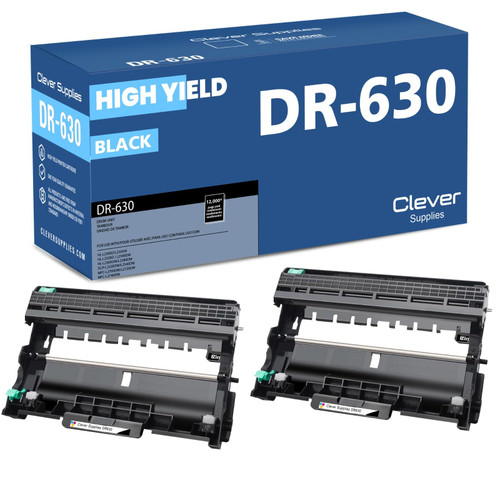
A 12,000-page drum in a home office or a small workgroup can take years to wear through, which makes the pair the natural unit of purchase for this platform: one drum goes in today, and its replacement is already on the shelf when the counter runs down again — no order placed under pressure, no printer sitting idle mid-week waiting on a delivery. The per-drum price keeps falling on the deeper packs below, and households running two or three of these printers should read on. For a single machine, though, two drums are roughly 24,000 pages of cover, and that is a long horizon at this family's print volumes.
Shop the 2-Pack →
The yardstick for the whole ladder, at about $2.31 for every thousand pages it prints. The right buy for a first drum change, or for a printer you do not expect to keep through a second one.
Shop the Single →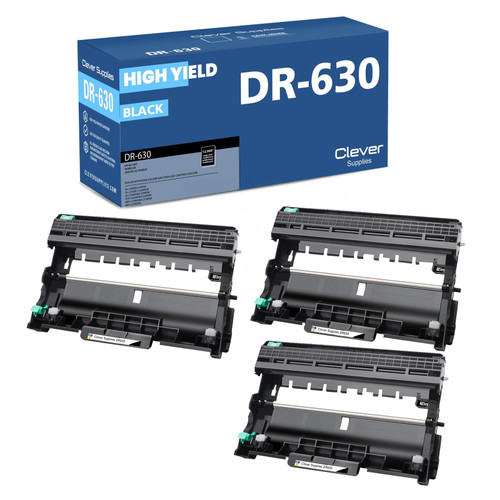
$16.95 per drum and about $1.41 per thousand pages. A practical depth when two machines in the house or office share this drum — and the first pack on the ladder that passes the $49 free-shipping line by itself.
Shop the 3-Pack →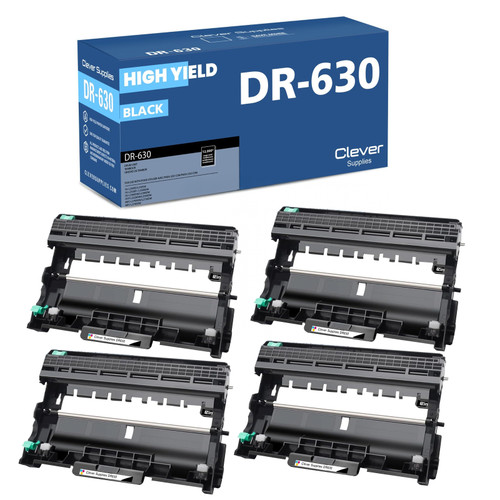
$15.61 per drum and about $1.30 per thousand pages. Stock for a small fleet of these printers, where drum changes arrive on a schedule rather than as surprises.
Shop the 4-Pack →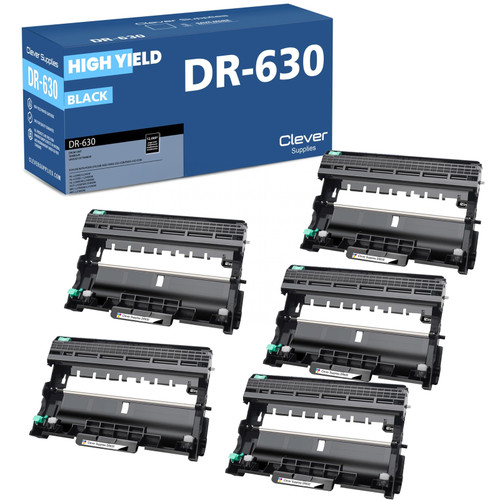
$14.81 per drum — eighty cents a unit beyond the 4-pack — and about $1.23 per thousand pages. The deepest stock on the shelf; it earns its place where several of these machines are in daily service.
Shop the 5-Pack →All five packs on one line each
Nothing in the rows below differs except how many drums are in the box — the unit, its Brother rating and the printers it serves are identical throughout. The per-thousand-pages column is the fairest single number for comparing them, since that is what the drum adds to the cost of every page the machine prints.
| Pack | Price | Per drum | Cost per 1,000 pages | Versus singles |
|---|---|---|---|---|
| 2-Pack — this page's pick | $39.26 | $19.63 | $1.64 | SAVE $16.08 |
| Single | $27.67 | $27.67 | $2.31 | The baseline |
| 3-Pack | $50.86 | $16.95 | $1.41 | SAVE $32.15 |
| 4-Pack | $62.45 | $15.61 | $1.30 | SAVE $48.23 |
| 5-Pack | $74.04 | $14.81 | $1.23 | SAVE $64.31 |
| Genuine Brother DR630, single (reference) | $129.08 | $129.08 | $10.76 | In stock — above Brother's own $112.79 |
Notice where the curve bends. Moving from one drum to two takes nearly a third off the per-thousand cost; each step after that helps less, and by the 5-pack the gain over the 4-pack is eighty cents a drum. Depth is a legitimate reason to buy the big packs — price, past the 3-pack, mostly is not.
Is it the drum, or is it the toner? Reading the symptoms
The two parts wear out on different schedules and fail in different ways, so the page in your hand usually names the culprit. A cartridge near its end gives you fading — print that washes out toward one edge or across the whole sheet, low-toner warnings, output that improves for a while if you take the cartridge out and rock it gently side to side. A drum near its end gives you marks instead: the same spot or short line repeating down the page at fixed intervals, a faint shadow of gray behind text that should sit on clean paper, or streaks that look identical on every sheet. The cleanest test costs nothing: put in a toner cartridge you know is good. Whatever clears was the cartridge. Whatever stays, unchanged, is the drum's surface — and no second cartridge will fix it.
The machine keeps its own score as well. Drum pages and toner pages are counted separately on these models, and when the display says the drum is due — a Replace Drum message — it is pointing at the unit on this page, not at the cartridge riding in it. Because one drum outlasts about ten TN630 cartridges, or between four and five TN660s, most owners meet the drum warning long after the printer has stopped feeling new, which is exactly why it catches people off guard.
One job remains after the swap, and forgetting it is the usual reason a fresh drum still shows a warning: the drum counter has to be reset at the machine, through the front-panel menu path Brother documents for resetting the drum count on these models. Do it when the new drum goes in — not before, and not for the old drum on its way out. Resetting the count on a worn drum does not restore its surface; it only persuades the printer to stop telling you about it, while the repeating marks carry on. Toner keeps its own separate count, untouched by a drum change.
Drum and toner in one box — and the two price quirks in the set shelf
If the drum warning and a low cartridge land in the same month, this store also sells the two parts boxed together: one drum with one, two or three toner cartridges, in both a TN630 flavor and a TN660 flavor, plus a two-drum, two-toner set at $53.00. The established listings price the one-drum sets at $33.04 with a single cartridge; on the TN660 line the two-cartridge set is $34.54 and the three-cartridge set $43.76, while the TN630 line charges $43.76 for both its two-cartridge and its three-cartridge sets. Those sets are the toner shelf's home ground, so their full comparison lives in the Best Brother TN630/TN660 Toner guide, and no savings figures for the sets appear here — those numbers belong in one place.
Two things about the set shelf deserve daylight, though. First, the TN630 pricing oddity just mentioned: the set with two cartridges and the set with three carry the same $43.76 price, so at the shelf as it stands the third cartridge in the larger set costs nothing extra — if you are buying a TN630 set at all, the three-cartridge box is the one to take. Second, the TN660 shapes exist in two listing generations, and the older one is cheaper for the identical contents, shape for shape — $33.04 against $34.54 for one drum and one cartridge, $34.54 against $41.41 with two cartridges, $43.76 against $48.28 with three. The older two-cartridge set and the newer one-cartridge set even sit at the same $34.54, which means the same money buys an extra cartridge in the older listing. Both generations are live and orderable; the guide on the toner side points at the older, cheaper one, and so would we.
The genuine drum costs more here than at Brother — stated plainly
Brother's own DR630 is on this shelf at $129.08, in stock and ready to order. What a buyer should know before choosing it is that Brother USA sells the same drum directly for $112.79 — $16.29 less than the price here. There is no framing that turns that into an advantage, so this page does not attempt one: the figure above is the shelf's price, printed next to the manufacturer's, and anyone set on the genuine part can compare the two and buy wherever it suits them. Genuine drum packs are stocked here too, at $244.83 for two and $306.53 for three.
Set against the compatible single, the genuine drum is about 4.7 times the price for the same published rating of roughly 12,000 pages. What the difference buys is Brother's own part with Brother's own backing: genuine products in this store are backed by the manufacturer's warranty with returns inside 30 days, while the compatible drums carded above come with this store's own one-year warranty and one-year return window. A service agreement that specifies genuine parts, or simple peace of mind on a machine a business leans on, can justify the premium — bought with open eyes, at whichever of the two prices you prefer.
Chips: nothing verified for this drum, so nothing claimed
A drum unit is the part the image is formed on; it holds no toner and reports no level, so there is no chip story for this guide to tell about the DR630 itself, and none is told. The word does surface in exactly two of this family's listings — the pair of drum listings mis-titled "Toner Cartridge" — inside template sentences shared with toner products — one of them even speaks of tracking ink levels, on a black-and-white laser drum with no ink in it anywhere. Template text that drifted onto the wrong product is not a specification, and this page does not present it as evidence that a chip is fitted to anything. Every other listing in the family, drums and sets alike, is silent on the subject. One statement can be put on the record, and it is Brother's own, published in its support answers and quoted in this store's other Brother guides: “Brother firmware updates do not block the use of third-party ink and toner cartridges in our machines.” Past that sentence, this page makes no promise about recognition or firmware, because nothing beyond it has been established.
The cover behind every compatible drum on this page
Before you order: five quick confirmations
The questions this drum tends to raise
Yes — all sixteen of them, with no exceptions to check. Brother's drum page and both toner pages name the identical roster, and every model on it accepts both toner cartridges and this drum. Choosing between TN630 and TN660 is a decision about cartridge yield only; it never changes which drum you need.
Because their titles are wrong. The two newer duplicate listings for the single drum and the 2-pack carry "Toner Cartridge" in the title while their contents, yield figures and prices describe the DR630 drum unit, identical to the correctly titled listings. What arrives is a drum. The cards on this page link the listings whose titles say so.
By Brother's published figures, around ten TN630 cartridges — 12,000 drum pages against roughly 1,200 per cartridge — or between four and five TN660 cartridges at roughly 2,600 pages each. Real ratios move with how much you print and how the printer is used, which is why Brother publishes the drum figure as an approximation.
The counter reset, in all likelihood. The printer maintains the drum's page count on a tally of its own and goes on displaying the warning until that count is reset from the front panel, using the drum-count reset Brother documents for your model. Only the drum count gets reset; the toner count is separate and stays exactly as it is.
Because that is this shelf's price, and this page will not pretend otherwise: Brother USA sells the genuine DR630 directly for $112.79. If the genuine part is the one you want, both prices are in front of you and the choice of where to buy it is yours. The compatible drum above, at $27.67, carries the same published 12,000-page rating.
Rarely, on the numbers. Five drums are about 60,000 rated pages; a lightly used machine may never print that much in its whole working life, and the saving over the 4-pack is eighty cents a drum. The 5-pack earns its shelf space where several of these printers are in regular service and the units will genuinely be used.