





 See Compatible Printers
 Read more about our ink!
Brother
Compatible Brother HL-5470 Toner Cartridge
- Page Yield:
- 8000
- Availability:
- In Stock
- Shipping:
- Calculated at Checkout

Amazon Price:

- Page Yield:
- 8000
- Availability:
- In Stock
- Shipping:
- Calculated at Checkout
- Compatible Printers
- Specifications
- SKU:
- HL-5470
- Printer Brand:
- Brother
- OEM Number:
- TN750
- Ink Color:
- Black
- Page Yield:
- 8000
- Printer Type:
- Laser Cartridge
- Condition:
- New Compatible
- Description
- Reviews
-
excellent replacement product
Great product. Good price. What else do you want? Keep it up.

/> 
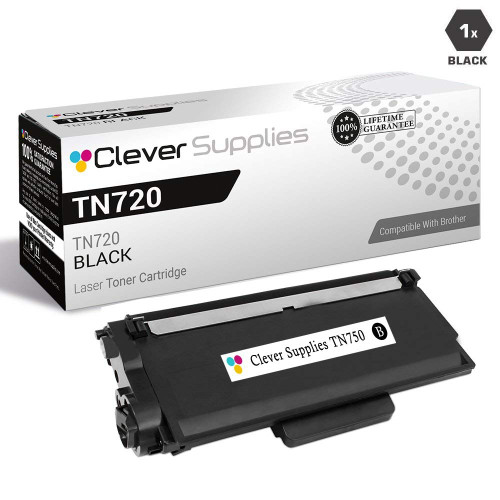
This listing is the compatible TN750 high-yield cartridge for the Brother HL-5470. Rated yield runs to 8,000 pages per cartridge — more than double the 3,000-page rating of the standard TN720 for the same machines. Every cartridge is backed by our 1-year warranty and 1-year free returns.
Frequently Asked Questions
At high monthly volume, how does the per-page math actually play out?
One TN750 is rated at 8,000 pages for $33.59 — about 0.42 cents a page. Push 6,000 pages a month through an HL-5470 and a cartridge lasts five to six weeks; a year of that volume is roughly nine cartridges, or about $302 in toner bought as singles. The same year on standard-yield TN720 cartridges (3,000 pages, also $33.59 each here) would take 24 cartridges and over $800. Speed machines punish small cartridges — this is the maths that proves it.
Where do packs take that annual figure?
Down by more than a third. The 4-pack is $78.88 (four 8,000-page cartridges, $19.72 each) and the 5-pack $93.98 ($18.80 each). A high-volume year bought as two 5-packs costs about $188 instead of $302 in singles — identical cartridges, identical yield, just fewer, smarter purchases. The 2-pack ($48.68) and 3-pack ($63.78) sit in between.
Which printers share this cartridge?
The Brother workgroup family built on this toner platform: DCP-8110DN, DCP-8150DN, DCP-8155DN, HL-5440D, HL-5450DN, HL-5470DW, HL-5470DWT, HL-6180DW, HL-6180DWT, MFC-8510DN, MFC-8710DW, MFC-8810DW, MFC-8910DW and MFC-8950DW. A department running several of these models pools one cartridge stock across all of them.
Does a fast printer wear the cartridge out sooner per page?
No — yield is counted in pages, not minutes. The rating assumes standard 5% text coverage, so heavy graphics shorten any cartridge's life, but the HL-5470's speed itself changes nothing. What speed changes is how fast you notice an empty one, which is why high-volume users keep a spare in rotation. For the three yield tiers side by side — TN720, TN750 and TN780 running on the same DR720 drum, with a cost-per-page figure for each — see our Brother TN720 toner guide. It settles the standard-yield versus high-yield question with the shelf’s own numbers.
How does the drum keep up with that pace?
The DR720 drum is rated at 12,000 pages ($41.78) — about two months at 6,000 pages a month — and it is a separate, separately warned part. At sustained volume, plan drums at roughly two-thirds the frequency of toners and the machine never stops for either.
What stands behind cartridges that get worked this hard?
The same cover as every cartridge we sell: a 1-year warranty and 1-year free returns, set out on the shipping & returns page. With four warehouses (IL, PA, GA, CA) and support staffed 9 AM–5 PM CST, a high-volume site is never far from a replacement or an answer.
A cartridge gives out in the middle of a long run — what is the cleanest way to handle the swap?
Note the page counter, swap the TN750, and get the run moving again; the paperwork can wait until the job is out. The one discipline worth keeping at HL-5470 volumes is labeling: if a partly used cartridge ever comes out early to make way for a fresh one before a critical job, mark it with its date and approximate count so it can go back in later for draft work instead of being mistaken for an empty.
How do I forecast the next change instead of being surprised by it?
Two counter readings are enough. Record the counter when a TN750 goes in; check it again a month later and you have your true monthly draw. Against the 8,000-page rating, that tells you the week the current cartridge will end — at 6,000 pages a month, roughly five to six weeks per unit. High-volume printing stops being a surprise the moment the forecast comes from your own numbers rather than the box.
What should be checked when a multi-pack arrives?
Three things, before the boxes reach the shelf: the count matches the order, every unit is still sealed, and the code on each box reads TN750. At the pace an HL-5470 consumes cartridges, a packing error discovered at swap time costs a day; discovered at the door, it costs an email. The check takes a minute and also starts your stock rotation, since the delivery date on the carton is what you will install from, oldest first.
Does duplex work change the high-volume math?
It changes the sheet count, not the page count. The 8,000-page rating is in printed sides, so a two-sided workload gets about 4,000 sheets per TN750. A department measuring consumption in reams will think the cartridge came up short; a department measuring in counter pages will see it land on its rating. At this volume, pick the counter as your unit of account and the forecasts stay honest.
About This TN750 Cartridge for the HL-5470
A fast printer converts toner into output at a rate that makes cartridge size a financial decision, not a detail. This TN750's 8,000-page yield at $33.59 is the foundation; the pack range is where the real savings live for an HL-5470 working at capacity. Start with this single if you are validating the cartridge, then move volume purchasing to the 2-pack and beyond. The rest of the platform is in our Brother catalogue.
1 Review
Related Items

Brother
Compatible Brother HL-4070 Toner Cartridges
/>


Brother
Compatible Brother HL-4050 Toner Cartridges
/>

Brother
Compatible Brother HL-5450DN Toner Cartridge
/>

Brother
Compatible Brother HL-4150CDN Toner Cartridges
/>