




HP’s departmental workhorses of 2004 and 2005 — the LaserJet 4240, 4250 and 4350 lines — run on a pair of cartridges: the standard 42A (10,000 pages) and the high-yield 42X (20,000). This store sells each four ways; the eight honest offers are carded below. Three warnings first. A third code, a “42AJ Jumbo Yield,” circulates on this shelf although HP never issued it. The high-yield pages disagree with themselves about whether the 42X fits the 4240n. And the standard five-pack is listed twice, under two names. All prices here are sale prices.
Start on the high-yield side unless money is tight. The 42X single costs $4.59 more than the 42A single — $49.16 against $44.57 — and carries twice the pages, halving the cost of a page — 0.446¢ to 0.246¢ — before pack discounts. From there the only question is depth: five X cartridges pool 100,000 rated pages at 0.181¢, three pool 60,000 at 0.192¢, two pool 40,000 at 0.206¢. The standard tier mirrors the ladder at higher rates and lower totals. The “42AJ” single is not a third HP tier — no such part number exists — and it is priced above the genuine-tier X single while claiming fewer pages; examined beside the flagship, never carded. And if your machine is a 4240n, ignore the warning line on the X listings’ own pages: HP’s published compatibility covers the whole 4240 series for both cartridges, and the fit section shows those pages arguing with themselves.
Five high-yield cartridges in one carton — 100,000 rated pages deep
Stack five 20,000-page cartridges and the family’s arithmetic bottoms out: $181.48 buys 100,000 pooled rated pages, 0.181¢ apiece, against 0.246¢ for the same cartridge bought singly. Five singles come to $245.80, so the carton keeps $64.32, and each cartridge works out to $36.30. Beside the flagship sits the shelf’s phantom — a cartridge wearing a code HP never printed.
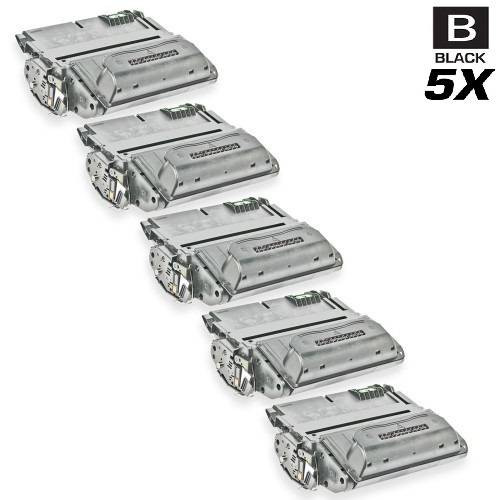
This is the supply-cupboard order for a department running several of these machines, or one 4350 that never gets a quiet week. A hundred thousand rated pages is a long interval between orders, and since every unit is the complete cartridge — toner and drum in one body — each swap renews the print engine’s wear parts.
Shop the 42X 5-Pack →HP’s genuine ladder here has two rungs, A and X; its only other code, Q5942XD, is two X cartridges in one box — packaging, not a third yield. The AJ is therefore recorded in prose: not carded, not linked, no table row.
The high-yield tier, shallower cuts — Q5942X
Below the flagship, the X ladder steps down through three and two cartridges to the single; every rung holds the same 20,000-page unit. One caution belongs to this tier’s pages rather than its boxes: the closing About paragraphs of the single and the three-pack each contain a cross-link labeled as a plain single that does not lead to the single carded here.
THE 42X TIER

The middle depth of the X tier: one cartridge working, two in reserve, 60,000 pooled rated pages between orders. Three singles total $147.48, so the pack trims $32.16, and each cartridge inside lands at $38.44 — well under the $44.21 figure its own page derives from list.
Shop the 42X 3-Pack →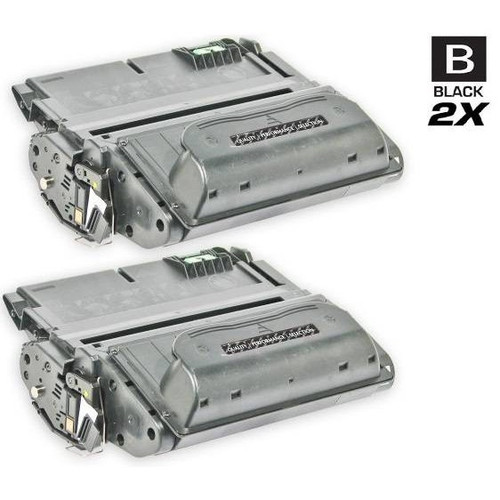
A working cartridge plus its successor already on the shelf: 40,000 pooled rated pages, so a fading unit never becomes an emergency purchase. Two singles apart come to $98.32; the pair keeps $16.08, at $41.12 per cartridge.
Shop the 42X 2-Pack →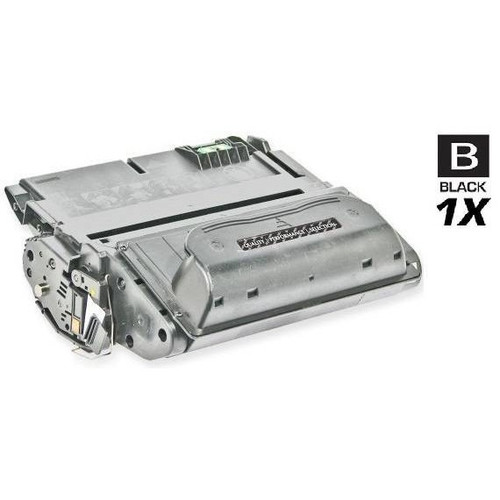
The default buy in this family, and the yardstick the X badges are measured against: $4.59 more than the standard single buys double the rated life. Its page carries two blemishes — the feature line denying 4240n fit, answered below, and the misdirected About cross-link noted above — but cartridge and price are exactly what the name says.
Shop the 42X Single →The standard tier — Q5942A, for smaller outlays
The A ladder runs through the same four depths at 10,000 pages a cartridge. Its per-page rates are roughly double the X tier’s, but its totals are lower — suited to a lightly used machine, or a buyer who resists tying money up in toner. Note the five-pack: two listings share one price, one stock figure and one filing set, and the card below follows the plainer page; the panel after the grid explains why.
THE 42A TIER
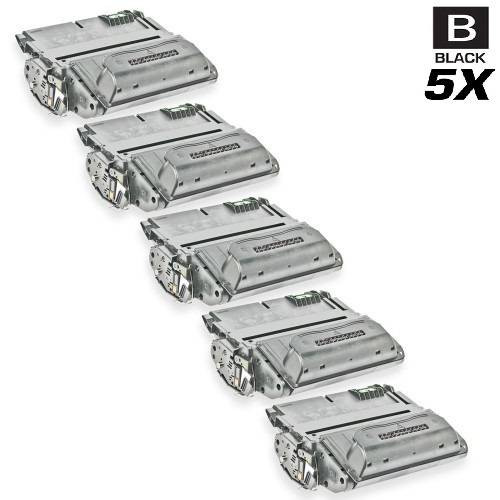
The deepest the standard tier goes: 50,000 pooled rated pages at $31.71 a cartridge, against five singles totaling $222.85. This is the plain listing of the twin pair; the identically priced “Premium Quality” copy is dealt with below and is not a different product.
Shop the 42A 5-Pack →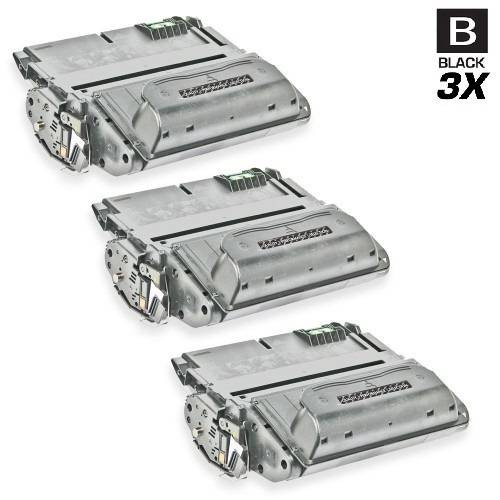
Three standard cartridges — one in the machine, two behind it — pooling 30,000 rated pages. Three singles at sale come to $133.71, so the pack keeps $32.16, each unit inside at $33.85 rather than the $38.93 its own page quotes from list.
Shop the 42A 3-Pack →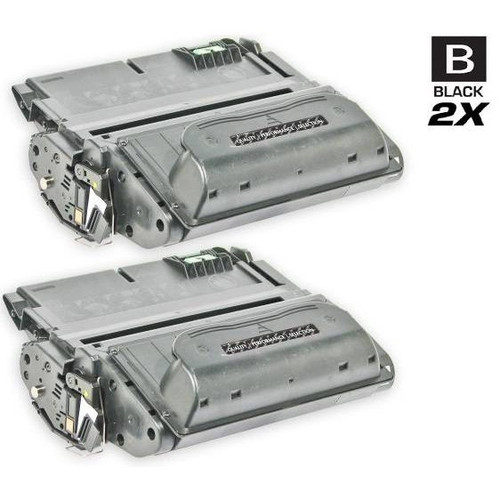
The pair pools the same 20,000 rated pages a single X cartridge carries, split across two standard units — for a buyer who prefers the smaller cartridge but wants a spare sealed. Two singles total $89.14, so the pair saves $16.08, at $36.53 per cartridge against its page’s list-derived $42.01.
Shop the 42A 2-Pack →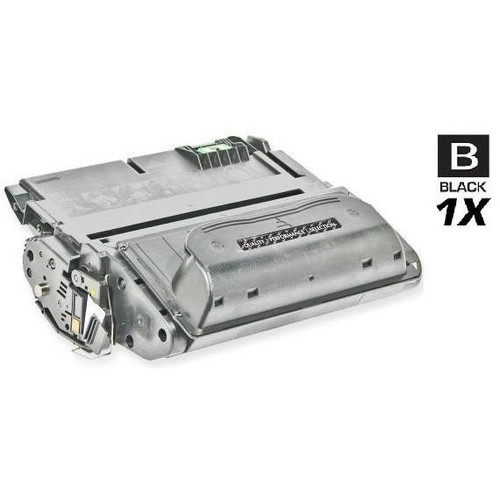
The smallest sum on the shelf and the standard tier’s yardstick. For scale: HP’s store sells one original 42A for $281.99 — $237.42 more than this cartridge, more than six of these singles would cost. For most buyers the X single above is the better arithmetic; this card is for the lightest workloads and tightest budgets.
Shop the 42A Single →The whole ladder on one table — one genuine row, eight compatible ones
HP’s US store still publishes a price for the standard cartridge, so the genuine 42A leads the table. There is no genuine 42X row, deliberately: HP’s store folds the X cartridge’s page into the A’s and publishes no standalone X offer, and this guide prints only prices HP states. The invented AJ gets no row either — not an HP configuration.
| Configuration | Price | Rated pages | Cost / page | Printer fit |
|---|---|---|---|---|
| Genuine HP 42A (Q5942A) — HP US store, in stock | $281.99 | 1 cartridge · 10,000 pages | 2.820¢ | All 12 models |
| 42X 5-Pack — the flagship | $181.48 | 5 cartridges · ~100,000 pages | 0.181¢ pooled | All 12 models |
| 42X 3-Pack | $115.32 | 3 cartridges · ~60,000 pages | 0.192¢ pooled | All 12 models |
| 42X 2-Pack | $82.24 | 2 cartridges · ~40,000 pages | 0.206¢ pooled | All 12 models |
| 42X Single | $49.16 | 1 cartridge · 20,000 pages | 0.246¢ | All 12 models |
| 42A 5-Pack | $158.53 | 5 cartridges · ~50,000 pages | 0.317¢ pooled | All 12 models |
| 42A 3-Pack | $101.55 | 3 cartridges · ~30,000 pages | 0.339¢ pooled | All 12 models |
| 42A 2-Pack | $73.06 | 2 cartridges · ~20,000 pages | 0.365¢ pooled | All 12 models |
| 42A Single | $44.57 | 1 cartridge · 10,000 pages | 0.446¢ | All 12 models |
Read the two singles first: the step from A to X costs $4.59 and halves the per-page rate — why the X side does most of the family’s work. Then set the flagship against the genuine row: five compatible high-yield cartridges, 100,000 pooled rated pages, for $100.51 less than one genuine standard cartridge, whose 2.820¢ a page is over six times the compatible single’s rate.
Twelve printers, one disputed suffix — the 4240n question, settled by HP
HP’s cartridge pages assign both the Q5942A and the Q5942X to twelve machines across the three departmental series: the LaserJet 4240 and 4240n; the 4250, 4250n, 4250tn, 4250dtn and 4250dtnsl; and the 4350, 4350n, 4350tn, 4350dtn and 4350dtnsl. Every card on this page fits every one of the twelve. The family gathers here under the HP Q5942A category — named for the standard cartridge alone; no Q5942X category exists, so the X listings live under their sibling’s name.
Now the dispute, because a 4240n owner deserves one answer rather than three. HP’s published compatibility for the 42X covers the 4240 series — the 4240n included — exactly as for the 42A. The store’s X listings say otherwise, then unsay it. Each X description opens by claiming compatibility with the “HP LaserJet 4240 4250 4350 printer series,” yet its features carry the flat line “The HP 42X Black toner cartridge is not compatible with LaserJet 4240n printers.” The two X listings that enumerate models in their closing paragraphs list nine of the twelve, dropping the 4240, the 4240n and the 4350tn. And the X group’s filing omits the 4240n’s category — the one category where the two tiers’ filing sets differ. A 4240n owner reading such a page meets a yes, a no and a silence. This guide follows HP: the 42X fits the 4240n; the exclusion line is a catalog error, recorded in the closing note.
The standard tier’s pages commit the milder fault of saying too little: their shared fit line names the platform by series — “4240 4250 4350 printer series” — and never enumerates the twelve models, leaving a buyer to guess whether a dtnsl suffix counts. It does; the roster above is complete. One neighboring machine should be cleared away: the LaserJet 4345 MFP is sometimes attached to this cartridge by third-party sellers, but HP’s cartridge pages do not name it, and no listing here does either — it is not part of this roster.
The catalog tree carries some noise: alongside the twelve real model categories sit store-invented buckets for variants HP never sold as distinct models — a 4250DN, a 4250DTNS, a 4350DTNS — and a misspelled duplicate pair, 4250DTNSI and 4350DTNSI, shadowing the correct dtnsl categories. Filing artifacts, not printers; none is linked here.
Identifying what your machine runs takes seconds: the cartridge that slides out is stamped Q5942A or Q5942X — standard or high-yield build of one design. Match the stamp tier for tier; a stamp reading Q5942AJ corresponds to nothing in HP’s catalog.
Two ratings that match HP’s paperwork to the page
Yield is where toner catalogs usually inflate; this family does not. HP declares both yields under ISO/IEC 19752 — 10,000 pages for the Q5942A, 20,000 for the Q5942X — and every genuine-tier listing repeats its tier’s figure exactly, with pooled totals multiplying out correctly: 20,000, 30,000 and 50,000 up the A ladder; 40,000, 60,000 and 100,000 up the X. Every per-page figure here is a sale price divided by HP’s rating, multiplied across the cartridges in the box.
Real consumption moves with coverage — dense reports spend a rating faster than memos — but the relationship never inverts: the X prints roughly twice what the A prints.
The family’s only off-paper number is the invented tier’s claimed 15,000 pages — a rating HP never published; it appears here only inside the panel that corrects it, labeled as claimed.
The drum rides inside the cartridge — so a swap is the whole service
No second consumable hides behind these prices. HP’s page for the standard cartridge describes its “All-in-one design”; the X listings say the same in their own words — “with the drum built in,” each unit “the complete cartridge with its drum built in.” Toner and drum are sealed in one body, renewed together at every change; no drum unit exists for the 4240, 4250 or 4350 under any separate part number, and no listing pretends otherwise. The price on each card is the platform’s entire cost per cycle.
Each compatible unit leaves with the latest-generation chip already fitted — the store’s current, trouble-free chipped supply — so fitting is the whole job: seat the cartridge, close the cover, and the printer recognizes it and reports its toner level as it would a genuine unit. Nothing needs transplanting from the spent cartridge. That assurance covers the firmware these machines run today; firmware not yet written is beyond any seller’s honest promise.
One set of terms on all twelve pages — with one borrowed sentence to set aside
Ask any listing in this family what covers the cartridge and the answer is the same: a one-year warranty and one year of free returns, stated in its own answers. No page reaches for a grander word. One wrinkle belongs on the record: the specification boilerplate these descriptions share carries a warranty sentence lifted from HP’s genuine-cartridge literature — “Warranted to be free from defects in materials and workmanship” — HP’s wording for its own product, carried into the compatible template. The operative terms are the ones the listings state as their own: the four tiles below.
Choosing by workload — tier first, then depth
The tier decision is worth more than the pack decision here, so make it first:
Questions from 4240, 4250 and 4350 owners
HP is right; the product page contradicts itself. HP’s published compatibility assigns the Q5942X to the 4240 series, 4240n included, exactly as it does the Q5942A. The warning is a feature line carried on every high-yield listing in this family — on pages whose opening line claims the 4240 series, whose closing paragraphs omit the 4240n from their model lists, and which are not filed under the 4240n’s category. One page, three answers. Follow the manufacturer: the 42X fits your 4240n.
Not from HP. No HP store page, datasheet, catalog or support document lists a Q5942AJ; the code exists only on this store’s own listing. That listing claims 15,000 pages — a rating HP never published for this platform — calls itself the family’s high-capacity member and its longest interval between swaps, and charges $51.63, above the genuine-tier X single’s $49.16, which is rated at 20,000 pages. Its own specification block files it as a standard-yield cartridge. HP’s only other code here, Q5942XD, is two X cartridges in one box — packaging, not a third yield. The panel beside the flagship examines it; it is neither carded nor linked.
Because the same five-pack was listed twice. The two pages agree on everything measurable: the same $158.53 sale price, the same stock figure of 53, the same twenty categories. The second page adds only a label, and its identity answer uses it to claim a separate line — “the Premium Quality version of the Q5942A” — without pointing to anything that differs. The catalog’s own map ranks that copy above the plain listing. Where two pages sell one product, this guide cards the page whose text claims nothing extra.
You found a catalog defect this guide deliberately does not reproduce. The closing About paragraphs of two listings carded here — the high-yield single and three-pack — each contain a cross-link whose text names a plain single cartridge of this family. Following it does not reach the single named; it lands on a different listing that is not part of this guide’s shelf. The cards above link each product to its own page and nothing else.
Because HP’s own store is the only source this guide takes genuine prices from, and it no longer sells the X under its own page: the genuine 42X’s address now serves the 42A’s page, with no standalone X offer attached. The 42A’s $281.99 is HP’s live figure, shown in stock. Rather than borrow a third-party price for the X, the table leaves the row out and says why.
Because their arithmetic starts from the list price, while this guide starts from the price actually charged. Ask the standard two-pack what one cartridge inside it costs and it answers $42.01 — its $84.02 list price halved. At the $73.06 actually charged, the figure is $36.53. The pattern runs through every pack: the high-yield three-pack’s “about $44.21” per cartridge against $38.44 at sale, the five-packs’ $36.46 against $31.71, the high-yield five-pack’s $41.74 against $36.30. No description in the family quotes its sale price; every figure here is sale.
Price and disclosure note: Every price on this page is a sale price, read from the carded listings on November 18, 2026; if a product page shows a different figure today, the product page governs. The descriptions work from list instead — $51.26 (standard single), $84.02 (standard two-pack), $116.78 (standard three-pack), $182.31 (standard five-pack, both copies), $59.37 (the invented-code single), $56.53 (high-yield single), $94.58 (high-yield two-pack), $132.62 (high-yield three-pack), $208.70 (high-yield five-pack) — and none quotes the sale figure a buyer pays. Badges are struck sale against sale within each tier — standard: $89.14 of singles against the two-pack’s $73.06, $133.71 against $101.55, $222.85 against $158.53; high-yield: $98.32 against $82.24, $147.48 against $115.32, $245.80 against $181.48. The genuine price is HP’s own US store figure, read the same day with the cartridge shown in stock: $281.99 for the Q5942A. No genuine Q5942X price is printed, because HP’s store folds that cartridge’s page into the Q5942A’s and publishes no standalone offer. Yields are HP’s declared ratings under ISO/IEC 19752 — 10,000 pages standard, 20,000 high-yield — except the invented tier’s claim, labeled as such wherever used. Fit follows HP’s published roster: LaserJet 4240, 4240n, 4250, 4250n, 4250tn, 4250dtn, 4250dtnsl, 4350, 4350n, 4350tn, 4350dtn, 4350dtnsl. The catalog’s own errors follow, one by one.
(1) List-price arithmetic in all twelve descriptions: every identity and contents answer and About paragraph prices at list, and every derived figure inherits the basis — the standard two-pack’s “$42.01 per Q5942A” against $36.53 at sale, the high-yield three-pack’s “about $44.21” against $38.44, the five-packs’ “$36.46 per cartridge” against $31.71, the high-yield five-pack’s “$41.74” against $36.30. (2) The high-yield tier’s self-contradicting 4240 story: all five X-group descriptions claim the 4240 series, warn that the 42X “is not compatible with LaserJet 4240n printers,” and — in the two that enumerate models — omit the 4240, 4240n and 4350tn from their fit lists (nine of twelve); the X filing omits the 4240n’s category. HP’s published compatibility covers the 4240 series for the X, and the fit section follows HP. (3) Cross-links that do not lead where their text promises: the closing About paragraphs of the high-yield single and three-pack each name a plain single cartridge of this family, and each link lands instead on a listing excluded from this guide — a destination its label never mentions. (4) An invented third tier sold as genuine HP identity: the “Q5942AJ / 42AJ Jumbo Yield” code appears in no HP source; the listing presents the suffix as part of the part number and the cartridge as the family’s high-capacity member at a claimed 15,000 pages, while its own spec block files it as standard-yield, the store’s X single offers 20,000 pages for less, and its longest-interval claim is false on the store’s own shelf. It also reads stock zero while standing visible, available and orderable — as does one further listing. (5) The reversed twin five-pack: two listings sell the identical standard five-pack on one price block, one stock figure of 53 and one filing set; the “Premium Quality” copy brands a separate line without conceding sameness, and the catalog’s canonical map elevates that copy over the plain listing — the reverse of the pattern elsewhere. This guide cards the plain listing. (6) Markup debris in all twelve descriptions, both generations: each carries a broken “<p> />” fragment in its boilerplate. (7) Fit under-naming in the standard group: every standard-tier and invented-tier description names the platform at series level only, against a twelve-model roster. (8) Weight fields that flatten the shelf: every pack, and the invented-code single, records weight 2 while the plain singles read 6; HP’s genuine 42A package weighs about 6.17 lb, matching the singles. (9) A family category named for one tier only: the whole family files under “HP Q5942A”; no Q5942X category exists, so the high-yield listings live under the standard cartridge’s name. (10) Store-invented buckets in the filing sets, for models HP never sold — 4250DN, 4250DTNS, 4350DTNS — and a misspelled duplicate pair, 4250DTNSI and 4350DTNSI, alongside the correct dtnsl pair. (11) The two listings excluded from this guide are priced inconsistently: one matches its tier’s plain single to the cent, the other sits at roughly three times its tier’s plain-single price — irreconcilable from the pages. (12) The series page above the family is broken live: the monochrome LaserJet series page answers with a server error, and is not linked here. What was searched for and not found is recorded too: no yield inflation on either genuine tier — every listing states its tier’s figure exactly, HP’s own, with pooled totals correct; no printer named outside the 4240/4250/4350 platform in any description (the 4240n problem is an under-claim and contradiction, not an over-claim); no “Lifetime” language; no separate-drum claim; no leaked production text; an image on every listing.
Eight cards carry the buyable shelf, one per distinct configuration of the two genuine cartridges. Two further listings are handled in prose, never as separate offers — the five-pack’s grander-named twin and the invented-code single — and two more are excluded entirely. Beneath them sit the terms the listings state for themselves — a year’s warranty, a year of free returns, weekday support 9 AM to 5 PM Central, and dispatch from warehouses in Illinois, Pennsylvania, Georgia and California.