




This family asks a different question than most. Fit settles nothing here: HP built two genuine cartridges for the LaserJet 4000 and 4050 platform — the C4127A, rated at about 6,000 pages, and the C4127X, at about 10,000 — and both run in all eleven printers on the roster, so the tier choice is never about which box your machine can accept. What decides it is an oddity in the store’s own pricing: the standard cartridge costs more than the high-yield cartridge, at every pack size, while delivering forty percent fewer pages. The yields need no referee — listing fields, listing text and HP’s published rating carry the same two figures, on the five-percent-coverage basis this 1990s line was rated under. Sixteen listings settle into fourteen distinct configurations: five boxes on each genuine code, plus four boxes across two further tiers the store constructed on its own — a C4127XJ and a C4127XX that HP never issued — labeled as the store’s own work wherever they appear. HP no longer sells either genuine cartridge, so every judgment below is per-page arithmetic.
Whichever LaserJet 4000 or 4050 model you run, begin with the high-yield cartridge. The C4127X fits your printer — it fits all eleven on the roster — it is rated for 10,000 pages against the standard cartridge’s 6,000, and on this store’s shelf it is also the cheaper box: $52.41 for a single against the standard’s $72.60. Bought as the flagship 2-pack, the pair costs $88.73 and delivers 20,000 rated pages at 0.44¢ a page, which is why that box leads this page. The standard C4127A ladder is carded in full below, because the listings exist and the cartridge is a genuine HP design — but read its block with the inversion in view. Two further tiers close the shelf, both of them the store’s own constructions rather than HP part numbers. The C4127XJ asks $97.97 for a claimed 15,000 pages and loses on arithmetic to the genuine high-yield single. The C4127XX matches the genuine single’s price to the cent while claiming 18,000 pages HP never rated; the closing note lays out the coincidence in full.
Fourteen boxes, priced upside down
Sixteen listings stand behind these fourteen cards; a duplicate and a specialty listing are both accounted for in the closing note. Every price quoted is the sale figure — what the register charges — never the higher list figure the product pages build their cover questions around. A SAVE badge marks a plain subtraction inside a single tier at sale prices, and on this page badges appear on the high-yield ladder only. The standard ladder’s matching subtractions are honest numbers in the wrong neighborhood — its packs undercut its own single while the whole ladder sits above the deeper tier — so they appear in the closing note rather than as badges, and the store-created tiers carry none at all.
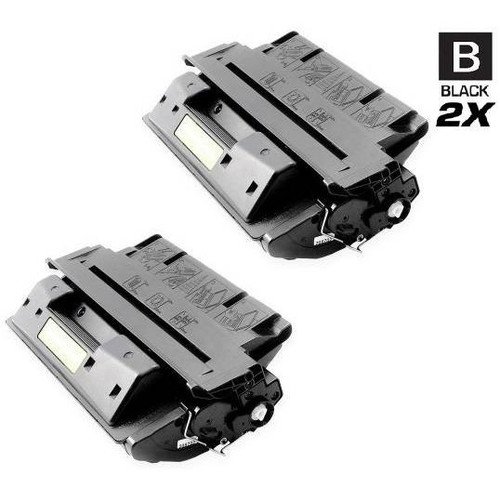
Set this pair beside the standard tier and the family’s pricing oddity stands in full view. The standard 2-pack costs $129.12 — $40.39 more than this box — and holds 12,000 rated pages against this pair’s 20,000. Even one standard cartridge bought alone, at $72.60, costs $20.19 more than one of these high-yield cartridges and carries 4,000 fewer rated pages. On this shelf the deeper cartridge is the cheaper cartridge at every size; the flagship pair is the simplest place to take the advantage.
Shop the 27X 2-Pack →THE HIGH-YIELD LADDER BEYOND THE FLAGSHIP — HP’S C4127X, RATED 10,000 PAGES A CARTRIDGE, ALL ELEVEN MODELS
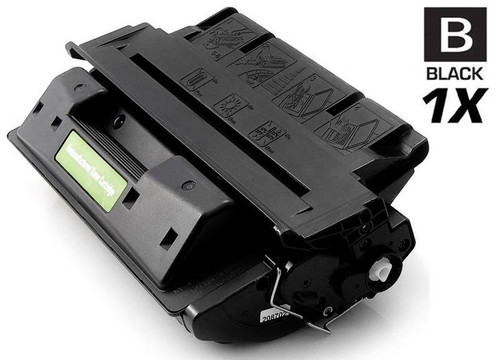
The single most instructive price on the shelf: the deep cartridge, alone, costs $20.19 less than the standard cartridge alone and outrates it by 4,000 pages. Anyone buying one cartridge at a time should be buying this one.
Shop the 27X Single →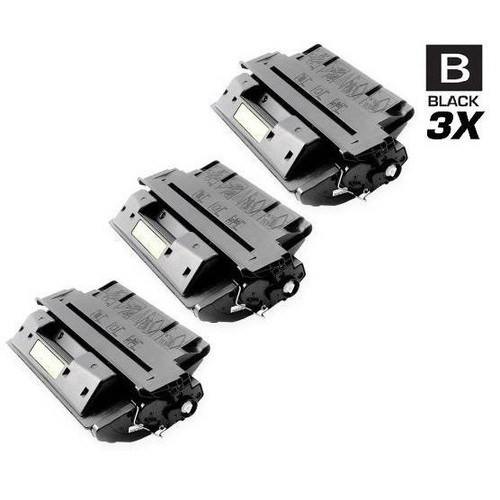
Cartridges at $41.69 apiece. Thirty thousand rated pages in one carton — a working season for a department machine.
Shop the 27X 3-Pack →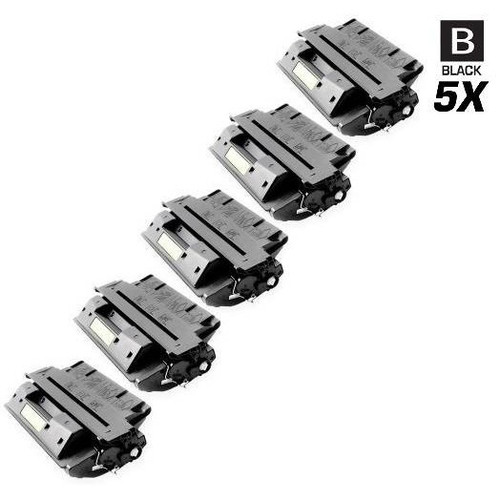
Cartridges at $39.54 apiece. Fifty thousand rated pages — depth for two or three machines fed from one supply shelf.
Shop the 27X 5-Pack →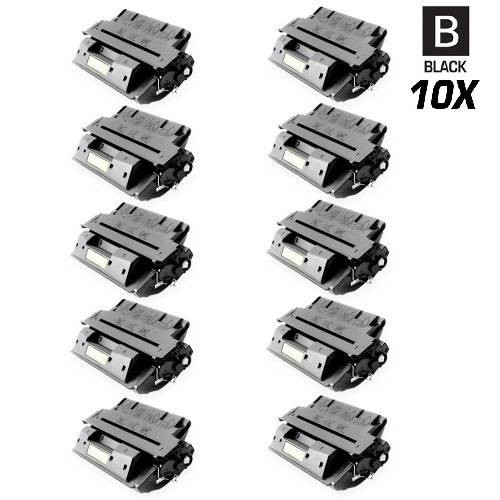
Cartridges at $37.94 apiece — the cheapest HP-rated page in the family. A hundred thousand rated pages is a stockroom decision, sized for a small fleet.
Shop the 27X 10-Pack →The standard line: a genuine cartridge priced past its deeper sibling
Nothing about the C4127A itself is second-rate. It is the cartridge this platform launched with, an HP design rated at about 6,000 pages, and it fits every printer the high-yield cartridge fits — all eleven models. What fails is its shelf position. A single costs $72.60, $20.19 more than the high-yield single, and the relationship never corrects itself as the packs grow: the standard 10-pack costs $201.91 more than the high-yield 10-pack while holding 40,000 fewer rated pages. Per page, the standard ladder runs from 1.21¢ down to 0.97¢; the high-yield ladder runs from 0.52¢ down to 0.38¢. The two ranges do not even touch. The cards below carry no SAVE badges: a badge would invite comparison inside a ladder that loses its comparison to the ladder above. Its subtractions are printed in the closing note, beside the inversion.
THE STANDARD LINE — HP’S C4127A, RATED 6,000 PAGES A CARTRIDGE, ALL ELEVEN MODELS
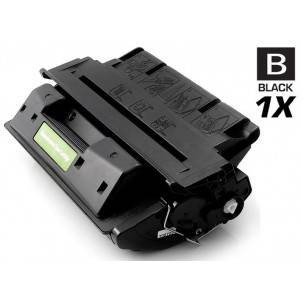
The platform’s original cartridge, and the dearest page in the family at 2.3 times the high-yield single’s rate. Carded because it is a genuine HP design some buyers ask for by code; on arithmetic it has no case.
Shop the 27A Single →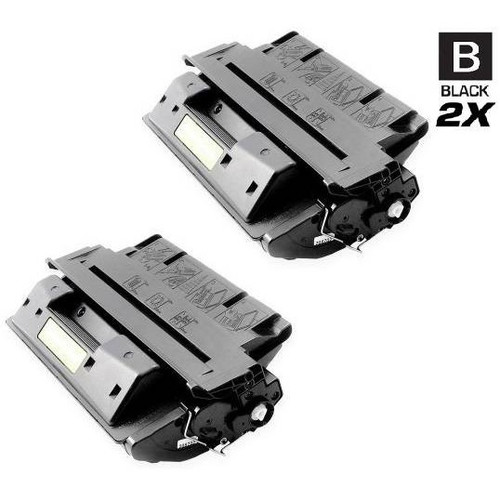
Cartridges at $64.56 apiece — cheaper than the standard single, as a pack should be, yet $40.39 dearer than the flagship pair carrying 8,000 more rated pages.
Shop the 27A 2-Pack →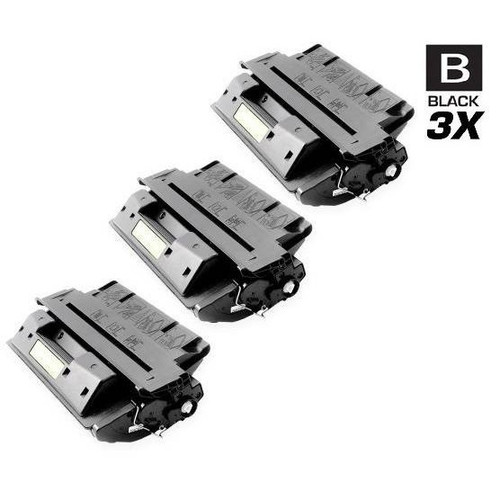
Cartridges at $61.88 apiece. Eighteen thousand rated pages for $185.64 — while the high-yield 3-pack delivers thirty thousand for $125.06.
Shop the 27A 3-Pack →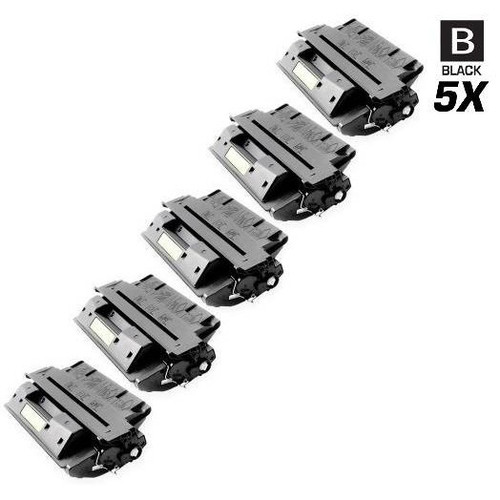
Cartridges at $59.73 apiece. This card uses the plain-named listing; a “Premium Quality” twin sells the same box at the same numbers (see the closing note).
Shop the 27A 5-Pack →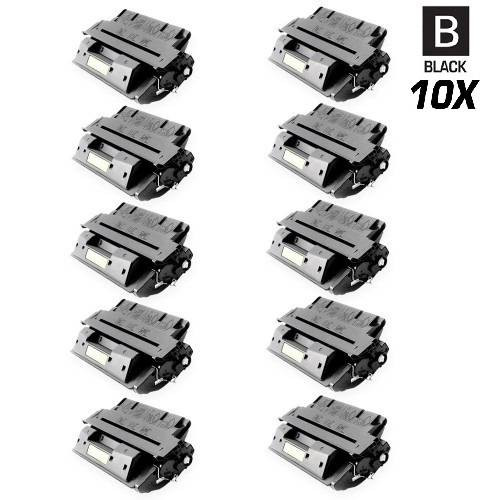
Cartridges at $58.13 apiece — the standard tier’s floor, and still two and a half times the high-yield 10-pack’s rate. Bulk buying cannot rescue a ladder that starts in the wrong place.
Shop the 27A 10-Pack →Two further tiers are the store’s own inventions
HP’s 27 line has exactly two cartridges. The C4127XJ and C4127XX carded below are codes the store created — a “Jumbo Yield” tier claiming 15,000 pages and a “Maximum Yield” tier claiming 18,000, neither figure published by HP — and this page labels both as store creations at every mention, computes every rate on them from the claimed figures, marked as computed on claims. Neither tier carries a SAVE badge: a badge would dress invented codes in the genuine tiers’ arithmetic. The two inventions fail in opposite directions. The XJ single costs $97.97 — nearly double the genuine high-yield single — for a claim that works out worse per page than the genuine cartridge’s rated figure. The XX single costs exactly what the genuine high-yield single costs, $52.41, and claims eighty percent more pages for the same money; its listing’s price and stock figures match the genuine single’s to the cent and to the unit, a coincidence the closing note records in full. Both are carded because they exist; neither is recommended on this page’s arithmetic.
THE STORE-CREATED TIERS — C4127XJ AND C4127XX, CODES HP NEVER ISSUED, RATED AT CLAIMED 15,000 AND 18,000 PAGES
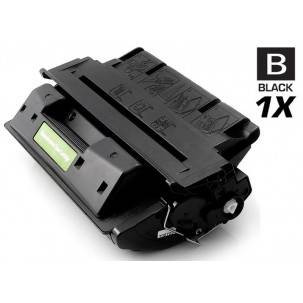
The store’s “Jumbo Yield” cartridge, priced $45.56 above the genuine high-yield single. Even granting the claimed rating in full, its page costs more than the genuine cartridge’s rated page.
Shop the 27XJ Single →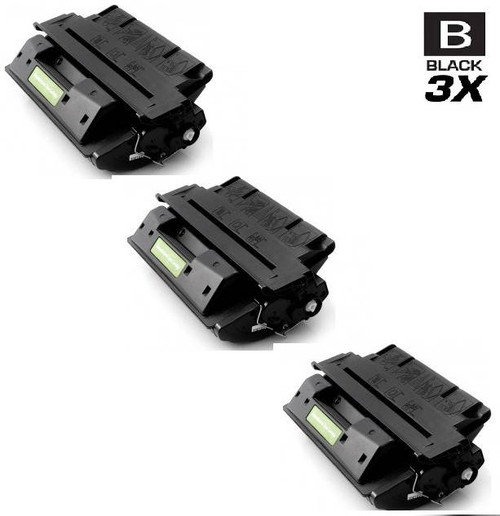
Cartridges at $87.25 apiece on the store’s claimed rating — $32.15 less than three of its own singles, printed in prose rather than badged. Three genuine high-yield cartridges, HP-rated, cost $125.06.
Shop the 27XJ 3-Pack →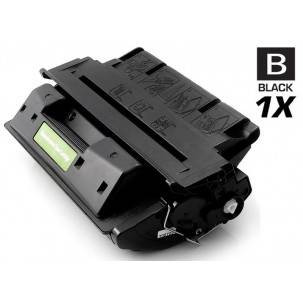
The XJ’s mirror image: the store’s “Maximum Yield” cartridge at the genuine single’s exact price, claiming 18,000 pages against an HP-rated 10,000. The claim would make it the family’s cheapest page; it is also unverifiable, and its listing mirrors the genuine single’s figures exactly.
Shop the 27XX Single →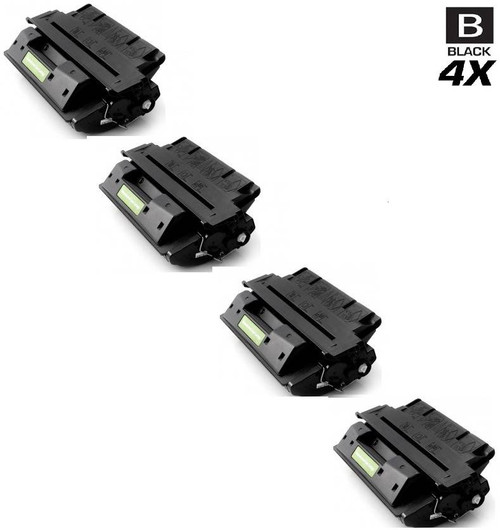
Cartridges at $40.35 apiece on the claimed rating — $48.25 less than four of its own singles, printed here in prose, unbadged. On the claim, the cheapest box on the shelf; the genuine 10-pack’s 0.38¢ rests on a rating HP publishes.
Shop the 27XX 4-Pack →Fourteen boxes ranked by cost per page
Every row is one division — price over pages — and where the tier is genuine, the divisor is HP’s own published figure, which the store’s yield fields and descriptive text match exactly. The store-created tiers’ four rows divide by claimed figures, marked as claims wherever the rate appears. The fit column, unusually for this program, decides nothing: all fourteen boxes address the same eleven printers.
| Pack | Sale price | Rated pages in each box | Cost per page | Fits |
|---|---|---|---|---|
| 27XX 4-Pack (store-created) | $161.39 | 4 cartridges · claimed ~72,000 pages | 0.22¢ on the claim | Store claims all 11 |
| 27XX Single (store-created) | $52.41 | 1 cartridge · claimed ~18,000 pages | 0.29¢ on the claim | Store claims all 11 |
| 27X 10-Pack | $379.36 | 10 cartridges · ~100,000 pages | 0.38¢ | All 11 models |
| 27X 5-Pack | $197.72 | 5 cartridges · ~50,000 pages | 0.40¢ | All 11 models |
| 27X 3-Pack | $125.06 | 3 cartridges · ~30,000 pages | 0.42¢ | All 11 models |
| 27X 2-Pack — the flagship | $88.73 | 2 cartridges · ~20,000 pages | 0.44¢ | All 11 models |
| 27X Single | $52.41 | 1 cartridge · ~10,000 pages | 0.52¢ | All 11 models |
| 27XJ 3-Pack (store-created) | $261.76 | 3 cartridges · claimed ~45,000 pages | 0.58¢ on the claim | Store claims all 11 |
| 27XJ Single (store-created) | $97.97 | 1 cartridge · claimed ~15,000 pages | 0.65¢ on the claim | Store claims all 11 |
| 27A 10-Pack | $581.27 | 10 cartridges · ~60,000 pages | 0.97¢ | All 11 models |
| 27A 5-Pack | $298.67 | 5 cartridges · ~30,000 pages | 1.00¢ | All 11 models |
| 27A 3-Pack | $185.64 | 3 cartridges · ~18,000 pages | 1.03¢ | All 11 models |
| 27A 2-Pack | $129.12 | 2 cartridges · ~12,000 pages | 1.08¢ | All 11 models |
| 27A Single | $72.60 | 1 cartridge · ~6,000 pages | 1.21¢ | All 11 models |
Two features of this table deserve a second look. The first is its head: the two cheapest rows belong to the store-created XX tier, their rates only as good as a rating HP never published for a code HP never issued. The cheapest verifiable rate is the high-yield 10-pack’s 0.38¢. The second is the clean break in the middle: every genuine high-yield row beats every standard row, and the standard ladder’s best rate, at the bottom of a $581.27 box, is still nearly double the high-yield single’s. In most families the table’s lesson is that bigger boxes print cheaper; here the tier choice swamps the pack choice entirely.
Fit: eleven machines, and no fence anywhere
HP’s compatibility for both genuine cartridges names one platform, and the store keeps a category for every model on it. The full roster: the LaserJet 4000, 4000N, 4000se, 4000T and 4000TN; and the LaserJet 4050, 4050N, 4050se, 4050T, 4050TN and 4050 USB-MAC. The two genuine cartridges are physically interchangeable across that list — same shell, different fill — and the store-created tiers claim the same platform from the same shell. The whole family shelf hangs under HP C4127A.
One boundary deserves precision, because third-party lists blur it. The LaserJet 4100 series, the platform that followed this one, takes a different cartridge — HP’s C8061A and C8061X — and nothing on this page fits it. The shells look near-identical, which is how the confusion starts; HP’s own documentation for the 4100 names its own cartridge, and this guide follows HP. If your machine is a 4100, this is the wrong family, however familiar the box looks.
Yields, and a comparison with no genuine price in it
HP rates the C4127A at approximately 6,000 pages and the C4127X at approximately 10,000, on the five-percent-coverage basis in use when the line was current — a rating that predates the standardized yield-testing regime, and this guide attaches no such standard to it. The listings agree with the manufacturer to the digit — fields and text both read 6,000 and 10,000 — and each pack total used here is a simple multiple of those figures. The arbitration this section usually performs has, once again, nothing to arbitrate on the genuine tiers.
What this family lacks is the genuine yardstick. HP’s US store no longer carries either genuine cartridge — the line is long discontinued — so no manufacturer price could be retrieved from the only source this program quotes, and none is printed. Every comparison here is therefore internal: the store’s tiers weighed against each other by the page. That is a weaker frame than a genuine price provides, and the honest one; a reseller’s asking price for a discontinued cartridge would dress a markup up as a manufacturer’s figure.
The shelf’s two other figures belong to the store alone: the XJ’s 15,000 and the XX’s 18,000 appear in the store’s fields and text, and in no HP publication, because HP never made either cartridge. This guide uses them only inside the store-created block and its four table rows, labeled as claims at every use.
One supply, and nothing else to stock
The C4127 cartridge is an all-in-one design — toner and imaging drum sealed in a single unit — which makes the print cartridge the only consumable these printers consume. There is no drum unit for the LaserJet 4000 or 4050: no separate part number, no separate replacement interval, no second shelf item to run out of. When the cartridge ends, the imaging surface ends with it, and the replacement renews both at once.
That keeps the running-cost question one-dimensional: the cartridge’s rating is the whole consumable story, with no drum wearing toward its own replacement in the background and no second per-page figure to add to the table’s rates.
Chips: a platform older than cartridge blocking
The LaserJet 4000 and 4050 lines date from the late 1990s, long before HP’s dynamic-security era, and the family’s listings reflect that: not one of the sixteen mentions a chip, a firmware version or any blocking mechanism. There is no authentication contest for a compatible cartridge to win — the printer asks only for a cartridge that fits and feeds, and the platform predates the machinery that would ask for more.
The compatibles on this page follow the store’s standing supplier specification: a latest-generation chip, installed before boxing. Installation asks nothing more than the swap itself — old cartridge out, new cartridge in, no chip carried over from the spent unit — and the printer resumes. What no page in this program undertakes, this one included, is a promise about firmware that has yet to be written. Cover terms follow.
What stands behind each box
Which box, for which printer
Answers for the LaserJet 4000 and 4050 owner
On this store’s current pricing, no — and the guide says so rather than dressing the ladder up. The standard single costs $72.60 against the high-yield single’s $52.41, the inversion holds at every pack size, and the standard cartridge yields 6,000 pages to the deep cartridge’s 10,000. Both fit your printer identically. The standard ladder is carded in full because the listings exist and the cartridge is a genuine HP design; its subtractions against its own single are printed in the closing note. But a buyer comparing tiers should buy the 27X.
Tiers the store created. HP’s 27 line is two cartridges, the C4127A and the C4127X; HP sells no C4127XJ and no C4127XX, and publishes no rating for either code. The store’s “Jumbo Yield” tier claims 15,000 pages and its “Maximum Yield” tier claims 18,000, figures that exist only in this store’s copy. This guide cards their four listings labeled as store creations, computes their rates from the claimed figures and marks them as claims, and prints no savings badge on either tier.
There is no manufacturer source to check it against — HP never made the cartridge, so the 18,000 figure is the store’s claim and is labeled as one at every use on this page. What can be checked is the listing’s own bookkeeping: its list price, sale price and inventory figure are identical, to the cent and to the unit, to the genuine high-yield single’s, which HP rates at 10,000 pages. Either the two listings draw on one stock record or the figures were copied across at creation; the closing note records the coincidence, and the buyer can weigh the claim accordingly.
No. The LaserJet 4100 series takes a different cartridge — HP’s C8061A and C8061X — per HP’s own documentation. The two cartridge families look near-identical on a shelf, which is how the confusion starts, and some third-party lists lump them together; HP’s record separates them, and this guide follows HP. Every cartridge on this page belongs to the LaserJet 4000 and 4050 platform only.
No. In both genuine cartridges the toner and the imaging drum live in a single sealed unit, so the drum’s wear follows the cartridge’s life and every replacement brings a new imaging surface with it. Neither HP’s catalog nor this store’s holds a drum part number for the LaserJet 4000 or 4050, and there is nothing else to stock for these machines.
Because HP’s US store no longer carries the C4127A or the C4127X — the line is long discontinued — and this program prints genuine prices from that store alone. A reseller’s asking price for a discontinued cartridge would be a markup wearing the manufacturer’s clothes. So the comparisons here are internal and per-page: the store’s tiers weighed against each other on ratings HP did publish — 6,000 and 10,000 pages for the genuine cartridges.
Price and disclosure note: All figures here are sale prices, read from the live catalog on November 17, 2026 and checked against each carded listing’s own page — title matched to its record — before use. A higher list price stands behind every sale price; if a promotion ends, the product page’s price is the one that governs. A SAVE badge is a within-tier subtraction at sale prices: a pack’s cost set against the cost of its own cartridges bought singly. Badges appear on the high-yield tier only: $16.09, $32.17, $64.33 and $144.74 from the 2-pack to the 10-pack. The standard tier’s subtractions are equally real arithmetic — $16.08 on its 2-pack, $32.16 on its 3-pack, $64.33 on its 5-pack and $144.73 on its 10-pack — printed here, unbadged, because the ladder they sit on is inverted: its single costs $72.60 against the high-yield single’s $52.41, its page 1.21¢ against 0.52¢. A badge there would advertise savings inside a tier that loses to the tier above it at every size. The store-created tiers carry no badges either; their subtractions — $32.15 on the XJ 3-pack, $48.25 on the XX 4-pack — are shown in their cards’ prose. Yields: the genuine rates divide by HP’s published figures — about 6,000 pages for the C4127A, 10,000 for the C4127X, on the five-percent-coverage basis of the line’s era, predating the ISO/IEC 19752 standard — the same figures the listings carry in their fields and prose. The XJ tier’s 15,000 and the XX tier’s 18,000 are the store’s claims, labeled as such at every use. No genuine price is printed, because HP’s US store no longer carries either genuine cartridge and no live manufacturer price could be retrieved from it. Fit follows HP’s published compatibility: all four tiers across all eleven LaserJet 4000 and 4050 roster models, the LaserJet 4100 series excluded — that platform takes the C8061 family. Against that record, the store’s pages depart as follows.
First, two invented codes presented as HP’s own. HP’s 27 line is exactly two cartridges — C4127A and C4127X; HP sells no C4127XJ and no C4127XX. The invented tiers’ listings present both codes as genuine: their names read “HP 27XJ Toner” and “HP 27XX Toner”, their specification lists carry “OEM Number: C4127XJ” and “OEM Number: C4127XX”, and one listing’s first answer asserts outright that “C4127XX is the complete part number of the maximum-yield black cartridge in the 27XX family”. The 15,000- and 18,000-page ratings attached to the codes exist in no HP source. Second, the price inversion: the standard-yield single costs $72.60 — $20.19 more than the high-yield single’s $52.41 — and the gap holds at the 2-pack ($129.12 against $88.73), the 3-pack ($185.64 against $125.06), the 5-pack ($298.67 against $197.72) and the 10-pack ($581.27 against $379.36), on forty percent fewer pages per cartridge throughout; per page, the standard single runs 1.21¢ against the high-yield single’s 0.52¢. Third, the XX single is a price-and-stock clone of the genuine single: it carries the high-yield single’s exact list price ($60.27), exact sale price ($52.41) and exact inventory figure (109) while claiming 18,000 pages against the genuine cartridge’s HP-rated 10,000 — an unverifiable claim priced, on the page, exactly as if it were the genuine article. Fourth, the XJ tier is dominated on its own terms: its single costs $97.97 for a claimed 15,000 pages — 0.65¢ a page on the claim — worse per claimed page than the genuine high-yield single’s 0.52¢ on a rating HP publishes, and eighty-seven percent more money up front. Fifth, a filing error on the family’s most-stocked product: the genuine high-yield single also sits under the store’s Brother brand category, its Brother DCP series category and an invisible default category — seventeen categories where its siblings carry fourteen — so an HP cartridge surfaces under a competitor brand’s browse paths. Sixth, arithmetic at list prices runs through all sixteen of the family’s descriptions: each text’s only dollar figure, in its closing paragraph, is the list price — $83.49, $60.27, $112.67, $185.60 and their pack equivalents — so a product page’s text never shows the price the register charges. All rates here are worked from sale prices instead. Seventh, a warranty contradiction inside the standard batch: all six of its listings print “Warranty: Lifetime” in their specification lists while the same listings’ answers promise a single year; the guide prints the year the answers promise. Eighth, a yield basis HP never claimed: the same six specification lists attach the footnote “Approximate average yield based on ISO/IEC 19752” to a cartridge rated in 1997 on a five-percent-coverage basis, seven years before that standard existed. The number is right; the basis printed under it is not HP’s. Ninth, color-printing boilerplate on black-only cartridges: ten listings open with the claim that the cartridge “produces rich consistent color” — template copy for color cartridges pasted onto a monochrome family. Tenth, lifted copy: HP’s own marketing prose and specification blocks are reproduced across the listings in the manufacturer’s voice rather than the store’s.
Fourteen cards stand above: five configurations on HP’s standard code, five on its high-yield code, and four on the two store-created codes, labeled as such wherever they appear. One further listing, not carded, is a “Premium Quality” standard 5-pack duplicating the carded plain listing’s numbers exactly — same list price, sale price and stock figure — differing only in its name. One more listing in the family is a check-printing (MICR) product, identified as such on its own page. Under this program’s standing rule it is not carded, not linked and not offered; this single count is its entire presence here. No text in this family — not one of the sixteen — mentions chips or firmware, on a platform built before cartridge blocking existed; the chip section states the supplier’s position as the store’s own, with its usual boundary: unwritten firmware is promised nothing. The cover behind every card above is the one the listings’ own answers describe: one year of warranty, one year of free returns, support on weekdays from 9 AM to 5 PM Central, and dispatch from warehouses in Illinois, Pennsylvania, Georgia and California.