




Some families make the buyer work out which cartridge fits which printer. This one never does: HP built exactly two cartridges for the LaserJet 2400 series — the Q6511A, rated at about 6,000 pages, and the high-yield Q6511X, at about 12,000 — and both run in every one of the eleven printers on the roster. The store adds a third code of its own making, the Q6511XX, which this page cards separately and labels as the store’s, because HP never sold a cartridge under that name. On yields there is nothing to settle: the store’s yield fields, its description text and HP’s published ISO/IEC 19752 ratings all carry the same two numbers, 6,000 and 12,000. The strangeness here is entirely in the prices. The high-yield single costs $39.49 — thirty cents less than the standard single, on twice the pages — and the high-yield 2-pack is priced at exactly the single’s figure, so the best box on the shelf costs what one cartridge costs. Fifteen listings resolve into eleven cards below; the four left off — a duplicate, two specialty listings and one single whose own record cannot decide what it is — are accounted for in the closing note.
Begin with the high-yield cartridge, because on this shelf the usual reason to start with the standard one — saving money — runs backwards. A single Q6511X costs $39.49 and is rated at 12,000 pages; a single Q6511A costs $39.79, rated at 6,000. The deeper cartridge is cheaper and fuller, and the same direction holds at the 3-pack and the 5-pack. Then the shelf plays its strangest card: the 11X 2-pack is priced at exactly the single’s $39.49, so two cartridges cost what one costs, and at 0.16¢ a rated page the pair is the cheapest box in the family. The page leads with that pair. The standard ladder below is honestly built — every pack genuinely undercuts its own single — and it is carded in full; but this page will not pretend the arithmetic favors it, and the closing note explains why the standard tier costs more than the tier above it. One caution applies to every figure here: the product descriptions reckon at higher list prices, so what their text prints is not what the register charges. Everything on this page is a sale price.
Eleven boxes, and one price that shows up three times
Fifteen listings stand behind these eleven cards. One is an exact duplicate of a carded box, two are specialty listings, and one single is held off the shelf because its own record claims two different cartridges at once; the closing note accounts for all four; none is sold here. Prices are the register prices — the sale figures — not the list figures the product descriptions work with. A SAVE badge, where a card wears one, is a plain subtraction inside a single tier at sale prices. Both genuine ladders pass that test, so badges appear on the packs of both. The flagship’s badge needs a sentence of its own, and its card gives it: priced at the single’s price, the pair’s saving is the whole price of the second cartridge.

Read the two cards side by side and the same $39.49 appears twice — once for one cartridge, once for two. Nothing here asks you to take that on faith: the listing’s own text describes two individually sealed cartridges, its yield field rates each at 12,000 pages, and its price, list figure and stock count match the single’s number for number. Either the pair is genuinely sold at the single’s price, or its price record was copied from the single when the listing was made; this guide reports the shelf as priced, and as priced nothing else in the family comes close. Fit is the easy part: the pair runs in all eleven roster models, from the LaserJet 2410 to the 2430dtn.
Shop the 11X 2-Pack →THE HIGH-YIELD LADDER BEYOND THE PAIR — HP’S Q6511X AT 12,000 PAGES A CARTRIDGE, ALL ELEVEN MODELS
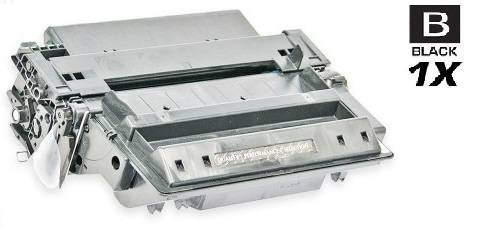
The reference point for the whole shelf: one cartridge, 12,000 rated pages, and a price thirty cents under the standard single’s. Buy it singly only if one is truly all you need — the pair above costs the same.
Shop the 11X Single →
Cartridges at $28.77 apiece, and an honest saving against three singles. But note the ladder’s oddity: at 0.24¢ a page this bigger box costs more per page than the flagship pair.
Shop the 11X 3-Pack →
Cartridges at $26.62 apiece — the deepest box on the high-yield side, and the right shape for a fleet order. Even so, its per-page rate sits above the pair’s: on this shelf, bulk is a convenience, not a discount.
Shop the 11X 5-Pack →THE STORE’S OWN ADDITION — A CODE HP NEVER MADE, LABELED AS WHAT IT IS
One card on this shelf is not an HP cartridge at all. HP’s 11 line is the Q6511A and the Q6511X and nothing else; the Q6511XX below exists only in this store, its 18,000-page figure is the store’s own claim with no HP rating behind it, and its stock code names yet another code — Q6511XJ — that appears nowhere else on its own listing. It is carded because it is a live, stocked listing a buyer will meet anyway; it is labeled, here and on its card, as a store variant, and it wears no SAVE badge.
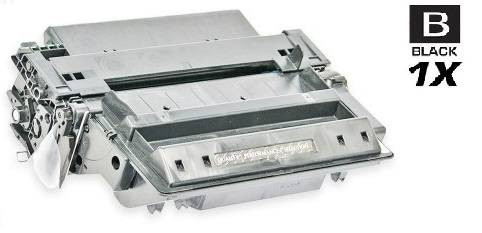
The same $39.49 as the high-yield single, against a claimed 18,000 pages — a claim no HP document supports, for a code HP never issued. The 11X beside it carries HP’s own 12,000-page rating at the identical price; the extra pages rest on a claim, not a rating.
Shop the 11XX Single →The standard line, priced out of its own argument
Nothing about the Q6511A ladder is dishonest. It is HP’s standard cartridge, rated at 6,000 pages in its field, its prose and HP’s own documents alike, and every pack on it undercuts its single by a genuine subtraction. What the ladder cannot survive is the comparison across the aisle: its single costs $39.79, thirty cents more than the high-yield single, for half the rated pages — 0.66¢ a page against 0.33¢, exactly double. The same direction holds at the 3-pack and the 5-pack; at the 2-pack the gap becomes a chasm, $63.49 against $39.49. So this block is carded as what it is: a real, stocked, correctly rated shelf a buyer might still choose — a purchasing system standardized on the 11A code, a standing order written years ago — but not one this page can recommend on price. While the high-yield equivalents sit in stock beside it, no price reason supports any configuration here, and the guide says so rather than dressing the ladder up.
THE STANDARD LINE — HP’S Q6511A, RATED 6,000 PAGES A CARTRIDGE, ALL ELEVEN MODELS
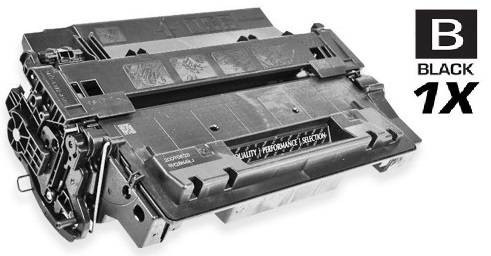
HP’s standard cartridge, correctly rated and honestly described — and the dearest single on the shelf, at thirty cents more than the cartridge that prints twice as much. Its case is standardization, not arithmetic.
Shop the 11A Single →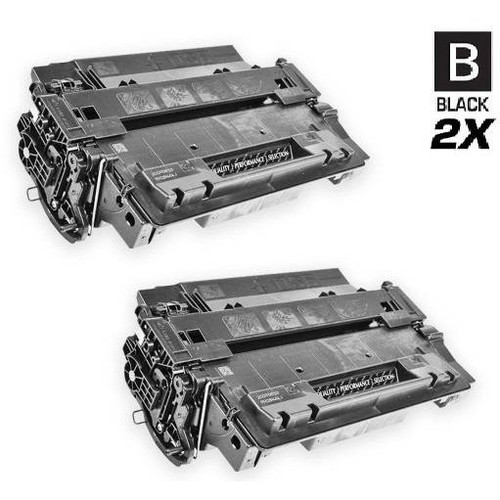
Works out to $31.75 a cartridge — a true saving against two standard singles. The comparison that hurts is the other one: the high-yield pair carries twice the pages per cartridge for $39.49.
Shop the 11A 2-Pack →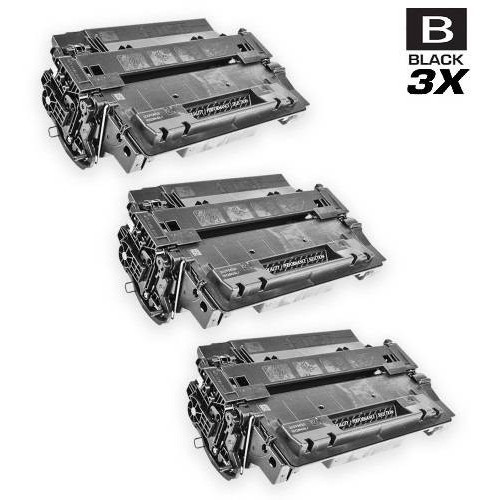
Cartridges at $29.07 apiece. Eighteen thousand rated pages, priced — as every rung here is — above the high-yield box of the same count.
Shop the 11A 3-Pack →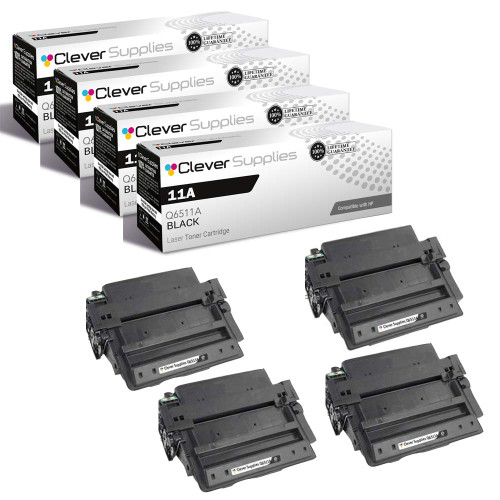
Cartridges at $27.73 apiece — the family’s only 4-pack. One disclosure belongs on the card itself: the listing’s name carries both HP codes, but its yield field and text rate these cartridges at the standard 6,000 pages — the tier this card sells them in.
Shop the 11A 4-Pack →
Cartridges at $26.92 apiece. The carded listing is the one wearing “Premium Quality” in its name; a plain-named twin offers the same box at the same numbers, with no stated difference between them (see the closing note).
Shop the 11A 5-Pack →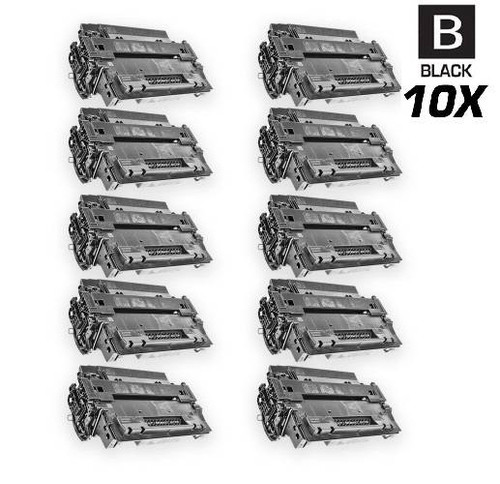
$25.32 a cartridge is the standard tier’s floor — and the floor still sits more than two and a half times above the flagship pair’s rate. Sixty thousand rated pages is a stocking decision; make it on the high-yield side unless the 11A code itself is the requirement.
Shop the 11A 10-Pack →What each rated page costs, box by box
One division, repeated eleven times: each box’s sale price over the rated pages inside it. Ten of the eleven divisors are HP’s own ratings, carried identically by the listings’ fields and prose — 6,000 pages for a standard cartridge, 12,000 for a high-yield one. The single exception is marked where it stands: the store variant’s 18,000 pages are the store’s claim, not a rating, and its rate is computed on that claim. The fit column, for once, decides nothing — every row serves the same eleven printers.
| Box | Sale price | Pages in the box (rated) | Cost per page | Fits |
|---|---|---|---|---|
| 11X 2-Pack — the flagship | $39.49 | 2 cartridges · ~24,000 pages | 0.16¢ | All 11 models |
| 11XX Single — store variant | $39.49 | 1 cartridge · ~18,000 pages (store claim) | 0.22¢ at the claimed rating | All 11 models |
| 11X 5-Pack | $133.12 | 5 cartridges · ~60,000 pages | 0.22¢ | All 11 models |
| 11X 3-Pack | $86.31 | 3 cartridges · ~36,000 pages | 0.24¢ | All 11 models |
| 11X Single | $39.49 | 1 cartridge · ~12,000 pages | 0.33¢ | All 11 models |
| 11A 10-Pack | $253.15 | 10 cartridges · ~60,000 pages | 0.42¢ | All 11 models |
| 11A 5-Pack | $134.61 | 5 cartridges · ~30,000 pages | 0.45¢ | All 11 models |
| 11A 4-Pack | $110.91 | 4 cartridges · ~24,000 pages | 0.46¢ | All 11 models |
| 11A 3-Pack | $87.20 | 3 cartridges · ~18,000 pages | 0.48¢ | All 11 models |
| 11A 2-Pack | $63.49 | 2 cartridges · ~12,000 pages | 0.53¢ | All 11 models |
| 11A Single | $39.79 | 1 cartridge · ~6,000 pages | 0.66¢ | All 11 models |
Two features of this ranking stand out. The first is at the top of the high-yield ladder, where the order runs backwards: the 2-pack is the cheapest page in the family, and both bigger high-yield boxes cost more per page than the pair — the ladder rewards buying two at a time over buying in bulk. The second is the gap between the halves. The standard ladder descends in an orderly way, each bigger box cheaper per page than the last, but it starts so far behind that its best rate — bought ten cartridges at a time — still costs more than two and a half times the flagship’s rate, and more than the high-yield single’s.
Put a single quantity on the counter and the spread shows itself. For 24,000 rated pages the shelf offers four tickets: the flagship pair at $39.49; two high-yield singles at $78.98; the standard 4-pack at $110.91; four standard singles at $159.16. One platform, one page count, and the dearest route costs four times the cheapest. No fifth route exists to add: HP no longer sells either cartridge, so the comparison stays inside the shelf.
Fit: eleven printers, two cartridges, no fence anywhere
HP’s roster for this platform — the LaserJet 2400 series — counts eleven models, and the store keeps a category of its own for each of them: LaserJet 2410; the LaserJet 2420, 2420D, 2420DN, 2420N and 2420TN; and the LaserJet 2430, 2430N, 2430T, 2430TN and 2430DTN. The whole family shelf hangs under HP Q6511A. Both genuine cartridges serve all eleven: the two are the same shell at two fills, physically interchangeable in the same printers, and HP’s own service manual applies the 6,000-page standard cartridge and the 12,000-page extended-life cartridge to the base models alike. No model takes one tier and refuses the other.
That absence of a fence cuts both ways. Nothing here needs a warning of the “does not fit” kind; the only fit mistake this family offers is at its edges. The generation before this platform, the LaserJet 2300 series, takes a different cartridge — HP’s Q2610A — and the generation after it, the P3005 line, takes the Q7551 family; neither appears in this family’s listings, and nothing on this page fits those machines. Inside the roster, the choice is never about the printer: it is about fill and price, and on this shelf the price half has already been decided in the high-yield cartridge’s favor.
One filing note belongs here, because it can send a buyer hunting for printers that do not exist. The store also keeps categories under the names “LaserJet 2400”, “LaserJet 2400D”, “LaserJet 2400DN” and “LaserJet 2410XI” — names HP never sold a printer under: 2400 is the series name, not a model, and the 2410 has no “xi” variant. They are not on the roster above and are not linked from this page; the closing note records them with the rest of the family’s bookkeeping.
Two ratings everyone agrees on — and one claim with no rating behind it
HP rates the Q6511A at approximately 6,000 pages and the Q6511X at approximately 12,000, both declared under ISO/IEC 19752 — a standard this 2004 family was genuinely tested under, unlike some of its elders. The listings match exactly: the same figures sit in the yield fields and in the prose of every genuine-tier text, and HP’s LaserJet 2410/2420/2430 service manual gives the same pair, a 6,000-page standard cartridge and a 12,000-page extended-life one. Where three sources agree, the arithmetic needs no referee: every rate on this page divides a sale price by one of those two numbers, and every pack total is the single rating multiplied by the cartridges in the box.
The third figure on the shelf is of a different kind. The store variant’s 18,000 pages appear in its listing’s field and prose and nowhere else — no HP document rates a Q6511XX, because HP never made one — so wherever this page uses the figure, in the card, in the table and here, it is labeled a store claim. It may be a deep fill; it may be optimism; what it is not is a rating, and it is never treated as one. One more absence: HP’s US store no longer carries either genuine cartridge, so this guide prints no genuine price and builds no comparison on one. Reseller prices for discontinued genuine stock are not the manufacturer’s, and none is borrowed here.
One unit does both jobs: toner and drum together
The Q6511 cartridges are all-in-one units: the toner supply and the imaging drum are built into the same sealed cartridge, in every tier on the shelf. The listings’ own answers confirm it — there is no separate drum to buy, track or replace on a LaserJet 2400-series machine. When a cartridge is spent, its imaging surface is spent with it; the next cartridge brings a fresh one.
The per-page figures in the table are the whole cost of printing the page — no drum replacement waits offstage, no second consumable has its own price curve, and no companion shelf needs stocking. One cartridge, one number, one decision: which tier, and how many at a time.
A platform from before cartridge blocking existed
The LaserJet 2400 series dates from 2004, long before HP’s dynamic-security regime taught printers to challenge their cartridges, and the family’s texts reflect that era: not one of the fifteen mentions a chip, a firmware version or any mechanism for refusing a cartridge. These machines ask a cartridge to fit the slot and feed the paper; there is no checkpoint beyond that, and none is coming for hardware of this age.
The compatibles carded here come from the store’s standing supplier specification: a latest-generation chip, already fitted when the cartridge is sealed. Fitting one is the entire job: the spent unit comes out, the fresh unit goes in, nothing is transplanted from the old cartridge, and printing resumes. The standing boundary of this program applies here as everywhere: that is a statement about the cartridges as supplied, not a promise about firmware that has not been written — on a platform this old, the question is academic in any case. There is no version lottery to lose: a cartridge bought for a 2420 today is not one update away from refusal tomorrow, because the refusing machinery was never part of these printers.
The cover terms, stated the same way on every listing
Read the answers on any listing in this family and the cover reads the same — the same warranty term, the same returns window, the same support hours, the same warehouses. No listing in the fifteen argues with another, so the version below is the family’s own, printed once for all eleven cards.
Which box, in plain terms
Answers for the LaserJet 2400-series owner
As the shelf stands, yes. The 11X 2-pack and the 11X single carry the same list price ($45.41), the same sale price ($39.49) and the same stock figure, while the 2-pack’s name, yield field and answers all describe two individually sealed cartridges, each rated at 12,000 pages. This guide reports the shelf exactly as priced, flags the identity openly, in the closing note as well; if the store corrects the pair’s price, the product page’s figure governs.
Both of them. The Q6511A and the Q6511X are the same shell at two fills, and every model in the LaserJet 2400 series — the 2410, all the 2420 variants and all the 2430 variants — accepts either. The choice is never about fit; it is about how many pages you want in the cartridge — and on this shelf the high-yield cartridge wins that argument on price as well.
No. HP’s 11 line is the Q6511A, the Q6511X and a genuine dual pack coded Q6511XD, which this store does not carry. The Q6511XX was created by the store: its 18,000-page figure is a store claim with no HP rating behind it, and its own stock code names a further code, Q6511XJ, that appears nowhere else on the listing. It is carded on this page as a store variant, labeled as one at every mention, because it is a live listing — not because the code has any standing with HP.
Because the descriptions do their arithmetic at list prices. The high-yield single’s own text calls it “a single unit at $45.41”, and the standard single’s text works its cost per page out from $45.76 to roughly three quarters of a cent — while the register charges $39.49 and $39.79, and the true standard rate is 0.66¢. The packs quote list totals the same way. Every figure in this guide is a sale price taken from the live catalog; the descriptions’ numbers describe the cartridge accurately and its price inaccurately.
Yes, freely, in any of the eleven models. The two cartridges share the platform and differ only in how much toner is inside; and running a standard cartridge today changes nothing about what the printer accepts tomorrow. A mixed shelf needs no system beyond knowing which code is in which box — the printer itself does not care.
No. On this platform the imaging drum is sealed inside the cartridge, in every tier on the shelf, so the drum’s life is the cartridge’s life and every fresh cartridge arrives with a fresh imaging surface inside it. There is no drum part number for the LaserJet 2400 series to buy, and nothing else to stock alongside the cartridges.
No. The LaserJet 2300 series that came before this platform takes HP’s Q2610A, and the P3005 generation that followed it takes the Q7551 family. Nothing on this page fits those machines.
Price and disclosure note: The prices on this page are sale prices, read from the live catalog on November 17, 2026 and checked against each carded listing’s own page. If a promotion lapses, the figure on the product page governs. A SAVE badge here means one narrow thing: inside one tier, at sale prices, what the pack saves against the same cartridges bought singly. The badges are: on the standard tier, $16.09 (2-pack), $32.17 (3-pack), $48.25 (4-pack), $64.34 (5-pack) and $144.75 (10-pack); on the high-yield tier, $39.49 (2-pack), $32.16 (3-pack) and $64.33 (5-pack). The store variant wears no badge. Page counts divide by the ratings HP publishes — 6,000 for the Q6511A, 12,000 for the Q6511X, each declared under ISO/IEC 19752 and matched exactly by the listings’ fields and text; the variant’s 18,000 pages are the store’s claim, and are flagged as a claim wherever this page uses them. No genuine price appears anywhere on this page: HP’s US store has dropped both cartridges, no live genuine price could be retrieved, and a reseller’s figure is not a manufacturer’s price. Fit follows HP’s published compatibility — both genuine tiers run in all eleven roster models, and no printer on the roster is closed to either tier. Where the store’s own pages depart from that record is set out next.
First, the descriptions reckon in list prices, all fifteen of them. Their identity answers present the list figure as the price — $45.76 for the standard single, $45.41 for the high-yield one — their per-page answers divide by it (about three quarters of a cent, where dividing by the sale price gives 0.66¢), and their pack answers quote list totals, the pair at $45.41 among them. Read a description through and you meet one price in the text and a lower one at the register; this page works only from the second kind. Second, the family’s price relationship is inverted: the standard tier costs more than the high-yield tier at the single ($39.79 against $39.49, on half the rated pages), again at the 3-pack and the 5-pack, and overwhelmingly at the 2-pack, where the standard pair asks $63.49 against the high-yield pair’s $39.49. Unlike some inverted shelves, this one is fully stocked — the anomaly is the relationship, not the availability. Third, figures are cloned across listings: the high-yield single’s list price, sale price and stock count — $45.41, $39.49 and 267 units — are shared number for number by three other listings, among them the flagship pair carded above and the store-variant single; at most one record in that set can be an independently maintained figure. Fourth, an invented code is presented as HP’s own: the variant’s name reads “HP 11XX Toner”, its specification field carries “OEM Number: Q6511XX”, and its first answer asserts the framing outright — while its own stock code, HEWQ6511XJ-COM, names a Q6511XJ that appears nowhere in the listing’s name, fields or text, so one product wears two invented codes. HP’s genuine line, for the record, also includes a dual pack, Q6511XD, which no listing here uses; the store’s pair sells under the plain high-yield identity. Fifth, two listings present one physical unit under both genuine codes at once, as if one cartridge could be both fills at once. The carded 4-pack’s field and prose settle its units at the standard figure, so it is sold in the standard tier with the naming stated on its card; the single wearing the same device is held off the shelf, for the reasons given below. Sixth, the filing wanders: the high-yield single also sits under Brother categories — a brand root, a DCP series and a default category in that tree, twenty-two categories to its siblings’ nineteen — and the family’s newest batch is filed under the store’s COLOR LASERJET SERIES heading, inside a second “LaserJet 2400” category that lives in that color tree, absent from the monochrome LaserJet parent and from the family category alike. Seventh, the phantom models: the store keeps visible categories for “LaserJet 2400”, “LaserJet 2400D”, “LaserJet 2400DN” and “LaserJet 2410XI”, names under which HP sold no printer; the newest batch’s copy names all four as printers this cartridge serves, and the older batch contradicts itself, claiming the 2410 series in its introductions while its fit lines list the 2420 and 2430 variants and leave the 2410 to an “etc”. Eighth, the older batch speaks in HP’s own marketing voice: the smart-printing-technology lines, a “21% total recycled content” figure that belongs to the genuine cartridge, the recycling-guide line, and one introduction sentence shared across all thirteen of its listings.
The shelf above holds eleven cards: six configurations of HP’s standard cartridge, four of its high-yield cartridge, and one variant of the store’s own creation, labeled wherever it appears. One further listing duplicates the carded Premium 5-pack number for number — list price, sale price and stock figure alike — and is not carded or linked. One further single is not carded either: its name claims both genuine codes for one physical unit, its yield field rates it at the standard 6,000 pages, and its price matches the high-yield single’s — no distinct configuration exists to card, so it is recorded here instead. Two further listings are check-printing (MICR) products, marked as such on their own pages; the standing rule of this program keeps them off the shelf — not carded, not linked, not offered — and this count is the only mention they receive. No chip or firmware question appears in any of the family’s fifteen texts, because the platform predates cartridge blocking; the chip section above states the supplier’s position with this program’s standing bound: no promise reaches firmware yet to be written. Behind every card stands the cover the family’s own answers describe: one year of warranty, one year of free returns, support on weekdays, 9 AM to 5 PM Central, and dispatch from warehouses in Illinois, Pennsylvania, Georgia and California.