




Eight compact Brother printers and all-in-ones from the late 2000s share this small monochrome platform: two toner codes on the box, TN330 and TN360, and one drum, the DR360, underneath them. Brother rates the two genuine cartridges a long way apart — about 1,500 pages for the TN330, about 2,600 for the TN360 — so a buyer would expect two shelves at two prices. This store's compatible shelf does something else. Every TN330 offer has a TN360 twin at the identical price, down to the last pack size, and the fingerprints underneath (the stock counters match offer for offer) say the two names are carried by one and the same cartridge. That is not a reason to walk away — the prices themselves are keen, and the drum, so often missing in families like this, is on the shelf as a compatible. It is a reason to read the ratings the right way round, and this guide does the arithmetic on both of Brother's figures, in the open, before it recommends anything.
The short answer: buy the TN360 2-pack at $38.40. It is the platform's flagship offer — two cartridges for $16.08 less than the same pair bought as singles — and because the two codes share one price ladder, the TN360 name is where the money works hardest: about 1.05¢ a page on Brother's TN360 rating, against about 1.82¢ on the TN330 rating for the very same single cartridge. Everything else on this page is the working-out: the full ladder under both names, the drum, and the handful of listings that are duplicates of offers already carded.
Order under the TN360 name. The pair at $38.40 is the buy most owners of these machines should make; a single is $27.24 under either code, and the deeper packs step down from there. The TN330 listings are carded in full further down — they are the same cartridges at the same prices, and for a genuinely light printer the standard name remains a fair, deliberate pick. When the drum's turn comes, the DR360 starts at $27.98, or take toner and drum together in the one set at $39.14.
Eight printers, two toner codes, one drum
Start with fit, because fit is the one thing about this platform that never changes. Brother's own pages for the TN330, the TN360 and the DR360 drum print the same “Use with” list — eight machines, word for word: DCP-7030, DCP-7040, HL-2140, HL-2170W, MFC-7340, MFC-7345N, MFC-7440N, MFC-7840W. There is no smaller-cartridge-only model and no high-yield-only model; the bigger cartridge drops into every slot the smaller one does, and the drum serves all eight. Each of the eight has its own category in this store, linked once each above, and the code-named listings are shelved under them.
The ratings need their basis stated, because this guide leans on them hard. Brother gives the TN330 at up to about 1,500 pages and the TN360 at up to about 2,600 pages, and its footnote ties both figures to ISO/IEC 19752 (letter/A4) — the monochrome yield standard, and the one this page names wherever a rating is quoted. The drum's figure is a different kind of statement: Brother headlines the DR360 at approximately 12,000 pages and adds only that drum yield is approximate and may vary by type of use. There is no second drum figure hiding behind a print pattern, and none is invented here.
Other Brother platforms keep their own guides, and cartridges never swap between platforms: the shared-cartridge question arises again on the TN420/TN450 shelf, worked through in Best Brother TN450 Toner Cartridges, and the heavier TN720/TN750/TN780 line is priced out in Best Brother TN720 Toner Cartridges.
One cartridge wearing two labels — the disclosure this page is built on
Lay the two compatible shelves side by side and they are the same shelf. Single: $27.24 as a TN330, $27.24 as a TN360. Two-pack: $38.40 under both names. Three-pack $49.56, five-pack $71.88, again identical. The match runs deeper than the price tags: the store's stock counters repeat offer for offer across the two names — 138 singles, 69 two-packs, 45 three-packs, 26 five-packs — which is the fingerprint of one physical cartridge stocked once and listed under both codes. The only place the two listings disagree is the yield field: TN330-titled pages claim 1,500 pages, TN360-titled pages claim 2,600.
Brother's genuine cartridges really are two different products — a standard fill rated near 1,500 pages and a high-yield fill rated near 2,600 — and Brother prices them apart ($58.79 against $83.99 at Brother's own store). The compatible shelf collapses that distinction into a single cartridge carrying both ratings in its paperwork. Which rating the shared cartridge truly lives up to cannot be settled from anything published, and this page does not pretend otherwise. What can be settled is the buyer's arithmetic, and it points one way: at one and the same price, the TN360 rating is the generous reading and the TN330 rating the cautious one, so every cost-per-page figure below is printed on both bases. On the TN360 basis the single works out near 1.05¢ a page; on the TN330 basis, near 1.82¢. Either way it undercuts the genuine shelf by a wide margin — but a TN330 buyer should know the cartridge in the box is the same one the TN360 buyer receives.
The cloning goes one layer further. Seventeen more listings title the same joint single by printer model — a DCP-7030 cartridge, an MFC-7440N cartridge, and so on — each priced at the same $27.24, each naming both codes in its specification field, and each parked outside the model categories entirely, under a hidden catch-all category where only a search or a direct link finds it. They are the same offer a nineteenth and twentieth time, so none is carded or linked here; the model links above lead to the categories that hold the code-named listings. Nothing about the cartridge changes with the name on the listing — what changes is only which rating its paperwork claims.
The whole shelf on one table
Thirteen rows: every distinct offer in the family, priced from its own product page. The toner rows appear under both names on purpose — that repetition is the family's central fact, not a layout error — and each toner row carries its cost per page on both of Brother's ratings, because the shared cartridge's paperwork claims both. Duplicate listings of these same offers (a 'Premium Quality' five-pack, a joint-named two-pack, a drum listing titled as a toner cartridge, and the seventeen model-named singles) are left off the table and out of the cards; the disclosure note at the foot of the page accounts for them.
| Offer | What is inside | Brother rating | Price | Cost per page | Against buying singly |
|---|---|---|---|---|---|
| TN360 2-pack | Two high-yield black cartridges | About 5,200 pages in total | $38.40 | About 0.74¢ on the TN360 rating · about 1.28¢ on the TN330 rating | SAVE $16.08 vs two singles |
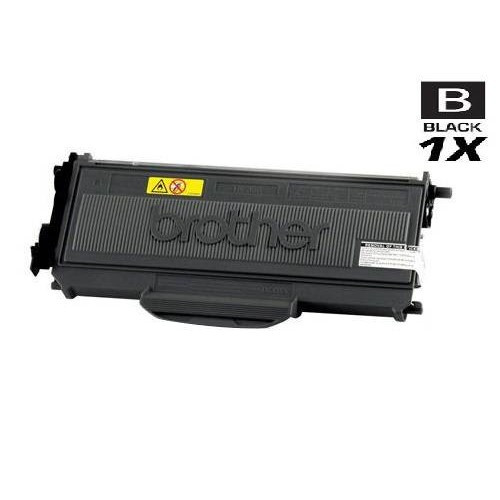
| TN360 single | One high-yield black cartridge | About 2,600 pages | $27.24 | About 1.05¢ on the TN360 rating · about 1.82¢ on the TN330 rating | — |
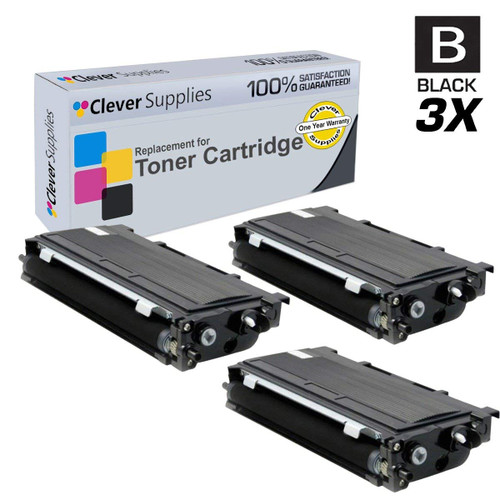
| TN360 3-pack | Three high-yield black cartridges | About 7,800 pages in total | $49.56 | About 0.64¢ on the TN360 rating · about 1.10¢ on the TN330 rating | SAVE $32.16 vs three singles |
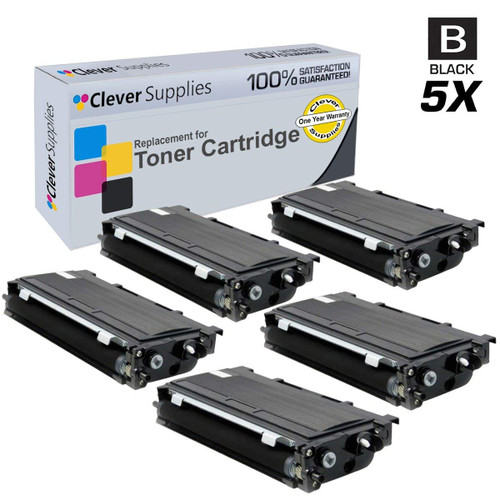
| TN360 5-pack | Five high-yield black cartridges | About 13,000 pages in total | $71.88 | About 0.55¢ on the TN360 rating · about 0.96¢ on the TN330 rating | SAVE $64.32 vs five singles |
| TN330 2-pack | Two standard-yield black cartridges | About 3,000 pages in total | $38.40 | About 0.74¢ on the TN360 rating · about 1.28¢ on the TN330 rating | SAVE $16.08 vs two singles |
| TN330 single | One standard-yield black cartridge | About 1,500 pages | $27.24 | About 1.05¢ on the TN360 rating · about 1.82¢ on the TN330 rating | — |
| TN330 3-pack | Three standard-yield black cartridges | About 4,500 pages in total | $49.56 | About 0.64¢ on the TN360 rating · about 1.10¢ on the TN330 rating | SAVE $32.16 vs three singles |
| TN330 5-pack | Five standard-yield black cartridges | About 7,500 pages in total | $71.88 | About 0.55¢ on the TN360 rating · about 0.96¢ on the TN330 rating | SAVE $64.32 vs five singles |
| TN360 toner + DR360 drum set | One high-yield toner and one drum unit | Toner about 2,600 pages · drum about 12,000 | $39.14 | — | SAVE $16.08 vs the two singles bought separately |
| DR360 drum single | One drum unit | About 12,000 pages | $27.98 | About 0.23¢ | — |
| DR360 drum 2-pack | Two drum units | About 24,000 pages in total | $39.89 | About 0.17¢ | SAVE $16.07 vs two singles |
| DR360 drum 3-pack | Three drum units | About 36,000 pages in total | $51.80 | About 0.14¢ | SAVE $32.14 vs three singles |
| DR360 drum 5-pack | Five drum units | About 60,000 pages in total | $75.61 | About 0.13¢ | SAVE $64.29 vs five singles |
The genuine shelf, for scale, quoted from this store's own listings and never linked from this guide: the genuine TN330BK single is $79.96, the genuine TN360 single $114.36 and the genuine DR360 drum $131.29. Brother's own store prices the same three at $58.79, $83.99 and $131.29 — so the genuine drum here matches Brother to the cent, while the two genuine toners sit about 36% above Brother's own figures. The compatible single at $27.24 is about a third of the genuine TN330BK's shelf price and about a quarter of the genuine TN360's.
TN360 — the name to buy under
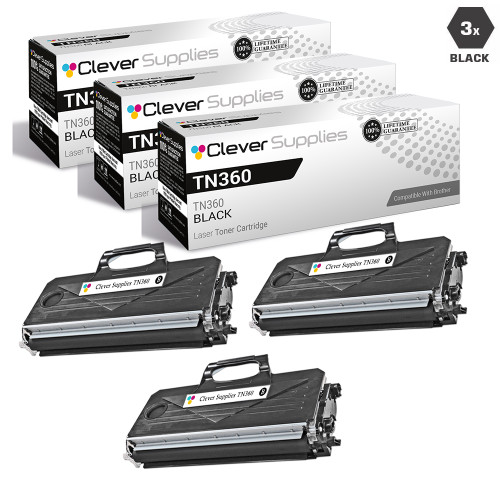
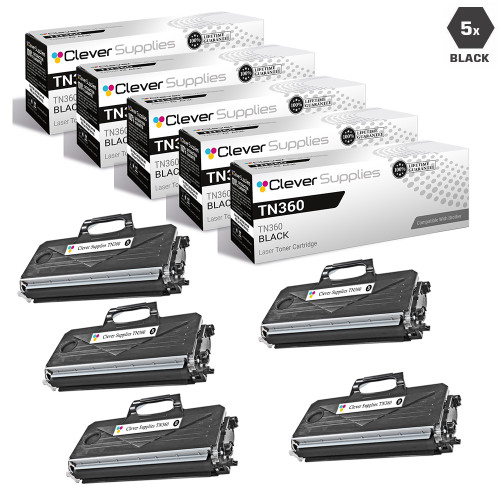
Nothing about the TN360 listings makes them better cartridges than the TN330 listings — the disclosure above is explicit that the hardware is shared. The TN360 name leads this page for a narrower, provable reason: its paperwork carries Brother's higher rating at no higher price, so every figure a buyer uses to judge the purchase — pages per cartridge, cost per page, swaps per year — reads better under this name for the same money. The ladder is complete and behaves like a ladder: each pack undercuts assembling the same cartridges one by one, by $16.08 on the pair, $32.16 on the three-pack and $64.32 on the five-pack.

A pair is the natural unit for these machines: one cartridge working, one sealed on the shelf, and no reorder errand in between. The saving for buying them together is real money — $16.08 against two singles — and it repeats at every rung of the ladder, so the pair is where the platform's flagship belongs. Owners stepping up from the standard cartridge their printer shipped with feel the change as silence: the swap interval stretches by Brother's figures from about 1,500 pages to about 2,600, and the low-toner warning stops being a monthly event.
Shop the TN360 2-Pack →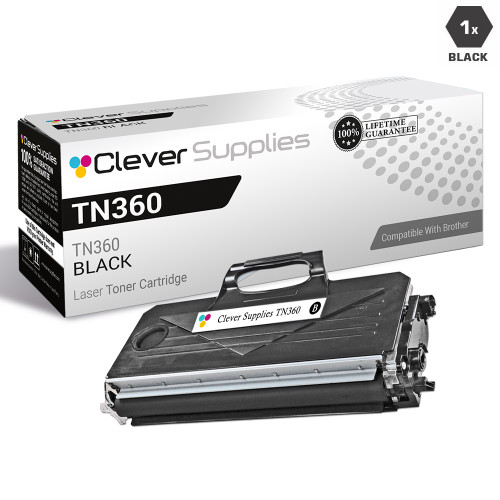
TN330 — the standard name, carded in full
The TN330 shelf is reproduced here completely, at its own prices, because some buyers have a real reason to choose it. A printer that produces a few pages a week — a home machine kept for letters and the occasional form — can take years to work through a high-yield fill, and a smaller cartridge that is used up and replaced on a tidier cycle is a legitimate preference rather than a mistake. What this page will not do is present the choice as one between two different compatible cartridges. It is one cartridge and two ratings; the TN330 cards below are the same offers as the TN360 cards above, under the name these printers left the factory with, and their cost-per-page figures are quoted on the standard rating their paperwork claims.
One honest consequence follows for anyone comparing the two sections: because the ladder is shared, there is no TN330-only saving anywhere on it, and no TN360 premium either. The pair saves the same $16.08, the five-pack the same $64.32, whichever name is on the box. Pick the name by the rating you want to hold the cartridge to — and if the answer is the higher one, the section above is the same shelf with better paperwork.
DR360 — the drum, sold here as a compatible
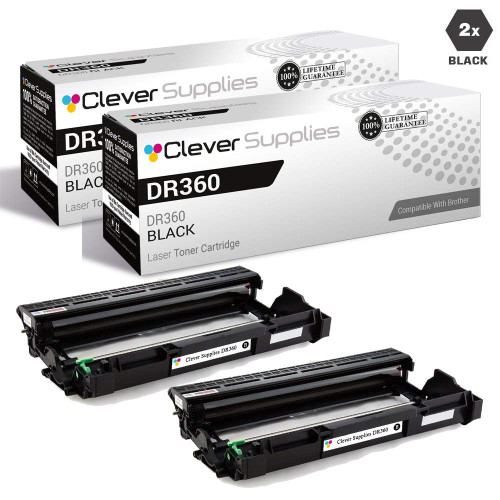
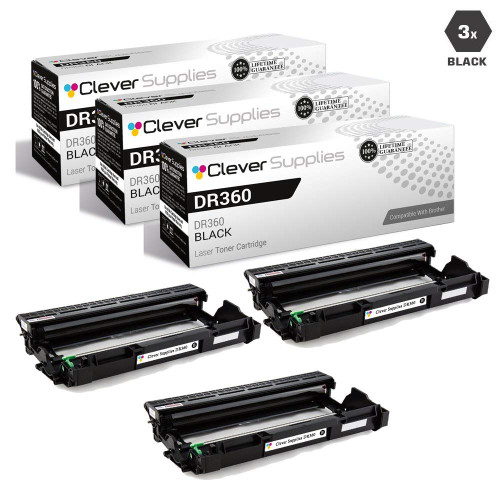
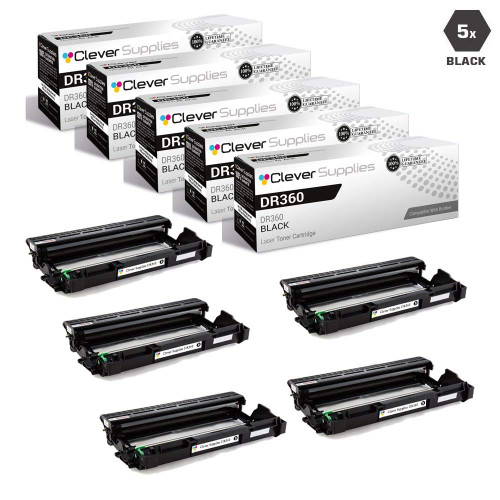
Behind every toner cartridge on this platform sits the DR360, a separate drum unit that carries no toner of its own: the cartridge slots into it, and together they put the image on the page. The two parts age independently. A toner change does nothing for a tired drum, whose signature is print quality fading or marking evenly across the page even with a fresh cartridge fitted; a drum change does nothing for an empty toner. Brother rates the drum at approximately 12,000 pages and says no more than that the figure is approximate and may vary by type of use — a single rating, printed here as a single rating. At that span, one drum outlasts roughly four high-yield toners or eight standard ones, which is why drum day feels rare next to toner day — and why it is worth having the part identified before it arrives.
In many families in this guide series the drum is the gap in the shelf; here it is not. A compatible DR360 is stocked as a single and in three pack sizes, each pack cheaper than its drums bought one by one. One warning about names: a second listing of this same drum single is titled as a toner cartridge. It is a drum — the title is wrong, the part is the drum — and it is not linked from this page; the card below is the correctly titled listing of the identical offer. The genuine drum, for reference, is $131.29 on this store's shelf, matching Brother's own price to the cent; the compatible single at $27.98 is about a fifth of that.
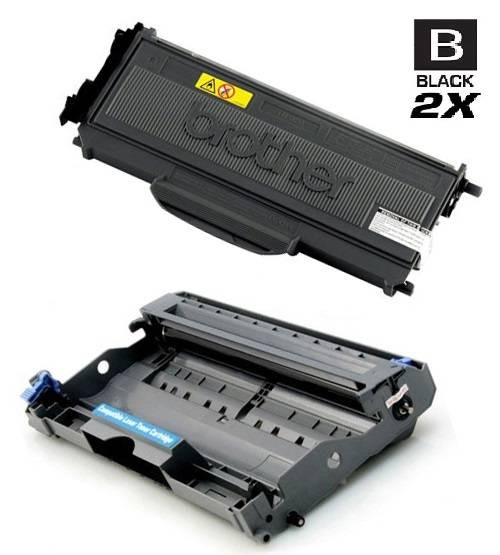
Toner and drum wear on different clocks, so most owners buy them separately and most of the time that is correct. The exception is the machine whose drum is due while its toner is also running down: fitting both from one box resets the pair together, and the set's price beats the two singles bought apart. It is also the simplest way to bring a neglected machine fully back — fresh toner for the pages, fresh drum for the print quality underneath them.
Shop the Toner + Drum Set →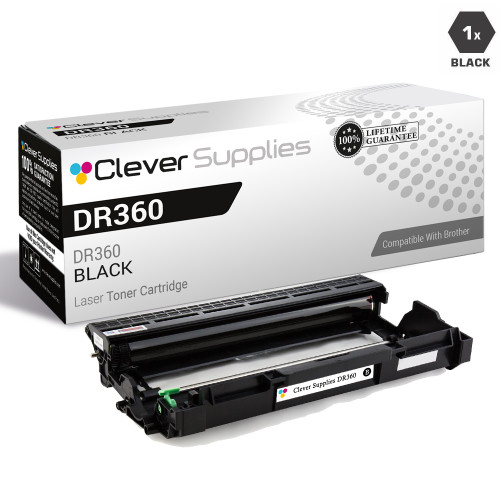
The genuine shelf, in prose
Brother's own cartridges are sold in this store under their own listings, and this guide links none of them — its cards are the compatible shelf, and genuine figures enter only as the scale everything else is measured against. That scale, from the store's genuine listings: the TN330BK single at $79.96, the TN360 single at $114.36, the DR360 drum at $131.29. Set against Brother's own store — $58.79, $83.99 and $131.29 for the same three — the drum matches exactly while both toners carry a markup of about 36% over the manufacturer's own price. Genuine is also where the two toner codes are genuinely two products: distinct fills, distinct ratings, distinct prices, which is precisely the distinction the compatible shelf does not reproduce. A buyer who wants Brother's standard cartridge to be exactly Brother's standard cartridge has that route open in this store; it simply costs about three times the compatible single for the TN330 and about four times for the TN360.
Chips and firmware — a thin record, reported as counted
This section of a buying guide is where recognition assurances usually live, so here is the count instead. Across the family's 36 listings, the word “chip” appears nine times in eight descriptions. Eight of those are one repeated sentence listing a cartridge's internal parts — drums, blades, a smart chip and other components — the standard parts boilerplate of this catalog, which describes what cartridges are made of rather than promising anything about a specific unit. The ninth is a marketing sentence on the joint two-pack listing claiming its cartridges let you “monitor and track your ink levels” — on a toner cartridge, which has no ink. That sentence is a copy defect in that listing, noted here so it is not mistaken for evidence, and it is not repeated anywhere on this page as a feature. The word “firmware” appears in none of the 36 listings at all.
On that record, no claim that these cartridges carry a fitted, new or specially updated chip can be made for this family, and none is. What can be cited is Brother’s own public position: Brother has stated that firmware updates are not a means of locking third-party cartridges out. The practical side of a swap on this platform — the messages these printers show, the toner and drum counters, the reset routine after a drum change — is gathered on our Brother Monochrome Toner & Drum Compatibility page. This guide confines itself to what it can verify from the record: fit, rating and price.
Before you order: the TN330 platform checklist
Frequently asked questions
On the evidence of this store's own catalog, no. The two names carry one price ladder — $27.24, $38.40, $49.56, $71.88 for single, pair, three-pack and five-pack under either code — and the stock counters match offer for offer (138, 69, 45, 26), which is what one stocked cartridge listed twice looks like. The listings differ in their yield fields: 1,500 pages claimed under the TN330 name, 2,600 under the TN360 name. Brother's genuine TN330 and TN360 really are different cartridges with different fills. The compatible ones, here, are one cartridge with two ratings in its paperwork — which is why this guide prints its cost-per-page arithmetic on both ratings and lets the cautious one stand as the floor.
The TN360, in almost every case. Both names fit all eight of the platform's printers — there is no model on Brother's list that takes one code and not the other — and at identical prices the TN360's paperwork rating of about 2,600 pages beats the TN330's about 1,500 on every measure a buyer can use. The honest exception is rhythm, not value: a printer that sees a few pages a week may be better served by the standard name's smaller fill, used up and replaced sooner rather than sitting in the machine for years. That is a preference about freshness, and this page cards the TN330 shelf in full for exactly that buyer.
Because the question-and-answer text on the compatible listings was written against list prices and never updated to the selling prices. Measured across the family: none of the 33 compatible listings' text states its own live sale price — the single is described at $31.33 where it sells at $27.24, and the pack savings quoted in that text are computed from the same stale figures. The three genuine listings' text, by contrast, does state their live prices. Every figure on this guide page was taken from the live product page and checked against the catalog record, so where a listing's own text and this page disagree on price, this page is the one quoting the checkout number.
Brother rates the DR360 at approximately 12,000 pages, and publishes that as a single figure — its only qualification is that drum yield is approximate and may vary by type of use. In cartridge terms that is roughly four high-yield toners or eight standard ones. The drum is a separate unit behind the toner cartridge, not part of it, and its wear shows as print quality: pages fading or marking evenly that a fresh toner cartridge does not cure. The printers track the drum on its own counter, separate from the toner counter. When it is due, the compatible drum here starts at $27.98 — against $131.29 for the genuine unit, which matches Brother's own price exactly.
This guide cannot confirm that, and it will not guess. The store's listing copy names eleven models, including four that Brother USA does not list for this platform, and its categories spread wider still — while leaving one genuine Brother model, the MFC-7840W, out of the printed lists even though Brother includes it. Where the store's copy and the manufacturer's pages disagree, compatibility follows Brother: the eight machines linked at the top of this page. A model outside that eight may share the hardware — several of the extra names are regional variants — but “probably the same printer” is not a fit claim, and none is made here.
No, and the reason is the state of the record rather than caution. The word “chip” shows up in this family's listings only inside a repeated parts-list sentence, plus one marketing line on a single listing that promises a toner cartridge will track your “ink levels” — a copy error, since toner cartridges hold no ink. “Firmware” appears nowhere in the family at all. There is nothing in that record to build a recognition guarantee on, so this page offers none; Brother's own public position is that its firmware updates are not a way of locking third-party cartridges out, and the swap-day practicalities for this platform are covered on our Brother Monochrome Toner & Drum Compatibility page.
The compatible cartridges and drums carded above are backed by this store directly: a one-year warranty, and a full year to return a compatible product that is not right for you. Genuine Brother products carry Brother's own warranty instead, with OEM returns closing at 30 days. Orders ship from the closest of our four warehouses in Illinois, Pennsylvania, Georgia and California, and the support desk is staffed 9 AM to 5 PM Central, Monday to Friday.