




Twenty-three listings make this shelf look crowded; counted as distinct boxes, it holds five. Two Return Program Unison cartridges feed Lexmark’s MS321–MS622 printers and MX321–MX622 multifunctions: the standard 561 (56F1000), rated at about 6,000 pages, and the ultra-high 561U (56F1U00), rated at about 25,000. The standard tier is stocked whole — single, 2-pack, 4-pack — while the ultra tier stops at a 2-pack, and the standard’s three boxes are re-listed under seven different printer names, which is where the twenty-three comes from. The decision this family actually asks for is not about depth but about permission. Lexmark documents the standard cartridge for all fourteen models on the platform; the ultra cartridge — the one that prints for under a cent a page — it documents for ten of them, the 521, 621 and 622 machines, and not for the 321 and 421 lines at all. One surface on the store’s own ultra pages gets that boundary wrong, in the direction that costs a buyer money. This guide prices the five boxes at the prices actually charged, draws the boundary where Lexmark draws it, and explains why no genuine Lexmark price appears anywhere on the page.
Two questions settle this purchase, and the order matters. First, the badge on the machine. If it belongs to the 521, 621 or 622 lines of either series, it may run the ultra cartridge, and the flagship 561U 2-pack at $470.68 — about fifty thousand rated pages at 0.94¢ each — is where this guide begins. If the badge reads 321 or 421, the ultra tier is closed to that machine on Lexmark’s record, whatever the printer block on the ultra listings implies; the standard 2-pack at $288.17 — the platform-wide alternative, carded directly below the flagship — is the box to buy. Second, depth — and here the tiers differ in kind, not just in size: the standard tier runs to a 4-pack, while the ultra tier has no 4-pack at any price, so its depth is bought a pair at a time. Everything after this paragraph is the evidence for those two answers.
Five distinct boxes behind twenty-three listings
The cards below are the family entire, each product shown once with its own photograph, its verified sale price and its own product link. The remaining eighteen listings add nothing to choose from: they are the standard tier’s same three boxes re-listed under six further printer names — MS421DN, MS421DW, MS521DN, MS621DN, MX321ADN and MX521ADE — at prices identical to the cent. The ultra tier has no re-listings at all; it exists only under the MS521dn name. Two cards lead the shelf: the flagship first, and below it the alternative for the models its tier cannot serve. SAVE badges appear on multi-packs only, and each one is reckoned against the same cartridges bought singly at the sale prices printed here — a different basis from the product pages’ own, as the closing note sets out.
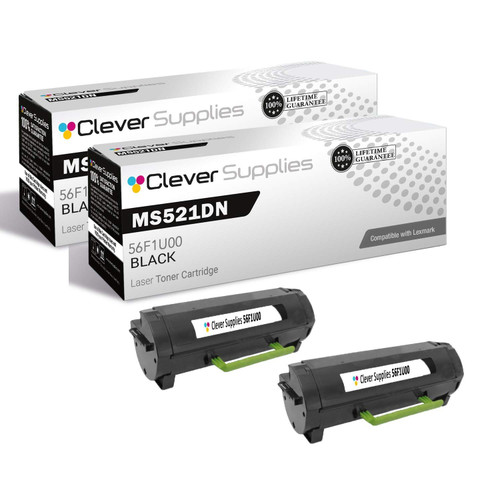
The case for this box is a subtraction. Set against the standard 2-pack below, the pair costs $182.51 more and carries thirty-eight thousand more rated pages; page for page it runs about a cent and a half cheaper than the standard tier at the same pack size, and at office volume that gap is the family’s whole economic argument. The caution that travels with it is fit, and it is not fine print: the printer block rendered on this listing’s own page attaches four models to it — the MS321dn among them — that Lexmark says cannot use the cartridge at all. Read the badge before the price; the fit section below is the authority this guide follows, and it is drawn from Lexmark, not from any single store surface.
Shop the 561U 2 Pack →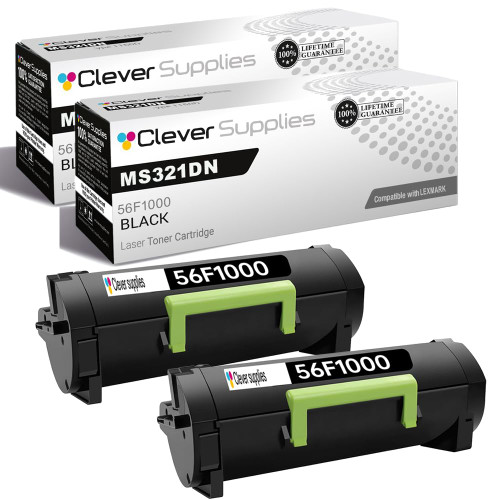
For the four 321 and 421 model lines this card is not the alternative but the ceiling — Lexmark admits nothing else stocked here to those machines. For everyone else it is the fleet spare: a single box that can rescue whichever printer on the platform runs dry first, ultra-capable models included. Owners of the ten ultra models should read it as insurance rather than as the recommendation, since their rate on the flagship above sits about a cent and a half lower. The 4-pack further down buys a further seven hundredths of a cent a page over this pair, and nothing else.
Shop the 561 2 Pack →THE REST OF THE SHELF
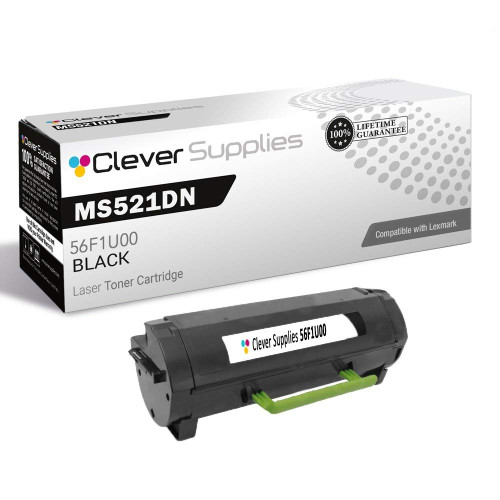
The longest cartridge on the platform, bought one at a time — the ultra tier for a lone hard-worked 621 or 622 machine. The pair above trims three hundredths of a cent from every page when volume earns it.
Shop the 561U Single →
The standard tier at its deepest and cheapest — twenty-four thousand rated pages that any of the fourteen models can draw on, in one box. Four singles bought separately would total $608.48.
Shop the 561 4 Pack →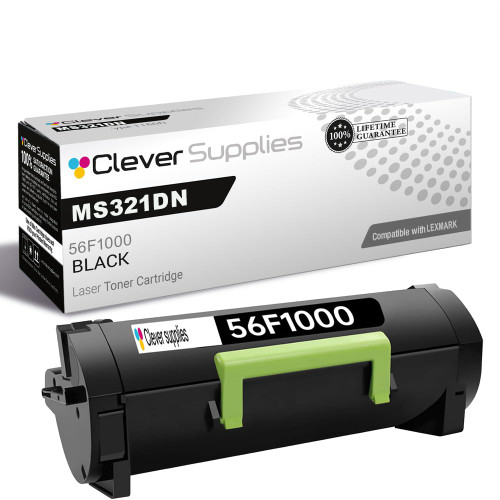
The smallest outlay on the shelf and its dearest page — and still the universal spare, the one cartridge that can go into whichever of the fourteen machines runs dry first.
Shop the 561 Single →Read the cards by their fit lines before their prices. The two cheapest rates on this page belong to a tier that four of the platform’s ten model lines may not touch, so the next section draws that line model by model before the comparison table prices anything.
The boundary: ten models may climb to the 561U
Lexmark’s record gives this family fourteen models. In the Lexmark MS Series: the MS321dn, MS421dn, MS421dw, MS521dn, MS621dn and MS622de. In the Lexmark MX Series: the MX321adn, MX521ade, MX521de, MX522adhe, MX622ade and MX622adhe. Those twelve names each link to a category page in this store. Two more models belong in prose because the store keeps no category for them: the MX321adw and the MX421ade, both documented fits for the standard cartridge.
The standard cartridge fits all fourteen. No restriction footnote attaches to its row in either platform user guide, and that unrestricted reach is what makes it the platform’s common part. The ultra cartridge fits ten: the MS521dn, MS621dn and MS622de; the MX521ade and MX521de; the MX522adhe and the MX522dhe; and the MX622ade, MX622adhe and MX622de — two of those ten, the MX522dhe and MX622de, named here in prose because they too have no category page in this store. The ultra cartridge does not fit the MS321dn, MS421dn, MS421dw, MX321adn, MX321adw or MX421ade. That is Lexmark’s own device list for its 25,000-page cartridge, stated on its cartridge pages, and this guide follows it exactly and at full strength.
Measured against that record, the store’s surfaces disagree with each other in both directions at once. The ultra listings are filed under exactly their eight linkable categories, and their fit paragraph and fit answers enumerate the same eight — all correct. But the printer block rendered on both ultra product pages names twelve models, adding the MS321dn, MS421dn, MS421dw and MX321adn, four machines Lexmark excludes; it is in fact the standard tier’s block, accurate on standard pages and wrong on ultra ones. An owner of a 321 or 421 machine who trusts the block on an ultra page buys a 25,000-page cartridge their printer cannot run. The standard tier’s surfaces err the opposite way: its listings file under, and their shared introduction and fit answers enumerate, only eight of the fourteen models — omitting the MS622de, MX522adhe, MX622ade and MX622adhe, all Lexmark fits holding live category pages here, and the very categories the ultra listings file under — so an MS622de owner browsing their own model finds no standard cartridge waiting, although the standard cartridge is the one stocked box their machine shares with the whole platform.
The cartridge already in the machine remains the fastest arbiter. Its label should read 56F1000 or 56F1U00 — or one of the codes this store does not stock, taken up in the ladder section below. Match the model against the boundary first and the tier second; on this platform the badge decides, and the label’s yield figure cannot rescue a model on the wrong side of the line.
Five boxes, priced by the page
Each rate below spreads a box’s sale price across the rated pages of the cartridges inside it. The ranking falls into two blocks that never touch: both ultra rows sit far above all three standard rows, and the distance between the blocks — roughly a cent and a half a page — is larger than every pack step inside either tier combined. Start with the final column; it tells you which of the two blocks your printer may buy from.
| Offer | Sale price | Pages per box, rated | Per-page cost | Fits |
|---|---|---|---|---|
| 561U 2 Pack — the flagship (56F1U00) | $470.68 | 2 cartridges · ~50,000 pages | 0.94¢ | 10 models — the 521, 621 and 622 lines |
| 561U Single (56F1U00) | $243.38 | 1 cartridge · ~25,000 pages | 0.97¢ | 10 models — the 521, 621 and 622 lines |
| 561 4 Pack (56F1000) | $560.26 | 4 cartridges · ~24,000 pages | 2.33¢ | All 14 platform models |
| 561 2 Pack (56F1000) | $288.17 | 2 cartridges · ~12,000 pages | 2.40¢ | All 14 platform models |
| 561 Single (56F1000) | $152.12 | 1 cartridge · ~6,000 pages | 2.54¢ | All 14 platform models |
Before rounding, the flagship works out to 0.941¢ against the ultra single’s 0.974¢ — the entire pack reward in the ultra tier is three hundredths of a cent, because the tier stops at two cartridges and offers no deeper box to reward. The standard tier’s ladder is steeper: twenty hundredths of a cent separate its single from its 4-pack. Neither slope should drive the decision. The step that costs real money is the tier step — 1.56¢ between the two singles, 1.46¢ between the two 2-packs — and it is open only to the ten models on the right side of the boundary, which is why the fit section came before this table.
The value case, with no genuine price to lean on
Most guides in this series set the compatible shelf against a genuine Lexmark price. This one cannot, and the absence deserves an explanation rather than a borrowed number. The document that priced the sibling families — Lexmark’s official US price list, the Texas DIR list hosted on lexmark.com — contains no 56F entry at all; its monochrome rows skip from the family below to the family above. Nor did Lexmark’s US retail store return a checkout price for either stocked code. The only priced genuine figures in circulation belong to government-schedule variants carrying different part numbers, and a price for a cartridge that is not this cartridge is not evidence about this one. So this guide prints no genuine price, no genuine per-page rate and no savings-versus-genuine claim, and makes its case on the shelf’s own arithmetic.
That arithmetic is strong enough to stand alone. Priced in blocks of ten thousand pages, the standard tier runs from about $254 bought as singles down through about $240 in the 2-pack to about $233 in the 4-pack; the ultra tier, where a machine may use it, runs about $97 as a single and about $94 in the flagship pair. Held at ten thousand pages a month, a year of printing on the flagship costs roughly $1,130 in toner, against roughly $2,882 on the standard 2-pack — on the order of $1,750 saved across the year by a machine permitted the top tier. The boundary drawn in the fit section, not anything printed on a box, is what that money turns on.
One caution for anyone cross-checking these figures against the product pages: the listings reckon their savings and per-page figures from list prices, not from the sale prices a buyer is actually charged. The standard single’s About text, for instance, works from $174.94 — the list price — where checkout charges $152.12, and the ultra single’s questions land at about 1.12¢ a page on that footing, where the sale price gives 0.97¢. Nothing in their arithmetic is wrong; the starting price is, and the closing note documents the pattern across all five products.
Ratings that agree — and the rungs between them that nobody stocks
On yield, every witness tells the same story. The structured yield field reads 6,000 pages on all twenty-one standard listings and 25,000 on both ultra listings; every description states its own tier’s figure in its text, pack totals included — 12,000 and 24,000 rated pages inside the standard boxes, 50,000 inside the ultra pair; and Lexmark’s own cartridge pages declare the identical figures, each in accordance with ISO/IEC 19752, the standard both platform user guides cite for their yield estimates. No tier leaves its rating out of its prose, no surface contradicts another, and every per-page figure in this guide is built from those two numbers and nothing else.
Between the two stocked rungs, Lexmark’s ladder holds two more, and this store stocks neither. The 561H (56F1H00, about 15,000 pages) is documented for the whole platform, like the standard; the 561X (56F1X00, about 20,000 pages) for the 421-and-up machines. No listing exists for either code in any pack size — and no product page in the family so much as names them, so a buyer comparing tiers from the listings alone sees a 6,000-page cartridge and a 25,000-page cartridge with empty air between. Each upper rung also exists as a Corporate Return Program variant written for contract accounts, and the ultra tier has a Regular twin sold outright, the 56F0UA0; none of those is stocked in any configuration either. The translation rule for a spent cartridge carrying any of those labels is the boundary from the fit section: match the model first, then take the stocked tier that model admits.
What a new machine carries in the box is on Lexmark’s record for six models. The MS321dn ships with a 2,000-page Return Program cartridge; the MS421dn, MS421dw and MX421ade with a 3,000-page one; the MS521dn with a 5,000-page one; and the MS621dn and MX522adhe with a 6,000-page one — a starter equal in rating to the standard retail rung, so on those two machines the first replacement arrives at a standard cartridge’s lifespan, far short of the ultra tier’s reach. For the platform’s remaining models, this guide’s research found no ships-with figure in Lexmark’s publications, so this page prints none rather than estimate one.
One further consumable belongs in the budget. The image itself is formed by a separate unit inside the printer — Lexmark’s 560Z (56F0Z00) — rated by Lexmark at up to 60,000 pages on a job-average basis of its own (three average pages per print job at about five percent coverage), not on the ISO basis behind the toner figures. The cartridges above contain no drum, and none of that lifespan is folded into their ratings or their prices. The unit is not sold in this store, and no genuine price for it could be retrieved, so none is quoted; it is named so the platform’s second consumable can be planned for on its far longer cycle, not discovered when the printer asks for it.
A chip claim on one tier, silence on the other
This shelf carries no chip specification field, and what prose exists divides cleanly by tier. The two ultra descriptions share a boilerplate passage describing units manufactured entirely new, with all-new parts that name a smart chip among the OPC drums and wiper blades, and adding that the use of these cartridges does not void the printer’s warranty. The twenty-one standard descriptions make no chip claim of any kind — their template carries no such passage at all. Firmware is mentioned nowhere in the family, in either direction: no listing promises anything about it, and none warns of anything. This guide reports the split exactly as found, harmonizes none of it, and rests no assurance of its own on either the claim or the silence; the cover that actually travels with these cartridges is set out in the next section.
What Lexmark itself documents, in the platform user guides’ section on genuine parts and supplies, is a general caution about third-party supplies: they may affect how the printer performs, how reliable it is and how long it and its imaging components last, and damage traced to them falls outside the printer’s warranty. The guides further note that genuine Return Program cartridges may automatically update the printer’s memory as a guard against counterfeit and unauthorized products, and are built as single-use cartridges that stop once they have delivered their rated amount of toner. Beyond that, the retrieved documentation says nothing — it describes no firmware-blocking regime of the kind some other brands operate, and this page invents none.
What backs each cartridge
Choosing by the badge on the machine
Answers for the workgroup buyer
Fourteen models, split by tier. The standard 561 serves all fourteen — the MS321dn, MS421dn, MS421dw, MS521dn, MS621dn and MS622de, and the MX321adn, MX321adw, MX421ade, MX521ade, MX521de, MX522adhe, MX622ade and MX622adhe. The 561U serves ten of them: the 521, 621 and 622 lines of both series. Those lines come from Lexmark’s own device lists for the two cartridges. Lexmark’s B-series machines, whose supplies tables appear in the same user guides, use another cartridge family entirely and fit nothing sold here.
No. Lexmark’s device list for the 25,000-page cartridge covers the 521, 621 and 622 machines only. Treat the printer block on the ultra product pages with suspicion here: it names twelve models, yours among them, because it is the standard tier’s block carried across — correct on the standard pages, wrong on the ultra ones. The ultra listings’ own fit paragraph and fit answers state the boundary correctly. Your tier is the standard 561, in whichever pack size your volume justifies.
Because the store does not stock one — the ultra tier exists as a single and a 2-pack only, and only under the MS521dn name at that, so an MS621dn or MX622ade owner reaches it through their model category or by the cartridge code, never through a listing named for their printer. Depth in this tier is bought in pairs. The standard tier’s 4-pack is not a substitute for the missing box: it fits the same ten machines, but at the standard cartridge’s 6,000-page rating rather than the ultra’s 25,000.
In Lexmark’s catalog but not in this store. The 561H (56F1H00) is rated at about 15,000 pages and documented for the whole platform; the 561X (56F1X00) at about 20,000 pages, for the 421-and-up machines. Neither code has a listing here in any pack size, and no product page in the family mentions either. Your stocked replacement is whichever stocked tier your model admits — the ultra if it is a 521, 621 or 622 machine, the standard otherwise.
No. Imaging on this platform is handled by a unit of its own inside the printer — Lexmark’s 560Z (56F0Z00), which Lexmark rates at up to 60,000 pages on a job-average basis (three pages per job at about five percent coverage) — and the toner cartridges contain no drum, so none of that life is bundled into their ratings or prices. The unit is not stocked in this store for this platform, and no genuine price for it was retrieved, so none appears here; it is named so the platform’s second consumable can be budgeted for.
For six models, Lexmark’s own printer pages answer directly: the MS321dn ships with a 2,000-page Return Program cartridge; the MS421dn, MS421dw and MX421ade with a 3,000-page one; the MS521dn with a 5,000-page one; and the MS621dn and MX522adhe with a 6,000-page one, equal to the standard retail rung. For the platform’s remaining models, no Lexmark-published figure could be found, and this guide offers none instead of dressing an estimate up as one.
Because the two sets of figures start from different prices: the product pages reckon from list prices, this guide from the sale prices charged at checkout. Take the ultra 2-pack’s page: it sets $559.78 of singles against a $541.28 list price and reports an $18.50 saving, $270.64 a cartridge, about 1.08¢ a page. Run the same comparison at sale prices — $486.76 against $470.68 — and the saving is $16.08, the cartridge $235.34, the page 0.94¢. All five products show the same pattern across their questions and About text. Their list-price arithmetic is accurate as far as it goes; it simply starts from a price nobody pays, and the closing note below works through each instance.
Price and disclosure note: Prices throughout this guide are the sale prices from each product’s own storefront page, matched title-by-title against its listing on November 17, 2026 and checked live once more ahead of publication. Each of the five listings also shows a higher list price over its sale price; should a sale end, the product page is the authority. The SAVE figure on a pack is the gap between its sale price and the cost of its cartridges bought singly at sale prices — $304.24 for two standard singles and $608.48 for four, producing badges of $16.07 and $48.22, and $486.76 for two ultra singles, producing $16.08. No genuine Lexmark price is printed anywhere in this guide: the Texas DIR list of July 25, 2024 — Lexmark’s official US price list, hosted on lexmark.com — contains no 56F entry, its US retail store gave no checkout price for either stocked code, and the genuine figures in circulation attach to government-schedule variants under different part numbers, which this guide does not use. On yields, no source disagrees with any other: listing fields, description texts, Lexmark’s cartridge pages and both platform user guides all land on about 6,000 pages (561) and about 25,000 (561U) under ISO/IEC 19752, while the unstocked middle rungs’ 15,000 and 20,000 rest on Lexmark’s record alone. Fit follows the device lists Lexmark publishes for the two cartridges, backed by the ordering tables in the platform user guides. Set against that record, the store’s surfaces depart in three recorded respects. First, the printer link block carried on both ultra listings names twelve models, handing the ultra tier four models Lexmark excludes — the MS321dn, MS421dn, MS421dw and MX321adn; that block belongs to the standard tier, on whose pages it is correct. Second, the standard tier’s category filing, shared introduction and fit answers enumerate eight of the fourteen models, omitting the MS622de, MX522adhe, MX622ade and MX622adhe — Lexmark fits with live category pages in this store, and categories the ultra listings do file under — together with the MX321adw and MX421ade, which have no categories. Third, the savings and per-page sums throughout the family are computed on list prices: the standard single’s About text works from $174.94 against the $152.12 charged; the standard 2-pack reports an $18.48 saving and $165.70 a cartridge on list, against $16.07 and $144.09 at sale prices; the standard 4-pack $55.46 and $161.08, against $48.22 and $140.07; the ultra single about 1.12¢ a page from its $279.89 list price, against 0.97¢ at the $243.38 charged; the ultra 2-pack an $18.50 saving, $270.64 a cartridge and about 1.08¢ a page on list, against $16.08, $235.34 and 0.94¢ at sale prices. In each instance the list-price arithmetic itself is accurate; the basis is the defect.
The five cards above exhaust the family’s distinct products. Eighteen further listings re-present the standard tier’s three boxes under six more printer names at prices identical to the cent, and no duplicate is ever carded twice in this series; the ultra tier has no per-printer listings and no 4-pack. Beyond the five, nothing in Lexmark’s ladder for this platform is stocked in any pack size — not the middle rungs 561H (56F1H00) and 561X (56F1X00), not the Corporate Return Program variants, not the Regular twin 56F0UA0 — and no store text names the middle rungs at all. Two wording and naming defects are recorded for completeness: the standard tier’s shared introduction, identical across all twenty-one of its listings, describes the compatible cartridge as “authentic” — wording recorded here and repeated as fact nowhere in this guide — and on the eighteen re-listed copies that same introduction names the MS321DN cartridge in its opening lines whatever printer the listing is titled for. The imaging unit (560Z, 56F0Z00) is background only, not being sold here; its rating of up to 60,000 pages is Lexmark’s, on its job-average basis, and no price for it was retrieved, so none is quoted. Starter figures reach exactly as far as Lexmark’s own pages: the six models named in the yields section, and no further. On chips, no listing carries a specification field; a boilerplate line in the two ultra descriptions names a smart chip among the cartridge’s all-new parts, the twenty-one standard descriptions claim nothing, and firmware goes unmentioned — while Lexmark’s documented position (its user-guide caution on third-party supplies; its note that genuine Return Program cartridges may update printer memory against counterfeit and unauthorized products) is reported as found. One catalog identifier is recorded for completeness: the standard 2-pack’s SKU reads “2Balck” in its pack suffix where “2Black” was meant — a typo with no effect on anything a buyer sees at checkout. Every offer on this page carries the store’s standard compatible cover: a year’s warranty against defects in materials and workmanship, and returns free for that first year.