




One black toner family serves Lexmark’s MS310-through-MS610 monochrome lasers, and Lexmark builds it as a ladder of four yields: a standard cartridge near 1,500 pages, then high, extra-high and ultra rungs at roughly 5,000, 10,000 and 20,000 pages. This store stocks the ladder’s top three rungs — 501H, 501X and 501U — and stocks each rung twice over, because every tier exists under two part numbers: a Return Program code (50F1H00, 50F1X00, 50F1U00) and a Regular code (50F0XA0, 50F0UA0) that Lexmark sells under the 500XA and 500UA names. Here the twin codes are priced identically to the cent, so the shelf resolves to fifteen distinct offers — five part numbers in single, 2-pack and 4-pack form — behind a storefront that lists them fifty-four times, mostly re-listed under individual printer names. The fact that governs everything below is fit: the higher rungs do not fit the smaller printers. The 501H runs in all twelve models on the platform; the 501X shuts out the MS310 and MS315 lines; the 501U belongs to the MS510 and MS610 alone. This page prices the whole ladder, draws each tier’s fit line where Lexmark’s own manuals draw it, and says plainly where the product pages’ printer lists claim more than Lexmark allows.
Begin with the badge on your printer, because on this platform the model chooses the tier. MS510 and MS610 owners can buy the whole ladder, and for them the flagship below — the 501U 2-pack at $164.67, forty thousand rated pages at 0.41¢ each — is the shelf’s center of gravity; the 501U 4-pack undercuts even that, at 0.39¢. MS410 and MS415 owners top out at the 501X, where the 4-pack reaches 0.59¢ a page. MS310, MS312 and MS315 owners are 501H-only: their deepest box is the 501H 4-pack at 0.95¢. At every tier the Return Program and Regular codes cost exactly the same here, so the code on the box is a labeling question, not a price question. Against Lexmark’s own list prices — $249.21 for a genuine 501H single, $549.93 for a genuine 501U — every compatible on this page lands between a sixth and a quarter of the genuine figure.
Fifteen offers: three tiers, two codes, three pack sizes
The grid underneath this section is complete — every distinct configuration the store sells for this platform, carded once. What it does not do is card the same offer again under a second printer’s name: thirty-nine further listings repeat these fifteen configurations model by model, and a repeated listing is not a second product. Savings badges appear only where a pack can be priced against the same cartridges bought as singles at the sale prices on this page, which is every multi-pack here. One discipline runs through all fifteen cards: the fit line printed on each is Lexmark’s, from its user-guide supplies tables — not the wider claim some of the listings’ own printer blocks make, a disagreement the fit section below takes up directly.
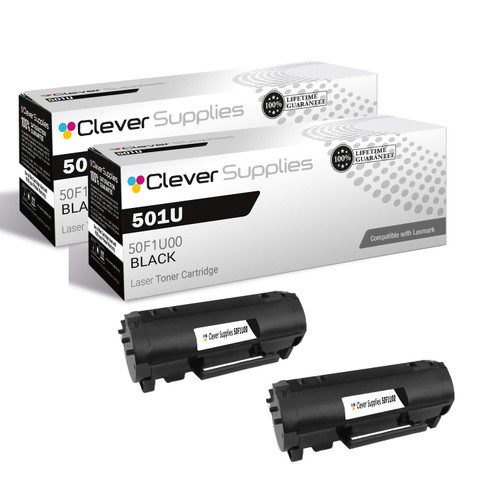
Set the price against the genuine counter and the shape of the offer sharpens: Lexmark’s US list price for a single genuine 501U cartridge is $549.93, so this box carries two cartridges — forty thousand rated pages — for thirty cents on that dollar. Its own description is also the family’s fullest, carrying the cross-reference that states the tier restrictions correctly, model by model. The one boundary to hold in mind is the tier’s own: this is an MS510/MS610 cartridge, and no other model on the platform can use it.
Shop the 501U 2 Pack →THE REMAINING OFFERS
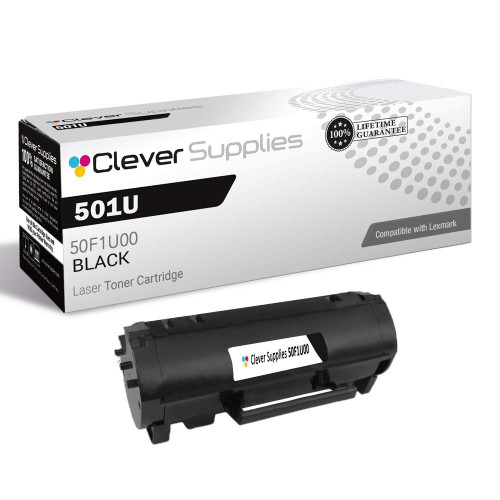
The full ultra rating bought one cartridge at a time — the dearest page in the U tier, but no commitment beyond a single box. Against Lexmark’s $549.93 list price for the genuine cartridge, it is also the family’s widest single-cartridge gap.
Shop the 501U Single →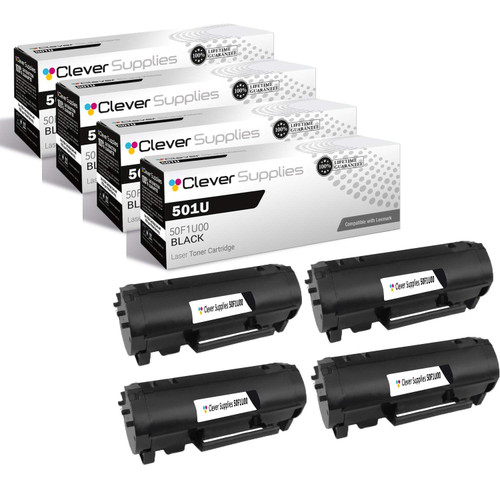
The deepest stock on the shelf: eighty thousand rated pages at the family’s floor rate. Four singles would cost $361.48; for a shared MS610 that eats toner by the box, this is the order that ends the reorder cycle for a season.
Shop the 501U 4 Pack →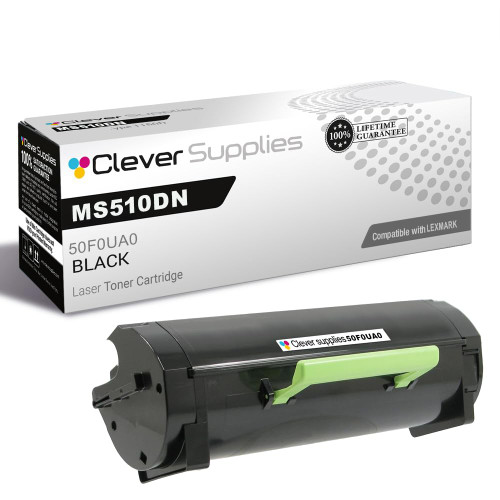
The ultra tier under its Regular code, in the listing named for the MS510dn. Same rating, same price to the cent as the 501U single above — the difference is the code line Lexmark prints on the box, not anything in the cartridge’s stated figures.
Shop the 500UA Single →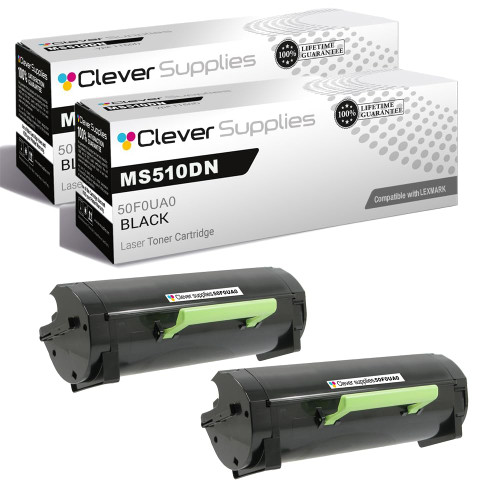
The flagship’s twin under the Regular code and a printer’s name — identical price, identical rating, identical pack saving. An MS510dn owner who lands on this listing first loses nothing by taking it instead.
Shop the 500UA 2 Pack →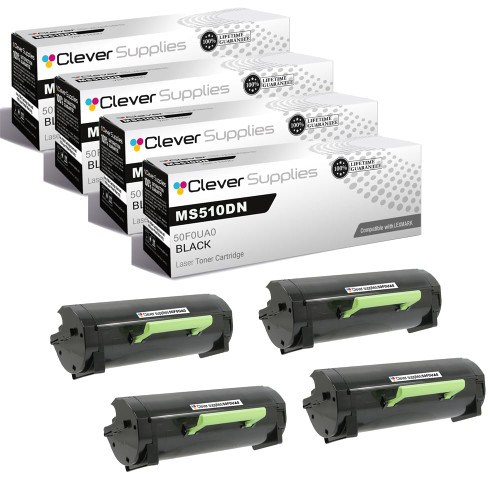
The 4-pack’s eighty thousand pages under the Regular code, at the same floor rate as its Return Program twin. Lexmark lists the genuine 500UA at $610.28 a cartridge; four genuine cartridges at list would pass $2,400.
Shop the 500UA 4 Pack →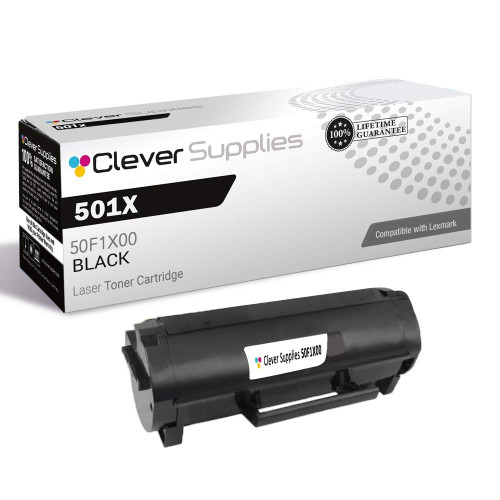
The middle rung bought singly: double the 501H’s rating for $10.90 more, which halves the per-page cost in one step. For MS410 and MS415 owners this is where the ladder starts to pay; the 310-series machines cannot take it at all.
Shop the 501X Single →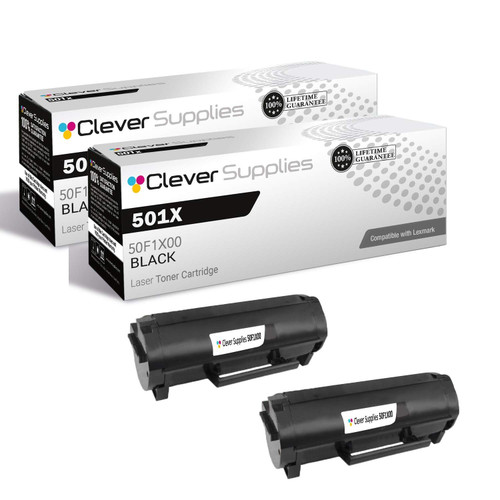
Twenty thousand pages of the middle tier at 0.63¢ — the working box for an MS410dn or MS415dn that prints every day. Note the filing quirk this card corrects by example: this listing also sits under the MS315dn category, a model Lexmark excludes from the X tier.
Shop the 501X 2 Pack →
The X tier’s floor: forty thousand pages at 0.59¢. For an MS510 or MS610 that does not need the U tier’s depth, this box and the U single sit within a cent of each other in total outlay — the choice is pages per cartridge against pages per dollar.
Shop the 501X 4 Pack →
The middle rung under its Regular code, in the listing named for the MS410dn — the X tier’s anchor printer. Identical in price and rating to the 501X single; Lexmark’s genuine 500XA lists at $435.38, the highest genuine figure in the family relative to what is charged here.
Shop the 500XA Single →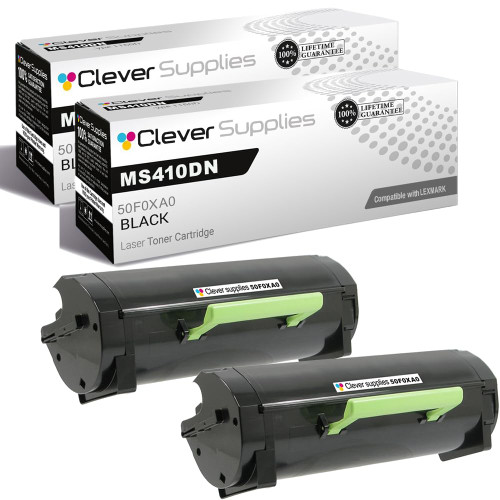
The X 2-pack under the Regular code and the MS410dn’s name — the same twenty thousand pages and the same $16.07 pack saving as the 501X version. The Regular-code X listings are also the family’s most carefully filed: they sit under exactly the eight categories Lexmark allows this tier.
Shop the 500XA 2 Pack →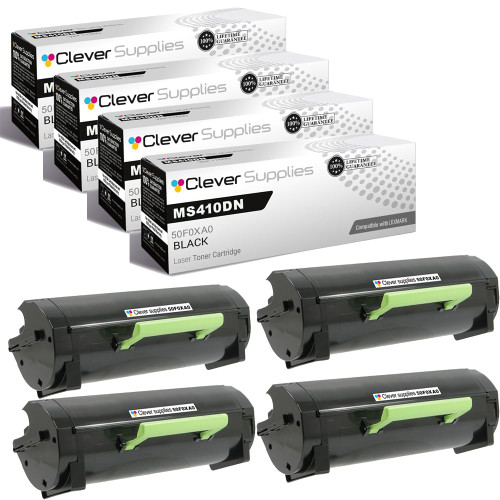
Forty thousand middle-tier pages under the Regular code, at the X floor of 0.59¢. Bought as four singles the same cartridges total $282.80 — the pack arithmetic is the family’s most repeatable pattern, and this card is its third instance.
Shop the 500XA 4 Pack →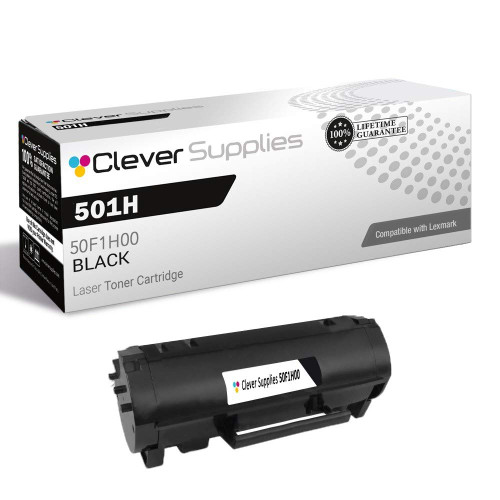
The universal cartridge — the one offer on this page that every printer on the platform can use, including the MS310, MS312 and MS315 machines the higher tiers shut out. It is also the family’s entry price, and the dearest page it sells; both facts follow from the same 5,000-page rating.
Shop the 501H Single →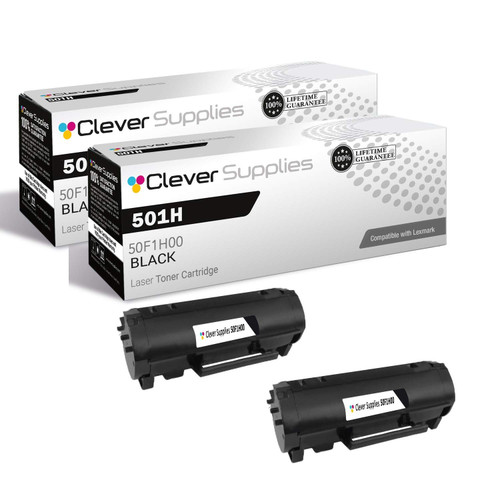
For a 310-series owner this pack matters beyond its $16.08 saving: the multi-packs of the higher tiers are closed to those machines, so this is the shallowest way to hold a spare cartridge on the shelf — ten thousand pages of the one tier that fits.
Shop the 501H 2 Pack →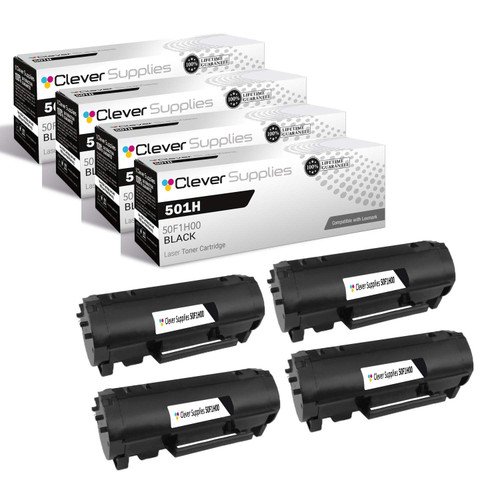
Twenty thousand pages of universal fit — as many pages as one 501U cartridge holds, assembled from the only tier a small MS machine accepts. For an office running several 310- or 410-series printers side by side, this is the deepest box that serves them all.
Shop the 501H 4 Pack →That is the whole shelf, with nothing held back and no offer carded twice. Two structural facts are worth carrying into the sections below: the pack saving is nearly a constant — about $16 on every 2-pack and about $48 on every 4-pack, whatever the tier or code — and no step on the ladder, tier or pack, ever raises the per-page cost. The arithmetic only runs one way.
The ladder in nine rows
Because the Return Program and Regular codes share a price at every tier, the fifteen cards above collapse into nine rows without losing a figure: each row is two listings, one under each code, at the price shown. Per-page costs divide the sale price by the rated yield of the cartridges in the box, on the figures the listings and Lexmark state identically.
| Offer (both codes) | Sale price | Rated pages in the box | Cost per page | Printers it fits |
|---|---|---|---|---|
| 501U / 500UA 2 Pack — the flagship (50F1U00 / 50F0UA0) | $164.67 | 2 cartridges · ~40,000 pages | 0.41¢ | MS510dn, MS610de/dn/dte/dtn (5 models) |
| 501U / 500UA Single (50F1U00 / 50F0UA0) | $90.37 | 1 cartridge · ~20,000 pages | 0.45¢ | MS510dn, MS610de/dn/dte/dtn (5 models) |
| 501U / 500UA 4 Pack (50F1U00 / 50F0UA0) | $313.26 | 4 cartridges · ~80,000 pages | 0.39¢ | MS510dn, MS610de/dn/dte/dtn (5 models) |
| 501X / 500XA Single (50F1X00 / 50F0XA0) | $70.70 | 1 cartridge · ~10,000 pages | 0.71¢ | MS410, MS415, MS510, MS610 (8 models) |
| 501X / 500XA 2 Pack (50F1X00 / 50F0XA0) | $125.33 | 2 cartridges · ~20,000 pages | 0.63¢ | MS410, MS415, MS510, MS610 (8 models) |
| 501X / 500XA 4 Pack (50F1X00 / 50F0XA0) | $234.59 | 4 cartridges · ~40,000 pages | 0.59¢ | MS410, MS415, MS510, MS610 (8 models) |
| 501H Single (50F1H00) | $59.80 | 1 cartridge · ~5,000 pages | 1.20¢ | All 12 platform models |
| 501H 2 Pack (50F1H00) | $103.52 | 2 cartridges · ~10,000 pages | 1.04¢ | All 12 platform models |
| 501H 4 Pack (50F1H00) | $190.96 | 4 cartridges · ~20,000 pages | 0.95¢ | All 12 platform models |
Read down the cost column and the ladder’s logic shows itself: moving up a tier is worth more than moving up a pack size. The step from the 501H single to the 501X single — $10.90 more at the till — cuts the page cost by nearly half, while the deepest pack discount on any tier trims roughly a fifth. An MS510 owner choosing between the X 4-pack and the U single is choosing between 0.59¢ spread over four cartridges and 0.45¢ in one; the table leaves that as a cash-flow question, which is what it is.
What ten thousand pages actually cost
Translate the rates into a working quarter and the tiers separate quickly. Ten thousand black pages cost about $120 bought as 501H singles, about $71 as a 501X single, and about $45 as a 501U single — and the pack shelves shave each of those further, to roughly $95, $59 and $39 respectively at the 4-pack rates. Nothing on the ladder inverts: every step up in yield, and every step up in pack size, lowers the cost of the next page. A buyer whose printer accepts the U tier and who prints steadily is leaving real money on the table by reordering H singles, which is the single most common shape of waste this family permits.
Against genuine Lexmark pricing the comparison needs one label kept in view: Lexmark’s own US store returned no checkout price for these codes, so the genuine figures here are Lexmark’s published US list prices — its MSRP, from its official price list — and they are printed as list prices, not street prices. On that basis a genuine 501H single lists at $249.21 against this shelf’s $59.80; a genuine 501X at $375.03 against $70.70; a genuine 501U at $549.93 against $90.37. The Regular codes list higher still — $435.38 for the 500XA and $610.28 for the 500UA — against the same $70.70 and $90.37 charged here. At every rung the compatible runs between roughly a sixth and a quarter of the genuine list figure.
One bookkeeping caution before comparing these numbers with the product pages: the listings’ own FAQ answers work out their savings and per-page figures from list prices — the 501H 2-pack’s text, for instance, prices two singles at their $137.54 list total — while every figure in this guide is built on the sale price the checkout actually charges. The closing note records the basis once more.
One yield ladder, stated the same way everywhere
Yield disputes are this guide series’ recurring headache; this family does not have one. The cross-reference paragraph carried by nearly every listing states the ladder in one breath — the standard 501 at 1,500 pages, the 501H at 5,000, the 501X at 10,000 and the 501U at 20,000 — the structured yield fields on every carded listing agree, and Lexmark’s own figures agree with both, declared under ISO/IEC 19752. Every rate on this page is arithmetic on those four numbers, and there is no second set of figures waiting in a data field to contradict them.
The two-code structure deserves its own paragraph, because it confuses more buyers than the tiers do. Lexmark sells each stocked tier in two lines: a Return Program cartridge — the 50F1x00 codes, Lexmark’s discounted line sold on the understanding that the empty is returned to Lexmark — and a Regular cartridge, the 50F0xA0 codes, which Lexmark names 500XA and 500UA in its own catalog. The yields are the same, the fit is the same, and in this store the prices are the same to the cent at every tier and pack size, so the practical difference between a 501X box and a 500XA box here is the name on the listing. Two rungs of the wider ladder are absent from the shelf entirely: the standard 501 (50F1000, about 1,500 pages, $108.21 at Lexmark list) is not stocked in any configuration, and neither is the 500HA, the Regular twin of the 501H — the H tier exists here only under its Return Program code.
What a new machine starts with varies by model, and the honest record is thin. Lexmark’s own US price-list material records the MS510dn shipping with a 6,000-page cartridge — a starter fill rated above even the 501H’s 5,000 pages, which is why no platform-wide starter figure can be inferred from the retail ladder. No starter yield for the other eleven models was retrieved from a Lexmark source for this guide, so none is printed; the ladder above is the retail ladder, and it takes over from the first replacement onward.
Finally, the platform’s other consumable. These toner cartridges carry no drum: the imaging unit on this platform is a separate, printer-side part — Lexmark’s 500Z in Return Program form, 500ZA as the Regular code — replaced on its own schedule. This store stocks no imaging unit for the platform in any form, so the unit is named here as information only, with nothing to card or link, and no yield figure printed for it, because none was retrieved from a Lexmark source for this guide. A 501 buying decision is a toner decision, full stop.
Fit, tier by tier: where Lexmark draws the lines
Lexmark’s platform roster, from the supplies tables in its own user guides, is twelve models in the Lexmark MS Series: the MS310d, MS310dn, MS312dn, MS315dn, MS410d, MS410dn, MS415dn, MS510dn, MS610de, MS610dn, MS610dte and MS610dtn. Eleven of the twelve have category pages in this store, linked above; the MS312dn has none, so it stands in prose — it takes the 501H like the rest of its line, and there is simply no category page to send its owner to.
The 501H fits all twelve. No footnote in any of Lexmark’s supplies tables restricts the standard or high-yield rows, so the H tier is the platform’s common denominator — the cartridge a mixed fleet can standardize on, and the only tier the three smallest lines can use. The 501X and 500XA fit eight: the MS410d, MS410dn, MS415dn, MS510dn, MS610de, MS610dn, MS610dte and MS610dtn. Lexmark’s MS410 manual carries the restriction as a footnote on the extra-high row — supported only in the MS410d, MS410dn, MS510dn, MS610dn and MS610de — and its MS31x manual adds the MS415 with a footnote of its own. The 501X does not fit the MS310d, MS310dn, MS312dn or MS315dn. The 501U and 500UA fit five: the MS510dn, MS610de, MS610dn, MS610dte and MS610dtn — the ultra rows appear only in the MS510/MS610 tables, and nothing in the MS310, MS410 or MS415 documentation admits them.
Now the part this page has a duty to print in the open. Every listing in this family carries a Compatible Printers link block, and that block is a single family-wide block rather than a tier-scoped one: the X-tier listings link the MS310 and MS315 categories although Lexmark excludes those printers from the tier, and the U-tier listings link the MS310, MS410 and MS415 models although the ultra cartridges fit none of them. The three cartridge-named 501X listings are also filed under the MS315dn category itself. The listings’ descriptive text, to its credit, states all three restrictions correctly — each product page contradicts itself, block against text. Where the two disagree, this guide follows Lexmark’s manuals, and every fit line on every card above is drawn from them. An MS310 owner who trusts the block on an X or U listing would buy a cartridge Lexmark says the printer cannot use; the correction belongs where that owner will meet it, which is here.
The label check closes the subject, as it does across this series: a cartridge coming out of any of the twelve printers should read 50F1000, 50F1H00, 50F1X00, 50F1U00, 50F0XA0 or 50F0UA0 — subject to the tier lines above — and the code on the old cartridge, matched against its model’s line, points back to the right rows of the table.
Chips and firmware: a quiet platform, one standard warning
There is no recognition regime to dissect on this platform, and this guide will not invent one. The listings carry no chip specification and make no claim of substance about how a printer will treat these cartridges — a bare handful of the family’s fifty-four descriptions mention a chip at all, and only in passing. Nothing here is sold with a promise about firmware behavior, in either direction.
Lexmark’s side of the record is its standard one. Its user guides for this platform carry the genuine-supplies warning in its usual form: supplies from other makers may affect the printer’s performance, reliability or life, and damage caused by third-party supplies is not covered by the printer’s warranty. That is the whole documented position in the sources behind this guide — a caution, not a blocking mechanism — and it is reported here exactly as it stands. What stands behind the cartridges themselves is the store’s cover, set out in the next section: a one-year warranty on the cartridge, with returns free through the first year.
The written cover on every offer
Choosing by the badge on the printer
Questions from the MS supply shelf
Twelve models share the platform — the MS310d, MS310dn, MS312dn, MS315dn, MS410d, MS410dn, MS415dn, MS510dn, MS610de, MS610dn, MS610dte and MS610dtn — but the answer depends on the tier. The 501H fits all twelve. The 501X and 500XA fit the eight from the MS410d upward. The 501U and 500UA fit only the MS510dn and the four MS610 variants. Those lines come from the supplies tables in Lexmark’s own user guides for the platform.
No. Lexmark restricts the extra-high tier to the MS410d and larger models, and the ultra tier to the MS510dn and MS610 line; the 310- and 315-series machines appear in neither tier’s table. Be aware that the printer lists on the X and U product pages link those smaller models anyway — the block is shared across the whole family — but the listings’ own descriptive text states the restriction correctly, and Lexmark’s manuals settle the question: for an MS310 or MS315, the 501H is the cartridge, in single, 2-pack or 4-pack form.
They are the same tier sold under Lexmark’s two lines. The 50F1X00 code is the Return Program cartridge — Lexmark’s discounted line, sold on the understanding that the empty cartridge goes back to Lexmark — and the 50F0XA0 is the Regular cartridge, which Lexmark’s own catalog names the 500XA. The rated yield is identical at about 10,000 pages, the fit is identical, and in this store the price is identical too, at every pack size. The same pairing runs through the ultra tier, as the 501U (50F1U00) and the 500UA (50F0UA0).
At Lexmark, yes: the standard 501, part 50F1000, rated at about 1,500 pages and listed at $108.21. In this store, no — the standard cartridge is not stocked in any pack configuration, and neither is the 500HA, the Regular-code twin of the 501H. The ladder on this page therefore starts at the 501H’s 5,000 pages, which for most offices is where it would have started anyway: the standard cartridge’s rating is a third of the H tier’s, at a genuine list price only $141 below it.
No — on this platform the imaging unit is a separate, printer-side consumable, Lexmark’s 500Z (Return Program) or 500ZA (Regular), and the toner cartridges above contain no drum. This store does not stock the imaging unit for this platform in any form, so when a unit reaches the end of its life it is sourced separately; no yield figure for it is printed here, because none was retrieved from a Lexmark source for this guide. Budget for it as its own line item, on its own schedule.
Lexmark’s own US price-list material records the MS510dn shipping with a 6,000-page cartridge — a starter fill rated above the retail 501H, which is unusual enough to be worth knowing before you plan the first reorder. Starter figures for the other eleven models were not retrieved from a Lexmark source for this guide, so none is stated for them; from the first replacement onward, the retail ladder on this page — 5,000, 10,000 and 20,000 pages by tier — is the planning basis for every model.