




One printer due a cartridge: take the single at $129.00. A shelf to fill, or several machines drinking from the same cartridge: take the three-pack at $354.84, which undercuts three singles by $32.16 and prints this family’s cheapest page. Either way the box contains the same 92298X — the high-yield member of HP’s pair for these machines. Its standard sibling is not sold here at all; no listing for the 92298A exists in this catalog, so a buyer who specifically wants the shorter-lived cartridge has to look elsewhere, and the tier section below quantifies exactly what the X adds so that choice can be made on real numbers. Every price on this page is a sale price taken from the product’s own listing. The listings’ own text reckons from higher list figures instead; none of those figures is allowed into the buying math here.
Three at a time: the pack holding the family’s only saving
With two offers built on one cartridge, the flagship is settled by arithmetic rather than variety. Three singles at their sale price come to $387.00; the three-pack is $354.84. The $32.16 between those figures is the only saving anywhere in this family, and it is badged on the pack’s card because it survives the strictest reading — sale measured against sale, the only comparison checkout honors. Pooled across its three cartridges, the pack also prints the cheapest page on the shelf: 1.344 cents against the single’s 1.466. Beside the flagship stands a panel this guide would rather not need. The single is listed twice in this catalog, and the second of those listings is accounted for there, in prose, because it earns no card.
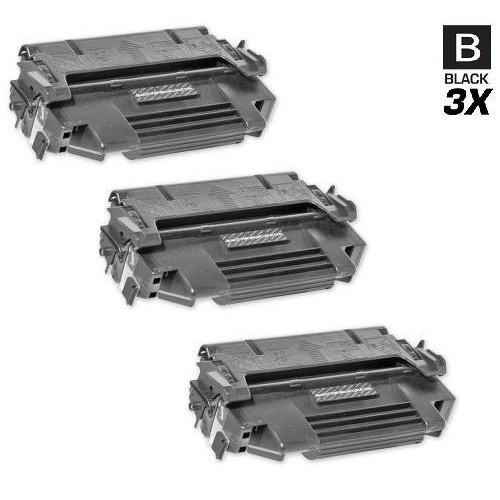
A three-pack of an all-in-one cartridge is shelf stock and nothing more exotic: three complete renewals for one machine that prints heavily, or one renewal apiece for three machines that share the cartridge. Nothing inside needs assembling or pairing — each unit seats in any of the seven roster printers and is spent independently of the other two. One pricing quirk deserves a pointer here: the pack’s list figure is not three times the single’s list figure, so the pack plainly runs on its own ladder, and the saving claimed on this card is measured strictly at sale, as the disclosure below sets out.
The single, for one machine at a time
Most surviving LaserJet 4 and 5 printers work alone now — one machine, one cartridge, changed when the pages fade — and the single serves exactly that pattern at $129.00. What arrives is the identical 92298X the pack contains, carrying the identical 8,800-page rating; nothing about the cartridge changes when it is bought one at a time. Only the rate moves, rising to 1.466¢ a page. The card wears no badge, because a single measured against itself saves nothing — this family’s one saving lives entirely in the pack above.
THE SINGLE — ONE COMPLETE RENEWAL
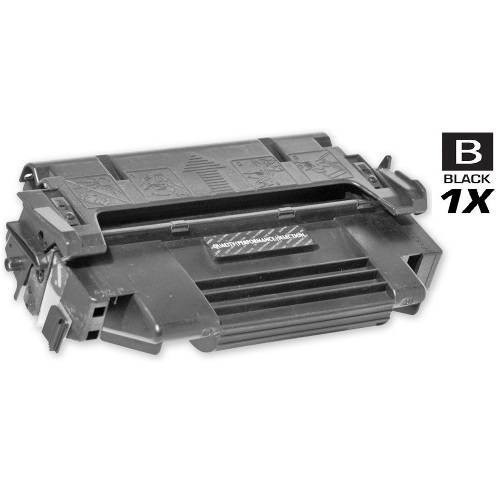
The straightforward restock: one complete consumable change for one machine. Its own text oversells the tier it belongs to — the correction is worked through in the yields section below — but the cartridge itself is honestly specified, with the same 8,800-page figure in its spec field, its prose and HP’s datasheet.
Shop the 98X Single →Two ways to buy one cartridge
Each buyable row divides a sale price by rated pages; the pack’s row is marked pooled because its pages sit in three separate cartridges. A third row is carried as a record — the standard cartridge HP pairs with the X — because buyers meet it elsewhere and deserve its figures from HP rather than from a listing’s exaggeration. It has no price here, for the plain reason that this store does not sell it:
| Configuration | Sale price | Rated pages | Cost per page | Printer fit |
|---|---|---|---|---|
| 98X 3-Pack — the flagship | $354.84 | 3 cartridges · ~26,400 pages | 1.344¢ pooled | All 7 models |
| 98X Single | $129.00 | 1 cartridge · ~8,800 pages | 1.466¢ | All 7 models |
| 98A Standard — not stocked | Not sold here | 1 cartridge · ~6,800 pages | — | All 7 models |
The standard row needs careful reading, because a listing in this store reads it aloud wrongly. The single’s own text calls the X “close to double the standard cartridge”, and its yield answer sketches a standard cartridge that lasts a year against an X that lasts two. HP’s figures are 8,800 pages against 6,800 — a ratio of 1.29, an extra 2,000 pages. That is a genuine advantage and worth having; it is also roughly twenty-nine percent, not a hundred. The yields section below shows the working in full.
No genuine HP price appears anywhere in this table. HP’s US store carries no page for the 92298X — the genuine cartridge left that store years ago — so there is no manufacturer figure to set beside the store’s own, and none is estimated in its place.
Seven printers — and a fence at the smaller siblings
Three HP sources — the cartridge’s datasheet, the platform’s service manual and HP’s own supplies list — name the same seven machines. From the earlier line, the LaserJet 4, 4 Plus, 4M and 4M Plus; from the later one, the LaserJet 5, 5M and 5N. Both tiers share that roster entire — a 98A and a 98X fit exactly the same printers and differ only in how long they last — and the store gathers the family under its HP 92298A category, a name belonging to the standard tier this store does not stock; the naming quirk is recorded in the disclosure below, and every product filed under it is a 98X.
The fence runs against the platform’s smaller siblings. The LaserJet 4L, 4P, 4ML and 4MP are built around a different, smaller engine and feed on the 92274A; the 5L, 5P and 5MP take cartridges of their own. Similar badges and a similar era do not make a shared fit — and, to the listings’ credit, none of them claims those models. The check that settles every case costs nothing: read the cartridge coming out. If its code does not read 92298, nothing carded on this page is its replacement.
8,800 pages — and what “high yield” honestly means here
The 98X is rated at about 8,800 pages, and unusually for this catalog the figure needs no arbitration: the spec field on each listing, the listings’ prose and HP’s datasheet all state the same number. Its basis is the yardstick of its era — five percent average page coverage, from before ISO/IEC 19752 standardized how yields are tested — so the rating supposes pages of text with modest accents. Light documents will carry a cartridge past it; dense ones will end it sooner. Every per-page figure on this page is computed from that declared rating, exactly as published.
Set against the standard cartridge, the advantage is real and specific. HP rates the 98A at about 6,800 pages on the same basis, so the X’s 8,800 amounts to 2,000 extra pages — a ratio of 1.29, roughly twenty-nine percent longer-lived. That is the whole of it, and it is enough; it does not need inflating. Yet the carded single’s text inflates it twice, calling the rating “close to double the standard cartridge” and reasoning that if the standard cartridge lasted a year, the X is roughly the two-year cartridge. Doubling 6,800 would take 13,600 pages; the X offers 8,800. HP’s own older supplies list even rounds the standard figure down to 6,000, which would flatter the ratio further still — this page uses the service manual’s 6,800, the conservative reading. A buyer weighing a 98A found elsewhere against the X stocked here should decide on the true figures: same fit, same seven printers, twenty-nine percent more pages from the X.
The drum is inside — checked, and true
On many platforms a guide has to warn that the imaging drum is a second purchase waiting behind the first. Here the warning runs the other way: there is no separate drum to buy, because there is no separate drum. HP’s service manual for these printers describes the toner cartridge as containing the printing mechanism alongside its supply of toner — drum and toner sealed into a single unit — and all three listings in this family say the same in their own words. Those statements were checked against HP rather than taken on trust, and they hold. Every cartridge swap is therefore also a drum renewal; there is no drum code, no drum rating and no second consumable cycle for these machines, and fading that on a two-part platform might point at a worn drum here simply means the cartridge itself is spent.
The cartridge’s electronics ask as little of the buyer as its mechanics do. Each unit leaves the supplier with the current chip generation already fitted — the standing arrangement across this store’s compatible range, and one with a clean record behind it: no chip complaint has come back on a cartridge supplied this way. Seat the cartridge and the printer accepts it, toner gauge reporting; nothing is salvaged or transferred from the spent unit. The boundary of that assurance is printed beside it, as it should be: it speaks for cartridges as supplied today and for the record accumulated so far, and it cannot promise anything about firmware HP has not yet written.
Warranty, returns and support
Two products are carded on this page, and one set of terms covers both of them, so the terms are stated once, here.
Choosing between the two cards
Questions from LaserJet 4 and 5 owners
No — and the correction is worth making plainly, because the claim appears in the carded single’s own text. HP rates the standard 98A at about 6,800 pages and the 98X at about 8,800, on the same five-percent basis: an extra 2,000 pages, a ratio of 1.29. The same listing’s yield answer reasons that if the standard cartridge lasted a year, the X is roughly the two-year cartridge; that sketch overstates the same honest advantage. Twenty-nine percent more life is a real reason to choose the X. It is not a doubling, and this guide goes by HP’s figures.
Because no listing for the 92298A exists in this catalog — only the high-yield X, as a single and as a three-pack. The gap is thorough enough that the store’s family category is named for the missing cartridge while holding nothing but X products. A buyer set on the standard tier has to look elsewhere; a buyer here gets the longer-lived cartridge by default, at the ratings set out above.
There is not. Toner and imaging drum are sealed into the one cartridge — HP’s service manual describes the cartridge as containing the printing mechanism — so every swap renews both together. No drum part number exists for this platform, and nothing else in the machine runs on a second consumable cycle.
The same cartridge at the same $129.00 sale price, described two ways. One listing is filed under the family category and every model category, and its condition field reads “New Compatible”. The other sits under an invisible housekeeping category alone, appears in neither of the store’s own inventories of this family, and its condition field reads “Remanufactured”. This page cards the first and records the second in the disclosure below, without claiming to know which condition label is true.
No. The 4L, 4P, 4ML and 4MP belong to a smaller engine family that takes the 92274A, and the 5L, 5P and 5MP take cartridges of their own. HP’s roster for the 92298X is the seven models named on this page — no more. The label on the cartridge you pull out is the decisive check: if it does not read 92298, this page has nothing for your machine.
A year of each, counted from delivery: warranty cover runs twelve months, and returns stay free for the same twelve months, under the terms set out on each product’s own page. Help is staffed on weekdays between 9 AM and 5 PM Central, and parcels ship from the Illinois, Pennsylvania, Georgia and California warehouses.
Price and disclosure note: The prices on this page are the sale figures on the carded products’ own pages, re-read on November 18, 2026 as this guide was prepared; if a figure moves afterwards, the product page is the authority. Sale figures are used throughout because checkout charges them. The listings’ own text argues from list instead — $148.35 for a single, $408.07 for the pack — and derives its per-page claims from those amounts: a little under 1.7 cents a page for the single, roughly a cent and a half pooled for the pack. The pack’s list figure is not three times the single’s, so the pack runs on its own price ladder at every level. The one saving badge on this page is measured sale against sale: three singles at $129.00 total $387.00, the pack is $354.84, and the difference is $32.16. The yield figures are HP’s declared ratings on the five-percent coverage basis of their era — about 8,800 pages for the 98X and about 6,800 for the standard cartridge — and on the stocked code the listings’ fields, the listings’ prose and HP’s datasheet agree exactly. No genuine price is printed for this cartridge: HP’s US store carries no page for the 92298X, and no figure is estimated in its place. Compatibility follows HP’s published roster: LaserJet 4, 4 Plus, 4M, 4M Plus, 5, 5M and 5N. The catalog’s own disorder follows, item by item.
First, the unrecorded listing: a second single for this cartridge is live and orderable at the family’s standard price, yet appears in neither the store census nor the canonical shelf map — both inventories count two listings where three exist. It is filed under a single invisible housekeeping category, outside the family category and every model category, so category browsing never reaches it. Second, the two singles contradict each other about what the product is: one’s condition field reads “Remanufactured”, the other’s “New Compatible”, at prices identical to the cent. Which label is true cannot be settled from store data — the readings are one product described two ways, one of them wrongly, or two genuinely different products priced identically by coincidence — and this page records the contradiction rather than resolving it. Third, money argued at list, as noted above: every price figure and per-page figure in every listing’s text is computed on the list price while checkout charges the sale price. Fourth, the tier overstatement: the carded single calls its rating “close to double the standard cartridge” and “roughly the two-year cartridge”; HP’s figures give a ratio of 1.29. Fifth, the family category is named “HP 92298A”, for the standard cartridge — the one variant with no listing in this store — while holding only 98X products. Sixth, the 5SE: both filed listings claim a LaserJet 5SE in their fit lines, and both sit under a store category kept for it. The 5se is a genuine HP model of this engine generation — HP’s own support list names one — but HP’s published compatibility for this cartridge, in datasheet, service manual and supplies list alike, names seven models without it. An unlisted variant is a lesser over-claim than an invented model, and it is recorded as exactly that. Seventh, the duplicate pair’s weight fields disagree — 4 against 2 — with HP’s genuine package weight of about 4.4 pounds sitting closer to the unrecorded listing’s figure. Eighth, the family’s structured data shows zero inventory on every listing while all three remain visible and orderable; this page therefore cards the two canonical products with no statement about stock. Minor artifacts: all three descriptions open with a stray markup fragment after their video embed, and the unrecorded listing’s stock code is the bare HP part number rather than a store code. Recorded as not defects: no production or prompt text leaks into any description in the family; the listings’ claims that the drum is built into the cartridge were checked against HP’s service manual and are true; warranty wording agrees at one year in all three listings, with no lifetime claim anywhere.
Two cards carry this family’s whole buyable shelf, and each product is shown exactly once; the unrecorded twin, the unstocked standard tier and the unlisted 5SE are dealt with in prose rather than dressed up as further choices. The roster stops where HP stops: seven models, two series, one cartridge at two fill levels of which this store sells the taller. The ratings are HP’s declared figures, neither padded nor trimmed — and where a listing inflated them, the true ratio is printed in their place. Chips carry their limit in the same breath: the current generation ships fitted, the record to date is clean, and firmware not yet written is promised against by nobody. Underneath stand the terms on the family’s own product pages — twelve months of warranty, twelve months of free returns, support staffed on weekdays between 9 AM and 5 PM Central, and orders leaving warehouses in Illinois, Pennsylvania, Georgia and California.