




This page is about the largest toner fill Xerox sells at retail for one compact mono platform. The cartridge is the 106R03624, rated at 15,000 pages, and Xerox calls it what it is: an Extra High Capacity print cartridge, with that yield declared in accordance with ISO/IEC 19752. It drops into exactly three machines — the print-only Phaser 3330 and the two multifunction WorkCentres, the 3335 and the 3345. Five listings carry it in this store, and unusually for a family this size, five listings means five genuinely different cartons: a single, then packs of two, three, five and ten. Nothing needs collapsing, nothing is posted twice, and the yields printed on those listings match the manufacturer figure to the page, pack multiples included. Two things do need correcting before any money changes hands. The product copy persistently demotes this cartridge by one rung, describing it as a high-yield unit and never once using the words extra-high, even though high is the name of the smaller cartridge one step down the ladder. And every economy figure in that copy — each saving, each unit price, each cost per page — is calculated from a base price roughly fifteen percent higher than the amount charged at checkout. The cards below therefore do their sums again, from the sale prices, and they restore the tier to its proper name throughout.
Short answer: begin with the 2-Pack at $60.10. Two cartridges at about $30.05 apiece bring the rated page cost down to roughly 0.20¢, bank a verified $16.08 against buying the same two units one at a time, and make this the lowest-priced carton here that travels free by itself — a lone single at $38.09 stops $10.91 short of the $49 line. Buy by code, not by badge: 106R03624 serves the Phaser 3330, the WorkCentre 3335 and the WorkCentre 3345, in each DN and DNI variant Xerox released.
Why does the top rung deserve its own shelf at all? Because at 15,000 rated pages a single cartridge can cover a quarter of a year for a busy workgroup, and the interval between changeovers — not just the price on the box — becomes part of what you are buying. The 2-Pack at $60.10 is the sensible entry point: 30,000 rated pages in the cupboard, a page cost near 0.20¢ against the single’s 0.25¢, and free shipping without anything else in the basket. Scale upward only when your monthly count justifies it; the deeper cartons keep shaving the unit price, down to about $23.62 a cartridge in the 10-Pack, but they ask you to commit further ahead. Whatever size you choose, ignore the savings printed inside the listings themselves and trust the recomputed ones here: the listings divide a higher base price, this guide divides the price you will actually be charged, and only the second set of numbers can be spent.
Five cartons, five distinct purchases
There is no detective work in this family’s lineup. Each of the five listings is a different quantity of the same Extra High Capacity cartridge, each appears in the store exactly once, and each is carded below with its own photograph, its own sale price and its own stock reading. Those readings are worth a sentence of explanation: all five cartons draw on one counted reservoir of cartridges, and each carton’s availability is that reservoir divided by the number of units the carton consumes, rounded down — which is why the count falls steadily as the boxes grow, even though the underlying supply is a single shared supply. Every saving badge is exact at sale prices, worked against buying the same number of singles at $38.09.
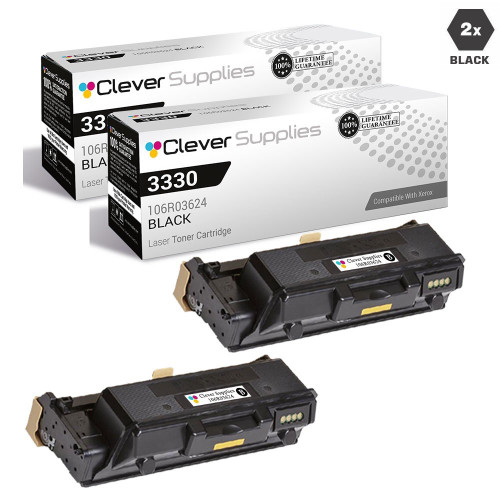
One cartridge working, one cartridge waiting: that is the rhythm this pack establishes, and on a 15,000-page fill it can hold for months at a time. Its listing tells a pricier story — two singles reckoned at $87.60, a pack at $69.12, units at $34.56, $18.48 kept and a page rate near 0.23 cents. The till disagrees on every line: $60.10 charged, about $30.05 a cartridge, $16.08 genuinely kept and a rate of roughly 0.20¢. Because the three machines on this platform all accept the identical unit, the sealed spare is not tied to whichever printer happens to fade first — it is a reserve for the whole group.
See the 2-Pack
Even bought one at a time, this is a long-lived purchase: 15,000 rated pages can carry a modest office the better part of a year, which makes the single a rational choice for a lightly loaded machine or a first compatible order you want to evaluate before stocking spares. Its copy divides a $43.80 base price and reports about 0.29 cents a page; at the $38.09 actually charged, the honest rate is nearer 0.25¢. Watch the basket total, though — ordered by itself, this is the one carton here that can attract a delivery charge.
See the single cartridge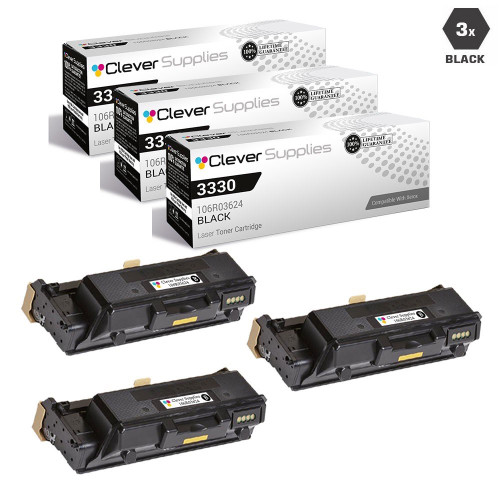
The middle depth suits a department that prints steadily and reorders on a calendar rather than in a panic: at 5,000 pages a month, three of these cartridges cover roughly nine months. The listing prices the pack at $94.42, puts the unit at $31.47 and claims $36.98 saved at about 0.21 cents a page. Charged prices rewrite all of it — $82.10 for the pack, about $27.37 a cartridge, $32.17 saved and a rate near 0.18¢.
See the 3-Pack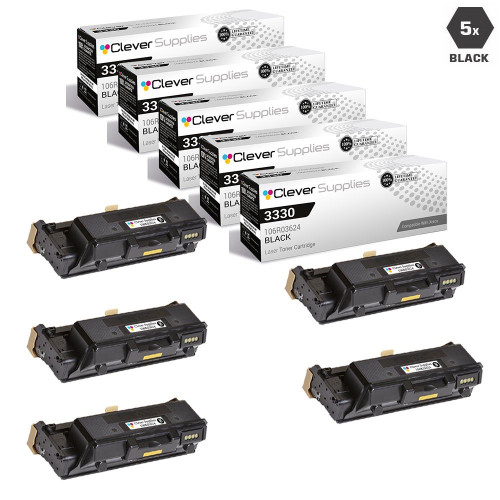
Five cartridges is shared-machine territory: a printer with many hands on it consumes toner as a measurable flow rather than one person’s guesswork, and a dry bay midweek inconveniences everybody at once. The listing asks $145.04, derives $29.01 a unit, advertises $73.96 saved and lands near 0.19 cents a page. At checkout the pack is $126.12, the unit about $25.22, the real saving $64.33 and the rate about 0.17¢. A quiet one-person office does not need this depth, and the smaller cartons exist precisely for it.
See the 5-Pack
This is a supply-room purchase: several machines in daily service, or one whose monthly counter runs to five figures. Ten cartridges hold 150,000 rated pages between them. The listing’s version — $271.58 for the pack, $27.16 a unit, $166.42 saved, about 0.18 cents a page — again starts one price level too high. Charged, the pack is $236.16, the unit about $23.62, the saving $144.74 and the rate roughly 0.16¢, the best unit economics available here. If your combined printing is a few thousand pages a month, that economy is theoretical: the stock would outlast the machines’ working lives.
See the 10-PackThe whole shelf at charged prices
One table holds the entire family, because five cartons of one cartridge is all there is to hold. Every amount below is a November 2026 sale price; unit costs and page costs are divided from those charged amounts, never from the higher base figures the product copy prefers. Read the page-cost column as the family’s real story: it falls in a smooth staircase from about a quarter of a cent to about a sixth of a cent, and the steepest single step is the first one, from one cartridge to two.
| Box | What’s inside | Sale price | Per cartridge | Cost per rated page | Ships free alone? |
|---|---|---|---|---|---|
| 2-Pack | 2 × 10⁶R03624 Extra High Capacity | $60.10 | ≈$30.05 | ≈0.20¢ | Yes |
| Single | 1 × 10⁶R03624 Extra High Capacity | $38.09 | $38.09 | ≈0.25¢ | No — $10.91 short of $49 |
| 3-Pack | 3 × 10⁶R03624 Extra High Capacity | $82.10 | ≈$27.37 | ≈0.18¢ | Yes |
| 5-Pack | 5 × 10⁶R03624 Extra High Capacity | $126.12 | ≈$25.22 | ≈0.17¢ | Yes |
| 10-Pack | 10 × 106R03624 Extra High Capacity | $236.16 | ≈$23.62 | ≈0.16¢ | Yes |
Per-page costs divide each box’s sale price by its total rated pages, at 15,000 pages for every cartridge inside.
Sizing the order: months of cover, not just cents per page
Start with postage, because it draws the first dividing line cleanly. Four of these five cartons pass the $49 free-shipping threshold unaided; the single, at $38.09, falls $10.91 below it. A single therefore makes sense in only two situations: riding in a basket that already clears the threshold on other items, or feeding a printer so lightly used that even a delivery charge beats warehousing a spare for a year. For everyone else the 2-Pack is the floor, not an upgrade. Beyond that point the decision stops being about postage and becomes about reorder frequency, since the unit price glides rather than plunges — about $30.05, then $27.37, then $25.22, then $23.62 as the cartons grow. You are trading a modest discount for a longer commitment each time, and the right trade depends entirely on how fast the pages move.
Translate cartons into calendar time and the choice sharpens. At 500 pages a month, one cartridge lasts about thirty months at rating, so anything past the 2-Pack is storage, not supply. At 2,000 pages a month a cartridge turns over every seven or eight months: the 2-Pack covers well over a year, the 3-Pack close to two. At the WorkCentre 3335’s recommended ceiling of 4,000 pages a month, a cartridge lasts a little under four months and the 5-Pack runs about a year and a half. At the 6,000-page recommended ceiling shared by the Phaser 3330 and the WorkCentre 3345, a cartridge is spent in two and a half months, the 5-Pack in about a year, and even the 10-Pack is a roughly two-year horizon rather than a lifetime buy. Notice what the top rung does to this arithmetic: because each unit carries 15,000 pages, pack sizes that would be modest on a smaller cartridge become long commitments here, and overbuying is the easier mistake to make.
Groups of machines change the calculation in one important way. A central shelf holding this cartridge serves a Phaser and both WorkCentres interchangeably, so a deeper carton is not a bet on one printer’s survival — any unit can go to whichever machine calls for it. That flexibility is the strongest argument for the 5-Pack and 10-Pack, and it comes with one discipline: keep a visible count on the shelf, because a shared reserve can reach zero while every individual user assumes someone else reordered.
The top rung: what 15,000 pages really means
Xerox organized this platform’s retail toner as a ladder of three fills for one bay. The fills differ only in how much toner is inside; the machines, the fit and the ordering logic stay constant as you climb. This guide covers the summit. The two lower rungs frame it: one is stocked in this store under its own guide, the other is not stocked at all, and both appear below as context only — neither is carded or linked from this page.
| Tier | Code | Rated yield | Yield basis | Sold here? |
|---|---|---|---|---|
| Standard Capacity | 106R03620 | 2,600 pages | ISO/IEC 19752 declared | No — not stocked in this store |
| High Capacity | 106R03622 | 8,500 pages | ISO/IEC 19752 declared | Yes — a separate family, under its own guide |
| Extra High Capacity — this guide | 106R03624 | 15,000 pages | ISO/IEC 19752 declared | Yes — the five boxes above |
Put the rungs in proportion. The extra-high fill holds close to six times the standard fill and not far short of double the high fill, so moving up the ladder is primarily a decision about how often you want to open the machine, secondarily about page cost. Three further codes orbit the retail ladder without belonging to it: 106R03621 is a DMO-channel high fill, 106R03623 is the DMO-channel twin of this very extra-high tier at the same 15,000 pages, and 106R03625 is a worldwide metered cartridge rated at 11,000 pages. None of the three is sold in this store, none appears in any listing here, and none is a retail substitute, however close its number sits to this one.
The measurement behind the headline figure is unusually well documented for this code. Xerox’s Detailed Specifications for the WorkCentre 3335 and 3345 attach their yield footnote directly to this cartridge’s line, and it reads: “Average standard pages. Declared Yield in accordance with ISO/IEC19752. Yield will vary based on image, area coverage and print mode.” No qualification splits the toner figure between machines, and no other basis is offered for it. Curiously, the listings themselves never mention that standard at all — their only standards language arrives inside an unrelated block of drum copy pasted into every description, a defect the closing section records. The declaration is Xerox’s, and this guide restores it to the cartridge it belongs to.
Finally, calibrate expectations against the cartridge the machine arrived with. Xerox states the in-box starter at 2,600 pages — the full standard-capacity rating, documented both in the Detailed Specifications’ box contents and in the service manual’s starter table as a 2.6K sold neutral toner. Against a 15,000-page refill, that starter is a short first chapter: an owner who judges the printer thirsty because the first cartridge ended quickly will misread every refill that follows. A smaller starter figure makes the rounds at retailers for this platform; it appears in no Xerox document behind this guide and is not used here. For a yield figure you can plan around, log your own: record the page counter at each changeover, and after two cartridges the gap between readings tells you what your documents, your coverage and your print mode actually deliver.
One bay across a printer and two multifunction machines
The trio splits by function, not by supplies. The Phaser 3330 prints and does nothing else; the WorkCentre 3335 and WorkCentre 3345 add copy, scan, fax and email around the same print engine. Under the covers they converge: 1200 × 1200 dpi image quality, a first page in as little as 6.5 seconds from USB, a 1 GHz processor, a 50-sheet bypass plus a 250-sheet main tray for 300 sheets standard, an optional 550-sheet tray lifting capacity to 850, 150 sheets of output space and automatic two-sided printing fitted as standard. Each connects by USB 2.0, Gigabit Ethernet and Wi-Fi. Memory divides them — 512 MB in the Phaser, 1.5 GB in each WorkCentre — as does the document feeder: a 50-sheet automatic feeder on the 3335, a 50-sheet reversing feeder on the 3345. The store organizes the platform under one category per machine: the Phaser 3330, the WorkCentre 3335 and the WorkCentre 3345. Whichever badge your machine wears, the bay behind its front panel is the same bay.
| Machine | Type | Speed, Letter | Duty cycle | Recommended volume | Cartridge |
|---|---|---|---|---|---|
| Phaser 3330 | Print only | Up to 42 ppm | Up to 80,000 pages/month | Up to 6,000 pages/month | 106R03624 |
| WorkCentre 3335 | Print / copy / scan / fax / email | Up to 35 ppm | Up to 50,000 pages/month | Up to 4,000 pages/month | 106R03624 |
| WorkCentre 3345 | Print / copy / scan / fax / email | Up to 42 ppm | Up to 80,000 pages/month | Up to 6,000 pages/month | 106R03624 |
On A4 stock those speeds read 40, 33 and 40 pages per minute respectively. Keep the last two columns conceptually separate when you plan around them: a duty cycle describes what the hardware can survive in an exceptional month, while recommended volume describes the pace it is meant to sustain month after month — a small fraction of the ceiling in every case. The 3335 is deliberately the gentler of the three on both measures, so in a mixed fleet it will draw on a shared shelf more slowly than its faster partners.
Configuration letters deserve a short, definitive paragraph, because they generate more ordering anxiety than any other detail on this platform. Xerox sold each machine in the United States in DN and DNI forms: D marks automatic two-sided printing, N marks networking over Gigabit Ethernet, and I marks internal Wi-Fi. Since Wi-Fi is built into all three machines regardless of suffix, the letters describe how a particular unit was packaged and equipped, never a different supply fit. A fit line naming a 3330, a 3330/DNI, a 3335/DNI or a 3345/DNI is naming real Xerox configurations of the same three machines, and every one of them takes the cartridge on this page. No invented nameplate appears anywhere in this family’s copy; there is nothing to decode.
A drum exists for this platform — just not on this shelf
These machines separate imaging from toner. Alongside the toner ladder, Xerox lists a 101R00555 Smart Kit Drum Cartridge rated at 30,000 pages, and the service manual describes the same part as the platform’s OPC drum cartridge for worldwide use. Its rating rests on a different footing from the toner’s: an A4-size, 75 gsm paper basis stated in its own footnote, rather than the ISO/IEC 19752 declaration that stands behind every toner rung. Two consumables, two measurement conventions — this guide keeps them on their own footings and never borrows one figure’s authority for the other.
No 101R00555 is sold in this store, so it earns a mention here and nothing more: no card, no link, no addition to a toner order. Ownership is therefore a two-clock affair. Toner turns over on the cycles the earlier sections map out, while the drum runs far longer in the background — roughly two of these extra-high cartridges per drum, at rating. When output eventually picks up background shading or repeating marks that a fresh toner cartridge does not clear, the drum is the next place to look, sourced under its own code through its own channels. One caution about the listings themselves: each of the five opens with a pasted block of drum-cartridge copy, boilerplate that belongs to a different product type. It is a copy defect, recorded in the closing notes; nothing in it is adopted as a claim about the toner cartridges carded above.
Fit, stated narrowly and completely
The complete fit statement for 106R03624 fits in one line: Phaser 3330, WorkCentre 3335, WorkCentre 3345 — those three, in their DN and DNI configurations, and no others. The agreement behind that line is total. The WorkCentre Detailed Specifications’ supplies table prints it, the Phaser 3330 specification repeats the same ladder, the European Declaration of Conformity for these supplies declares exactly this code for exactly these models, and the service manual’s supplies table concurs. Store copy is equally disciplined: every listing’s fit resolves to the same three machines, with no stray model added and none dropped. If the code coming out of your machine reads 106R03624, the cartridge on this page is its replacement, whatever letters follow the model number on the front panel.
The one boundary a buyer can genuinely cross sits inside the ladder, not outside it. The high-capacity 106R03622, at 8,500 pages, fits the identical three machines — it is simply a smaller fill of the same platform, stocked here as its own family. Physical fit therefore cannot arbitrate between the two codes; intention has to. Decide the fill you want first, then order by that fill’s code and that family’s prices. Searching by page count alone, or by machine name alone, is how the two shelves get confused, because the machine names are shared while the yields and prices are not.
Two smaller traps complete the section. The channel codes — the DMO pair 106R03621 and 106R03623, and the metered 106R03625 — sit numerically adjacent to this code while belonging to distribution and billing arrangements outside retail; similarity of number is not compatibility of channel, and none of them belongs in a retail order placed for this cartridge. And the bare numerals travel across brands: other manufacturers have marketed printers numbered 3330 and 3335, with listings of their own in this store. Those are not Xerox machines and accept entirely unrelated cartridges. The reliable identifier is always the full pairing — Xerox, the model name, and the cartridge code together.
Identical terms behind all five cartons
Carton size is the only variable on this shelf. The unit inside is the same Clever Supplies compatible cartridge for the Phaser 3330 / WorkCentre 3335 / 3345 platform in every box, and the terms around it do not change with quantity: a year of warranty cover, a year of free returns, and weekday support between 9 AM and 5 PM CST. Orders reach free shipping at $49 — every pack clears that mark alone, and the single is the one box that needs company in the basket.
Before you order: the 106R03624 checklist
Questions buyers ask about the 106R03624
Is this really an extra-high cartridge? The listings call it high-yield.
It is, and the listings are understating it. Xerox’s specifications name 106R03624 the Extra High Capacity print cartridge for this platform, one rung above the High Capacity 106R03622 at 8,500 pages. The store copy never uses the words extra-high for it and reaches for high-yield instead — the neighboring tier’s vocabulary applied to the wrong cartridge. The yields in that same copy are accurate; only the label is a rung too low. This guide follows Xerox’s naming, because buyers comparing tiers by name deserve the tiers’ real names.
Which fill should I choose: 8,500 pages or 15,000?
Let your monthly count decide. Both cartridges fit the same three machines, so the question is purely how long you want to go between changeovers and what page cost you accept. At a few hundred pages a month, either fill lasts a long time and the smaller cartridge ties up less money. As volume climbs toward the machines’ recommended ceilings of 4,000 to 6,000 pages a month, the 15,000-page fill earns its place: changeovers drop to a handful a year, and at the compatible prices on this page its rated page cost runs from about 0.25¢ down to about 0.16¢ depending on carton size. The standard 2,600-page fill, for reference, is not stocked in this store at all.
My printer is a DNI model. Does that change anything?
Nothing about toner. Xerox released the Phaser 3330, the WorkCentre 3335 and the WorkCentre 3345 in DN and DNI configurations, where D denotes automatic two-sided printing, N denotes Gigabit Ethernet networking and I denotes internal Wi-Fi. Wi-Fi is fitted to all three machines in every configuration, so the suffixes record packaging differences only. Any suffixed variant of the three models uses this same cartridge.
What came in the box when the machine was new?
A standard-capacity cartridge rated at 2,600 pages. Xerox documents that starter two ways: the Detailed Specifications list the in-box supply as a 2,600-page standard-capacity print cartridge, and the service manual’s starter table carries a 2.6K sold neutral toner for the platform. So a new machine began life holding the ladder’s smallest fill, and the first 106R03624 you install will run close to six times as long. A 1,500-page starter figure circulates among retailers; no Xerox document behind this guide supports it.
Should a drum go in the same order?
There is a drum for this platform — the 101R00555 Smart Kit Drum Cartridge, rated at 30,000 pages as an A4-size, 75 gsm figure rather than under ISO/IEC 19752 — but this store does not stock it, so there is nothing to add here. Its cycle is far longer than the toner’s in any case: at rating, roughly two extra-high cartridges pass through the machine for each drum. Treat the drum as its own purchase, under its own code, when print quality rather than fading output starts pointing at it.
I found 106R03623 at the same page rating. Is it the same cartridge?
Same tier, different channel. The 106R03623 is the DMO-channel edition of this extra-high fill, also rated at 15,000 pages, and Xerox’s service documentation lists it alongside the retail codes for exactly that reason. It is not sold in this store and it is not the retail ordering code for a buyer in the normal channel; 106R03624 is. The same caution covers the DMO high fill, 106R03621, and the worldwide metered 106R03625 at 11,000 pages: documented codes, real cartridges, wrong shelf.
Why are your savings smaller than the ones in the listings?
Because the starting prices differ. Listing copy calculates from base prices — $43.80 for a single, $69.12 for the 2-Pack, $94.42, $145.04 and $271.58 for the larger cartons — while checkout charges each of those amounts divided by 1.15. Rebuild the comparisons at the charged level and the savings become $16.08, $32.17, $64.33 and $144.74 for the four packs respectively: smaller than advertised, and exactly what a buyer actually keeps. The listings’ internal arithmetic is consistent; it is simply performed one price level above the transaction.
How long will a 2-Pack last in practice?
The pair carries 30,000 rated pages. At 500 pages a month that is about five years of printing; at 2,000 a month, roughly fifteen months; at 4,000 a month, about seven and a half months; and at the 6,000-page recommended ceiling of the Phaser 3330 and the WorkCentre 3345, about five months. Those spans rest on the declared rating, so read them as planning figures — dense coverage consumes toner faster than plain correspondence does. After two cartridges you can retire the estimates: note the counter reading when a unit goes in and when it fades, and the difference is the yield your own documents deliver.
Closing: the summit rung, priced at the till
Summarize this family and the summary is refreshingly short. One platform of three machines, one ladder of three fills, and at its top a 15,000-page cartridge whose rating is declared under an international standard in the manufacturer’s own specifications. Five listings, five distinct cartons, no duplicates to untangle, yields and machine fit that pass inspection without amendment. Against that clean background stand the two habits this guide exists to correct: a tier name demoted by one rung throughout the store’s copy, and savings calculated from prices nobody is charged. Both are fixed the same way — by going back to the source documents for the name and the rating, and back to the checkout for every dollar figure. No MICR variant of this cartridge is sold in this store, so no check-printing version is carded, linked or priced anywhere on this page.
How this guide was put together
The evidence here comes from two directions. From the store side, the five listings for this code were read in full: their yields, fit lines, prices and stock levels, checked against one another. From the manufacturer side, the WorkCentre 3335 / 3345 Detailed Specifications (BR19338) supplied this code’s tier name, its 15,000-page line and the ISO/IEC 19752 footnote attached to it, while the Phaser 3330 specification, the platform service manual’s supplies and starter tables, the Evaluator Guide and the European Declaration of Conformity corroborated the ladder, the three-machine roster with its DN and DNI configurations, the 2,600-page starter and the separate drum. The decisions taken are these. First, naming: the guide prints Xerox’s tier name, Extra High Capacity, throughout, correcting the store copy’s high-yield label rather than repeating it. Second, money: every price is the November 2026 sale amount, every saving, unit cost and page cost was recomputed from those amounts, and the four badge savings are exact at them; no genuine Xerox price is quoted, because no dated United States price list carrying a line for this code was found — a reseller figure in a state contract catalog is not a manufacturer price and is not borrowed. Third, stock: the five listings’ levels resolve to one shared counted reservoir divided by pack size, so counted stock is printed on all five cards exactly as read. Fourth, scope: the drum 101R00555 is named as platform context with its own non-ISO rating basis and is neither carded nor linked, since the store does not sell it; the DMO and metered channel codes are named only to be fenced off; and claims that appear solely inside the drum boilerplate pasted into all five listings — including the family’s only standards and origin strings of that kind — were adopted nowhere, because boilerplate written for a different product is not evidence about this one. Fifth, categories: one category is linked per machine, the three base categories, and the DNI child categories, though real configurations, are not linked.