




The IM C4500 and IM C6000 are Ricoh’s departmental color machines — the kind that sit at the end of a corridor and print for forty people at once. Both drink from the same four long-life cartridges: 842279 black, 842280 yellow, 842281 magenta and 842282 cyan. Read that sequence twice before ordering anything, because Ricoh handed the numbers out in an order that defies the usual process sequence — yellow second, cyan last. This guide works through all six products built on those four codes — a four-color set, black sold singly and in pairs, and one cartridge per color — priced at the sale figures our checkout actually charges and measured against the page ratings in Ricoh’s own brochure for the platform.
The short version: restock the whole machine with the 4 Color Set at $322.04 and keep $48.22 versus buying the four singles apart; after that, let black ride in 2-packs and replace each color on its own schedule.
One consumables table in Ricoh’s brochure covers both the IM C4500 and the IM C6000, and both machines take the identical four cartridges: 842279 in black, 842280 in yellow, 842281 in magenta, 842282 in cyan. When the whole machine needs attention, the 4 Color Set at $322.04 is the efficient buy. For the cartridge that does the heavy lifting, the black 2-pack at $127.33 drops black to $63.67 a cartridge. A lone color that has faded costs $99.52 to replace by itself — just confirm the code against the color word before you pay, because 842280 is the yellow one, with cyan holding the last position as 842282.
The departmental pair: IM C4500 and IM C6000
Two machines share this shelf. The IM C4500 prints at 45 pages per minute; the IM C6000 raises that to 60. That speed gap is the whole difference where toner is concerned — Ricoh’s platform brochure carries a single consumables list for the pair, so the faster machine simply arrives at an empty cartridge sooner. A department running one of each stocks a single shelf of spares, and any cartridge on that shelf serves whichever machine asks first.
The same hardware also left Ricoh’s factories wearing other badges. The Savin IM C4500 and Savin IM C6000 are documented in the Savin edition of Ricoh’s own brochure for this platform, so those machines belong on this roster outright. Our listings describe the identical machines as sold under the Lanier name as well, with the same IM C4500 and IM C6000 model names; if your nameplate reads Lanier above one of those two model names, the cartridges to order are the four in this guide. No Gestetner-badged edition of this platform turned up in Ricoh’s documentation, so this guide claims none.
Two look-alikes deserve a warning. First, some third-party sellers advertise these cartridges as fitting an IM C5500. Ricoh’s documentation does not back that claim — the IM C5500 is a separate platform with a cartridge set of its own — so this guide draws the fit line at the C4500 and C6000 and leaves the C5500 outside it. Second, the much older Aficio MP C4500 copier line shares most of a model name with the IM C4500 and nothing else; it belongs to a different generation and takes entirely different cartridges.
One more roster note, because sibling platforms behave differently: Ricoh’s US brochure for this family lists no “A” variants. There is no separate IM C4500A or IM C6000A toner to hunt for — the four codes below are the complete list for both machines.
It is also worth understanding why the cartridges are rated so generously. Machines in this class are built for sustained monthly volumes that would exhaust a desktop printer’s supply in a week, so Ricoh sizes the black cartridge at 33,000 pages and each color at 22,500. On this platform a toner change is a quarterly event rather than a weekly chore — and the buying patterns further down this page, pairs for black and singles for colors, are shaped around that slower rhythm.
The whole shelf, priced at checkout
Six products cover every buying situation this family produces: one carton with all four colors, black in two pack sizes, and a single cartridge for each color. Every figure in the table is a sale price — the amount checkout charges today, not a struck-through list figure. A catalog quirk worth knowing before you browse: each of the six also appears in our store under the plain C4500 and C6000 names at the same prices. Those are duplicate listings of these same products, and the cards further down link to the IMC4500 versions collected here.
| Product | What you receive | Sale price | Works out to | Rated pages inside | Reach for it when |
|---|---|---|---|---|---|
| 4 Color Set | One cartridge of each of the four codes | $322.04 | $80.51 per cartridge, averaged | 33,000 black + 22,500 per color | A new machine, or two or more colors running low together |
| Black 2-pack | 2 × 842279 black | $127.33 | $63.67 per cartridge | 66,000 pages | Black turns over fastest here; keep the spare on hand |
| Black single | 1 × 842279 black | $71.70 | $71.70 per cartridge | 33,000 pages | A single refill, or a low-risk first trial of compatibles |
| Yellow single | 1 × 842280 yellow | $99.52 | $99.52 per cartridge | 22,500 pages | Yellow alone has given out — it carries the second code, 842280 |
| Magenta single | 1 × 842281 magenta | $99.52 | $99.52 per cartridge | 22,500 pages | Magenta alone has given out |
| Cyan single | 1 × 842282 cyan | $99.52 | $99.52 per cartridge | 22,500 pages | Cyan alone has given out — it closes the run as 842282 |
Shipping arithmetic is simple on this shelf: our free-shipping line sits at $49, and the least expensive item here — the black single at $71.70 — passes it without help. Any single box in the family ships free ordered on its own.
Notice, too, that the three colors are priced identically at $99.52. Whichever color your department burns through fastest, restocking it costs the same as restocking the slowest — and black is the shelf’s cheapest cartridge even though Ricoh rates it for more pages than any color.
Yellow wears the second number here
Buyers who order toner by pattern-matching the number sequence get this family wrong. Habits formed on other platforms say the codes should climb black, cyan, magenta, yellow — which would make the second code cyan. Ricoh assigned this family differently: black opens at 842279, yellow follows immediately at 842280, magenta takes 842281, and cyan finishes the set at 842282. Anyone who orders “the second one” expecting cyan receives a yellow cartridge instead, and the mistake only surfaces at the machine, where each bay accepts just its own color. The reliable habit costs two seconds: read the color word printed next to the code and order by that, never by position.
| Cartridge code | Color it holds | Ricoh-rated yield | Single-cartridge price | Toner cost per rated page |
|---|---|---|---|---|
| 842279 | Black | 33,000 pages | $71.70 | About 0.22 cents |
| 842280 | Yellow | 22,500 pages | $99.52 | About 0.44 cents |
| 842281 | Magenta | 22,500 pages | $99.52 | About 0.44 cents |
| 842282 | Cyan | 22,500 pages | $99.52 | About 0.44 cents |
The yields in that table come from the consumables page of Ricoh’s IM C4500 / IM C6000 brochure, which rates them on A4 paper at 5% coverage — roughly the ink laid down by a text page carrying a letterhead and a signature block. Departmental reality runs heavier: full-color handouts, chart-heavy reports and photo pages can consume several times the rated coverage per sheet, so a color cartridge empties well before its rating in a graphics-heavy office, while black’s 33,000-page figure assumes the text-dominated mix these machines usually see. Use the ratings to compare boxes against each other, not as a promise about a calendar date.
These figures also price a finished page. Black-only output costs roughly 0.22 cents a page in toner at single prices, dropping toward 0.19 cents when black comes from the 2-pack. A page printed in full color draws on all four cartridges simultaneously, and summing the four rates puts it near 1.54 cents — a concrete figure for anyone costing a department’s color habit. Coverage pushes real pages above or below the ratings, but for comparing the boxes on this shelf the arithmetic is sound.
Six boxes, six decisions
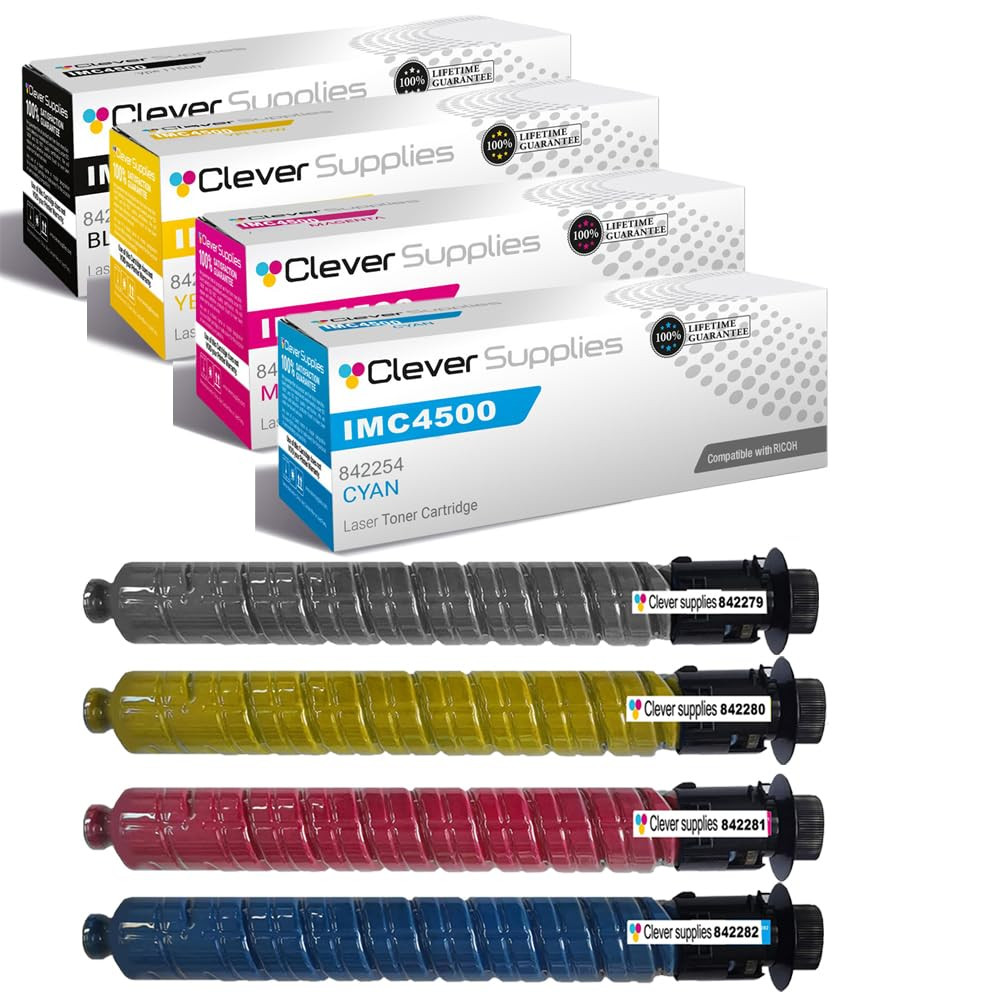
Bought one by one, the same four cartridges total $370.26. The set brings them home for $322.04, and the $48.22 difference pays for most of the next black cartridge when this round runs out. Nothing inside the carton differs from the singles — the set is the identical four sealed cartridges, packed together so a department restocks in one order instead of four.
View the 4 Color Set →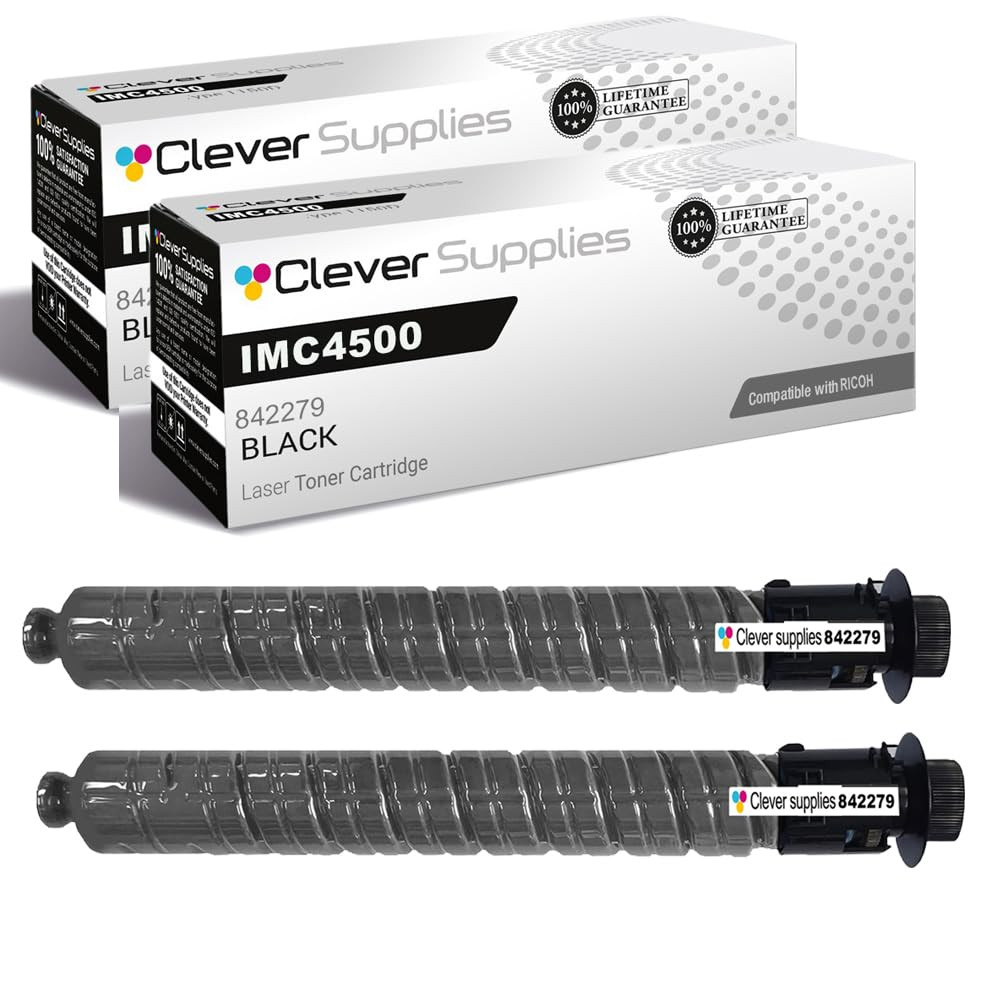
Two singles ring up at $143.40; the pair costs $127.33. On a machine that prints for a whole floor, the spare matters as much as the saving — when black fades mid-morning, the replacement is already in the building, and the reorder becomes a routine purchase instead of an emergency.
View the Black 2-Pack →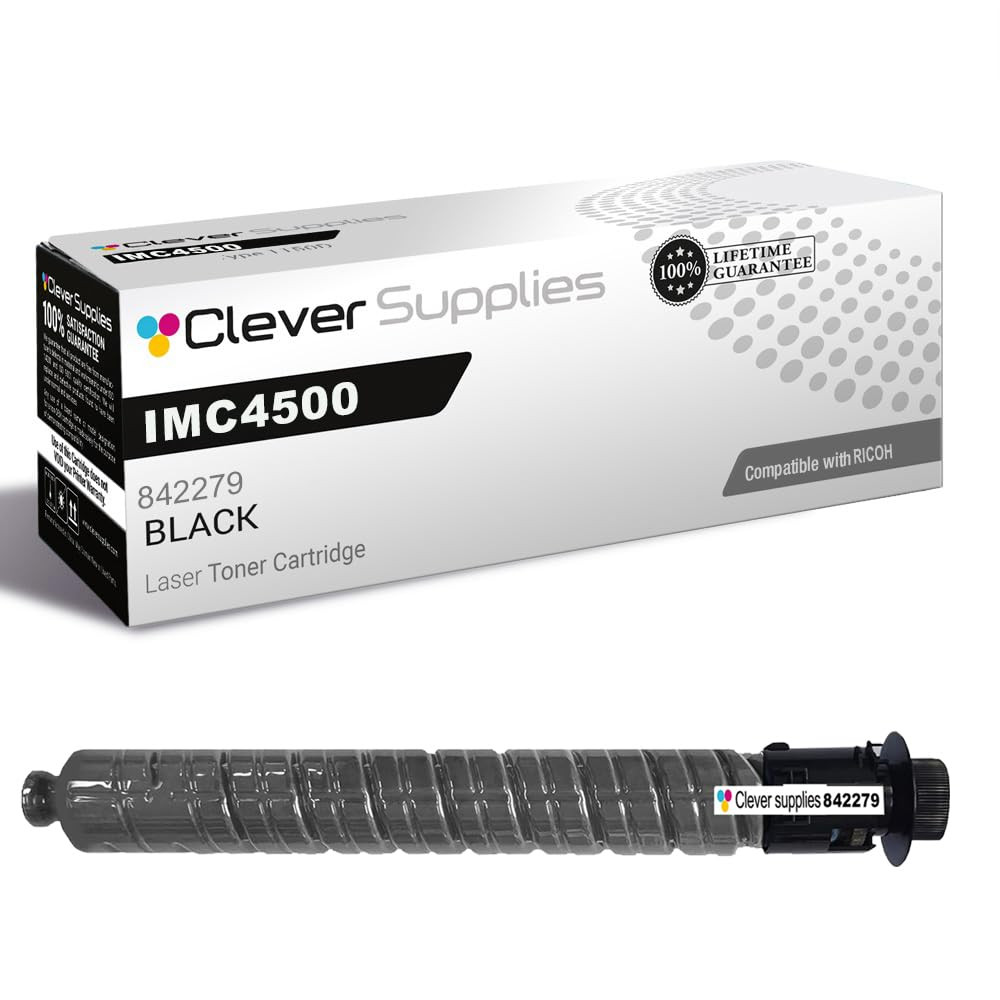
On any departmental machine, black carries the workload — memos, reports, invoices, copies — and Ricoh’s 33,000-page rating is sized for exactly that. The single keeps the commitment small: one cartridge at the family’s lowest per-page cost, and a clean way to judge a compatible’s output before packs become the habit.
View the Black Cartridge →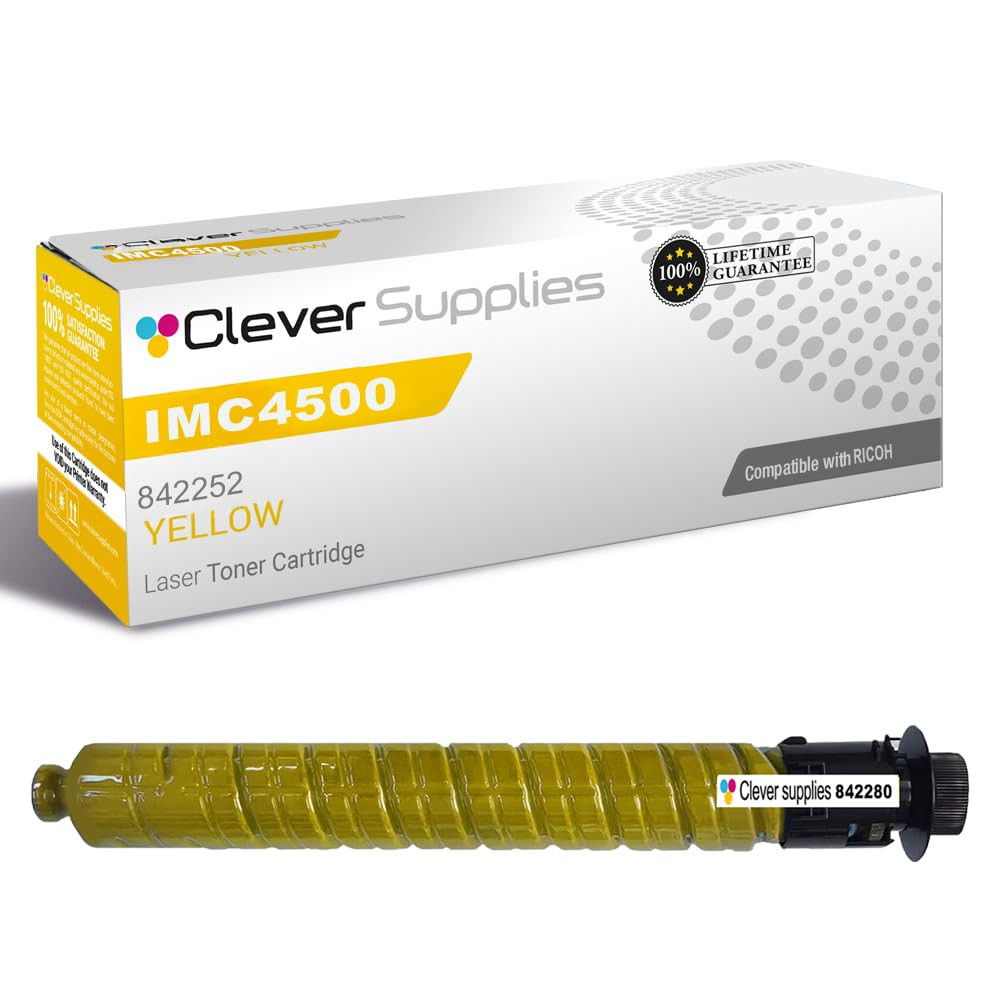
If one card on this page earns a bookmark, it is this one: 842280 is yellow here, not cyan. Order it when greens start drifting blue and highlights lose their warmth — and at the machine, believe the color word on the cartridge rather than the number’s position in the sequence, because the position is precisely where the trap is set.
View the Yellow Cartridge →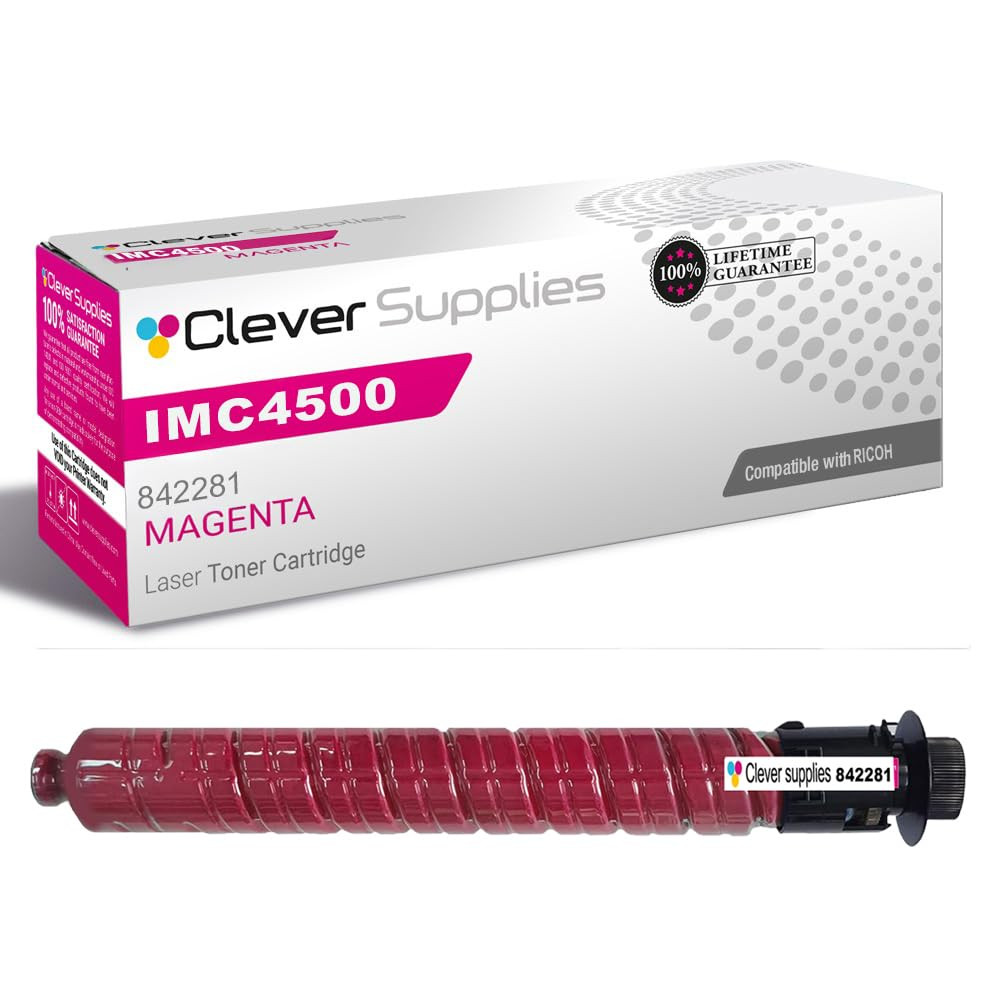
Here, magenta is 842281. When the panel calls for magenta and the other gauges still look healthy, this one cartridge completes the repair — swapping out three healthy cartridges alongside it spends money without fixing anything more.
View the Magenta Cartridge →
This family’s numbering trips the most buyers at cyan, so the card says it plainly: the cyan cartridge is 842282. Order it when blues begin to fade — washed-out skies, charts losing depth, a logo drifting from its corporate blue — and let the colors with life remaining finish theirs.
View the Cyan Cartridge →Feeding a machine that prints all day
Begin with the monthly meter, not the calendar
Departmental machines consume toner by volume, so the meter reading is the honest planning tool. A floor printing 10,000 pages a month, most of it text, works through roughly 120,000 black pages a year — close to four 33,000-page black cartridges. At 5,000 pages a month that same cartridge lasts the better part of seven months. Read your own counter, divide it into the ratings on this page, and the family turns into a reorder schedule with dates attached instead of a surprise with a warning light.
A year of black, priced two ways
Take that 120,000-page year. Four black cartridges bought as singles cost 4 × $71.70 = $286.80. The same four cartridges bought as two black 2-packs cost 2 × $127.33 = $254.66 — $32.14 kept, and a spare sitting in the cabinet for most of the year. The pair is not a bulk gimmick; on a shared machine it is simply how black wants to be bought.
A full year, all-in
Extend the same year to the whole machine: 120,000 pages with color on roughly a fifth of them works through about one full round of colors alongside the four black cartridges. Bought the patterned way — two black 2-packs plus one 4 Color Set — the year costs $254.66 + $322.04 = $576.70. Bought entirely as singles, the identical cartridges cost $286.80 + $370.26 = $657.06. The pattern is worth about $80 a year per machine, before counting the emergency orders it prevents; a floor running three of these machines keeps roughly $240. Your own mix will shift the figures, but the shape of the saving survives any realistic mix.
Colors keep their own time
A color cartridge empties only as pages demand that color, and departments demand unevenly — the office that prints blue-heavy reports will empty cyan years ahead of yellow. So colors are bought as they fade, one $99.52 cartridge at a time. The exception is clustering: colors installed together have lived together, so when one gauge drops, glance at the other two. If a second color is close behind, the set’s arithmetic ($322.04 against $370.26 for the four singles) beats three separate deliveries.
When singles beat the set
Honesty cuts the other way too: not every machine earns the set. A C4500 in a quiet branch office, printing a few hundred pages a week, may take years to work through one round of colors — for that machine, a set ties up budget in cartridges that will sit, and singles bought as each color fades are the rational pattern. The set’s saving is real, but it only pays when the volume arrives to spend it. Match the purchase to the meter, not to the discount.
The set is a reset, not a routine
Reserve the 4 Color Set for the moments it was priced for: a machine arriving on the floor, a new department inheriting one, or several bays running low in the same month. Used that way, each purchase resets all four gauges to full rated life in a single order, and the everyday rhythm — pairs for black, singles for colors — takes over from there.
Running notes for a high-volume platform
The chip announces itself
Every compatible cartridge on this shelf leaves the factory carrying the current-generation chip, so the machine recognizes it as it seats and the supply gauge keeps reporting honestly. Nothing needs to be rescued from the spent cartridge and nothing transfers across — seating the new cartridge is the entire job. One boundary, stated openly: no cartridge maker can honestly promise protection against a future firmware change, and this page will not pretend otherwise. Behind that honesty sit current-generation chips and a long record of trouble-free running in these machines.
No drum line in this budget
Nothing else in the machine needs a supplies budget here. These are print cartridges; Ricoh lists no separate drum unit for the platform, and we sell none. The budget is the four cartridges — singles, pairs or a set — with no second component aging toward a replacement bill of its own.
Swapping while the floor is busy
The panel names the color that has finished. Open the front cover, draw that one cartridge straight out, give the replacement a few gentle side-to-side rocks so the toner settles evenly, strip its protective tape, and slide it into its own bay until it clicks home. The remaining three cartridges never move. Because each bay is keyed to a single color, a wrong cartridge physically refuses to seat — the machine itself refuses the error at install time, which is one more reason the careful check belongs at the ordering desk, not the corridor.
Keeping department spares
Store spares flat, still sealed, in a cool dry cabinet away from sunlight. Toner powder cannot dry out, so a set cartridge shelved for months loses nothing while it waits; rotate stock oldest-first. A floor running both a C4500 and a C6000 needs only one cabinet between them — label each spare with its color written out beside the code, and nobody has to decode a number sequence in front of an open machine.
The pre-order checklist: IM C4500 / IM C6000
Questions from the copy room
No. Ricoh’s brochure prints one consumables table beneath both model names, and the IM C6000 uses the same 842279 black rated at the same 33,000 pages. The 60 ppm engine just burns through the same rating faster, because it puts more pages out per day.
Nothing was mis-picked — the expectation was. This family’s sequence runs black, yellow, magenta, cyan: 842280 is yellow by design, and cyan sits last at 842282. More buyers trip on this than on anything else about the platform, which is why the cards above print a color name beside every code.
Yes for the Savin IM C4500 and Savin IM C6000: those badge editions appear in the Savin edition of Ricoh’s own platform brochure, with the same four cartridges. Our listings also describe the same machines as sold under the Lanier name with identical model names, so a Lanier nameplate over an IM C4500 or IM C6000 points to the same four codes. No Gestetner-badged edition of this platform was found in Ricoh’s documentation, so this guide claims none.
We would not. Ricoh’s IM C4500 / IM C6000 documentation names only those two machines for this cartridge set, and the IM C5500 is a separate platform with cartridges of its own. Our store carries no IM C5500 listing for this family, and this guide holds the roster where Ricoh’s documentation holds it.
No. Budget for cartridges only: Ricoh sells no standalone drum unit for this platform, and neither do we. Between the singles, the black 2-pack and the set, the six products above are the complete consumables list for both machines.
That stamp is from this platform’s European numbering, 842283–842286, rated identically to ours. Within that set, 842286 is cyan — so order its North American twin, 842282. With any unfamiliar code, matching by the color printed on the cartridge settles the question.
Not at all. The set is packaging, not a matched kit — every cartridge inside is individually sealed and identical to the same color sold singly. Install one now, keep the remainder shelved for months, and blend them freely with singles and 2-packs bought later; the machine monitors toner levels, not boxes.
One carton and one shipment cost less than four. Priced apart — black at $71.70 plus three colors at $99.52 each — the four singles total $370.26; the set is $322.04, handing back $48.22, roughly 13%, for precisely the same four sealed cartridges.