




This family is the quiet kind: two cartridges, both of them genuine HP part numbers, built for one small platform. The Q2613A is the standard fill, rated at about 2,500 pages; the Q2613X is the identical shell loaded deeper, rated at about 4,000. Unusually, nothing in the yield story needs arbitration — the store’s yield fields, the store’s descriptive text and HP’s own published figures all carry the same two numbers, each measured under ISO/IEC 19752. The family’s eighteen listings settle into eleven distinct configurations once four duplicates and one disputed listing are set aside: five boxes on the standard code and six on the high-yield code. What does need a warning label is the pricing. The two tiers’ packs are priced identically at every shared size, so the high-yield box hands over sixty percent more pages for the same money — and the standard single, at $100.24, costs more than its own 2-pack, 3-pack and 5-pack. Both facts are priced into every comparison below. One more honesty note before the shelf: HP’s US store no longer sells either cartridge, so this guide prints no genuine price anywhere and lets the per-page arithmetic speak for itself.
Fit decides nothing on this platform: whether the machine on the desk is a LaserJet 1300, a 1300n, a 1300t or a 1300xi, both cartridges on this page drop in. So the whole decision collapses into one question — how many pages does a dollar buy — and the shelf answers it the same way at every pack size: the high-yield box. The store charges $40.99 for the 13A 2-pack and $40.99 for the 13X 2-pack; one carton holds 5,000 rated pages, the other 8,000. That pattern repeats at three, five and ten cartridges without a cent changing. The lead recommendation is therefore the 13X 2-pack at $40.99, the pair that covers a working printer’s rhythm — one cartridge printing, one waiting sealed. And one box earns an explicit warning rather than a recommendation: the lone 13A single at $100.24, priced above three of its own packs and dearer per page than anything else in the family. It is carded below because it exists, with its arithmetic shown; the closing note explains why no savings badge is allowed anywhere near it.
Eleven boxes on two honest ratings
Eighteen listings stand behind these eleven cards. Four are duplicates that repeat a carded box to the cent, and one wears the high-yield code over a standard rating — that listing is held out of the shelf entirely and accounted for in the closing note. Every price printed here is the sale price the register takes, never the higher list figure the product pages do their own sums with. Savings badges appear on the high-yield packs only, where each badge is an honest subtraction: the pack’s price measured against the same cartridges bought singly, inside the same tier, at sale prices. The standard tier’s packs carry no badges at all, for a reason the standard block below states in the open. The page runs flagship first, the rest of the high-yield ladder behind it, and the standard line last.
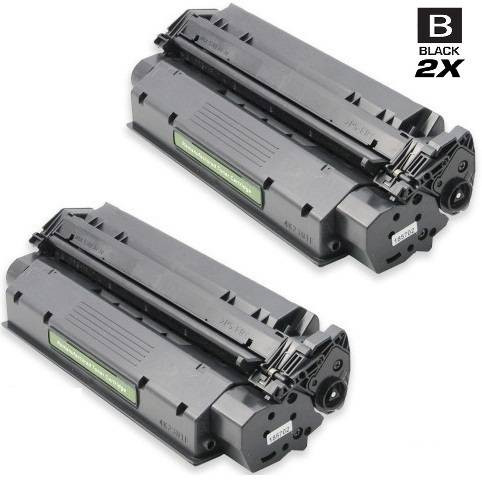
Set this box beside its standard-code twin and the family’s whole story is told: the 13A 2-pack costs the identical $40.99 and delivers 5,000 pages where this pair delivers 8,000. Nothing about the printer changes — the same shell seats in the same bay — only the fill inside the cartridge differs. For a 1300-series machine in regular service the pair also matches how toner actually runs out: the second cartridge is already in the building on the morning the first one fades, and the reorder can happen at leisure instead of in a panic.
Shop the 13X 2-Pack →THE REST OF THE HIGH-YIELD LINE — HP’S Q2613X, RATED 4,000 PAGES A CARTRIDGE
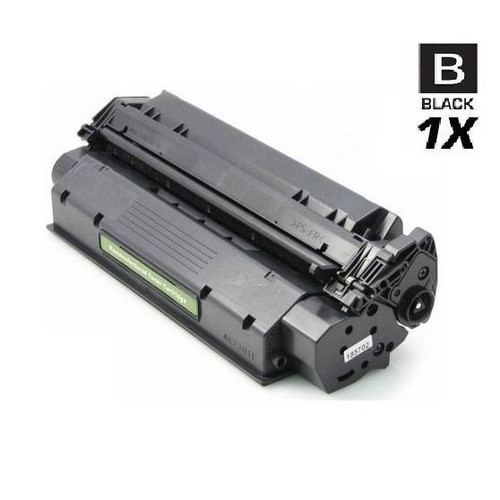
The sensible way to buy one cartridge at a time. At $28.54 it undercuts the standard single by $71.70 while carrying 1,500 more rated pages — the comparison that exposes the 13A single’s price as an outlier rather than a tier difference.
Shop the 13X Single →
Cartridges at $17.82 apiece. Twelve thousand pages in one carton — roughly a working year for a single busy 1300, bought in one transaction instead of three.
Shop the 13X 3-Pack →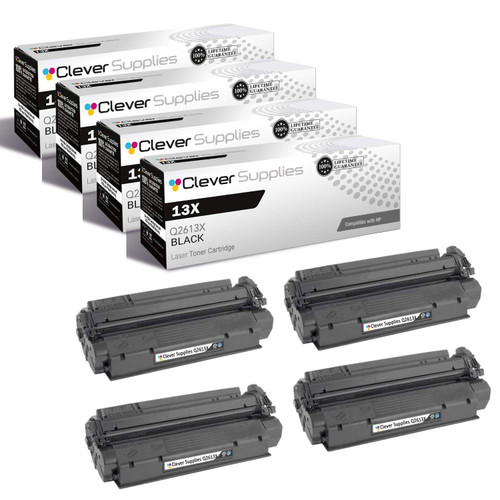
Cartridges at $16.48 apiece. The family’s only 4-pack comes from the newer batch of listings, and its own answers confirm what the box holds: the cartridges in this pack are the Q2613X, rated 4,000 pages each — the dual code in its name is cataloguing, not contents.
Shop the 13X 4-Pack →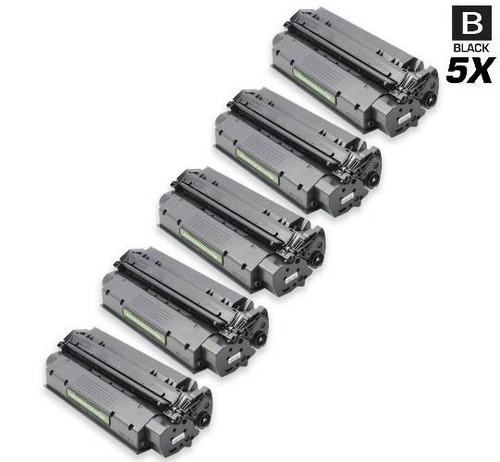
Cartridges at $15.67 apiece. Twenty thousand pages for less than the standard tier’s lone single cartridge costs — the starkest single comparison on this shelf.
Shop the 13X 5-Pack →
Cartridges at $14.07 apiece — the cheapest page this store sells for the LaserJet 1300 platform. Forty thousand rated pages is a deep stockroom commitment, suited to a small fleet of these machines rather than one.
Shop the 13X 10-Pack →The standard line: sound cartridges, one broken price
The Q2613A boxes below are perfectly good cartridges — the cartridge this platform was designed around, at HP’s declared 2,500 pages. What they are not, at this store’s prices, is the value choice: each standard pack costs exactly what its high-yield counterpart costs and carries three-fifths of the pages. This block therefore wears no SAVE badges. A badge is computed against the tier’s own single, and the standard single is priced at $100.24 — more than the 2-pack, the 3-pack and the 5-pack beneath it. Measured against that figure, the packs would appear to “save” between $159 and $862 apiece, sums manufactured entirely by one anomalous price rather than by any generosity in the packs. The honest measure of these boxes is their per-page rate, printed on every card, and the closing note shows the badge arithmetic it declines to use. Buy a standard pack if you are attached to the standard fill itself; buy it knowing the same money buys more pages one block up.
THE STANDARD LINE — HP’S Q2613A, RATED 2,500 PAGES A CARTRIDGE, NO BADGES BY DESIGN
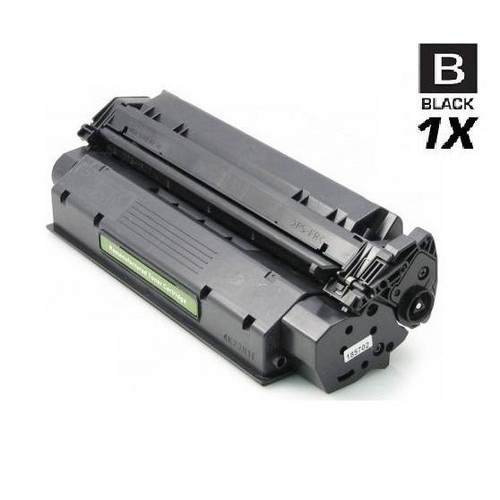
The dearest cartridge in the family by a wide margin — $59.25 more than the standard 2-pack that contains two of it, and three and a half times the high-yield single’s price. Carded for completeness, recommended to no one: every other box on this page beats it on pages, price or both.
Shop the 13A Single →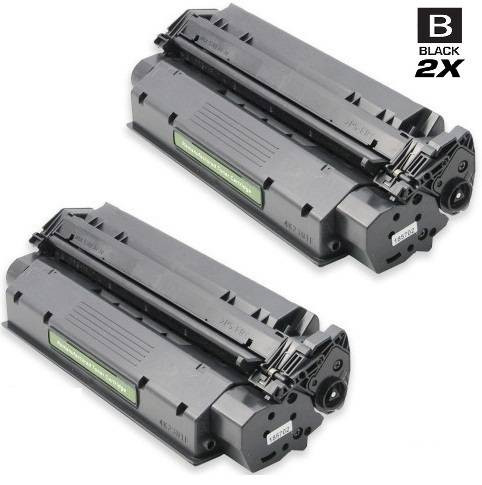
Cartridges at $20.50 apiece — the standard tier’s sanest entry point, and the box that proves the single’s price is the anomaly: two standard cartridges for $59.25 less than one. The flagship pair above still delivers 3,000 more pages for the same $40.99.
Shop the 13A 2-Pack →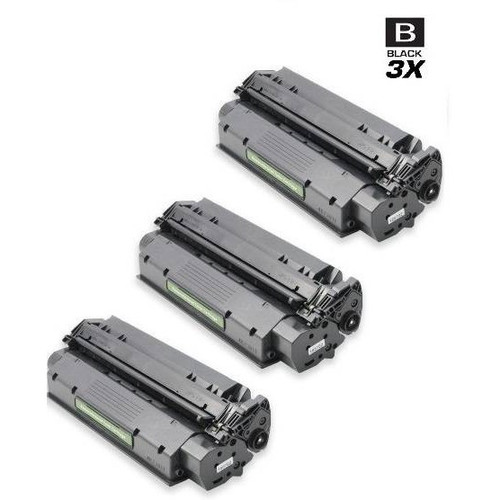
Cartridges at $17.82 apiece. Its per-page rate exactly matches the high-yield single’s — a fair box on its own terms, overtaken only by the fact that the high-yield 3-pack at the same price carries 12,000 pages instead of 7,500.
Shop the 13A 3-Pack →
Cartridges at $15.67 apiece. The carded listing is the one named “Premium Quality” in the store’s catalog; a plain-named twin sells the identical box at the identical price and stock figure, and the closing note records the pairing. The high-yield 5-pack, same money, carries 20,000 pages.
Shop the 13A 5-Pack →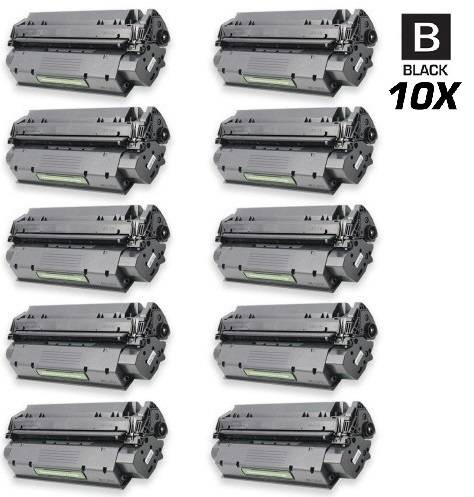
Cartridges at $14.07 apiece — the standard line’s floor, and still a tenth of a cent dearer per page than the flagship pair. At this depth the high-yield 10-pack’s 40,000 pages for the same $140.65 is the comparison that matters.
Shop the 13A 10-Pack →Every box ranked by the page
The ranking below is one division per row — price over rated pages — with both tiers divided by HP’s own figures, since the store’s fields and HP’s publications agree. Read the two ladders against each other and the cloning shows itself: wherever a standard pack and a high-yield pack share a price, the high-yield row sits several places higher, because the same dollars are divided by sixty percent more pages. The fit column never varies; on this platform it cannot.
| Pack | Sale price | Rated pages in the box | Cost per page | Fits |
|---|---|---|---|---|
| 13X 10-Pack | $140.65 | 10 cartridges · ~40,000 pages | 0.35¢ | All four models |
| 13X 5-Pack | $78.36 | 5 cartridges · ~20,000 pages | 0.39¢ | All four models |
| 13X 4-Pack | $65.91 | 4 cartridges · ~16,000 pages | 0.41¢ | All four models |
| 13X 3-Pack | $53.45 | 3 cartridges · ~12,000 pages | 0.45¢ | All four models |
| 13X 2-Pack — the flagship | $40.99 | 2 cartridges · ~8,000 pages | 0.51¢ | All four models |
| 13A 10-Pack | $140.65 | 10 cartridges · ~25,000 pages | 0.56¢ | All four models |
| 13A 5-Pack | $78.36 | 5 cartridges · ~12,500 pages | 0.63¢ | All four models |
| 13A 3-Pack | $53.45 | 3 cartridges · ~7,500 pages | 0.71¢ | All four models |
| 13X Single | $28.54 | 1 cartridge · ~4,000 pages | 0.71¢ | All four models |
| 13A 2-Pack | $40.99 | 2 cartridges · ~5,000 pages | 0.82¢ | All four models |
| 13A Single | $100.24 | 1 cartridge · ~2,500 pages | 4.01¢ | All four models |
Two features of this table deserve a second look. The first is the gap at the bottom: the standard single sits nearly five times dearer per page than the next-worst box, a distance no other step in the ranking comes close to — that is the anomaly’s footprint, visible without any commentary. The second is the tie in the middle, where the standard 3-pack and the high-yield single print the same 0.71¢: equal rates, different commitments — three cartridges of stock against one. Everywhere else, depth wins in the order you would expect, and the high-yield ladder occupies the entire top half.
Fit: four machines, two cartridges, no fence
HP’s compatibility for both codes is the LaserJet 1300 series, and the roster is short enough to print in full: the LaserJet 1300, the networked LaserJet 1300n, the LaserJet 1300t and the LaserJet 1300xi. The store keeps a category for each of the four, and the family’s shelf as a whole sits under HP Q2613A. There is no restricted model in either direction: the Q2613X is the Q2613A’s shell carrying a deeper fill of toner, so a machine that accepts one accepts the other, and HP’s support summary for the standard cartridge — written for the LaserJet 1300, full stop — describes the whole platform. Depth on this family is purely a question of how much toner sits inside the cartridge, never of whether the cartridge seats.
One filing wrinkle is worth a sentence, because a shopper browsing categories can trip over it: five of the family’s newer listings are not filed in the family category above. They sit under a color LaserJet heading instead — a monochrome family shelved as color — and the closing note records the detail. The cartridges themselves are unaffected; the links on this page go to the products directly.
Yields: three sources, two numbers, no argument
Most families in this program need a paragraph of arbitration at this point, because the yield field, the listing prose and the manufacturer disagree. This one needs none. HP publishes approximately 2,500 standard pages for the Q2613A and up to 4,000 for the Q2613X, each under ISO/IEC 19752; the yield fields on the store’s listings read 2,500 and 4,000; the listings’ descriptive text says 2,500 and 4,000; and every pack total on the page is a plain multiplication of those figures. Both codes are genuine HP part numbers for real HP cartridges, so there is no invented tier to unmask — the deeper cartridge exists because HP made it, and its rating carries HP’s name rather than the store’s. Every rate in this guide is therefore a division by a figure the manufacturer stands behind.
What the page cannot offer is a genuine price to set against the compatibles. HP’s US store no longer carries a product page for either cartridge — both were discontinued long ago — and this program prints genuine prices only from the manufacturer’s own US store, never from a third-party shelf. So the comparisons here run on per-page cost and on the two tiers against each other, which on this family is comparison enough: the tiers’ cloned pricing makes the verdict arithmetic rather than judgment.
One caution does carry over from the rest of the catalog: the family’s product pages do their own sums from list prices rather than the sale figures the register takes — the prices carded here. The 13A single’s text works out “about 4.6 cents” a page at its $115.28 list price, where the $100.24 actually charged gives 4.01¢; the standard 5-pack’s “roughly 0.72 cents” is 0.63¢ at sale; and the high-yield 4-pack’s “$18.95 per cartridge” becomes $16.48 once the sale price is used. Any per-page figure quoted on a product page in this family should be re-divided at the sale price before it is believed; that re-division is all the arithmetic this guide performs.
One supply, and nothing else to stock
The LaserJet 1300 platform runs on a single supply. Toner and imaging drum live inside the same cartridge housing, so the print cartridge is the only consumable HP lists for these machines — there is no drum unit with its own part number, its own service interval and its own line in the budget. When a cartridge is spent, the imaging surface is spent with it, and the replacement renews both at once. Owners coming from platforms that split the two supplies can retire the second budget line entirely.
That single-supply design is also why the tier question stays simple here. On a split-supply platform, a deeper toner cartridge interacts with a drum rated separately, and the arithmetic has two moving parts. Here the cartridge’s page rating is the whole consumable story: 2,500 pages of it in the standard fill, 4,000 in the deep one, and nothing else to wear out on a different clock.
Chips: a contact chip, and no blocking machinery
The cartridge does carry a chip — a contact chip that runs the toner-level and page-count functions — but this platform dates from 2003, long before HP started authenticating cartridges inside its printers. A LaserJet 1300 contains no dynamic-security machinery for a compatible cartridge to contend with, HP’s present-day page for the Q2613X prints no dynamic-security notice, and not one of the eighteen listings in this family says a word about chips, firmware or blocking.
The compatibles this store sells are built around the supplier’s standing specification — the current generation of chip, installed before the cartridge is boxed — and the cartridges in this family follow that same build. Swapping one in is a plain exchange, old cartridge out and new cartridge in, plug-and-play, with nothing to move across from the spent unit. One boundary holds in this guide as in every guide in the program: nothing is promised about firmware that has not been written yet. The cover terms come next.
What stands behind each box
Which box, for which printer
Answers for the LaserJet 1300 owner
Yes — whichever of the four models you own. The Q2613X is the Q2613A’s cartridge shell carrying a deeper fill of toner, and HP’s compatibility for both codes is the whole LaserJet 1300 series: the 1300, 1300n, 1300t and 1300xi. No model on the roster is confined to the standard fill, and the deep fill is not reserved for any of them either — the choice is pages, not fit.
There is no good answer, and this guide will not invent one. The price stands above the standard 2-pack ($40.99), 3-pack ($53.45) and 5-pack ($78.36), and at three and a half times the high-yield single’s $28.54 — while every other standard configuration is priced in line with the high-yield tier. It reads as a lone pricing error rather than a tier position. The guide cards the box with its arithmetic showing, prints no savings badge derived from it, and recommends every alternative above it.
Because there is none to quote honestly. HP’s US store no longer carries a product page for the Q2613A or the Q2613X — the cartridges were discontinued years ago — and this program takes genuine prices only from the manufacturer’s own US store, not from third-party shelves where a reseller’s markup would stand in for HP’s price. The comparisons here are therefore per-page costs and tier-against-tier, which on this family settle the question anyway.
Both are HP’s, and both govern their own tier. The Q2613A is rated at approximately 2,500 pages and the Q2613X at up to 4,000, each under ISO/IEC 19752 — the same figures the listings carry in their yield fields and their text, with no split to arbitrate. The deeper rating is not a longer-lived cartridge design; it is the same shell holding more toner, which is why the two ratings coexist on one platform with no fit difference between them.
Because the store priced the two tiers as one ladder: $40.99, $53.45, $78.36 and $140.65 at two, three, five and ten cartridges, with identical stock figures at every shared size. Only the singles break the pattern, and they break it in opposite directions — the high-yield single is the shelf’s sensible $28.54 while the standard single sits at $100.24. The practical consequence is the one this page keeps returning to: at pack sizes, the deeper cartridge costs nothing extra.
No. The Q2613A and Q2613X are all-in-one print cartridges — toner and imaging drum in a single housing — so the drum wears out on the cartridge’s schedule rather than its own, and every replacement cartridge brings a fresh imaging surface with it. HP lists no drum part number for the LaserJet 1300 platform, and neither does this store.
Price and disclosure note: Prices here are the sale prices the register actually charges, read from the store’s live catalog on November 17, 2026. Each figure was confirmed on the carded listing’s own storefront page, its title matched against the catalog record before the number was used. A higher list price stands behind every sale price; should a promotion lapse, the product page’s figure is the one that governs. A SAVE badge subtracts within a single tier at sale prices — what a pack costs, set against what its own cartridges cost bought one by one. Badges appear on the high-yield tier only. There, the 2-pack’s $16.09 badge is the gap between its $40.99 price and $57.08 of singles; the 3-pack’s $32.17 against $85.62; the 4-pack’s $48.25 against $114.16; the 5-pack’s $64.34 against $142.70; the 10-pack’s $144.75 against $285.40. The standard tier carries no badges, deliberately: measured against its single’s $100.24, its packs would show savings of $159.49, $247.27, $422.84 and $861.75 — figures manufactured by the single’s anomalous price rather than earned by the packs, and this guide does not print them. No genuine HP price appears anywhere in this guide: HP’s US store no longer carries a product page for either cartridge, and no third-party price is presented as HP’s. Yields: every rate divides by HP’s published figures — approximately 2,500 pages for the Q2613A and up to 4,000 for the Q2613X under ISO/IEC 19752 — which are also the figures in the listings’ yield fields and prose; field, text and manufacturer agree throughout this family. Fit follows HP’s published compatibility for the two codes: the four LaserJet 1300 models, all of which take both cartridges. Against that record, the departures on the store’s own pages are these.
First, the standard single’s price. The Q2613A single sells at $100.24 against a $115.28 list price — more than its own 2-pack at $40.99, 3-pack at $53.45 and 5-pack at $78.36, and three and a half times the high-yield single’s $28.54. It is the worst-value box in the family at 4.01¢ a page, and it is the reason the standard tier’s badges are suppressed above: every one of them would be an artifact of this one price. Second, cloned pricing across the tiers: at all four shared pack sizes the standard and high-yield boxes carry identical prices — $40.99, $53.45, $78.36 and $140.65 — and identical stock figures of 38, 25, 15 and 7, as though one ladder had been priced and then split into two. Third, arithmetic at list prices runs through all eighteen of the family’s descriptions: cover questions framed around the list figure (“What cover comes with the $115.28 price?”), per-page sums worked at list (the standard single’s “about 4.6 cents” where sale gives 4.01¢; the standard 5-pack’s math at its $90.11 list where sale gives 0.63¢ a page), and closing paragraphs built on list prices throughout. Every rate in this guide is worked afresh from sale prices. Fourth, a warranty contradiction inside the standard batch: its feature lists print “Warranty: Lifetime” while the same listings’ own answers promise a one-year warranty — and the one-year figure is the cover this guide prints, as the family’s answers state it. The high-yield batch instead carries HP’s own warranty boilerplate in that position. Fifth, a wrong family’s code pasted into both standard 5-pack descriptions: their spent-cartridge answers speak of a “finished Q2612A” — the LaserJet 1010-platform cartridge from the neighboring family — sitting in this family’s copy, residue of the two families having been written from one template. Sixth, one listing is held out of the shelf entirely: a 2-pack whose name leads with the high-yield code and whose catalog fields carry both codes, while its yield field and its own text rate its cartridges at the standard 2,500 pages — a standard product in high-yield dress, priced and stocked identically to both genuine 2-packs. Its own answers concede it is “catalogued under both codes printed for this cartridge family”; it is neither carded as high-yield, which would misstate its rating, nor as standard, which would duplicate the carded 2-pack. Seventh, filing: the family’s five newer listings are filed under COLOR LASERJET SERIES — a color series heading sheltering a monochrome family — and under that series’ own LaserJet 1300 category; none of the five appears in the family’s own category, home to the thirteen older listings, and none carries the base LaserJet 1300 category the older batch carries. Eighth, the high-yield 4-pack’s name and OEM field also carry both codes — but unlike the held-out listing, its yield field, its text and its answers all agree the cartridges inside are the Q2613X at 4,000 pages each, so it is carded as what it is, with the dual code in its name recorded here. Ninth, lifted copy: HP’s own marketing prose opens both batches’ listings, including a “Cartridge yield type: Standard” line printed on high-yield listings, and an essay praising the standard cartridge stands unchanged at the head of the high-yield 4-pack’s description, whose product is the other cartridge. Tenth, the duplicates, none of them carded: a plain-named standard 5-pack identical in price and stock to the carded “Premium Quality” listing — the store’s map makes the Premium listing the canonical one and the plain listing the duplicate — and three newer high-yield singles sharing one name character for character at identical numbers, one of their SKUs carrying a doubled hyphen.
Eleven cards stand above: five configurations on HP’s standard code and six on its high-yield code. Two more listings in this family are check-printing (MICR) products, identified as such on their own pages; the standing rule of this guide program keeps them uncarded, unlinked and unoffered — their count in this note is all the presence they get. The chip section records that none of the family’s eighteen descriptions touches chips or firmware, on a platform older than cartridge blocking, and it states the supplier’s position as the store’s own, with the usual limit: nothing is promised about firmware still to come. The cover on every offer is the cover its own listing’s answers describe — one year of warranty, one year of free returns, weekday support between 9 AM and 5 PM Central, and stock spread across Illinois, Pennsylvania, Georgia and California.