




Some printer platforms wind down through a long tail of options; this one narrows to a point. Brother built the HL-7050 and its networked twin, the HL-7050N, around a single toner cartridge — the TN700, rated at roughly 12,000 pages at 5% coverage on Letter paper — turning on a single drum, the DR700, expected to last roughly 40,000 pages. Brother has since discontinued both parts and no longer publishes a price for either of them. What remains is the compatible shelf, and it is the whole subject of this page: that one cartridge, stocked by this store as a single, a 2-pack and a 4-pack. There is no second tier to weigh, no genuine box to set beside them, and — flagged here rather than saved for the drum section — no DR700 for sale in this store at all. The buying decision is a short one, so the guide keeps it short: confirm the model, then let pack size do the work.
The short answer: if the badge on your printer reads HL-7050 or HL-7050N, the shelf’s center of gravity is the TN700 2-pack at $107.78 — about 24,000 rated pages, and $16.08 less than the same two cartridges ordered one by one. A machine that burns through cartridges briskly belongs in the 4-pack at $199.48, where the cost of a page bottoms out near 0.42¢. The single at $61.93 is the reference every saving here is measured from — and the sensible buy only for a printer that barely prints.
Compatibility takes ten seconds on this platform: two model names exist, and both draw on the same cartridge. Spot HL-7050 or HL-7050N on the badge and the question is closed — there is no alternative size on the shelf to grab by mistake. Spend the deliberation you saved on quantity instead. The 2-pack at $107.78 covers most owners, joining roughly 24,000 rated pages to a $16.08 saving against singles; offices with heavier throughput should price the 4-pack at $199.48 and its 0.42¢ page. One absence is worth learning before checkout rather than after: the DR700 drum is not stocked by this store in any form.
Two printers, and only two, call for this cartridge
Open Brother’s pages for the TN700 and the DR700 and the compatibility line is the briefest in this guide series: “For use with: HL-7050, HL-7050N.” The machines are the HL-7050 and the HL-7050N — the second being the network-ready variant of the first — and no multifunction or copier model joins them. Both printers run the same single cartridge and turn on the same drum.
That brevity dissolves the usual trap. There is no per-model ceiling to check and no machine that accepts a small cartridge while refusing a large one, because size never enters into it: one cartridge design, one capacity, both printers. Every offer further down this page fits either model, and each of the two categories linked above carries all three.
A filing note, for the record: the store also parks the single cartridge under extra categories bearing variant names — HL-7050B, HL-7050DTN, HL-7050NB, HL-7050NDLT, HL-7050NLT, HL-7050TN — that Brother’s page never mentions, and the single’s own description text names the HL-7050 alone. This guide follows Brother throughout: two models, both named against every offer, and only those two categories linked.
One name deserves untangling before anyone orders: in Europe this identical cartridge is sold as the TN-5500, so a cartridge stamped TN-5500 and a TN700 are the same unit, built for the same two printers. It is not a separate tier — and despite the letters the name contains, it has nothing to do with the TN550 platform. This store stocks the cartridge under its US name only.
And one near miss is worth steering around: the TN670 reads like a sibling and is not. It serves Brother’s HL-6050D, HL-6050DN and HL-6050DW — a separate platform sharing no model with this one — and nothing in this guide fits those machines.
One cartridge on the shelf, in one, two or four at a time
With fit settled by two names and no tier standing above or below, the shelf reduces to a single cartridge at three quantities. Ordered on its own the TN700 costs $61.93; two singles placed as separate orders come to $123.86, and four come to $247.72. Those two sums are the yardsticks the pack prices are held against below — every saving on this page is a pack measured against its own singles, with nothing else in the family to cross it against.

A 12,000-page cartridge already asks little of an owner’s attention, and the pair halves even that. The case for it is plain bookkeeping: $16.08 kept versus two separate singles, a page cost stepping down from 0.52¢ to about 0.45¢, and one checkout standing in for two. There is no genuine box to weigh it against — Brother withdrew the TN700 entirely — and no larger tier above it to save toward. Within everything this platform offers, the pair is where the numbers settle, which is why it leads the page.
Shop the 2-Pack →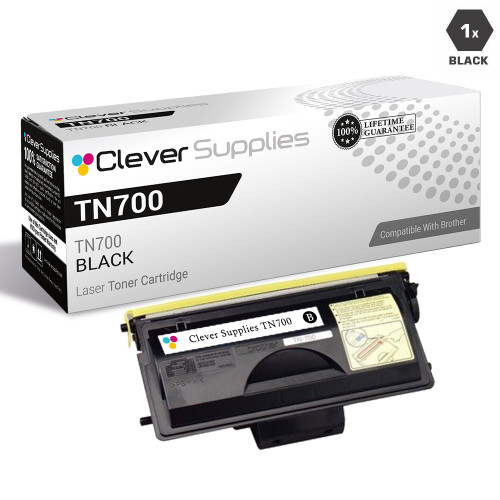
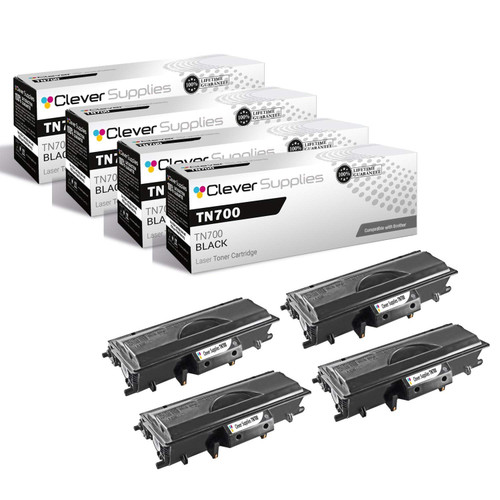
Nothing about the cartridge itself changes from box to box — the housing, the fill and the 12,000-page rating are identical whether one ships or four. What moves is the unit price and the interval between orders. A departmental HL-7050N turning out a few hundred pages a month can take years to work through a single cartridge, and for that machine the single keeps money from sitting idle on a shelf in toner form. A shared workgroup printer under daily load belongs at the other end of the ladder: the $48.24 the 4-pack holds back against four singles bought separately is the largest saving this shelf produces.
The yield figures deserve one clean note, because this family asks for no correction: the listings’ own yield fields repeat Brother’s 12,000 exactly, and the pack totals printed there — 24,000 and 48,000 — are honest multiples of it. The totals used on this page are therefore the listings’ own numbers, verified against Brother rather than repaired.
The complete shelf for this platform, in three rows
Three rows are the entire story — there is nothing further to add. No genuine entries sit beneath the compatible ones, because this store lists no genuine TN700, and Brother, having discontinued the cartridge, publishes no price that could anchor a reference row. What the table can do is line up the three real offers side by side and let the per-page column make the argument on its own.
| Offer | What you get | Yield, as Brother rates it | Price | Cost per page | Against buying singles |
|---|---|---|---|---|---|
| TN700 2-pack | Two TN700 cartridges | About 24,000 pages in total | $107.78 | About 0.45¢ | SAVE $16.08 vs two singles |
| TN700 4-pack | Four TN700 cartridges | About 48,000 pages in total | $199.48 | About 0.42¢ | SAVE $48.24 vs four singles |
| TN700 single | One TN700 cartridge | About 12,000 pages | $61.93 | About 0.52¢ | — |
Missing from the table is the DR700 drum, and the omission is deliberate: Brother rates it at roughly 40,000 pages, yet it is not sold here in any form, so no row, price or saving can honestly be printed for it. The drum receives its own short section below.
Why there is no smaller TN700 — and no genuine one either
Owners arriving from other Brother platforms often go hunting for the standard-yield sibling first — the smaller, cheaper cartridge the printer supposedly started life with. For these two machines, that hunt has no target. Brother’s own specification sheet for the HL-7050 lists exactly one toner line, and the TN700 is it; the “high-yield replacement” wording on Brother’s printer page measures the TN700 against the modest starter cartridge packed in the box at the factory, not against a second retail size that was never sold.
The second absence runs parallel to the first: there is no genuine TN700 to fall back on. Brother has discontinued the cartridge outright and prints no price for it, and this store’s shelf holds no genuine listing either. Anyone whose buying rule is genuine-only should hear that plainly — on this platform, that rule now means hunting down remaining stock somewhere else, because neither the manufacturer nor this store can offer the box.
Neither gap quietly taxes the buyer, which is why this page can afford to state both of them flatly. The compatible shelf covers the platform’s only cartridge at all three practical quantities, and its savings are computed without tier games of any kind: packs against the single, full stop.
The DR700 drum: Brother rates it, nobody here stocks it
Both printers form their images on a single drum design, the DR700. Brother’s specifications put a new drum’s expected life at approximately 40,000 pages, adding Brother’s own caution that drum yield is approximate and may vary by type of use. Set against the toner, one drum spans roughly three and a third TN700 cartridges — a replacement that falls due a handful of times across a machine’s working life rather than a routine purchase.
Here is the part this guide will not soften: this store does not sell the DR700. Not as a compatible unit, not as a genuine one, not singly and not in packs — the drum shelf for this platform stands empty, and no card, price or saving for it appears on this page because none could be honest. Brother has discontinued the drum as well, so the gap runs wider than one store’s catalog.
In practice, that divides ownership into two errands. Toner for an HL-7050 or HL-7050N is a solved problem — three offers, priced openly, on the page above. A drum, when the machine eventually calls for one, has to be sourced somewhere beyond this store, and owners are better off knowing that today than discovering it with a drum warning lit.
What the listings say about chips: nothing at all
Run a text search across the three compatible listings carded above and one word never turns up: “chip.” None of the three asserts a fitted chip, promises a toner-gauge reading, or claims any recognition behavior whatsoever. This guide accordingly makes no chip claim for the TN700 — printing one would mean inventing a feature the product pages themselves never mention.
What can be quoted is Brother’s own published answer to the worry that usually sits behind the chip question: “Brother firmware updates do not block the use of third-party ink and toner cartridges in our machines.” Everything else on this page stands on ground of the same checkable kind — Brother’s two-model roster, Brother’s 5% coverage footnote, and shelf prices read on the date shown at the top.
Five TN700 checks to run before checkout
Answers for HL-7050 and HL-7050N owners
No. Brother produced exactly one toner for this platform, and the TN700 is it. The high-yield language on Brother’s HL-7050 page describes the TN700 measured against the small starter cartridge that shipped inside the printer — not against a second retail size. The only choice on this shelf is how many of the one cartridge arrive in the box.
Yes. TN-5500 is the designation this cartridge carries in Europe — the same roughly 12,000-page unit, for the same two printers. It has nothing to do with the TN550 platform, despite sharing most of its letters. If your old box or cartridge reads TN-5500, the TN700 listings on this page are the ones that fit your machine.
No — and this page would rather say so in plain words than let it surface at checkout. This store stocks no DR700 in any form: no compatible version, no genuine one. Brother rates the drum at approximately 40,000 pages and has discontinued it. Toner is fully covered above; the drum, when its turn comes, has to be sourced elsewhere.
Because there is none to show. Brother discontinued the TN700 and publishes no price for it, and this store carries no genuine listing for the platform. A comparison row would require a figure invented out of thin air, so the table confines itself to the three offers that actually exist, each with its live shelf price attached.
They will not. The TN670 belongs to the HL-6050 family — HL-6050D, HL-6050DN and HL-6050DW — which is a different platform that shares no model with this one. The codes sit close together on the page and nowhere else; nothing sold here fits that family.
All three compatible offers carry this store’s own terms: a one-year warranty, and a full year in which a compatible item that turns out wrong for your machine can be returned. There is no genuine alternative in this family to weigh those terms against — the compatible shelf is the whole shelf. Orders leave from whichever of the four warehouses, in Illinois, Pennsylvania, Georgia or California, is closest, and the support desk is staffed on weekdays from 9 AM to 5 PM Central.