




Twenty-four Brother machines from the fax era still earn their keep in back offices, clinics, churches and warehouses, and every one of them feeds on the same pair of cartridges: the TN430, which Brother scores at roughly 3,000 pages, and its high-yield sibling the TN460, at roughly 6,000 — each figure given the old way, at 5% coverage on Letter paper, above a single DR400 drum rated near 20,000 pages. The oddity of this shelf is which cartridge survived as a compatible. The smaller TN430, the one most of these machines were delivered with, exists here only as Brother’s genuine article. The TN460 is the compatible: one box, two boxes or four, priced so that even its single undercuts the genuine standard cartridge several times over per page. This page lays out that shelf exactly as it stands — three toner boxes, three drum offers, the genuine numbers printed alongside for scale, and a clear account of where the TN430 went.
The short answer: confirm your machine is among the twenty-four named below, then order the TN460 2-pack at $44.99 — roughly 12,000 rated pages, bought for $16.07 less than the same two cartridges purchased one at a time. A busier machine justifies the 4-pack at $73.89, where printing falls to about 0.31¢ a page. Anyone hunting for the standard TN430 in compatible form can stop hunting: this store does not stock one, and the genuine version at $95.92 works out near 3.20¢ a page — the dearest printing on this entire page.
Locate your model in the twenty-four-name roster first — each of those machines swallows either cartridge size, so the only fit question is whether yours is on the list at all. After that, the arithmetic points one way: the TN460 2-pack at $44.99 covers most offices, pairing roughly 12,000 rated pages with a $16.07 saving over buying the cartridges singly. Print through a cartridge every few weeks and the 4-pack at $73.89 takes the per-page figure down to about 0.31¢. When the machine eventually asks for a drum instead, the DR400 single at $44.11 answers it, with deeper packs waiting underneath for anyone feeding several of these machines.
Twenty-four machines share one roster, and both sizes fit every one
Open Brother’s own pages for the TN430, the TN460 and the DR400 and the same “Use with” list stares back from all three — twenty-four names, identical down to the last fax machine. The printer lines run: the DCP-1200 and DCP-1400; the HL-1230, HL-1240, HL-1250, HL-1270N, HL-1435, HL-1440, HL-1450 and HL-1470N; and the MFC-8300, MFC-8500, MFC-8600, MFC-8700, MFC-9600, MFC-9700, MFC-9800 and MFC-P2500.
The fax half of the family completes the count: the IntelliFax-4100, IntelliFax-4100e, IntelliFax-4750, IntelliFax-4750e, IntelliFax-5750 and IntelliFax-5750e. Since the three Brother lists agree word for word, no machine on the roster is restricted to the smaller cartridge — choosing between the two sizes is a question of workload and cost per page, never of whether it will fit.
Product listings in this store cast a wider net than Brother does, sweeping in an HL-1030 and an MFC-9870 from an earlier sibling generation, a trio of overseas MFC variants, and a few shorthand names besides. Brother’s current cartridge pages carry none of those extras, so this guide holds to the twenty-four names above and links only those twenty-four categories.
One digit is all that separates this family from a stranger: the TN420 and TN450 belong to an entirely different Brother platform — the HL-22xx generation turning on a DR420 drum — and that family has its own guide elsewhere on this site; a TN450 cartridge will not run in any machine named above.
The toner shelf: three TN460 boxes and an empty standard rung
Brother built two cartridges for these machines: the standard TN430 at roughly 3,000 pages and the high-yield TN460 at roughly 6,000, both scored at 5% coverage on Letter paper. The compatible side of the store stocks the bigger one only — by itself, in pairs and in fours. Two singles rung up separately come to $61.06 and four come to $122.12; those totals are the yardstick for every pack below, and the comparison never leaves the TN460 tier. A later section deals with the TN430, whose absence from the compatible shelf is the single most useful thing a returning owner can learn here.
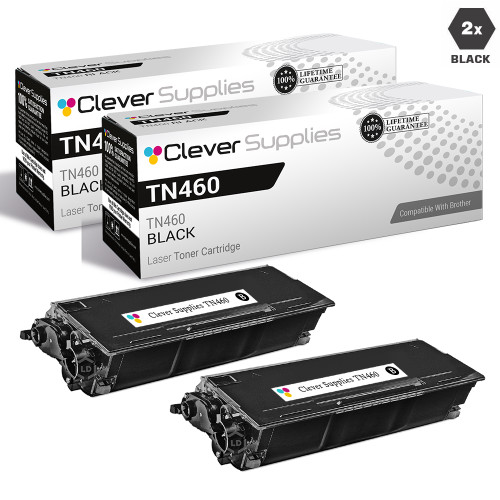
Machines of this vintage tend to sit where paperwork concentrates — the fax corner, the dispatch desk, the office that prints statements all morning — and a 6,000-page cartridge in steady service empties faster than its rating suggests. The pair takes $16.07 off the two-single route while cutting the per-page cost by better than a quarter in the same stroke. Set against the genuine standard cartridge further down this page — $95.92 for roughly 3,000 pages — this box carries about four times the rated pages for under half the money, which is why it leads.
Shop the 2-Pack →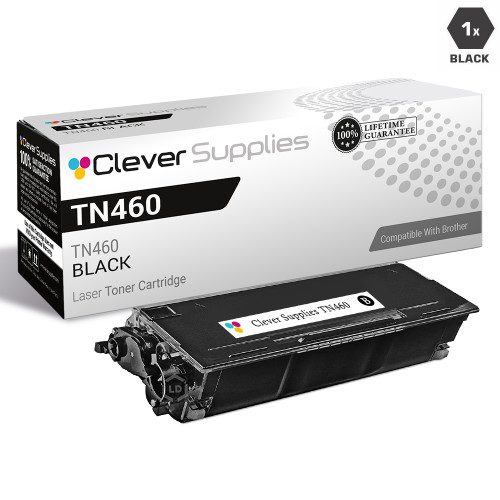

Whichever box it ships in, the cartridge inside is identical — only the count and the per-page price move. A lightly used MFC in a side room might take most of a year to finish one TN460, and for that desk the single puts money exactly where it gets used. A machine in daily departmental duty burns through the 4-pack’s 0.31¢ soon enough, and the $48.23 it holds back against four separate singles is the biggest single saving this page can offer.
One correction belongs on the record: the 4-pack’s own listing describes the cartridge as a 7,000-page unit, in its text and in its yield field alike. Brother rates the TN460 at roughly 6,000 pages, and 6,000 is the figure behind every number on this page, the 4-pack’s per-page cost included. The listing’s larger number is an error in that listing, not a rating.
All six compatible offers on one table
Three TN460 boxes and three DR400 drum offers sit in the upper rows; the genuine shelf follows beneath, present so the gaps can be weighed at a glance. The lower rows are context only — nothing among them is carded or linked. Linger on the genuine standard row for a moment: at $95.92 and roughly 3.20¢ a page, the genuine TN430 is out-priced per page by every compatible box above it, the high-yield single included.
| Offer | What you get | Brother-rated yield | Price | Cost per page | Kept back vs singles |
|---|---|---|---|---|---|
| TN460 2-pack | Two TN460 cartridges | Roughly 12,000 pages in total | $44.99 | About 0.37¢ | SAVE $16.07 vs two singles |
| TN460 4-pack | Four TN460 cartridges | Roughly 24,000 pages in total | $73.89 | About 0.31¢ | SAVE $48.23 vs four singles |
| TN460 single | One TN460 cartridge | Roughly 6,000 pages | $30.53 | About 0.51¢ | — |
| DR400 drum 4-pack | Four DR400 drum units | Near 80,000 pages combined | $128.19 | About 0.16¢ | SAVE $48.25 vs four singles |
| DR400 drum 2-pack | Two DR400 drum units | Near 40,000 pages combined | $72.14 | About 0.18¢ | SAVE $16.08 vs two singles |
| DR400 drum single | One DR400 drum unit | Near 20,000 pages | $44.11 | About 0.22¢ | — |
| Genuine Brother TN430 single | One genuine cartridge (reference only) | Roughly 3,000 pages | $95.92 | About 3.20¢ | — |
| Genuine Brother TN460 single | One genuine cartridge (reference only) | Roughly 6,000 pages | $118.29 | About 1.97¢ | — |
| Genuine Brother DR400 single | One genuine drum unit (reference only) | Near 20,000 pages | $227.29 | About 1.14¢ | — |
Drum figures lean on Brother’s approximate 20,000-page DR400 rating, which Brother itself warns shifts with how the machine is used. The drums get a section of their own further down, past the TN430 discussion.
Where the TN430 went: the standard tier is genuine-only
A great many of these machines left the factory with a TN430 inside, so the returning owner comes back asking for the cartridge by that name: standard yield, roughly 3,000 pages. The situation is plain enough to state in one breath: this store sells no compatible TN430 in any form — no single, no pack, nothing. The one TN430 listing on the shelf is Brother’s genuine cartridge at $95.92.
Here the missing tier costs the buyer nothing, because the numbers lean the other way. The genuine TN430 prints at roughly 3.20¢ a page. The compatible TN460 single — twice the rated pages in the cartridge — costs $30.53, about 0.51¢ a page, and the 4-pack reaches 0.31¢. Living with the high-yield tier means swapping cartridges half as often; it never means paying more to print. The genuine TN430 keeps a single honest use, for the buyer who wants Brother’s own toner in the smaller size on principle — and that buyer deserves one more fact: Brother’s own store currently prices that cartridge at $83.99, which is $11.93 below this shelf’s figure.
Brother still sells both sizes in this family, so genuine prices stand on both sides of the comparison. The genuine TN460 and the genuine DR400 on this shelf are each priced to the cent at Brother’s own current figures, $118.29 and $227.29 — stated as matches because they verifiably are. And nothing anywhere on this page sets a TN460 pack against a TN430 price: every saving quoted stays inside its own tier, reckoned against that tier’s single and nothing else.
The drum: one DR400 turning under all twenty-four machines
Beneath every printer and fax machine on the roster sits a single drum design, the DR400. Brother gives a fresh drum an expected yield of approximately 20,000 pages and adds, in its own footnote, that the figure is approximate and may vary by type of use — no standardized rating is claimed for the drum, and none appears here. Counted in cartridges, a drum outlasts roughly three and a third TN460s, or about six and two-thirds TN430s, which makes the drum purchase a rare event in a machine’s life and one worth making on price rather than in a rush.
Unlike the toner shelf, the drum ladder runs its full length: a single, a 2-pack and a 4-pack, stepping down from $44.11 a drum to $36.07 and then $32.05. What does not exist is any box marrying the two halves of the machine — no cartridge-and-drum combination is sold in this family, so a drum is ordered as a drum, when the printer asks for one.
One labeling caution attaches to the drum shelf itself. Both packs below carry the words “Toner Cartridge” in their store titles. Read that as a naming slip, not a description of the contents: the boxes hold DR400 drum units, and the cards on this page call them drum units because drum units are what arrive. The single, an older listing, is titled correctly.
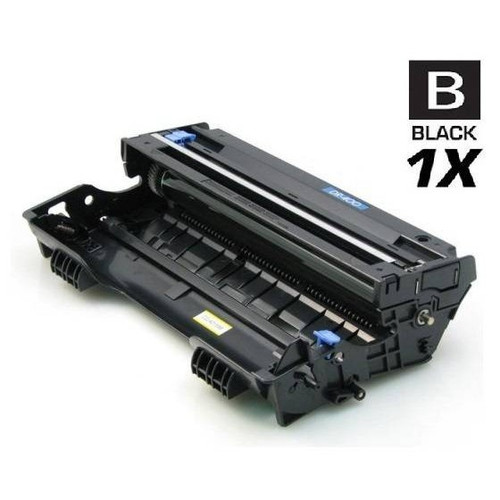

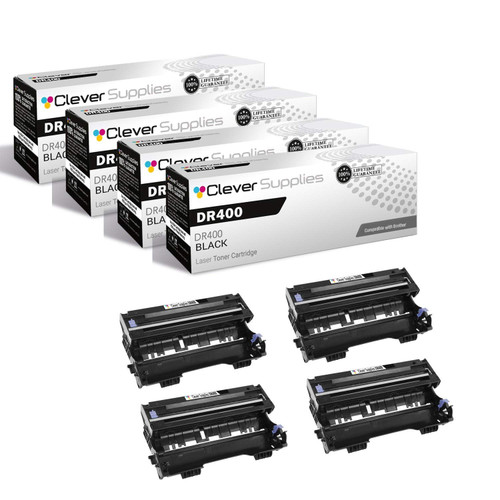
One machine with a worn drum needs the single and nothing more. The packs come into their own where two or three of the twenty-four models share a supply cabinet and drums cycle through on a schedule — $32.05 a unit inside the 4-pack comfortably beats paying $44.11 four separate times. Just place the order knowing what is inside: despite the wording riding on the packs’ store titles, they hold drums and drums alone, and anyone chasing toner belongs in the ladder section further up the page.
Chips and firmware: what can actually be said
Work through all six compatible listings in this family from top to bottom and the word “chip” never turns up — no fitted-chip statement, no promise about level reporting, no recognition claim of any kind. A guide that dressed these cartridges in a chip story its own listings never tell would be inventing, so this one claims nothing about chips.
The one quotable word on the subject belongs to Brother. On its US help site the company writes: “Brother firmware updates do not block the use of third-party ink and toner cartridges in our machines.” Everything else on this page can be audited the same way — against the roster Brother publishes, the 5%-coverage wording Brother prints for this generation, and the prices showing on the shelf on the date stamped at the head of this page.
Running through the TN460 checklist before you order
Frequently asked questions
Yes. The two cartridges are the same fitting at two fill levels — roughly 3,000 pages from the TN430, roughly 6,000 from the TN460 — and every one of the twenty-four machines on Brother’s roster accepts either. Switching sizes changes nothing but how often you swap, and on this shelf the TN460 is also the only size sold in compatible form.
Because the store does not stock one — the standard tier survives solely as Brother’s genuine cartridge at $95.92, roughly 3.20¢ a page, and Brother’s own store charges $83.99 for that same cartridge. Every compatible TN460 box undercuts the genuine standard cartridge per page, which is why the page leads with the bigger cartridge rather than apologizing for the gap.
Brother’s number. Brother rates the TN460 at approximately 6,000 pages at 5% coverage on Letter paper; the 7,000 figure in that one listing’s description and yield field is an error in the listing, and every figure on this page — the 4-pack’s 0.31¢ per page included — is computed from Brother’s 6,000.
No. The TN450 serves a different generation — the HL-22xx printers and their relatives, running on a DR420 drum — and shares not a single model with this page’s twenty-four. The codes differ by one digit, which is exactly how the mix-up starts; your HL-1440 takes the TN430 or TN460 over a DR400 drum.
Drum units — two or four of them, matching the pack ordered. The toner wording is a leftover in the newer drum listings’ store titles; what ships is drums, and this page cards them under what they actually are. If your machine is asking for toner rather than a drum, the cartridge cards in the ladder section further up are the ones to order from.
Two different covers apply, depending on what is bought. The six compatible offers sit under this store’s terms — a year of warranty, and a year in which a compatible item that proves wrong for the machine can be returned. The genuine products quoted here for reference fall under Brother’s warranty instead, and genuine returns close after 30 days. Parcels ship from the nearest of the four warehouses — Illinois, Pennsylvania, Georgia, California — and the support desk answers on weekdays between 9 AM and 5 PM Central.