




Three departmental copiers share this shelf, and they share it completely: the WorkCentre 5325, the WorkCentre 5330 and the WorkCentre 5335 all run on the one black toner cartridge Xerox ever made for the platform, the 006R01159, rated at 30,000 pages with the yield declared under ISO/IEC 19752 on the price-list line itself. There is no smaller fill, no bigger fill and no tier name to decode — Xerox gave this cartridge no tier at all. Twenty-three listings in this store sell it, spread across the three machine nameplates, and those twenty-three settle into five cartons: a single, a 2-Pack, and packs of three, four and five. The yields printed in the listings are right, and the fit is right at machine level. What needs rebuilding is the money, because every saving, unit price and per-page figure in the product copy is worked from a base price fifteen percent above the price checkout actually charges — and the older listings’ fit answers quietly drop the 5335 from a three-machine platform. This guide states the full fit plainly and reprices all five boxes at the amounts buyers really pay.
Short answer: start with the 2-Pack at $136.66. At $68.33 a cartridge it undercuts the $76.37 single, keeps a verified $16.08 against two separate single orders, and puts 60,000 rated pages in the cupboard. Postage settles nothing on this shelf: every carton, the single included, clears the $49 free-shipping bar on its own. Order by the full code on the outgoing cartridge — 006R01159, with two zeros at the front, is a different cartridge from the Phaser code that differs by a single digit, and the compatibility section below draws that line in full.
For most WorkCentre owners the right first order is the 2-Pack at $136.66: one cartridge working, one sealed in reserve, about 0.23¢ a rated page instead of the single’s 0.25¢, and a real $16.08 kept against buying the pair one at a time. The rating behind that math carries unusual paperwork. Xerox’s Commercial Price List effective April 1, 2015 prints the cartridge, its three-machine fit and the words ISO/IEC 19752 in the yield-basis column of the same line, and the October 15, 2016 Advanced Multifunction Price List repeats the 30,000-page figure without moving it. Two reading habits will protect you on this shelf. Count the fit the way Xerox counts it — all three machines, 5325, 5330 and 5335, whatever an individual listing’s answers happen to name — and rebuild any saving the listings quote from the sale price, because their figures are struck one price tier above the till.
The flagship: the 2-Pack
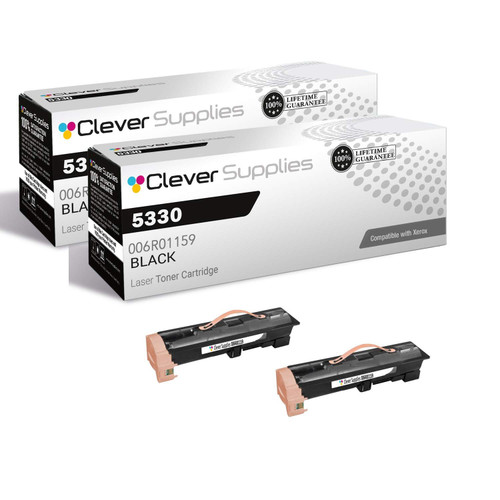
A departmental copier that warns about toner at 4 PM on a deadline day is exactly the machine that wants a sealed spare within arm’s reach, and this is the carton that establishes that rhythm. Its own copy argues from the base tier — a pair at $157.16, cartridges at $78.58, a saving of $18.50 and roughly 0.26 cents a page. Checkout charges $136.66, which puts the cartridge at $68.33, the verified saving at $16.08 and the page rate at about 0.23¢. The two cartridges are identical, so fitting order does not matter; writing the fitting date on the shelved carton keeps the rotation honest months later.
See the 2-PackThe rest of the shelf, box by box
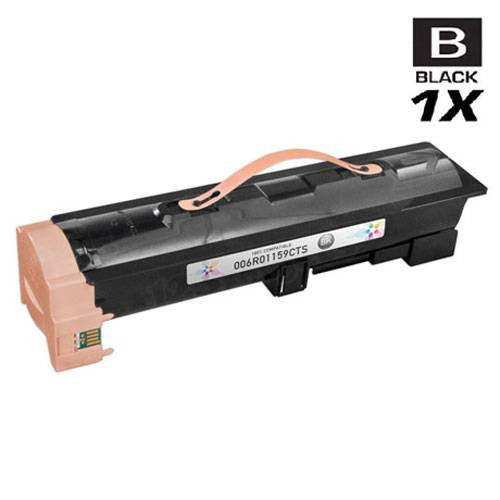
The right depth for a lightly worked machine, or for a first compatible order on a platform you have not bought for before. Its answers quote $87.83 and roughly 0.29 cents a page; the charged $76.37 brings the rate to about 0.25¢. Unusually for a single, postage is no argument against it: at $76.37 it travels free alone, so the case for the pair rests on the $8.04-a-cartridge discount and the spare, not on delivery.
See the single cartridge
A year of cover for a copier turning over a cartridge every few months, bought in one order. The listing reckons at base — three singles at $263.49 against $226.49, about $37 saved, cartridges at $75.50 and roughly 0.25 cents a page. At the $196.95 charged, the cartridge is $65.65, the verified saving is $32.16 and the rate settles at about 0.22¢. Date the cartons on arrival and work through them oldest first; rotation matters over a 90,000-page horizon.
See the 3-Pack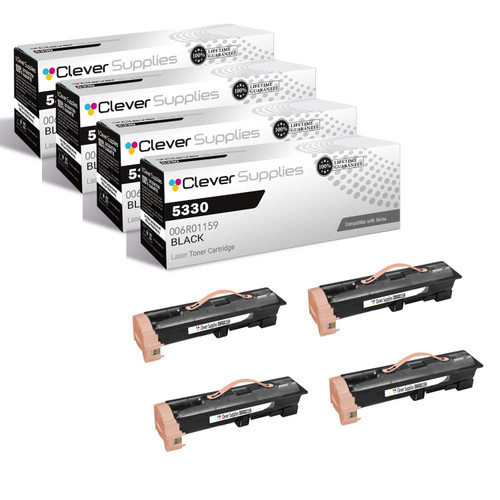
The natural fleet box: because all three machines take the same cartridge, the four units divide however volumes fall — three for the busy department copier and one for the quiet floor unit, or an even split. Its copy sets four singles at $351.32 against a $295.81 base and claims about $55.51 saved, with cartridges at $73.95. At the $257.23 charged, the cartridge is $64.31, the verified saving is $48.25 and the rate is about 0.21¢. Once the box is divided, note where the sealed units live; a cartridge in the wrong office is no spare at all.
See the 4-Pack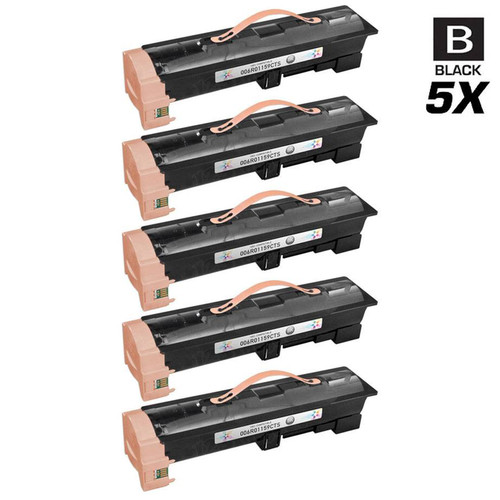
The deepest carton here, and the one whose canonical posting carries a Premium Quality badge its own text disowns: the copy concedes the box costs exactly what the standard five-pack costs and that the cartridges inside are the same 006R01159 units, so it is carded here as the standard box it admits to being. The standard copy quotes $365.15, $73.03 a cartridge and about $74 saved against five singles. At the $317.52 charged, the cartridge is $63.50, the rate about 0.21¢ and the verified saving $64.33. Pool the units centrally — one shelf, one count, and whichever machine runs dry draws the next cartridge.
See the 5-PackThe whole shelf at the prices checkout charges
Twenty-three listings, five cartons, one cartridge. The table below prices the complete shelf at November 2026 sale prices, with per-cartridge costs and rated per-page costs worked from the charged figure in every row, and each multi-pack’s saving measured against singles bought at the charged single price.
| Box | What’s inside | Sale price | Per cartridge | Cost per rated page | Saving vs singles |
|---|---|---|---|---|---|
| 2-Pack | 2 × 006R01159 | $136.66 | $68.33 | ≈0.23¢ | $16.08 |
| Single | 1 × 006R01159 | $76.37 | $76.37 | ≈0.25¢ | — |
| 3-Pack | 3 × 006R01159 | $196.95 | $65.65 | ≈0.22¢ | $32.16 |
| 4-Pack | 4 × 006R01159 | $257.23 | $64.31 | ≈0.21¢ | $48.25 |
| 5-Pack | 5 × 006R01159 | $317.52 | $63.50 | ≈0.21¢ | $64.33 |
Per-page costs divide each box’s sale price by its total rated pages, at 30,000 pages for every cartridge inside. Every box on the shelf clears the $49 free-shipping threshold on its own.
Choosing a depth: volume against cartridge life
Postage, usually the first question on a shelf like this, settles nothing here. The cheapest carton, the $76.37 single, already clears the $49 free-shipping threshold with room to spare, and every pack above it travels free as well. So the choice is purely about reorder frequency and unit price. Unit prices step down $76.37, $68.33, $65.65, $64.31 and $63.50 as the boxes grow, and the rated page cost eases from about 0.25¢ to about 0.21¢. The steepest single step on that ladder is the first one, from single to pair — an $8.04 drop per cartridge — which is another way of stating the short answer. Beyond the pair, each extra cartridge buys convenience more than it buys discount: the move from the 4-Pack to the 5-Pack trims only 81 cents off the unit price.
Now translate cartons into calendar time at your own volume. At 2,000 pages a month — a figure several listings in this family use as a worked example — one cartridge lasts about fifteen months at rating, so the single and the 2-Pack bracket the sensible range and anything deeper is warehousing. At 5,000 pages a month, a cartridge turns over roughly every six months: the 2-Pack covers about a year, the 3-Pack about eighteen months, and the 4-Pack becomes a set-and-forget purchase with margin. At 6,000 pages a month across a small fleet sharing one shelf, a cartridge lasts about five months and the 5-Pack runs a little over two years — deep, but rational when three machines draw on the same pool and an empty shelf idles a department rather than a desk. The listings’ own examples run from 2,000 to 6,000 pages a month, with one putting the load at about 115 pages a workday; measure your fleet against its page counters rather than against anyone’s example, and buy the shallowest carton that keeps a sealed spare in the building.
One more consideration belongs to offices running more than one of these machines. Because the cartridge is common to the 5325, the 5330 and the 5335, a shared shelf needs no per-machine allocation: whichever copier fades first takes the next sealed unit, and the pack sizes above describe the fleet’s total cover rather than any one machine’s. That pooling is the practical dividend of a one-cartridge platform, and it is why the deeper cartons make more sense here than the same money spent on a single-machine shelf.
Yield and cost per page: one rating, declared on the price list
The 30,000-page rating is the only yield figure this platform has, and its documentation is better than most. Xerox’s Commercial Price List effective April 1, 2015 carries a yield-basis column, and where neighboring lines show a coverage percentage, the 006R01159 line shows the words ISO/IEC 19752 — the rating is declared under the mono toner standard, not approximated at a coverage guess. The October 15, 2016 Advanced Multifunction Price List repeats the figure in its consumables table (“Black Toner Cartridge WC5325/5330/5335 — 006R01159 — Yield 30,000”), and the WorkCentre 5300 Series User Guide states the same number. Three documents, one figure, no competing rating anywhere. Against that, the store’s copy is oddly quiet: no listing in this family mentions the standard at all, and one describes the rating as measured at a standard five percent coverage — a paraphrase that undersells the paperwork behind the number. The declaration is Xerox’s, and this guide restores it.
The same 2015 list prices the genuine cartridge at $202, flat at every quantity break, and the 2016 list corroborates at $202.40. Hold that against the compatible shelf: the $76.37 single costs a little over a third of the genuine cartridge’s dated list price, and the 5-Pack’s $63.50 unit price is under a third. Genuine pricing is quoted here only with its date attached, because a 2015 list price is a benchmark, not a quote for today.
At the declared rating, the per-page arithmetic is simple because there is only one cartridge size to divide by. The single works out to about 0.25¢ a page; the 2-Pack to about 0.23¢; the 3-Pack to about 0.22¢; and the 4-Pack and 5-Pack both land at about 0.21¢, separated by less than a tenth of a cent. Real-world yield will move with what you print — dense coverage and heavy graphics draw toner faster than plain office text, and the rating assumes the standard’s test pages — but it moves for every box equally, so the ranking above survives whatever your actual page count turns out to be.
Two yield questions this guide deliberately leaves open. Xerox’s configuration lists for these machines include a starter toner cartridge in the box, but no Xerox document read for this guide states a page yield for it, so none is printed here; expect the first cartridge to be a separate question from the refills and judge the machine’s appetite from its second cartridge onward. And the store’s spec blocks label this cartridge with a yield-type word that Xerox never assigned it — the cartridge carries no tier name in any Xerox document, so this guide names no tier either.
Three machines, one cartridge bay
The platform is three machines, and the differences between them are speed and stamina rather than supplies. All three copy at up to 600 × 600 dpi and print at up to 1200 × 1200 dpi, all three carry a 110-sheet automatic document feeder, a 50-sheet bypass tray and automatic two-sided printing as standard, and all three take the same toner and the same drum. The store keeps a category shelf for each machine: the WorkCentre 5325, the WorkCentre 5330 and the WorkCentre 5335.
| Machine | Speed | Duty cycle | First copy out | Toner |
|---|---|---|---|---|
| WorkCentre 5325 | Up to 25 ppm | Up to 100,000 pages/month | As fast as 4.2 seconds | 006R01159 |
| WorkCentre 5330 | Up to 30 ppm | Up to 125,000 pages/month | As fast as 4.2 seconds | 006R01159 |
| WorkCentre 5335 | Up to 35 ppm | Up to 150,000 pages/month | As fast as 4.0 seconds | 006R01159 |
Treat the duty-cycle column as a ceiling, not a target: it is the most the hardware is built to absorb in a month, stated by Xerox in both the User Guide and the 2016 price list. No Xerox document read for this guide states a recommended monthly volume for this platform, so none is printed here — the worked examples in the which-to-buy section above use the volumes the listings themselves use, and your own page counters are the better guide. Under the glass, all three machines share the same supporting hardware: 1 GB of memory with a 160 GB hard drive, a 667 MHz processor, paper drawn from two 520-sheet trays on a stand or a 2,000-sheet high-capacity tandem tray, and a maximum capacity of 5,090 sheets. Print languages are PCL 5e and PCL 6 as standard, with Adobe PostScript 3 an option on the printer configurations.
The nameplates need one explanation, because the store’s shelf shows more of them than the three machine names. Xerox sold each machine in the United States in two families: a copy-only Copier build and a Copier/Printer/Scanner build that adds network printing, color scanning and optional fax. Xerox’s own part numbers carry the distinction as suffixes — /C and /CH for the copier builds, /P for the printer/scanner build on the two-tray stand, /PH for the printer/scanner build with the high-capacity tandem tray in place of that stand, and /PHXF for the tandem-tray build with a fax line and an integrated finisher. The store’s 5325P, 5330PH and similar nameplates transcribe those suffixes: P means the printer/scanner configuration, PH means that same configuration standing on the tandem tray. They are configurations of the three machines, not extra models, and the cartridge is identical across every one of them — which is why this guide’s roster follows the machines and links one category per machine.
The drum is a separate unit — and it is not sold here
Unlike the single-cartridge platforms elsewhere in this guide series, the WorkCentre 5300 platform does have a separate drum. Xerox lists a drum cartridge, code 013R00591, rated at 96,000 pages — a little over three toner cartridges’ worth of work — priced at $325 on the April 1, 2015 list and at $325.00 again on the October 15, 2016 list. The User Guide treats it as its own replaceable unit, the xerographic module, on its own schedule independent of toner changes. Toner and drum are the platform’s only two cartridge consumables.
This store does not sell that drum: no listing in this family offers it, and none of the twenty-three descriptions mentions it. So there is no drum card on this page and no drum to add to a toner order here. When a 5325, 5330 or 5335 eventually shows the print-quality faults of a worn drum — repeating marks or background shading that a fresh toner cartridge does not cure — the 013R00591 is the part to source through Xerox channels, at the dated list price above as a benchmark. Keep the two lives separate in your records: toner roughly every 30,000 rated pages, drum roughly every 96,000.
Compatibility notes: read the code digit by digit
The fit itself could hardly be simpler. The April 1, 2015 price list prints the fit set on the toner line itself — “WorkCentre 5325/5330/5335 Black Toner” — and every configuration of those machines, copier-only or printer/scanner, stand or tandem tray, fax or no fax, draws from the same bay. If your machine is a WorkCentre 5325, 5330 or 5335 in any configuration, this is its cartridge, and there is no second toner code for the platform to confuse it with: neither Xerox price list carries any other toner line for these machines, no higher or lower capacity, no metered or channel variant.
The one real trap sits a single digit away. The code on this page is 006R01159. Xerox also sells a 106R01159, a Phaser cartridge for an entirely different, much smaller machine family, which shares nothing with this platform but a confusingly similar number. The two codes differ only in the third character — a 6 where this cartridge has a 0 — and a transposed order or a misread digit at reorder time is all it takes to bring the wrong box into the building. The fence is clean on this store’s shelf in both directions: none of the twenty-three listings behind this guide carries the Phaser code anywhere in its copy, and the Phaser family’s own listings share no product with this one. Check the full code on the outgoing cartridge, leading zeros included, before ordering.
One fault in the listings deserves naming precisely because it never misdirects an order. Every listing’s specification block lists all three machines, and the two Clever Supplies canonicals name all three in prose. But the older code-named listings’ fit answers name only the WorkCentre 5325 and the WorkCentre 5330, and leave the 5335 out — so a 5335 owner reading only the single’s answers could reasonably wonder whether the cartridge fits their machine. It does: Xerox’s fit line covers the 5335 in terms, the 5335-badged listings in this store say so in prose, and the cartridge those listings sell is the same 006R01159 at the same prices. The omission is an understatement in the answers, not a limit on the cartridge, and this guide states the full three-machine fit everywhere.
The terms that accompany every carton
Every box above holds the same Clever Supplies compatible cartridge for the WorkCentre 5325, 5330 and 5335, and the terms around it do not change with pack size: a one-year warranty, free returns for a year, and weekday support between 9 AM and 5 PM CST. Orders ship free from $49 — and on this shelf every carton, the single included, qualifies on its own.
A WorkCentre 5325 / 5330 / 5335 checklist
Questions buyers ask about the 006R01159
Which cartridge does my WorkCentre take?
The 006R01159, rated at 30,000 pages, whichever of the three machines you own. Xerox made exactly one toner cartridge for the WorkCentre 5325, 5330 and 5335 platform — there is no standard or high-capacity choice to make, no tier name attached to it in Xerox’s documents, and no variant for particular billing arrangements. If the code on the cartridge you are pulling out reads 006R01159, every box on this page is its replacement.
My machine is a 5330P or a 5335PH. Is that a different cartridge?
No. The letters are Xerox’s own configuration suffixes, not separate models. P marks the Copier/Printer/Scanner build supplied on the two-tray stand; PH marks the same printer/scanner build supplied with the high-capacity tandem tray instead. Copier-only builds carry /C or /CH, and a tandem-tray build with fax and finisher carries /PHXF. Every configuration of the 5325, 5330 and 5335 uses the same 006R01159, so order by the machine’s base name and the cartridge code, and ignore the suffix for supply purposes.
Some listings only mention the 5325 and 5330. Does this fit my 5335?
Yes. Xerox’s price lists print the fit on the cartridge line itself — WorkCentre 5325/5330/5335 — and every listing’s specification block in this store lists all three machines. The gap is in the older listings’ answer prose, which names the 5325 and 5330 pair and leaves the 5335 unmentioned; the 5335-badged listings here name all three. The cartridge is the same one, at the same prices, whichever badge the listing wears.
How is the 30,000-page yield measured?
Under ISO/IEC 19752, the mono toner yield standard — and unusually, the declaration sits on the price list itself: the yield-basis column of the 006R01159 line in Xerox’s Commercial Price List effective April 1, 2015 reads ISO/IEC 19752 where other lines carry a coverage percentage. The October 15, 2016 list states the same 30,000 pages. Real output varies with coverage and content, as it does for any cartridge measured this way, but the rating itself is a declared standard figure rather than a store estimate.
Is there a drum to replace on these machines?
Yes — this platform has one, unlike simpler single-cartridge machines. The drum cartridge is the 013R00591, rated at 96,000 pages and priced at $325 on both the April 1, 2015 and the October 15, 2016 Xerox lists. This store does not sell it, and no listing in this family mentions it, so it cannot be added to a toner order here. Track its life separately from toner: roughly one drum to a little over three toner cartridges.
Why do the savings in the listings differ from the savings here?
Because the two sets of figures start from different prices. The listings compute from base prices — $87.83 for a single, $157.16 for the 2-Pack — while checkout charges those bases divided by 1.15. Rebuilt at the charged prices, the 2-Pack saves $16.08 rather than $18.50, the 3-Pack $32.16 rather than about $37, the 4-Pack $48.25 rather than $55.51 and the 5-Pack $64.33 rather than about $74. The listings’ arithmetic is consistent on its own terms; it is simply performed one tier above the till.
How long should a 2-Pack last me?
The pair holds 60,000 rated pages. At 2,000 pages a month that is about two and a half years of work; at 5,000 a month, about a year; at 6,000 a month across a small fleet, about ten months. Treat those spans as planning figures at the declared rating — dense pages use toner faster than plain text — and refine them with your own counter readings once two cartridges have gone through the machine. Store the sealed unit flat in its carton, away from direct sunlight, and it will print like the first when its turn comes.
How this guide was put together
Everything above rests on two bodies of evidence: the store’s own listings, read in full, and Xerox’s published documents for this platform — the Commercial Price List effective April 1, 2015, the Advanced Multifunction Price List of October 15, 2016 and the WorkCentre 5300 Series User Guide — which between them settle the one-cartridge ladder, the ISO/IEC 19752 declaration on the price-list line, the three-machine roster with its configuration suffixes, the duty cycles and the separate drum. The census for this family counts twenty-three listings, and no MICR variant exists among them or anywhere in Xerox’s documents for this platform, so there is nothing of that kind to card, link or price here; the twenty-three fold into the five boxes carded above. Each box is carded once, under the canonical posting named in the audit; duplicate postings behind a box are not linked and do not count toward the shelf, and the 5-Pack’s canonical posting, badged Premium Quality, collapses into the standard box by its own copy’s admission. The judgment calls are recorded. First, the roster: Xerox documents three machines and a set of configuration suffixes, so the guide follows the machines, links one category per machine and explains P and PH as the configurations they are. Second, fit: where the older listings’ answers name two machines, the guide follows Xerox’s own fit line and states all three, everywhere. Third, money: every price printed here is the amount checkout charged in November 2026, and because the listings compute from a higher base tier, every saving, per-cartridge figure and per-page cost was recalculated from the charged amounts; the four savings on the badges are exact at those prices. Fourth, the genuine benchmark: the only genuine figure quoted carries its date — $202 from the list effective April 1, 2015, corroborated at $202.40 on the October 15, 2016 list, with the drum at $325 on both. Fifth, two silences kept deliberately: no starter-cartridge yield is printed, because no Xerox document read states one, and no tier name is used, because Xerox assigned this cartridge none.