




Ten Brother printers share this platform, and Brother built it with two rungs: the standard TN620, rated at up to 3,000 pages, and the high-yield TN650, rated at up to 8,000 — both figures measured under ISO/IEC 19752, with one DR620 drum turning underneath all ten machines. The compatible shelf, though, stocks only the lower rung. Not one compatible TN650 is sold in this store; the big cartridge survives here solely as Brother’s genuine article, at a price per page that every compatible TN620 box on this page undercuts. What follows is the shelf as it truly stands: three TN620 boxes, two drum offers, the genuine figures quoted openly for scale, and a frank account of where the TN650 went.
The short answer: if your printer is one of Brother’s ten — DCP-8080DN or DCP-8085DN, HL-5340D, HL-5350DN, HL-5370DW or HL-5370DWT, MFC-8480DN, MFC-8680DN, MFC-8690DW or MFC-8890DW — start with the TN620 2-pack at $41.65 (about 0.69¢ a page). Busier offices drop to about 0.56¢ a page with the 4-pack at $67.22. Holding out for a TN650 means the genuine cartridge at $173.87 and about 2.17¢ a page — nearly four times the 4-pack’s rate, for a cartridge this store simply does not stock in compatible form.
Find your model in the ten-name roster below first — every one of those printers accepts both cartridge sizes, so fit is a yes-or-no question with no exceptions hiding inside it. Then take the TN620 2-pack at $41.65: roughly 6,000 rated pages in one box, bought for $16.07 less than two singles purchased apart. A machine that prints all day, every day, earns the 4-pack at $67.22. When the drum message eventually appears, the DR620 single at $29.15 is the direct replacement, and a 2-pack sits beneath it for shops running more than one of these printers.
Ten printers on the roster, both cartridges fit each one
Brother prints the identical “Use with” list on its TN620 page, its TN650 page and its DR620 page — ten names, word for word the same on all three: the DCP-8080DN, the DCP-8085DN, the HL-5340D, the HL-5350DN, the HL-5370DW, the HL-5370DWT, the MFC-8480DN, the MFC-8680DN, the MFC-8690DW and the MFC-8890DW. Because the three lists match exactly, no model on it is capped at the smaller cartridge — the size decision is purely about how much you print.
Store listings cast a somewhat wider net, folding in variants sold in other markets such as the HL-5380DN, along with an MFC-8880DN that Brother’s current cartridge pages no longer list at all. This guide stays with the ten names Brother publishes today and links only those ten categories.
One warning belongs here, because the codes sit a single digit apart: the TN630 and TN660 belong to a separate Brother platform altogether, turning on a DR630 drum, and that family has its own guide elsewhere on this site — a TN660 cartridge will not run in any printer named above.
The toner shelf: a TN620 ladder, and an empty high-yield rung
Brother drew two sizes for these printers: the standard TN620 at up to 3,000 pages and the high-yield TN650 at up to 8,000, both rated the same way, under ISO/IEC 19752. The compatible shelf stocks only the standard size — singly, paired, and in fours. Buying the single twice over totals $57.72, and four separate singles reach $115.44; those are the sums each pack below is judged against, strictly within the TN620 tier. After the table, a separate section deals with the TN650, whose absence is the one fact a returning buyer most needs to hear.

These ten printers tend to anchor busy corners of an office — the shared machine by the copier, the workhorse in accounting — and at that tempo a 3,000-page cartridge turns over fast enough that buying singly means buying often. The pair trims $16.07 off the two-single route and pulls the per-page figure down by more than a quarter in the same move. Against the genuine high-yield cartridge further down this page — $173.87 for its 8,000 pages — the pair delivers nearly as many pages for well under a third of the money, which is why it leads this page.
Shop the 2-Pack →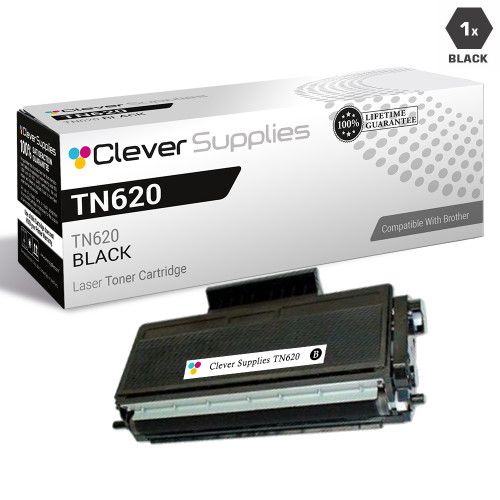
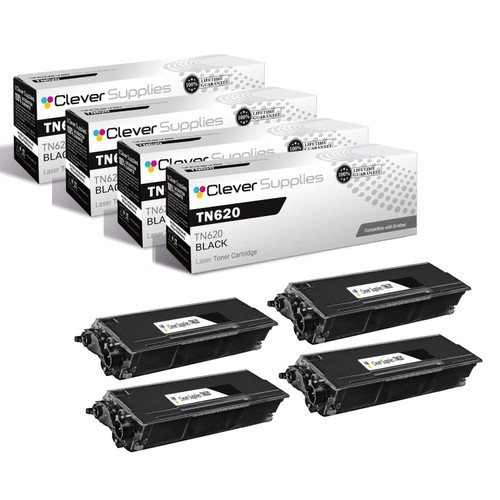
The cartridge inside is the same whichever box it arrives in; only the count in the box and the per-page price change. A quiet machine in a side office may take the better part of a year over one TN620, and for that desk the single is money placed exactly where it is used. A printer in daily departmental service reaches the 4-pack’s 0.56¢ quickly, and the $48.22 it keeps back against four singles is the largest single saving this page can put in front of you.
All five compatible offers on one table
Three TN620 boxes and two DR620 drum offers up top; Brother’s genuine shelf below them, included so the price gaps can be judged at a glance. Nothing in those lower rows is carded or linked — they are context, not offers. Give the genuine high-yield row a second look: at $173.87 and about 2.17¢ a page, the genuine TN650 is out-priced per page by every compatible box above it, the standard-yield single included.
| Offer | In the box | Brother’s rating | Price | Cost for each page | Saving vs singles |
|---|---|---|---|---|---|
| TN620 2-pack | Two TN620 cartridges | About 6,000 pages in total | $41.65 | About 0.69¢ | SAVE $16.07 vs two singles |
| TN620 4-pack | Four TN620 cartridges | About 12,000 pages in total | $67.22 | About 0.56¢ | SAVE $48.22 vs four singles |
| TN620 single | One TN620 cartridge | Up to 3,000 pages | $28.86 | About 0.96¢ | — |
| DR620 drum 2-pack | A pair of DR620 drum units | Roughly 50,000 pages combined | $42.21 | About 0.08¢ | SAVE $16.09 vs two singles |
| DR620 drum single | One DR620 drum unit | About 25,000 pages | $29.15 | About 0.12¢ | — |
| Genuine Brother TN650 single | One genuine cartridge (reference only) | Up to 8,000 pages | $173.87 | About 2.17¢ | — |
| Genuine Brother TN620 single | One genuine cartridge (reference only) | Up to 3,000 pages | $118.75 | About 3.96¢ | — |
| Genuine Brother DR620 single | One genuine drum unit (reference only) | About 25,000 pages | $206.49 | About 0.83¢ | — |
Drum math here leans on Brother’s approximate 25,000-page DR620 rating, which Brother itself warns shifts with how the machine is used. Further down, past the TN650 section, the drums get a section of their own.
Where the TN650 went: the high-yield tier is genuine-only
Plenty of these printers were bought with a TN650 inside them, and a returning owner naturally comes back looking for the same cartridge: high yield, up to 8,000 pages. The situation deserves to be stated flatly: this store sells no compatible TN650 whatsoever — no single, no pack, no bundle. Brother’s genuine cartridge, priced at $173.87, is the only TN650 listing the shelf holds.
Here, unusually, the gap costs the buyer nothing, because the arithmetic runs the other way. The genuine TN650 lands at about 2.17¢ a page. The compatible TN620 single — fewer pages per cartridge, admittedly — costs $28.86, about 0.96¢ a page, and the 4-pack reaches 0.56¢. Staying with the compatible standard tier means swapping cartridges more often; it does not mean paying more to print. The genuine TN650 keeps one honest use: it is the pick for a buyer who wants Brother’s own toner in the larger size specifically, and that buyer should also know Brother’s own store currently lists it at $143.29, below this shelf’s figure.
Brother still sells both cartridges in this family, so genuine prices exist on both sides of the comparison — and every genuine figure on this shelf sits above Brother’s own, a point the closing note on this page sets out in full. Nothing here measures a TN620 pack against a TN650 price: every saving quoted on this page stays inside its own tier, reckoned against that tier’s single and nothing else.
The drum: one DR620 under all ten printers
All ten printers on the roster turn on a single drum design, the DR620. Brother puts a new drum’s yield at approximately 25,000 pages and adds, in its own footnote, that drum yield is approximate and may vary by type of use — no ISO figure is claimed for the drum, and none is printed here. Measured in cartridges, one drum outlasts roughly eight TN620s, so the drum decision arrives rarely in a printer’s life and deserves to be made on price rather than in a hurry.
The drum ladder is short, and this page will not pretend otherwise: a single and a 2-pack, stepping down from $29.15 to $21.11 a drum, and then it ends. No 4-pack exists, and no box in this family combines a cartridge with a drum — a drum is bought as a drum, when the printer asks for one.
Two cautions attach to the drum listings themselves. First, the newer of them — the 2-pack carded below among them — are titled “Toner Cartridge” in the store. Treat that as a labeling mistake, not as a statement about the box: the contents are DR620 drum units, and the cards below call them drums because drums are what a buyer receives. Second, those same newer descriptions claim printers from an altogether different platform — the DCP-8060 family — as machines this drum fits. It fits none of them; the ten-name roster at the head of this page is its real one.

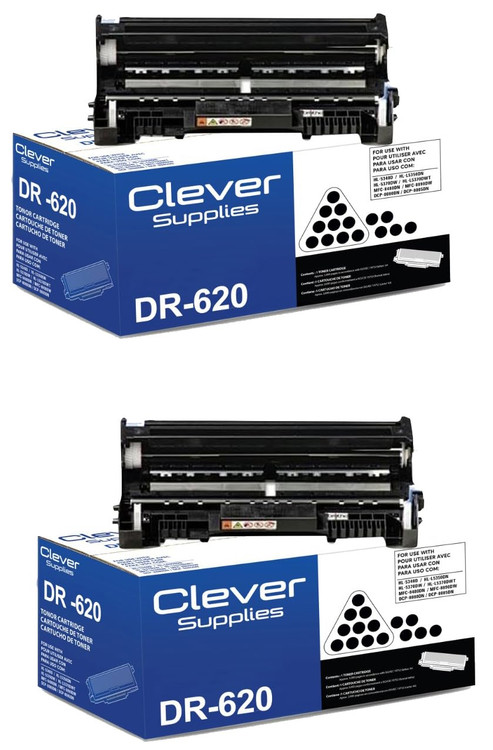
For one printer with a tired drum, the single is the whole answer. The 2-pack justifies itself where two or three of the ten models draw from one supply cabinet and drums rotate through on a rhythm — $21.11 a unit beats paying $29.15 twice over. But nobody should order that pack expecting toner cartridges inside: despite the wording of its store title it holds drums and drums alone, and anyone after toner belongs in the ladder section further up the page.
Chips and firmware: only what the evidence supports
Read all seven compatible listings in this family end to end — the five carded on this page and the two duplicate drum listings beside them — and the word “chip” never appears. Nothing about a fitted chip, nothing about level reporting, nothing about recognition. A page that invents a chip claim its own listings do not make would be selling a story, so this one makes no chip claim at all.
What can be stated comes from Brother itself. On its US help site the company writes: “Brother firmware updates do not block the use of third-party ink and toner cartridges in our machines.” Everything else asserted here can be checked the same way — against the roster Brother publishes, the ISO wording Brother prints, and the prices showing on the shelf on the date stamped at the head of this page.
Before you order: the TN620 checklist
Frequently asked questions
Buy the TN620 here. This store stocks no compatible TN650, and Brother’s genuine one at $173.87 lands near 2.17¢ a page — dearer per page than anything compatible on this page. Should genuine high-yield toner be a hard requirement rather than a habit, it is worth knowing Brother’s own store currently sells that cartridge for $143.29.
Essentially, yes — two cartridges for the same ten printers, differing in how much toner they carry: up to 3,000 pages from the standard-yield TN620, up to 8,000 from the high-yield TN650, each rated under ISO/IEC 19752. Since all ten models swallow either cartridge, deciding between them is purely a question of volume and cost per page; fit never enters into it.
No. The TN630 and TN660 serve sixteen different printers — the HL-L2300 and MFC-L2700 generation — over a DR630 drum, and share not one model with this page’s ten. One digit separates the two codes, which is precisely how the confusion starts; no printer named on this page can run a TN660.
Drum units — two of them. The title’s wording is a leftover from how the newer drum listings were named in this store; what ships is drums, and this page cards them under what they actually are. The same listings’ descriptions borrow a roster from another platform, so trust the ten models at the head of this page instead. And if it is toner your printer is asking for, scroll back up to the ladder section, where the cartridge cards live.
Brother puts a new DR620 at approximately 25,000 pages, qualifying that figure as approximate and variable with the type of use. Translated into cartridges, one drum outlasts about eight TN620s. When output fades or streaks and a fresh cartridge changes nothing, the drum — rather than the toner — has usually reached the end of its life.
Two different covers apply, depending on what is bought. The five compatible offers sit under this store’s terms — twelve months of warranty, and a twelve-month window for returning a compatible item that turns out wrong for the machine. The genuine products quoted here for reference fall under Brother’s warranty instead, and genuine returns close after 30 days. Parcels are dispatched from the nearest of the four warehouses — Illinois, Pennsylvania, Georgia, California — and the support desk answers on weekdays between 9 AM and 5 PM Central.